What’s actually slowing this PC down?
Pick the symptom - the matching free tool is one click away.
Marina Bay makes overtaking difficult because its narrow streets, close barriers and slow corners leave little room to pass or recover from a mistake. Yet the long acceleration zone toward Turn 7 and the revised final sector create specific attack opportunities. That tension makes track position valuable, while tyre age, pit timing and Safety Car or Virtual Safety Car periods can change the best strategy. These are recurring tendencies, not guarantees: conditions, cars, tyres and race-control events vary by season.
Why is overtaking difficult at the Singapore Grand Prix?
Marina Bay is a street circuit, not a permanent track with broad run-off areas and many alternative racing lines. Formula 1 lists the current layout as 4.927 km long with 19 turns. The barriers sit close to the racing surface, and the slow, confined sections make it hard for a following car to carry a different line or stay alongside without risking contact. A driver who makes a mistake also has little space in which to recover.
As an Amazon Associate I earn from qualifying purchases.
Those constraints affect more than the moment of a pass. A driver may be faster but still struggle to get close enough to attack, especially if the car ahead can protect the racing line through a sequence of slow corners. The faster car then has to choose between spending tyres or energy to create an opportunity, waiting for a designated passing zone, or relying on strategy to move ahead.
Windows Errors? Fix Them Before They Spread
Repair common Windows errors and clear accumulated junk for a smoother, more stable PC - no reinstall needed.Free scan · no reinstallOutdated Drivers Are Slowing You Down
One free scan finds every outdated or missing driver and matches the right update for your exact hardware.Free scan · exact hardware matchThat is why track position tends to matter at Marina Bay. When passing is difficult, keeping a place gained at the start or after a pit stop can be more valuable than taking a risk in traffic. But position is not absolute: a pace advantage on fresher tyres, a DRS opportunity, or a well-timed stop can give a driver a way to change the order.
#1 Best Overall

- ✅ 1/43 Diecast Model Car
- ✅ Highly detailed model of the McLaren MCL38 Monaco Grand Prix
- ✅ Singapore Grand Prix Limited Edition
- ✅ Die-cast metal body with plastic parts
- ✅ Official Licensed
Where can drivers overtake at Marina Bay?
The run to Turn 7
The approach to Turn 7 is identified as the circuit’s primary overtaking opportunity. The long acceleration zone gives a driver a chance to build speed behind a rival and attempt a pass under braking. It is one of the clearest places to attack, but it does not make overtaking automatic: the driver still needs to be close enough and positioned well before the braking zone.
Other sections of the lap may help a driver set up an attempt, but the tight corners and limited passing room make it difficult to turn every small pace advantage into a completed move. A driver can be quicker over a lap and remain behind if the car ahead defends effectively and reaches the next braking zone in front.
The revised final sector
For 2023, the layout replaced the former Turns 16–19 sequence with a straight. The lap went from 23 turns to 19, and Formula 1’s 2026 strategy feature describes the sharp right-handers at Turns 14 and 16 as viable DRS-assisted passing spots following the change. The revision therefore altered where drivers can build an attack late in the lap, as well as shortening the sequence of corners that preceded it.
DRS availability and its exact detection and activation points are event-specific. Drivers and fans should check the FIA map for the relevant season rather than assume that zone positions remain unchanged. The layout change opened potential opportunities; it did not remove the circuit’s narrow, low-speed sections or establish that passes are easy everywhere.
Rank #2

- 1:25 scale 138 super-detailed parts 4-in-1: build stock, custom, stylized show car or drag racer Molded in white, clear and tinted clear with many chrome plated parts Two complete customizing front and rear end options Accessories to build a road test car Pre-decorated tires and drag slicks with whitewalls or lettering Expanded decal sheet includes new “Grrrand Prize” graphics Built size: ~ 7.5 inches long Reproduction of rare, vintage AMT packaging from 1969 Skill level 2, Ages 10+
What the overtaking count does—and does not—show
Formula 1 reported 58 overtakes in the 2025 Singapore Grand Prix. That is a count for one race, not a typical annual rate. On its own, it also cannot show how many more overtakes the 2023 layout change caused: the available information does not quantify that causal effect across comparable races.
Why teams often favor track position and a one-stop plan
Formula 1’s 2026 strategy preview expects a one-stop race and says track position remains important even though overtaking is possible. Pirelli’s 2026 preview likewise calls one stop the preferred option, citing pit-lane time loss and the likelihood of neutralisations. These are season-specific previews, not a promise of what every Singapore race will require.
A one-stop plan limits the time a driver loses by entering and leaving the pits. Its appeal is particularly clear when passing is hard: a driver can preserve a position rather than deliberately rejoin behind rivals and try to pass them. But extending a stint for track position can leave a driver on older tyres, and the value of staying out depends on whether the pace loss becomes large enough for a rival to attack.
The strategic decision is therefore a balance, not a simple rule to pit as late as possible. Teams weigh the likely time lost in the pit lane against the performance benefit of fresh tyres, the traffic into which a driver might rejoin, the positions of rivals and the chance that a neutralisation will change the cost of stopping.
Rank #3
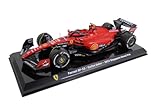
- 1/24 car in metal
- Each vehicle is screwed onto a base and presented in a display box
- A great gift idea!
Track position versus tyre freshness
Tyre age matters because a driver on newer tyres may have a pace advantage over a rival whose tyres have been used longer. That advantage can support an on-track attack or make it possible to lap faster immediately after a stop. An early stop intended to exploit that fresh-tyre pace while a rival remains out is commonly called an undercut.
The undercut only works if the driver can use the advantage effectively. Rejoining in traffic can blunt the benefit, and the rival may respond by stopping soon after. Meanwhile, the driver who stays out keeps current track position for longer. At a circuit where passing is complicated, that position has value—but so does avoiding a long stint on less competitive tyres.
Formula 1’s 2025 preview quoted an unnamed race-engineering perspective saying that the post-change layout had made overtaking “a bit easier,” while it remained “rather complicated.” The same preview noted that a substantial performance difference between relatively new soft tyres and older medium or hard tyres could be useful in creating an opportunity. The point is the tyre-age difference, not a universal prescription to use a particular compound or stop at a particular lap; compounds and race conditions vary by season.
Do these 3 things before closing this tab:
1Scan for outdated or missing drivers - takes under a minute2Clear out junk files and repair common Windows errors3Fix the driver behind crashes, sound loss and screen glitchesHow Safety Cars and Virtual Safety Cars change the calculation
A Safety Car or Virtual Safety Car can reduce the time a driver loses by making a pit stop relative to rivals continuing at racing speed. That can turn a stop that was unattractive under green-flag conditions into a worthwhile option. The window is not automatically beneficial: the timing, traffic, the position of rivals and whether a teammate needs to stop at the same time all matter. A team may also face a choice between stopping immediately and waiting to see how the race develops.
Rank #4

- Brand new box
- Real rubber tires.
- Detailed interior, exterior.
- True-to-scale detail
- Die-cast metal body.
2019: an early stop and later Safety Cars
In 2019, Sebastian Vettel stopped early and undercut Charles Leclerc and Lewis Hamilton. Three Safety Cars followed later in the race. The sequence shows how an early stop can change track position and how subsequent neutralisations can reshape the strategic picture. It does not mean an early stop will work in another year, or that a driver who benefits from an undercut will necessarily benefit from later Safety Cars.
2023: a late Virtual Safety Car
In 2023, a late Virtual Safety Car enabled George Russell and Lewis Hamilton to pit for fresh tyres and close on the leaders. That is an example of a late neutralisation creating a new tyre opportunity and changing the closing phase of the race. A VSC cannot be assumed to arrive at a useful moment, and stopping under one does not guarantee that a driver will have enough time or track access to pass.
How to compare the main strategic choices
| Decision | Why a team might choose it | Main risk or trade-off |
|---|---|---|
| Protect track position | Staying out can preserve a place when passing through the field is difficult. | Older tyres may lose pace and make the car vulnerable to a rival with fresher tyres. |
| Stop earlier for fresher tyres | A tyre-age advantage may create an undercut opportunity or improve the chance of an on-track attack. | The driver may rejoin in traffic, and the rival may respond before the advantage is large enough. |
| Wait for a neutralisation | A Safety Car or VSC may reduce the relative time cost of a stop. | There is no guarantee one will occur at a useful time; waiting can also leave a team with fewer options. |
| Attack on track | A driver may use a tyre, DRS or energy advantage at a suitable passing opportunity. | The narrow layout limits passing room, and an unsuccessful attempt can cost time or position. |
| Preserve the current position | A driver can avoid spending pace or taking risk while waiting for a clearer opening. | A faster rival may keep applying pressure, and the opportunity may not arrive before the race ends. |
These options can overlap. A team may protect position early, plan an undercut if a rival’s pace falls away, and then reassess if a neutralisation appears. The best response depends on the race state rather than on a fixed Singapore strategy formula.
Weather and season-specific rules matter
Rain can change grip and track conditions between sessions, which affects how confidently drivers can attack and how teams evaluate tyre performance. Pirelli’s 2025 recap said the track was damp after afternoon rain, the Hard tyre was not used at the start, and almost the entire field completed a one-stop race; only three drivers used two stops. Those are details of the 2025 event, not a forecast for another Singapore Grand Prix.
Best Value

- 1/24 car in metal
- Vehicle screwed on base, in blister: no box
- A great gift idea!
Tyre compounds, car characteristics and race rules also change over time. The 2026 preview expects more robust tyres that could make conventional undercut and tyre-delta advantages less potent than in other circumstances. It also identifies Overtake Mode and energy deployment as possible factors supporting attacks. Those points are expectations in a preview, not settled evidence about the outcome of the 2026 race.
For a specific event, the useful questions are: what compounds are available, how quickly do they lose performance, where are the DRS zones, and what rules govern energy use? A strategy that works when a tyre-age gap is large may be less effective when tyres are more robust or a driver has other ways to attack.
What this means when watching the race
When a driver is stuck behind another car, look for whether the gap closes on the run to Turn 7 or in the DRS-assisted opportunities around Turns 14 and 16. If the faster car cannot get close enough at those points, the team may try to create a tyre-age advantage with an earlier stop instead of relying on a pass through the slower sections.
The Tool Desk
Outbyte Driver Updater FREEScan for outdated or missing drivers - takes under a minuteDriver Scan →Outbyte PC Repair FREEClear out junk files and repair common Windows errorsFree Scan →When a driver pits, watch where that car rejoins and whether rivals respond. A fast lap on new tyres matters only if it translates into a position gain or a gap that survives the rival’s stop. If a Safety Car or VSC appears, teams must reassess whether the lower relative cost of a stop outweighs the risk of traffic or losing track position.
The broad pattern is a contest between position and opportunity: Marina Bay rewards drivers who can defend and teams that time stops well, while the straights, DRS, tyre differences and neutralisations prevent the race from being purely a procession. The exact balance can only be judged in the context of that season’s layout details, tyres, weather and race events.
Quick Recap
Product prices and availability are accurate as of the date/time indicated and are subject to change. Any price and availability information displayed on Amazon at the time of purchase will apply.




