Quick wins for a faster PC:
Clear out junk files and repair common Windows errorsFree Scan →Scan for outdated or missing drivers - takes under a minuteDriver Scan →Short answer: The BMW B58 has not been proven to be the most reliable engine in BMW’s entire history. BMW does not publish a complete engine-by-engine failure-rate table, and the oldest B58 applications in the United States date only to the 2016 model year. But the B58 has an unusually strong case as BMW’s most reliable modern performance engine—and as the best chapter in the company’s turbocharged gasoline inline-six progression.
Its reputation comes from a specific combination: BMW kept the power, smoothness, and tuning potential that made the N54 and N55 popular, while improving the crankcase structure, cooling strategy, charge-air plumbing, and overall packaging. The result is not an indestructible engine. It is a sophisticated engine with fewer notorious failure patterns than its immediate predecessors and a better ownership risk profile when maintained in standard form.
As an Amazon Associate I earn from qualifying purchases.
The B58 succeeded by fixing the ownership story, not by becoming simple
BMW introduced the B58 in the 2016 340i as the successor to the N55-powered 335i. In its original U.S. 340i application, the 3.0-liter turbocharged inline-six produced 320 horsepower and 330 lb-ft of torque. Those numbers were competitive, but output alone does not explain why the engine became a reliability favorite.
Do these 3 things before closing this tab:
1Fix the driver behind crashes, sound loss and screen glitches2Repair Windows errors before they cause bigger problems3Scan for outdated or missing drivers - takes under a minuteThe important change was that BMW redesigned the surrounding system instead of merely increasing power. The B58 remained a direct-injected, turbocharged, variable-valve-timing inline-six, but BMW revised the structural architecture, thermal management, lubrication layout, and charge-air cooling. That gave owners a modern performance engine without repeating as many of the N54 and N55 ownership headaches.
#1 Best Overall
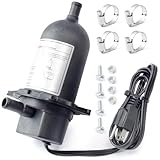
- Compatibility: Compatible with Diesel & Gas engines Generator Tractor Truck Bus Boat Marine etc. Please carefully compare every details of yours with the pictures before placing order
- Replace Part Number: TPS151GT10-000 Engine Heater replace TPS151GT8-000, TPS151GT12-000, TPS151GT10-005, 590-893, 52748, 24597503, KHTPS151GT10-005, KHTPS151GT10-000, for generac:84918G, 084918G (Please have in mind for generac it may have a 6' cord, this one has the standard 4' cord)
- Efficient Preheat: Provides 1500 watts of power output at 120 volts, which can quickly raise the coolant temperature in a short period of time, ensuring that the engine can be started smoothly even in cold weather and reducing wear and tear
- Temperature Control: It offers a temperature adjustment range of 100-120°F, allowing flexible adjustment of the preheating effect according to different environmental needs, reducing heat loss, and ensuring the equipment operates optimally at all times
- High Durability: Made of excellent materials, sturdy and shockproof, with excellent high temperature resistance. Sturdy shell and precision internal structure, making the heater more reliable, reducing maintenance and replacement costs
BMW’s technical-training material describes the B58 as part of a modular EfficientDynamics engine family shared across gasoline and diesel applications. The strategy used common production and service concepts, including a rigid aluminum crankcase, double-VANOS variable valve timing, TwinPower Turbo technology, direct fuel injection, integrated charge-air cooling, and a dedicated heat-management module.
Modularity is not automatically a synonym for reliability. It can also mean more shared components and more complex systems. In the B58’s case, however, the modular strategy helped BMW consolidate the design and improve packaging while retaining a strong bottom end and more controlled thermal behavior.
Why the B58 looks so good next to the N54 and N55
The comparison that shaped the B58’s reputation is not really “B58 versus every BMW engine ever made.” It is primarily B58 versus the modern turbocharged BMW six-cylinder engines that came before it.
The Tool Desk
Outbyte Driver Updater FREEFix the driver behind crashes, sound loss and screen glitchesFind Drivers →Outbyte PC Repair FREERepair Windows errors before they cause bigger problemsFix Now →| Engine family | What owners commonly associate with it | How the B58 changed the picture |
|---|---|---|
| N54 | High-pressure fuel-pump and injector problems, turbocharger wastegate concerns, water-pump failures, and oil leaks | The B58 avoided the N54’s reputation for several widespread, high-cost fuel and turbo-related failure patterns |
| N55 | A simpler and generally improved ownership experience, but recurring cooling-system, valve-cover, and oil-filter-housing sealing issues | The B58 revised the structural and thermal package rather than simply carrying the N55 design forward |
| B58 | Generally strong internal durability, with continuing risks around cooling, PCV, sealing, sensors, VANOS, and maintenance neglect | Known problems are more often peripheral or service-related than evidence of a fundamentally weak long block |
This is comparative specialist analysis, not a BMW-published failure-rate study. The N54 is widely regarded as the riskiest of the three, the N55 as an improvement, and the B58 as the strongest of the group. The B58’s advantage is that it reduced the number of problems enthusiasts came to regard as signature BMW turbo-six failures.
That distinction matters. A leaking gasket, aging coolant component, or failed sensor can still be expensive on a BMW because of restricted access, specialized diagnostics, genuine-parts pricing, and labor rates. But those failures are different from a pattern of widespread fuel-pump, injector, or turbocharger problems that can dominate an ownership experience.
The engineering changes that matter
1. A more rigid crankcase and stronger bottom-end philosophy
The B58 uses a more rigid, closed-deck-style aluminum crankcase architecture than the earlier engines’ general reputation would lead many buyers to expect. The purpose is not simply to support high dyno numbers. A stiffer structure can provide a better foundation for cylinder pressure, head sealing, and long-term operation under the loads created by turbocharging.
That does not make every tuned B58 safe. Calibration quality, fuel quality, ignition control, heat, oil condition, and installation quality still matter. It does explain why a standard B58 often feels comfortably under-stressed in ordinary road use, particularly when compared with a modified older turbo-six being pushed beyond its original design assumptions.
2. Integrated water-to-air charge cooling
One of the B58’s most visible changes is its integrated water-to-air charge cooler. Instead of sending intake air through a large, separate external air-to-air intercooler, the charge cooler is integrated into the intake system.
Rank #2

- Pre-Heat: Diesel and Gas engines, construction equipment, trucks, marine and industrial applications
- Heating Fluid: Engine Coolant, Water, other No pump needed (thermosiphon principle)
- Engine Displacement: 350 – 500 CID (5.7–8.2 L)
- Volts: 120v - kW: 1.5 - AMPS: 12.5 - 60Hz
- Temperature Range: ON: 100°F (38°C) – OFF 120°F (49°C)
The arrangement shortens the intake path and helps BMW manage charge temperatures and throttle response within a tightly packaged engine bay. It also fits the B58’s broader thermal-management strategy. The trade-off is important: water-to-air cooling does not eliminate complexity. It adds coolant circuits, heat exchangers, pumps, hoses, and related components that may eventually need service.
In other words, the B58’s cooling system is better integrated, not maintenance-free. A buyer should judge the condition of the entire cooling system rather than assuming the engine’s reputation makes overheating impossible.
3. A more consolidated heat-management system
BMW’s heat-management module gives the B58 more deliberate control over warm-up and operating temperature. Thermal management affects emissions, fuel economy, oil behavior, charge-air temperature, and component life, so it is central to the engine’s design rather than a minor accessory.
Again, there is a trade-off. More sophisticated thermal control means more components and more potential service points. The B58 can be more robust internally while still having an expensive water pump, thermostat, expansion tank, hose, or heat-management component fail at some point in its life.
4. The later B58TU revisions were substantial updates
“The B58” is a family, not one completely unchanged engine. BMW later introduced B58 Technical Update variants. Current applications use an extensively revised version that can include Miller-cycle combustion, revised intake ports and combustion chambers, electric VANOS, active-coil ignition electronics, and an exhaust manifold integrated into the cylinder head.
These changes improve efficiency, emissions control, packaging, and operating behavior, but they also mean that a 2016 B58-powered BMW and a much newer B58-powered vehicle should not be treated as mechanically identical. Parts, software, cooling arrangements, service procedures, and known issues can vary by generation, model, market, and production date.
For that reason, broad claims such as “all B58s use the same parts” or “every B58 has the same reliability” are misleading. Identify the vehicle by VIN before ordering components or making a repair plan.
The Toyota Supra gave the B58 a second proving ground
The fifth-generation Toyota GR Supra brought the BMW-developed powertrain to a much wider enthusiast audience. B58-powered Supra versions shared the engine architecture with BMW applications, exposing the engine to a large sports-car, tuning, and aftermarket community.
Rank #3

- Reference Part Number: Engine Block Heater 1153, 1155, 1155X with specifications of 120 Volts, 60 HZ, and 200 Watts for reliable engine heating performance
- Wide Range of Applications: Uses include cars, trucks, tractors, snow blowers, chainsaws, snowmobiles, and other equipment for heating engine block, oil pan, battery holder, intake manifold, small engine equipment, or hydraulic systems
- Engine Heating Function: This electric heater warms the engine of a vehicle to provide quicker starts and helps minimize wear on engine components during cold weather starts, promoting longevity
- Durable Construction: Built from high-quality materials, this heater is designed to withstand harsh weather conditions with robust construction that ensures reliable performance for cold weather engine protection
- Convenient Installation: Magnetic design allows for easy attachment to desired location without mechanical installation, simply plug in for instant heat transmission to help start your engine in freezing temperatures
The Supra connection does not prove that every B58 is trouble-free. Toyota and NHTSA documentation records vehicle-level campaigns affecting some 2020–2021 Supra models, including engine-management and fuel-tank-related matters. Those campaigns should be checked by VIN and should not be treated as laboratory evidence that every B58 has the same defect.
What the Supra relationship does show is that the architecture was mature enough for a major manufacturer partnership and a high-profile sports-car application. It also broadened the repair and tuning knowledge base around the engine. More owners, technicians, and aftermarket developers have studied the B58, which makes diagnosis and parts support easier than it would be for a rare engine.
What actually goes wrong on a B58?
The B58 is reliable by modern BMW performance-engine standards, not immune to failure. Independent BMW service coverage consistently identifies crankcase ventilation, oil leaks, and cooling-system components as areas worth inspecting. The following items are the practical reasons a B58 vehicle can still become expensive.
Recommended Free Tools
| Area to inspect | Why it matters | What a buyer or owner should do |
|---|---|---|
| Oil-filter housing | Coolant can leak from the oil-filter housing area. A 2025 BMW service bulletin addresses the repair with replacement gaskets and a redesigned bushing or insert, with parts determined by VIN. | Look for coolant or oil residue around the housing and have the exact repair parts confirmed for the chassis. A B58 oil filter housing repair kit may be useful when the diagnosis is confirmed, but kit compatibility should never be assumed from the engine name alone. |
| Cooling system | Expansion tanks, hoses, water pumps, thermostats, heat-management components, and charge-cooling circuits can age or leak. | Check coolant level and residue, investigate warning messages, and treat any overheating history as a serious concern. Do not continue driving an overheating engine because the B58 has a good reputation. |
| PCV and crankcase ventilation | Earlier B58 variants can develop PCV-related problems. Crankcase-ventilation faults can create drivability symptoms, oil consumption, pressure issues, or warning lights. | Scan for faults and have the ventilation system inspected rather than replacing parts based only on a vague symptom. |
| Valve-cover and other seals | Gasketed surfaces can leak as the vehicle ages, even when the engine’s internal components remain healthy. | Inspect for oil around the valve cover and adjacent components. Separate a manageable external leak from evidence of low-oil operation or internal damage. |
| VANOS, ignition, sensors, and wiring | Solenoids, coils, sensors, connectors, and wiring can produce misfires, reduced power, rough running, or fault codes. | Use vehicle-specific diagnostic data. Do not assume a misfire automatically means the engine needs major internal work. |
| Modification history | Repeated high-load use, poor tuning, low-quality calibrations, neglected oil services, and cooling-system neglect can turn a strong platform into a risky used-car purchase. | Prefer a stock or carefully documented vehicle. Inspect software, hardware, maintenance records, and evidence of track or drag-racing use. |
The oil-filter-housing issue is a useful example of the difference between “reliable engine” and “cheap-to-own vehicle.” BMW’s 2025 service documentation directs technicians toward updated sealing parts and VIN-specific parts determination. That is more reassuring than an unexplained recurring failure, but it still means the owner must pay for diagnosis, labor, and the correct repair.
In practical terms, many B58 problems are peripheral to the long block. That is good news, but not free news. A peripheral component can still strand the vehicle, cause secondary damage if ignored, or require substantial labor because of the way the engine bay is packaged.
Reliability depends more on the individual car than the engine badge
A stock, documented, correctly serviced B58 is a meaningfully different proposition from a modified example with skipped oil changes and an unknown calibration. That conclusion follows from BMW’s maintenance requirements and the known service areas, not from a published BMW failure-rate guarantee.
BMW’s U.S. maintenance program includes engine oil, engine filters, spark plugs, engine air filters, brake fluid, cabin microfilters, vehicle checks, and other factory-recommended items, depending on the model and program eligibility. The exact schedule varies by vehicle and market, so owners should use the vehicle’s maintenance information and VIN-specific instructions rather than a generic internet interval.
What’s actually slowing this PC down?
Pick the symptom - the matching free tool is one click away.
A sensible B58 maintenance approach
- Keep complete records. Record the date, mileage, oil specification, parts used, and work performed. A documented service history is especially valuable when buying a used B58.
- Use the correct fluids and parts. Confirm the specification for the exact vehicle. For routine work, use the correct BMW-approved engine oil, a compatible oil filter, the correct spark plugs, and VIN-matched coolant rather than choosing by color or a generic engine listing.
- Do not wait for a large leak. Oil or coolant residue around the oil-filter housing, valve cover, hoses, or expansion tank deserves diagnosis before the level drops far enough to create a larger problem.
- Pay attention to warning messages. Low coolant, overheating, oil-pressure warnings, repeated misfires, and reduced-power messages are reasons to stop and diagnose the vehicle—not excuses to continue driving because the B58 is considered dependable.
- Inspect the cooling system as a group. The water pump, thermostat, expansion tank, hoses, heat-management module, and charge-cooling hardware work as a system. Replacing one failed part does not prove every adjacent component is new or healthy.
- Be conservative with modifications. A tune can produce impressive results, but it also changes the thermal and mechanical demands on the engine. The safest used purchase is normally the car with the clearest history, not the car with the highest advertised dyno number.
How to buy a used B58 without being distracted by the reputation
Before you view the vehicle
- Confirm the exact model year, chassis, market, and B58 variant.
- Obtain the VIN and check open recalls and campaigns through BMW’s VIN system or the NHTSA recall database.
- Ask for service records, including oil services, spark plugs, cooling-system work, and previous leak repairs.
- Ask whether the car has ever been tuned, fitted with aftermarket turbo or fueling parts, tracked, drag-raced, or repeatedly operated at high load.
- Check whether the seller is describing an engine issue or a vehicle issue. A B58-powered car can have electrical, fuel, braking, starter, or software recalls unrelated to the engine’s internal design.
During the inspection
- Start it cold if possible. A warm engine can hide difficult starting, smoke, rough running, or warning-light behavior.
- Inspect for oil and coolant residue. Pay particular attention to the oil-filter housing, valve-cover area, expansion tank, hoses, and accessible charge-cooling plumbing.
- Scan the vehicle. A BMW-compatible diagnostic scan tool can help a DIY buyer identify stored faults and basic service data, but it is not a substitute for BMW’s factory-level diagnostic equipment or a qualified technician—especially for intermittent, safety-critical, or network-related faults.
- Check the oil and coolant history. Low levels, contamination, repeated top-ups, or an overheating event should be investigated before purchase.
- Road-test under normal conditions. Look for hesitation, misfires, reduced power, abnormal smoke, coolant warnings, temperature instability, and transmission or driveline behavior that the seller may incorrectly attribute to the engine.
- Pay for a specialist inspection. A BMW specialist can often identify leaks, stored codes, modifications, and cooling-system concerns that a general visual inspection misses.
Do B58 recalls disprove its reliability?
No. Recalls must be judged by the failed component, not simply by the presence of a B58 under the hood.
Rank #4

- Ensure quick winter starts and reduce engine wear
- For Ford, Jaguar, Mazda, Lincoln, Volvo. See Zero start catalog for specific applications.
- 3/4" NPT thread
- 5' (1. 52m) cord included
- Volts: 120 | Watts: 400 | Plug Type: 120 Volt, 15 Amp (Type A)
A 2025 NHTSA recall covered nearly 200,000 BMW vehicles and 1,469 BMW-built Toyota Supras for a starter-relay problem. The relay could corrode, overheat, and short-circuit. The listed vehicles included certain 2019–2022 BMWs and 2020–2022 Supras. That is a serious vehicle-safety matter, but it is not evidence that the B58’s crankcase, pistons, connecting rods, or internal lubrication system were unreliable.
The same principle applies to other campaigns involving engine management, fuel tanks, electrical systems, braking systems, or starters. They matter to the buyer and must be completed, but they should not automatically be counted as internal B58 failures.
Always perform a VIN-specific recall check. Model-year summaries and enthusiast forums are useful for identifying questions to ask, but only the VIN can establish whether a particular vehicle has an open campaign.
Is the B58 really BMW’s most reliable engine ever?
That depends on what “most reliable” means.
If it means the lowest verified failure rate across every BMW engine ever produced, the claim is unproven. BMW does not publish a universal engine-by-engine reliability table, and older naturally aspirated BMW six-cylinder engines have had far more time to establish long-term durability records. The B58’s oldest U.S. applications are still relatively young compared with engines from earlier decades.
If it means the strongest reliability reputation among BMW’s modern turbocharged gasoline inline-sixes, the B58 has a compelling case. It combines:
- BMW’s accumulated experience with turbocharged, direct-injected inline-six engines;
- a more rigid modular architecture and robust bottom-end design;
- integrated charge-air cooling and more deliberate thermal management;
- fewer notorious high-pressure-fuel-pump, injector, and wastegate patterns than the N54 era;
- an ownership profile that generally improved on the N55’s recurring leak and cooling concerns;
- wide use across BMW models and the Toyota Supra; and
- enough performance potential that many owners can achieve strong results without pushing the engine to an extreme state of tune.
That final point is easy to misunderstand. Tuning headroom is not proof of reliability. It simply means the engine’s standard output can feel satisfying without requiring every owner to modify it. A stock B58 with good maintenance is usually a more attractive risk than a heavily modified B58 with uncertain service history.
The final verdict
The B58 became BMW’s reliability darling because it corrected the weaknesses that had defined the ownership conversation around the N54 and, to a lesser extent, the N55. BMW did not make the engine simple. It made the complex package more mature: stronger where cylinder pressure matters, better organized thermally, more efficiently packaged, and less associated with a cluster of catastrophic or high-frequency turbo-six problems.
Windows Errors? Fix Them Before They Spread
Repair common Windows errors and clear accumulated junk for a smoother, more stable PC - no reinstall needed.Free scan · no reinstallCrashes, No Sound, or Screen Glitches?
Random freezes, missing sound and display glitches usually trace back to one bad driver. Find and replace yours safely.Free scan · under a minuteIt still has PCV concerns, leaks, cooling-system components, VANOS and ignition-related faults, recall obligations, and the usual BMW cost of specialized service. Neglect, overheating, poor tuning, and low-oil operation can damage any B58.
Best Value

- Uses include snow blowers, chainsaws, snowmobiles, or other small engines
- Applications can include oil pan, engine block, battery holder or intake manifold
- May also be used for warming hydraulic systems or thawing frozen gutters, livestock feeders, locks, and pipes
- Convenient, reliable with no mechanical installation
- Thermostatically controlled
So the most accurate conclusion is not that the B58 is bulletproof or definitively the most reliable BMW engine ever made. It is that the B58 is one of BMW’s most reliable modern performance engines—and likely the company’s best turbocharged gasoline inline-six from an ordinary-owner risk-versus-performance perspective.
This assessment is based on BMW technical-training and maintenance material, BMW service documentation, NHTSA recall information, and specialist comparative coverage. The reliability conclusion is a qualified engineering and ownership judgment, not a published BMW fleet failure-rate ranking.
Frequently Asked Questions
Is the BMW B58 more reliable than the N54 and N55?
Generally, yes, based on specialist comparative coverage and the B58’s reduced association with the N54’s high-pressure-fuel-pump, injector, turbo-wastegate, and water-pump problems. The N55 improved on the N54, but still has familiar cooling-system, valve-cover, and oil-filter-housing leak concerns. This is informed comparative analysis, not a BMW-published failure-rate study.
Free tools Windows power users keep installed
One-click scans. No signup required.
What are the most common B58 problems?
The main inspection areas are oil-filter-housing sealing, expansion tanks and other cooling-system components, earlier-variant PCV components, valve-cover and other gasketed surfaces, VANOS solenoids, ignition coils, sensors, and wiring. These are not all internal engine failures, but they can still be expensive to repair.
Is the Toyota Supra B58 the same as the BMW B58?
The fifth-generation Toyota GR Supra uses a BMW-developed platform and B58-powered versions of the BMW powertrain, but applications and revisions can vary. Do not assume that every BMW and Supra part or service procedure is interchangeable; verify by VIN, model year, chassis, and engine variant.
What should I check before buying a used B58 BMW?
Verify the VIN, open recalls, service history, oil and coolant maintenance, spark-plug records, cooling-system condition, oil-filter-housing and valve-cover leaks, stored diagnostic faults, and modification history. A pre-purchase inspection by a BMW specialist is more valuable than relying on the B58 reputation alone.
The Bottom Line
Bottom line: The B58 is not proven to be BMW’s most reliable engine ever, but it has the strongest case among BMW’s modern turbocharged performance engines. Its design reduced several notorious N54/N55 failure patterns while preserving exceptional performance. Buy the individual car—not merely the engine code—and prioritize VIN-verified recalls, documented maintenance, cooling-system health, and an un abused calibration.
Quick Recap
Product prices and availability are accurate as of the date/time indicated and are subject to change. Any price and availability information displayed on Amazon at the time of purchase will apply.




