The Tool Desk
Outbyte PC Repair FREEClear out junk files and repair common Windows errorsFree Scan →Outbyte Driver Updater FREEFix the driver behind crashes, sound loss and screen glitchesFind Drivers →Tesla’s robotaxi plans are not blocked by one universal prohibition on driverless cars. They are running into something more complicated: a patchwork of federal safety rules, state automated-vehicle permissions, passenger-service requirements, insurance and reporting duties, and tightly defined operating areas.
Texas currently offers Tesla the clearest path because state law expressly allows an automated vehicle to operate without a human driver physically present. California is more demanding: testing, driverless operation, deployment, and paid passenger service pass through separate DMV and CPUC pathways. Meanwhile, NHTSA can investigate Tesla’s software, require crash reporting, order corrective action, and regulate the design of a purpose-built vehicle such as Cybercab.
Tesla does not need to clear one universal “self-driving license” before operating robotaxis. The real obstacle is a stack of approvals and continuing obligations that vary by location: federal vehicle-safety and crash-reporting rules, state automated-vehicle laws, passenger-service permits, insurance, safety plans, remote assistance, and operating limits such as geography, weather, speed, and hours.
That is why Tesla has been able to move faster in Texas than in California. Texas law expressly allows an automated motor vehicle to operate with its automated driving system engaged even when no human driver is physically present. California, by contrast, separates driverless testing, driverless deployment, and paid passenger service across the Department of Motor Vehicles and the California Public Utilities Commission. NHTSA remains involved in both states through vehicle-certification, defect-investigation, recall, and crash-reporting authority.
#1 Best Overall

- UPSCALED 4K FRONT + 1080P REAR DUAL DASH CAM: The ROVE R2-4K DUAL records the road ahead and behind at the same time. The front camera captures at 2.5K (QHD) and intelligently upscales to 4K (2160P) for higher-detail playback, while the rear camera records at Full HD 1080P. This is upscaled 4K, not native 4K, engineered to show sharper everyday detail than standard 1080P dash cams, so you can read license plates, signs, and surroundings in front and rear footage.
- SONY STARVIS 2 IMX675 SENSOR + SUPER NIGHT VISION: The front camera uses a Sony STARVIS 2 IMX675 5MP image sensor with a wide F1.5 aperture (F1.8 rear) and HDR to pull in more light for clearer low-light footage. This advanced sensor enhances nighttime clarity, helping capture license plates, road signs, and surrounding vehicles with greater reliability when driving after dark, through tunnels, or in dusk and dawn conditions.
- ULTRA FAST 5.8GHz WIFI/ UP TO 20MB/s DOWNLOAD SPEED: With its built-in dual-band 5.8GHz and 2.4GHz WiFi, you can use the ROVE dash cam app to view and manage dash cam recordings instantly on your iPhone and Android smartphone. Using the ROVE app, download your recorded videos directly to your smartphone at up to 20 MB/sec, then easily share them on social media with friends and family. Additionally, manage camera settings and update the latest firmware over-the-air via the ROVE App.
- CAR CAMERA WITH GPS: The new front and rear dashcam comes with built-in GPS, which enables you to view real-time live speed and compass on the 3” IPS wide camera screen. It records precise driving routes, locations, and speed stamps directly on the video so you can watch dashcam videos with GPS data using ROVE's free GPS Player on your PC or Mac & get additional evidence when you need it.
- FEATURES WITH STATE-OF-THE-ART TECHNOLOGY INCLUDED: Experience peace of mind with this front and rear car dash cam. It comes with a free 128GB microSD card and offers advanced features such as an f1.5 aperture, motion detection, G-sensor, seamless loop recording, emergency video lock, screen saver, live speed and compass direction, voice guidance, ring of threads for optional CPL filter, a built-in supercapacitor for extended product life, support for up to 1TB microSD cards, and many more.
The important qualification is that Tesla’s consumer product is still officially FSD (Supervised). Tesla’s own support documentation says an attentive driver must remain responsible and ready to take over. A driverless Robotaxi is a different regulatory and technical product, even if Tesla uses the FSD name for some of the software behind it.
What Tesla has actually announced
Tesla’s January 2026 shareholder update said it began testing driverless Robotaxis in Austin in December 2025. It said the company began removing safety monitors from customer rides on a limited basis in January 2026 and described Austin as “ramping unsupervised.” The same update continued to distinguish that service from consumer FSD (Supervised), which still requires active driver supervision.
In its April 2026 quarterly update, Tesla said it had expanded the unsupervised operating area in Austin and launched unsupervised rides in Dallas and Houston. It also said it was preparing additional U.S. metropolitan areas through testing and permitting.
Tesla’s public Robotaxi page now lists autonomous rides in Miami, Florida, and in Austin, Dallas, and Houston, Texas. Its support material says service areas are limited and that operating hours vary by area. Those listings should not be read as proof that every ride in every city is operating under identical conditions. A service may be geofenced, limited to particular times or roads, supported by remote personnel, or operated with a different vehicle configuration.
Windows Errors? Fix Them Before They Spread
Repair common Windows errors and clear accumulated junk for a smoother, more stable PC - no reinstall needed.Free scan · no reinstallOutdated Drivers Are Slowing You Down
One free scan finds every outdated or missing driver and matches the right update for your exact hardware.Free scan · exact hardware matchNor does the public Robotaxi availability establish that ordinary Tesla owners can use FSD without supervision. Tesla’s current consumer documentation says the opposite: FSD (Supervised) is an advanced driver-assistance system, not an autonomous driving system that makes the owner’s attention unnecessary.
The phrase “unsupervised FSD” hides the central legal distinction
Regulators generally separate driver-assistance systems from automated driving systems.
| System or use case | Who performs the driving task? | Why the regulatory question changes |
|---|---|---|
| Consumer FSD (Supervised) | The human driver remains responsible, monitors the system, and must be ready to intervene. | The principal issues are driver-assistance performance, warnings, human misuse, vehicle safety, and defect reporting. |
| Driverless Robotaxi using a conventional vehicle | The automated driving system is intended to perform the entire driving task within a defined operating area and set of conditions. | Tesla becomes involved not only as a vehicle manufacturer and software developer, but also as an automated-vehicle operator and passenger-service provider. |
| Purpose-built vehicle such as Cybercab | The vehicle may be designed to operate without a human driver and, as Tesla has described it, without conventional steering or pedal controls. | Federal vehicle-design and certification rules become an additional issue, apart from permission to operate a service in a particular state. |
NHTSA uses a similar conceptual distinction. Level 2 driver assistance can control steering and speed but still requires the human driver to remain fully engaged. An automated driving system, or ADS, is intended to perform the complete dynamic driving task within a defined operational design domain without human involvement.
“Unsupervised” therefore does not automatically mean “everywhere,” “in every weather condition,” or “available to consumers.” It may describe a limited fleet operating inside a mapped geofence, during restricted hours, with remote assistance and a conventional vehicle. A purpose-built, control-free vehicle raises a different set of certification questions again.
Why Texas is the easier early market
Texas Transportation Code section 545.455 states that an automated motor vehicle may operate with its automated driving system engaged regardless of whether a human driver is physically present. The vehicle must be capable of complying with applicable traffic and motor-vehicle laws under the state’s automated-vehicle provisions.
Texas law also treats the automated driving system as the operator while it is engaged. The vehicle owner or an authorization holder may receive citations for violations associated with the vehicle. That allocation helps answer a basic question—who is considered the operator when nobody is sitting behind a wheel?—without requiring a human safety driver to be physically present for every trip.
This comparatively permissive framework helps explain Tesla’s early unsupervised activity in Austin, Dallas, and Houston. It lowers one significant state-level barrier. It does not create a blanket exemption from the rest of the law.
What Texas law does not eliminate
- Federal vehicle requirements: The vehicle still has to comply with applicable Federal Motor Vehicle Safety Standards, or qualify under whatever exemption or regulatory pathway applies.
- Registration and insurance: Automated operation does not remove ordinary vehicle-registration or financial-responsibility questions.
- Commercial transportation rules: Carrying paying passengers can create obligations beyond operating a private vehicle.
- Traffic-law compliance: The automated driving system must be capable of following applicable traffic rules; the statute is not permission to disregard them.
- Crash reporting and defect oversight: NHTSA retains authority to require information, investigate safety concerns, and pursue corrective action or a recall.
- Operational liability: Assigning the system an operator under state law does not prevent disputes over ownership, maintenance, software, passenger injury, or product defects.
In practical terms, Texas removes or reduces a state-law question about whether a human must be physically present. It does not immunize Tesla from federal enforcement, insurance requirements, commercial-service obligations, or liability. That is why “Texas allows driverless cars” is directionally useful but incomplete.
California has several gates, not one approval
California’s framework is more visibly layered. The state DMV controls important automated-vehicle testing and deployment permissions, while the CPUC regulates passenger-service programs. Holding one type of permit does not automatically provide the others.
Where Tesla stands in the California DMV system
The California DMV’s 2026 permit-holder page lists Tesla Robotaxi LLC among manufacturers holding a permit to test with a driver. The same page separately identifies manufacturers authorized for driverless testing and manufacturers authorized for deployment. Tesla is absent from those displayed driverless-testing and deployment categories in the cited update.
Rank #2

- 💖💖【Important Note】Due to soaring memory chip costs, many brands have eliminated memory cards entirely, requiring a separate purchase. However, to save you the hassle of buying extra accessories, we are resisting cost pressures without raising our dashcam's price. Starting June 26, 2026, this camera will include a 32GB memory card (previously 64GB) so you can still use it out of the box. For extended storage, we highly recommend purchasing a Class 10, U3, and V30 (or higher) memory card.
- 【4K 2160P Resolution Dash Cam】Capture every drive in stunning 4K UHD resolution with the Galphi front dash cam, featuring a 160-degree wide-angle lens for clear, cinematic video footage. Ideal for family cars, new drivers, and Uber/Lyft drivers, it provides reliable video evidence for accident disputes and insurance claims.
- 【Advanced 5GHz WiFi with App】 Featuring cutting-edge 5GHz WiFi and a free app, the video download speed reaches up to 8MB/s, compared to just 2MB/s with the 2.4GHz option. This greatly reduces download times and minimizes lag during video playback.
- 【No Screen & Less Distraction】This dash camerma features a screen-free design, minimizing distractions while you drive so you can stay focused on the road. Enjoy peace of mind knowing your camera is recording without taking your attention away from the journey.
- 【Compact and Super Easy to Install】The dash cam's slim and compact design ensures it won't obstruct your view. With easy installation and clear, detailed instructions included, even first-time users can set it up without any hassle.
That is a crucial distinction. Tesla’s listing for testing with a driver shows regulatory engagement and permission to conduct that type of test. It does not establish that Tesla has permission to test driverless vehicles or deploy a paid driverless Robotaxi service in California.
The CPUC adds a passenger-service layer
The CPUC’s autonomous-vehicle program covers another part of the problem: what happens when an automated vehicle carries passengers, particularly passengers who may pay for the ride.
According to the CPUC’s program description:
- Drivered and driverless testing pilots exist as separate pathways.
- Eligible participants must hold the corresponding DMV testing permit.
- For driverless passenger service, a communication link to remote operators must be available and maintained throughout the service.
- Test-vehicle pilot rides cannot charge monetary compensation.
- Fares may be charged under deployment programs, but applicants must obtain a DMV Autonomous Vehicle Deployment Permit.
- Driverless deployment applicants must submit passenger-safety plans.
That means a company can be allowed to test with passengers under one program without being allowed to charge fares for a fully driverless deployment. It also means that a DMV approval alone may not answer whether the company can legally offer a particular passenger service.
What Tesla’s California TCP reference does—and does not—prove
Tesla’s April 2026 filing references California TCP permit TCP0046782 and describes its Bay Area ride-hailing service as serving San Jose Airport. The filing says expansion to other airports depends on obtaining required permitting.
A TCP reference may indicate passenger-carrier authority for a particular service. It does not, by itself, prove that Tesla has California authorization for fully driverless Robotaxi deployment. The DMV’s automated-vehicle permits and the CPUC’s passenger-service programs address separate questions, and the specific vehicle, operating mode, fare structure, and safety arrangements still matter.
The practical California sequence is therefore closer to this:
What’s actually slowing this PC down?
Pick the symptom - the matching free tool is one click away.
- Obtain the relevant DMV authority to test the vehicle and software.
- Obtain separate authority for driverless testing if no safety driver will be present.
- Meet the CPUC requirements for the applicable passenger-testing program.
- Obtain the DMV autonomous-vehicle deployment permit before moving from testing to deployment.
- Obtain the relevant CPUC deployment or carrier authority before charging fares for the service.
- Provide the required passenger-safety plan, remote-operator communication, insurance, reporting, and operational controls.
Not every project follows those steps in exactly that order, but the structure illustrates why a California launch can take longer even when the underlying driving software is the same.
Federal regulators can still create major trouble
State permission to operate is only one part of the picture. NHTSA regulates vehicle safety at the federal level and can act independently of a state’s decision to permit automated operation.
Crash reporting under NHTSA’s Standing General Order
NHTSA’s Standing General Order requires named manufacturers, developers, and operators to report qualifying crashes involving ADS vehicles and certain Level 2 driver-assistance systems. The purpose is to give the agency timely information for safety investigations and possible defect enforcement.
The reporting system does not mean every report represents a confirmed system failure. NHTSA’s published dashboard data have limitations, including duplicate reports and later corrections to whether a system was classified as ADS or Level 2 ADAS. Classification matters because a supervised consumer system and a driverless Robotaxi are not the same regulatory category.
Quick wins for a faster PC:
Scan for outdated or missing drivers - takes under a minuteDriver Scan →Repair Windows errors before they cause bigger problemsFix Now →Fix the driver behind crashes, sound loss and screen glitchesFind Drivers →For readers evaluating claims about crash totals, the right questions are:
- Was the event reported under the ADS or Level 2 category?
- Was the automated system engaged at the relevant time?
- Was the report later corrected or duplicated?
- Does the report describe a confirmed system defect, or only an incident that requires investigation?
- Was a human driver present, and if so, what warnings and intervention opportunities existed?
NHTSA’s Tesla FSD preliminary evaluation
In October 2025, NHTSA opened Preliminary Evaluation PE25012 to examine the scope, frequency, and potential safety consequences of Tesla FSD executing maneuvers that may violate traffic laws.
The opening resume identifies allegations involving:
- Entering intersections against red signals;
- Lane changes into opposing traffic;
- Wrong-way behavior; and
- Movements from inappropriate lanes.
The resume records six Standing General Order reports involving red-light crashes, four of which involved reported injuries. NHTSA said it was assessing issues including driver warnings, the time available for intervention, traffic-signal detection, lane markings, and the effect of software changes.
Recommended Free Tools
Rank #3
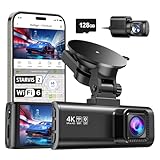
- [4K+1080P Front & Rear Recording] REDTIGER F7NP dash cam captures every detail with stunning 4K front and 1080P rear video. Featuring the advanced STARVIS 2 sensor plus the 170° front and 140° rear wide-angle lens, this dash camera delivers sharper images, balanced lighting, and reliable evidence day or night. Ideal for commuting, road trips, rideshare drivers, and new drivers.
- [STARVIS 2 Sensor & WDR Night Vision] Equipped with the advanced STARVIS 2 sensor, F1.5 large aperture, and 6-layer optical lens, F7NP 4K dual dash cam delivers clear, high-contrast footage in any lighting. WDR and HDR technology balance highlights and shadows, ensuring sharp night vision and crisp details day or night, providing reliable evidence and enhanced safety for every drive.
- [Built-in 5.8GHz WiFi & Smart App] Connect your smartphone to the dashcam’s built-in 5.8GHz WiFi to enjoy ultra-fast downloads up to 20MB/s. Using Redtiger Cam app, you can preview, download, and replay videos in real time, check GPS ata (route, speed, and location), and manage settings effortlessly, making it simple to review footage and share important moments.
- [Loop Recording & Free Memory Card] This car camera supports seamless loop recording to ensure continuous coverage without interruption. Older files are automatically overwritten when storage is full, while important events are safely locked. A free memory card is included, giving you ample space for 4K recordings and allowing you to use the camera right out of the box.
- [24/7 Parking Mode* & G-Sensor] Enjoy round-the-clock protection with two parking modes: time-lapse recording for continuous low-bitrate monitoring and G-sensor mode that records when collision is detected. The car security camera with G-sensor automatically locks important clips, ensuring crucial evidence is safely preserved even while your vehicle is parked.(*Hardwire kit needed.)
The existence of PE25012 is not a finding that Tesla FSD is defective or unsafe. A preliminary evaluation is an investigative step. However, it creates material regulatory risk: NHTSA can request additional information, expand the investigation, require software or warning changes, or pursue a recall if it concludes that a vehicle or system presents an unreasonable safety risk.
That investigation also shows why branding a product “unsupervised FSD” does not settle the legal issue. If Tesla moves from a supervised driver-assistance product to a driverless fleet, regulators will examine not only what the system can do, but also how it communicates limitations, handles edge cases, detects traffic controls, and responds when a passenger cannot intervene.
Cybercab raises a separate vehicle-certification problem
A driverless service using an ordinary vehicle with a steering wheel and pedals is one regulatory scenario. A purpose-built Cybercab designed without normal driving controls is another.
In June 2026, NHTSA commenced rulemaking that would remove manual brake-control requirements for vehicles designed never to be operated by a human. The proposal would preserve stopping-distance requirements and would retain existing requirements for vehicles that do have manual controls. NHTSA described the action as part of an evolving automated-vehicle framework and said it was separately developing real-world AV performance requirements.
This could reduce a specific mismatch between existing equipment rules and a vehicle that has no human driver. It is not the same as permission to sell or operate every control-free autonomous vehicle. Several questions remain separate:
- Whether the rulemaking becomes final and in what form;
- Whether Cybercab satisfies all other applicable Federal Motor Vehicle Safety Standards;
- Whether Tesla needs an exemption for any remaining equipment conflict;
- Whether Tesla can certify the vehicle’s manufacturing and safety compliance;
- Where the vehicle may legally operate under state law;
- How passenger safety, emergency response, accessibility, and remote assistance will work; and
- Whether NHTSA later identifies a safety defect requiring corrective action.
In other words, changing a brake-control requirement may make the vehicle design legally possible. It does not certify Tesla’s complete robotaxi business model.
Why the rollout is geographically slow
Autonomous-vehicle approval is usually tied to an operational design domain, or ODD. The ODD defines where and under what conditions the system is intended to operate. Relevant limits can include:
- Specific roads, neighborhoods, airports, or service zones;
- Maximum speed;
- Time of day;
- Weather and visibility;
- Road type and lane configuration;
- Construction or mapped-road conditions; and
- Whether a safety driver, remote operator, or other support is available.
California’s published automated-vehicle tables illustrate this point by identifying approved locations, operating times, weather conditions, and speed limits for individual companies. Tesla’s own filings similarly describe a staged expansion: Austin was ramping unsupervised, Dallas and Houston were added later, and additional markets such as Phoenix, Las Vegas, and Florida were described as preparation or planned coverage in earlier updates.
Free tools Windows power users keep installed
One-click scans. No signup required.
This is why a robotaxi launch should always be described with four details: city, vehicle, fleet mode, and human-support arrangement. “Tesla has unsupervised FSD” is too broad to be meaningful. “Tesla is offering a limited Robotaxi service in a defined Austin zone without a safety monitor in the vehicle” tells the reader much more.
Independent reader supportYour contribution helps us test, update, and keep practical guides available for everyone.The red-tape risks that matter most
1. California DMV status
The first major milestone is whether Tesla obtains a California permit for driverless testing and then a separate deployment permit. Its current listing for testing with a driver is not equivalent to either authorization.
2. California CPUC passenger authority
Tesla must also navigate the CPUC’s passenger-service requirements, including the applicable deployment program, passenger-safety plan, remote-operator communication, fare rules, and other operating obligations.
3. The outcome of PE25012
NHTSA’s FSD investigation could close without enforcement, expand into a broader review, or result in required warnings, software changes, or a recall. Until the agency reaches a conclusion, it is inaccurate to describe the investigation as a final safety verdict—but it is equally inaccurate to ignore it.
Do these 3 things before closing this tab:
1Repair Windows errors before they cause bigger problems2Scan for outdated or missing drivers - takes under a minute3Clear out junk files and repair common Windows errors4. The quality of crash reporting
As Tesla’s fleet grows, regulators and the public will care whether reports are timely, complete, and consistently classified. A growing number of reported incidents can partly reflect a larger fleet and broader reporting, so raw totals require context. Incomplete or inconsistent reporting would create a separate compliance and credibility problem.
5. Cybercab certification
NHTSA’s June 2026 action is a rulemaking start, not a final Cybercab exemption. Tesla still has to address the full federal certification picture and any state-level operating requirements.
Rank #4

- 【1296P front recording and night vision】 The V300 front dash cam records in 2304 x 1296P to capture everyday road details with greater clarity than standard 1080P. A 170° wide-angle lens covers multiple lanes, while the F1.7 aperture and 6-layer glass lens help improve visibility during nighttime driving and other low-light conditions.
- 【WiFi app control 】Connect your phone to the dash camera’s built-in Wi-Fi and use the VeeCar app to preview live video, play back recordings, download clips, and share files. The Wi-Fi connection is local and does not provide internet access; this dash camera for cars still requires a power cable during use.
- 【Advanced Safety Engineering】Designed with your safety in mind, Veement V300 mini dash cam incorporates an RTC circuit and eliminates traditional lithium batteries to prevent overheating. This dedication to safety guarantees reliable performance under various conditions, requiring only a continuous USB-C power supply.
- 【Seamless Connectivity & Easy Operation】Utilize the built-in WIFI and exclusive VeeCar APP to effortlessly control your WiFi front dash cam. From real-time previews to straightforward video downloads, edits, and shares, Veement V300 dash camera for cars offers an intuitive interface for managing your driving footage.
- 【Advanced Features for Complete Protection】Take advantage of cutting-edge TS stream technology in this WiFi dashcam for fast and reliable video storage. Supporting up to 256GB SD cards, seamless loop recording, and 24/7 parking mode, Veement V300 car dash cam provides comprehensive security. Its user-friendly operation ensures a seamless experience. (Note: SD card not included, must be purchased separately).
6. Expansion beyond the initial geofences
A system that works in a restricted part of Austin is not automatically approved—or necessarily ready—for every road in Texas, much less every city in the country. Each expansion can add new road designs, weather, traffic patterns, emergency procedures, and permitting questions.
7. Passenger-service obligations
Once Tesla carries paying passengers at scale, issues that are less visible in a software demonstration become central: commercial insurance, accessibility, emergency assistance, remote intervention, passenger complaints, incident reporting, vehicle cleaning and maintenance, and responsibility after a crash.
What Tesla’s Texas progress does not prove about California
Texas progress is evidence that Tesla has found a workable early operating environment. It is not evidence that California regulators must approve the same service, that Tesla has a national license, or that a California TCP permit authorizes fully driverless rides.
The states are answering different questions. Texas has established a statutory framework under which the automated system can operate without a physically present human driver. California asks for more specific permission at multiple stages and places passenger-service requirements alongside vehicle-testing and deployment rules. Federal agencies remain capable of intervening in either state.
The same vehicle can therefore be legal in one city and unavailable in another without any contradiction. The difference may arise from state permits, passenger-service authority, the approved ODD, insurance, vehicle configuration, or the presence of a safety monitor—not necessarily from a single judgment about whether the software is “autonomous.”
How to read Tesla’s future announcements
When Tesla announces a new city or a new level of supervision, look for the details behind the headline:
- Is this consumer FSD or a Tesla-operated Robotaxi fleet? Consumer FSD remains supervised according to Tesla’s documentation.
- Is the ride driverless, or merely hands-off for a supervised driver? Those are legally and operationally different.
- What vehicle is being used? A modified conventional Tesla and a control-free Cybercab raise different federal questions.
- What is the exact service area? A geofence can be much smaller than a city or metropolitan area.
- Are hours and weather restricted? Limited operating conditions are part of the system’s ODD.
- Is a safety monitor in the vehicle? The removal of a monitor from some rides does not establish that all rides operate without one.
- Is there a state AV permit and a passenger-service permit? A carrier or TCP permit alone does not prove driverless deployment authority.
- What continuing oversight applies? Crash reports, investigations, software updates, recalls, insurance, and passenger-protection duties continue after launch.
Bottom line
Tesla’s fastest route to unsupervised robotaxi scale is currently the Texas model, where state law expressly contemplates automated operation without a human physically present. The harder challenge is turning a limited, geofenced Texas service into a repeatable national business.
To do that, Tesla must navigate California’s separate DMV and CPUC pathways, comply with federal safety and crash-reporting requirements, manage the consequences of NHTSA’s FSD investigation, and solve the certification problem presented by a vehicle designed without conventional controls. The red tape is not one roadblock. It is a sequence of permissions and accountability mechanisms that become more demanding as Tesla moves from supervised driver assistance to paid, driverless passenger transportation.
Frequently Asked Questions
Is Tesla FSD already fully autonomous?
No. Tesla’s consumer FSD (Supervised) documentation says an attentive driver remains responsible and must be ready to take over. A driverless Robotaxi fleet is a separate operating model, even if it uses related Tesla software.
Why can Tesla operate driverless Robotaxis in Texas?
Texas Transportation Code section 545.455 allows an automated motor vehicle to operate with its automated driving system engaged even when a human driver is not physically present. That does not remove federal safety rules, insurance, registration, commercial-transportation obligations, traffic-law duties, crash reporting, or liability.
What’s actually slowing this PC down?
Pick the symptom - the matching free tool is one click away.
Does Tesla have approval to operate fully driverless Robotaxis in California?
Not on the basis of the cited permit alone. Tesla Robotaxi LLC is listed as holding a California DMV permit to test with a driver, but the cited DMV update does not list Tesla among manufacturers authorized for driverless testing or deployment. A California TCP permit reference also does not independently prove fully driverless Robotaxi authorization.
Has NHTSA ruled that Tesla FSD is unsafe?
No. PE25012 is a preliminary evaluation opened by NHTSA in October 2025. It examines allegations and reported incidents involving Tesla FSD, but it is not a final determination that the system is defective or unsafe. The investigation could close, expand, or lead to corrective action depending on NHTSA’s findings.
Did NHTSA approve Tesla Cybercab?
Not yet. NHTSA commenced rulemaking in June 2026 to consider removing manual brake-control requirements for vehicles designed never to be operated by a human, while preserving stopping-distance requirements. That rulemaking is not the same as a final Cybercab exemption or approval to operate the vehicle everywhere.
The Bottom Line
Bottom line: Texas law gives Tesla a relatively clear path to limited driverless operation, but it does not create a national robotaxi license. California permits, CPUC passenger rules, NHTSA reporting and defect authority, vehicle certification, insurance, and operating-domain limits will determine how far Tesla can scale.
Quick Recap
Product prices and availability are accurate as of the date/time indicated and are subject to change. Any price and availability information displayed on Amazon at the time of purchase will apply.




