Recommended Free Tools
ADAS can build a more useful picture of nearby traffic by combining data from different sensors instead of relying on one measurement stream alone. Camera-and-radar fusion, for example, can support vehicle tracking and functions such as adaptive cruise control (ACC) and automatic emergency braking (AEB). The benefit is conditional: it depends on what the sensors measure, how the system matches and combines their readings, the scenarios it has been evaluated in, and how it responds when a sensor degrades.
What multi-sensor fusion adds to ADAS
A camera, radar, or other sensor observes the road in a different way. Sensor fusion brings those measurements together to form an environmental model: an estimate of what is around the vehicle and how relevant objects are moving. That model can give an ADAS function more useful information than an individual sensor provides on its own.
For example, a camera-and-radar tracking system can combine detections from a front radar and a smart camera to track multiple vehicles. SAE International’s 2022 study describes this kind of post-fusion approach and reports validation in a real highway scenario. Camera-radar fusion is also discussed in safety-critical assistance research in connection with AEB and the integrity of the environmental model. These examples establish potential uses, not a guarantee that every fused system will perform better in every situation.
From sensor readings to a driving function
- Measure: Sensors produce observations of the scene. Those observations differ in what they measure and how accurately they measure it.
- Associate: The system decides which observations from different sensors are likely to refer to the same object. Incorrect matching can undermine the combined estimate.
- Track: The system maintains an estimate of an object’s position or movement over time, rather than treating each observation as an isolated detection.
- Use the environmental model: ADAS functions such as ACC or AEB can use the tracked scene to support their operation.
Why camera and radar measurements can complement each other
The sensors are not interchangeable: their relative strengths depend on the hardware, setup, and task. In a 2018 SAE International vision-radar tracking study, vision had higher azimuth accuracy while radar had higher range accuracy in that study’s setup. The authors also examined how data association and the design of the association gate affected tracking results. Those findings should not be generalized into a claim that cameras always measure direction better or radar always measures distance better.
Do these 3 things before closing this tab:
1Fix the driver behind crashes, sound loss and screen glitches2Clear out junk files and repair common Windows errors3Scan for outdated or missing drivers - takes under a minute#1 Best Overall

- Universal Compatibility: Fit for Honda, Toyota, Kia, and Ford vehicles,Whether you're a professional mechanic or a DIY enthusiast, this kit is designed to meet your ADAS calibration needs.Please confirm whether it meets your car model
- Calibration Kit: Enhance the safety and performance of your vehicle's advanced driver-assistance systems (ADAS) with this ADAS targeting reflector and stand kit, perfect for calibration tasks.
- The ADAS aiming corner reflector is a precisely engineered conical metal trihedron,that durable billet aluminum ensures that reflector maintains its shape and calibration accuracy over time. Type 18-8 stainless steel stand keeps stand stabilized on uneven surfaces.The ANGSO-AUTO ADAS calibration tool kit providing a reliable and consistent target for your vehicle's systems.
- Maximize ADAS Efficiency: The height-adjustment bracket features a clear scale from 0-30cm, enabling fast and precise adjustments. Say goodbye to time consuming guesswork and other tools helper . This tool reducing calibration time and improving the overall ADAS calibration experience.
- Easy Assembly: No special skills or complex tools required – just follow a few simple steps to set up the stand. It's designed with ease in mind, ensuring that even those with minimal DIY experience can assemble it with confidence and speed.
The broader lesson is that fusion quality depends on more than the number of sensors. A system must decide which measurements correspond to the same target and how to combine them. An association rule that is too restrictive can fail to match relevant observations; one that is too permissive can combine observations that do not belong together. The appropriate design depends on the sensor configuration and the targets and scenarios the ADAS is meant to handle.
What published car-following figures show—and what they do not
A 2020 SAE International road-test evaluation, “Experiment and Evaluation on Multi-Sensor Fusion Data of Car-Following Scenarios,” reported average relative tolerances for longitudinal distance and velocity across four groups. The figures are results for that study’s car-following evaluation, not a universal specification or a prediction of production ADAS accuracy.
Rank #2
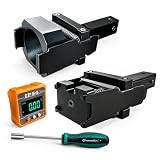
- 1.Dual Radar Compatibility: The Planar Radar Alignment Tool and Eyeball Radar Calibration Tool functions are combined in one setup, allowing professional technicians to work with both radar unit styles without switching to separate positioning fixtures.
- 2.ACC And Lane Assist Calibration: The Dynamic Angle Leveling Kit supports radar positioning during ACC dynamic calibration and Lane Assist Calibration Tool procedures, helping technicians establish the required sensor position during professional vehicle service.
- 3.Digital Angle Reference: The included digital inclinometer provides a clear numerical angle display while technicians adjust radar position and leveling. It helps reduce reliance on visual estimation during setup without adding unverified accuracy claims.
- 4.Controlled Radar Adjustment: The Radar Sensor Adjustment Tool setup combines the positioning fixture, digital inclinometer, and dedicated screwdriver so technicians can check angle changes and make controlled adjustments during calibration work.
- 5.Built For Professional Repair Bays: Durable metal construction supports repeated shop use, while the complete setup works as a Collision Repair ADAS Tool for body shops, independent repair facilities, and professional calibration specialists.
| Road-test group | Average relative longitudinal distance tolerance | Average relative longitudinal velocity tolerance |
|---|---|---|
| 1 | 0.99% (SAE International, 2020 car-following road test) | 1.68% (SAE International, 2020 car-following road test) |
| 2 | 1.07% (SAE International, 2020 car-following road test) | 1.99% (SAE International, 2020 car-following road test) |
| 3 | 0.99% (SAE International, 2020 car-following road test) | 2.30% (SAE International, 2020 car-following road test) |
| 4 | 1.12% (SAE International, 2020 car-following road test) | 2.66% (SAE International, 2020 car-following road test) |
The figures help show that performance can differ by metric even within one evaluation: the reported distance tolerances are not the same as the velocity tolerances. The available study summary does not define what distinguishes the four groups, so the group labels should not be read as particular sensor configurations or operating conditions.
More sensors do not guarantee continued assistance
Sensor redundancy can help a system retain useful information when one input is impaired, but it does not ensure uninterrupted ADAS operation. A U.S. Department of Transportation study of camera, radar, and lidar degradation found outcomes that varied with the type and extent of degradation and with redundancy, including fusion. Depending on those factors, a feature could shut down, operate with degraded performance, or show no impact.
Rank #3

- 1.Vehicle Compatibility: HUPILAN ADAS calibration tool Compatible with Honda/Toyota/Lexus/Ford/Kia and Mazda vehicles with ADAS systems. Please verify your vehicle model before ordering.
- 2.Complete Radar Calibration Kit: This HUPILAN Radar Calibration Kit Includes radar corner reflector target, 0-30cm scale stand and C-shaped clamp, designed for automotive radar aiming and ADAS calibration setup.
- 3.18-8 Type Stainless Steel Stand: Crafted from 18-8 type stainless steel for strong support, corrosion resistance and stable performance during repeated workshop use.
- 4.Adjustable Scale & Secure Clamp: Clear 0-30cm side scale helps adjust reflector height quickly, while the C clamp locks the target securely for accurate positioning.
- 5.Stable Base for Precise Setup: Wide support base with 4 white anti-slip feet and 3 black locking knobs helps reduce wobble and keep the calibration target steady.
For drivers, the important distinction is between having multiple sensors and having a system that can detect and manage degraded inputs safely. A fused system still needs to respond appropriately when measurements are missing, unreliable, or inconsistent. Sensor count alone does not establish what the vehicle will do in those circumstances.
How to compare claims about fused ADAS
A useful comparison asks what was measured, how measurements were combined, and under which conditions performance was evaluated. Avoid treating “sensor fusion” as a single capability with one predictable result.
Rank #4

- Build a 37-Module Sensor Lab: Add motion, distance, light, sound, temperature, touch, display and control functions to compatible UNO, MEGA, Nano, ESP-32 or STM32 projects for prototyping, classroom experiments and maker builds
- Explore Input Sensors and Motion: Experiment with GY-521 motion sensing, PIR detection, ultrasonic ranging, temperature and humidity, DS18B20, flame, Hall, touch, light, sound, tilt, tracking and obstacle-avoidance modules
- Add Displays, Timing and Control: Use the LCD1602, DS1307 real-time clock, joystick, rotary encoder, relay, buzzers, RGB LEDs and infrared modules to build clocks, alarms, counters, status displays and automated projects
- Follow Guided Projects Materials: Use digital tutorial materials, datasheets, wiring diagrams and example code for compatible UNO R3, MEGA 2560 and Nano boards, then adjust thresholds, timing and logic to create custom experiments
- Module-Only Expansion Kit: Controller board, USB cable, breadboard and jumper wires are not included; use 6.5–9 V DC only with the included power module, verify pin requirements before wiring and keep the laser emitter away from eyes
- Sensor modalities and measurement strengths: Identify which sensors are used and what each contributes in the tested setup. A study-specific camera-versus-radar result is not a universal ranking.
- Fusion and data association: Look for how the system matches observations across sensors and constructs or updates tracks. Association and gate design can affect results.
- Target and scenario: Check whether evaluation covers car following, multiple-vehicle tracking, pedestrians, or other situations relevant to the stated ADAS function. Results from one scenario do not establish performance in another.
- Metric and test conditions: Distinguish distance error or tolerance from velocity error or tolerance, and check whether the figures come from a road test or another evaluation. A number without its metric and scenario is difficult to interpret.
- Degraded-sensor behavior: Ask whether the system reduces performance, disables a feature, or continues without an observed impact when an input is impaired—and under what conditions.
NHTSA’s November 18, 2024, New Car Assessment Program final decision notice summarizes commenters’ views on sensor field of view, pedestrian scenarios, sensor combinations, and false-positive and false-negative trade-offs. These are stakeholder positions recorded in the notice, not an agency finding that one sensor stack is superior. They illustrate why comparisons should account for both scenario coverage and the cost of missed detections and false alerts.
Independent reader supportYour contribution helps us test, update, and keep practical guides available for everyone.Which sensor combination is best?
The available evidence does not establish one universally superior sensor combination. Camera-and-radar fusion has been studied for tracking and for ADAS applications such as ACC and AEB, while broader automated-driving surveys consider radar, lidar, cameras, ultrasonic sensors, GPS, IMUs, and V2X. The relevant choice depends on the measurements a function needs, the fusion and association design, the scenarios evaluated, and how the system handles degraded inputs. A credible performance claim should make those conditions clear rather than relying on sensor count alone.
PC Slower Than It Used to Be?
A free scan shows the junk files, broken settings and background clutter dragging Windows down - then fixes them in one click.Free scan · Windows 10 & 11Crashes, No Sound, or Screen Glitches?
Random freezes, missing sound and display glitches usually trace back to one bad driver. Find and replace yours safely.Free scan · under a minuteQuick Recap
Best Value
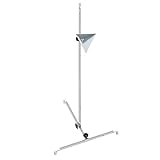
- 【Includes Radar Aiming Corner Reflector Target with Stand 】 Features a 0-30cm scale for easy height adjustment, ensuring optimal radar calibration for vehicles with ADAS.
- 【Professional ADAS Calibration Tool Kit】 The ANGSO-AUTO tool kit ensures precise calibration for advanced driver assistance systems (ADAS), helping auto mechanics achieve accurate sensor alignment.
- 【Durable & Portable Design】 Made for auto mechanics, this ADAS Calibration Tool Kit is lightweight yet sturdy, perfect for workshop or mobile service use.
- 【Universal Compatibility】Works with ADAS-equipped vehicles,compatible with Honda, Toyota, Mazda, Kia, Ford, GM and Hyundai,Designed for most mid-size and standard vehicles. Not intended for large trucks, vans, or SUVs.Please ensure that your vehicle model is the mentioned compatible model.
- 【 Easy Setup & Reliable Accuracy 】 The included stand and reflector target simplify the calibration process, delivering consistent, professional-grade results every time.
Product prices and availability are accurate as of the date/time indicated and are subject to change. Any price and availability information displayed on Amazon at the time of purchase will apply.




