There is no single cost to charge an electric car: multiply the electricity added in kilowatt-hours (kWh) by the rate you pay, then add any applicable charging, parking, or other fees. For a dated U.S. benchmark, residential electricity averaged 17.30¢/kWh in 2025, but local rates and public-charging prices vary widely. Your utility tariff and the station’s current pricing are the best inputs for a personal estimate.
How to calculate the cost to charge an electric car
For a charging session, use:
Session cost = kWh added × price per kWh + applicable fees
The kWh added is the electricity replenished during that session—not necessarily the battery’s full capacity. A session may also involve time-based, per-session, subscription, parking, or service fees. Add those separately rather than treating the posted energy rate as the entire cost.
Estimate running cost per mile
To compare the electricity cost of different vehicles or charging rates, use:
#1 Best Overall

- Road-Trip Ready & Apartment-Friendly: Comes with a 20ft heavy-duty cable that easily spans a standard parking space, plus a NEMA 5-15 adapter for plug and play convenience. Whether you're charging at home or hitting the highway, this portable EV Charger is your ultimate travel companion for weekend getaways and camping trips
- Delay Timer & Adjustable Current: Use the built-in timer to delay your start by 1-12 hours and easily harvest off-peak energy savings. Then pick from 6/8/10/12/16A (Level 2) to match your garage grid. It automatically locks in your favorite setting and never forces you to re-adjust. No complicated apps or Wi-Fi needed, just straightforward, reliable control
- Tactile Buttons & LED Screen: No glitchy smartphone apps or finicky touchscreens that lag, freeze, and misfire in winter. Our EV charger is engineered with a high-definition LED display that tracks critical real-time data, including live voltage and current. Tactile buttons deliver direct, satisfying click feedback that remains highly responsive even when wearing heavy winter gloves or operating in torrential downpours—conditions where standard touchscreens completely fail
- ETL Certified Safety & IP65 All-Weather Shield: ETL certified to meet US safety standards for charging. Engineered with a certified IP65 dust-and-waterproof enclosure and a heavy-duty TPE cable that operates reliably across a wide -22°F to 130°F range. An intelligent multi-protection defense system (GFCI, over-voltage, over-current, surge, short-circuit, and over-temp) keeps a 24/7 watch for 100% safe, unattended overnight charging in any weather
- J1772 Compatible + Dual-Level Charging: Works with all J1772 EVs (Tesla requires a separate J1772 adapter). Level 2: built-in NEMA 6-20 plug. Level 1: included NEMA 5-15 adapter fits any standard outlet. Please confirm your outlet is NEMA 6-20 or 5-15 before purchase
Cost per mile = (vehicle consumption in kWh per 100 miles × electricity price per kWh) ÷ 100
For example, the U.S. Department of Energy’s Alternative Fuels Data Center (AFDC) illustrates that a vehicle using 27 kWh per 100 miles at 10.7¢/kWh costs about 3¢ per mile. That is an example calculation using an assumed electricity rate, not a current national price. DOE AFDC: Developing Infrastructure to Charge Electric Vehicles
Rank #2

- Flex Level 1 EV Charger - The EVDANCE Level 1 electric car charger is compatible with J1772 electric vehicles and plug-in hybrid vehicles (North American Standard). *Tesla requires a SAE J1772 adapter.
- Convenient to Use - This charger has both NEMA 6-20 plug for 16A 240V charging (3.68kW, 10-12 mi/h) and a NEMA 6-20 to 5-15 plug adapter for 12A 120V charging (1.44kW, 2-5 mi/h). The included bag makes it easier to carry on the go. It also has a 25ft cable length, you can use it flexibly from anywhere in the garage or driveway.
- Check Your Outlet Type -This charger works with standard 120V NEMA 5-15/5-20 outlets (2-5 mph charging speed) and 240V NEMA 6-20 outlets (10-12 mph) . It's not compatible with NEMA 6-15/10-30/14-30/14-50/6-50 outlets – you'll need a NEMA 14-50/14-30/10-30/6-50 to 6-20 adapter (sold separately) to connect.
- Compatible EV Models -This EV charger works with most major electric vehicles, including Ford, Chevrolet, Hyundai, Audi, Nissan Ariya, Rivian R1S, Kia, and others. However, it's not compatible with Mini Cooper Electric Hardtop,Toyota Prus Prime/Z4X/RAV4Prime, Porsche Taycan Base/4S/Turbo/Turbo S or Tesla models (Tesla requires a J1772 to Tesla Adapter, sold separately). For a full list of compatible models, check out the Full Compatibility List on our product page.
- Indication Displays - LED display that can tell you the status as well as indicate errors while charging your electric vehicle.
Why a full-charge estimate can mislead
AFDC also illustrates a roughly $6 charge for an assumed 54-kWh battery, described as a vehicle with a 200-mile range, at 10.7¢/kWh. That example assumes the battery is fully depleted and then replenished; most charging sessions start with some charge remaining. The actual electricity purchased depends on the starting and ending state of charge, vehicle, and charging losses. DOE AFDC: Developing Infrastructure to Charge Electric Vehicles
What U.S. electricity and charging prices looked like
The latest annual U.S. electricity figures in the cited benchmark are for 2025. The U.S. Energy Information Administration (EIA) reported a 13.63¢/kWh average across customer classes and a 17.30¢/kWh residential average. The state annual averages ranged from 8.20¢/kWh in North Dakota to 35.72¢/kWh in Hawaii. EIA published these figures in 2026 using preliminary February 2026 Electric Power Monthly data, so they are benchmarks—not a substitute for your current bill or tariff. EIA: Electric Power Monthly
Do these 3 things before closing this tab:
1Scan for outdated or missing drivers - takes under a minute2Clear out junk files and repair common Windows errors3Fix the driver behind crashes, sound loss and screen glitchesRank #3
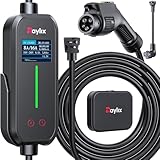
- [2026 INTELLIGENT CHARGING UPGRADE — PRECISION CONTROL MEETS SMART SCHEDULING] After surveying 100K+ U.S. EV owners, the Raylix R&D team found that nearly all drivers recognized the necessity of adjustable current and scheduled charging. Our upgraded J1772 charger features 4-level adjustable current (8A/10A/12A/16A) and a 1–12 hour smart delay timer. Whether you're charging overnight or during off-peak hours, enjoy smarter energy use, lower costs, and total convenience—on your schedule.
- [ONE CHARGER, ALL J1772 EVs/PHEVs READY!] Compatible with all SAE J1772 electric vehicles and plug-in hybrids—whether it’s Ford, GM, Nissan, Audi, BMW, Kia, Hyundai, Honda, Chevy, or more. Perfect for home or on-the-road charging, our 16A Level 1 & 2 charger ensures your EV is always powered and ready for any journey.
- [CHARGE 4× FASTER — NO MORE WAITING] In a rush? Our 16A Level 1 & 2 charger delivers charging speeds up to 4× faster than standard 8A Charger Level 1. Whether it's an early commute, a spontaneous trip, or last-minute errands, your EV will be ready when you are.
- [LEVEL 1 & 2 PORTABLE CHARGER — CHARGE ANYWHERE, ANYTIME] Designed for maximum flexibility, Raylix Level 1 & 2 EV charger features both 5-15 and 6-20 plug compatibility. Whether you're charging in your garage, at a friend's house, or at a roadside motel. NEMA 6-20 plug for Level 2 ev charging (240V, 16A, 3.68kW, 9-12 miles/hr) and a NEMA 5-15 adapter for Level 1 ev charging (120V, 12A, 1.44kW, 3-5 miles/hr) NOTE: In compliance with North American electrical safety standards, the charger automatically limits current to 12A when using a 5-15 outlet—protecting both your vehicle and your home’s electrical system.
- [AT-A-GLANCE CHARGING COMMAND: TOTAL CONTROL, INSTANTLY] While most ev chargers solutions confine vital data to in-car screens, the Raylix tesla charger breaks free with its enhanced TFT color display. This Raylix-exclusive feature delivers crystal-clear, real-time updates—voltage, current, power load, AND critical charging temperature—directly on the unit. Just one glance gives you complete charging insight. It’s not just information; it's the empowering peace of mind and satisfying control that transforms every charge into a masterfully managed experience.
For charging-location comparisons, DOE’s AFDC report published in 2025 gives approximate U.S. average prices based on 2024 inputs. These are dated reference points rather than current quotes from a specific utility or charging network.
| Charging option | Approximate benchmark | What it represents |
|---|---|---|
| Home or private AC Level 2 | About $0.17/kWh | Approximate 2024 average price reported in a 2025 DOE AFDC report. |
| Public AC Level 2 | $0.20–$0.25/kWh | Approximate 2024 average price reported in a 2025 DOE AFDC report. |
| Public DC fast charging | $0.40–$0.60/kWh | Approximate 2024 average price reported in a 2025 DOE AFDC report. |
Actual public charging prices and fee structures vary by location and provider. A station may bill by kWh, time, session, or subscription, and may add fees. Check the station’s current terms before estimating a visit. DOE AFDC: Developing Infrastructure to Charge Electric Vehicles DOE AFDC: Electric Vehicle Charging Infrastructure Trends
Rank #4

- SAE J1772 Standard Charger: Compatible with all North American electric vehicles and plug-in hybrids, including Ford, Chevrolet, Nissan, BMW, Volkswagen, Hyundai, Kia, Audi, Mercedes-Benz, Rivian, Porsche, Toyota, Honda, Jeep, and GMC. Tesla vehicles can be charged with a separate SAE J1772 adapter (sold separately).
- Adjustable Current: Choose from 8A, 10A, 13A, or 16A to match your vehicle’s charging needs.Dual Plug Compatibility,NEMA 6-20 Plug (220/240V): Delivers up to 3.84 kW/h, providing approximately 15.36 MPH charging speed at 16A.NEMA 5-15 Plug (110/120V): Supports 10A charging at 120V, offering 1.2 kW/h (around 4.4 MPH). Customizable Charging: Easily adjust current to suit different charging scenarios, giving you maximum flexibility at home or on the go
- Hassle-Free Installation: Forget complicated setups—just plug in and go. Equipped with NEMA 5-15 and NEMA 6-20 (220V/240V) connectors, it works with any standard 110V–240V outlet. The 25-foot cable gives you the freedom to reach vehicles parked at a distance, making charging convenient anywhere.
- Intelligent Charging: Featuring a 2.8-inch touch display, you can easily select the charging current (8A / 10A / 13A / 16A) and schedule charging with a 1–12 hour delayed start. Perfect for maximizing off-peak hours and cutting electricity costs. (Example: Set a 2-hour delay, and charging begins automatically after 2 hours.)
- Comprehensive Safety: Designed to meet CE and FCC safety standards, this charger offers multiple layers of protection, including overvoltage, overload, short-circuit, grounding, and leakage safeguards. The durable IP65-rated waterproof housing and reinforced cable ensure reliable charging in all weather conditions, keeping your vehicle safe year-round.
How much does it cost to charge an electric car at home?
Multiply the kWh added by the price on your electricity bill or applicable utility tariff. If you have a time-of-use plan, the rate may depend on when you charge; overnight charging can be cheaper where the utility offers a lower off-peak rate. Use the actual schedule and terms for your service, not the national average.
Home charging is typically less costly than public charging, but the difference depends on your local electricity rate and the station prices you would otherwise pay. EPA explains that home charging appears on the monthly electric bill like other household electricity use. EPA: Plug-in Electric Vehicle Charging at Home
What’s actually slowing this PC down?
Pick the symptom - the matching free tool is one click away.
Best Value
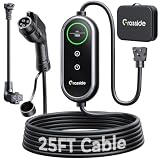
- Universal J1772 Compatibility: Designed with a standard J1772 connector, this J1772 charger works with most J1772 electric vehicles and PHEVs, including BMW, Mercedes-Benz, Hyundai, Kia, Nissan, Rivian, Ford, Chevy, Volkswagen, Toyota and more. Note: Tesla vehicles require a J1772 to Tesla adapter (not included)
- Flexible Outlet Compatibility: This portable EV charger comes with a NEMA 6-20 plug and a NEMA 5-15/5-20 to 6-20 adapter. Supports Level 1 (8–12A) and Level 2 (16A). Max 12A (1.44kW) on 120V NEMA 5-15/5-20 outlets, and full 16A (3.84kW) with a 240V NEMA 6-20 outlet. One charger is designed to cover home, garage, and travel charging needs with reliable performance
- Adjustable Smart Charging Control: Customize charging safely with adjustable current settings (8A/10A/12A/16A) to match different circuits. The 0–12 hour delay timer helps schedule overnight charging during lower electricity rates. Integrated LCD display shows real-time voltage, current, power, and charging status for clear monitoring without apps. Note: Press 'A' or 'T' for 3s to set and confirm.
- Home Charging & Travel Backup: For daily home use while remaining fully portable for travel. This level 1 ev charger includes a durable 25FT ev charging cord, providing flexible reach for garage or driveway charging. Charge overnight to take advantage of lower utility rates—potentially saving up to $500 annually on electricity costs. The included carrying case makes storage easy and keeps a dependable backup charger available in your trunk for road trips or visiting friends
- Engineered For Safety & Durability: Built for dependable daily use, this electric car charger features an IP65 waterproof rating for all weather operation. Equipped with a UL-listed cable, fully rubberized connector, and advanced protection against overcurrent, overheating, and electrical faults. Designed to ensure safe, stable, and long-term charging performance in demanding environments
What changes the total cost?
- Local electricity rate: State and utility prices vary substantially. A bill or current tariff is more useful for your estimate than a national mean. Time-of-use rates can change the cost depending on charging time.
- Vehicle efficiency and energy added: A less efficient vehicle uses more kWh for a given distance. A charging session also depends on how much energy the battery needs, not simply its rated capacity.
- Charging location and speed: The dated DOE benchmarks are higher for public AC Level 2 and especially public DC fast charging than for home/private AC Level 2. A station’s advertised maximum DC charging power does not guarantee that speed for every vehicle; the vehicle can accept power only up to its own charging capability. DOE AFDC: Electric Vehicle Charging Infrastructure Trends
- Public fees and billing method: Public charging may be free or billed by energy, time, session, or subscription. Parking and other fees may apply, so check the specific station’s terms. DOE AFDC: Electric Vehicle Charging Infrastructure Trends
Home charging equipment and installation are separate costs
Electricity used to charge the car is an ongoing expense. Buying equipment and preparing the home’s electrical system are separate, potentially one-time costs. DOE’s consumer guidance gives a typical Level 2 equipment range of $500–$4,000 before installation and incentives; it is a guide range, not a vendor quote. Installation, electrical upgrades, permits, and local code requirements can change the total. DOE AFDC: Electric Vehicles for Consumers
A dedicated Level 2 charger is not automatically necessary: some vehicles include a cordset for Level 1 charging. Whether Level 1 meets your needs depends on your vehicle and charging routine. If considering Level 2 equipment, check vehicle compatibility, connector, electrical capacity, charging needs, certification, installation, local code, and any available incentives. DOE recommends ENERGY STAR-rated products and equipment certified by a nationally recognized testing laboratory. Check with your utility and an electrical contractor for cost estimates before installation. DOE AFDC: Electric Vehicles for Consumers
How to compare EV charging with gasoline
Compare costs using the same distance and your own prices: estimate EV electricity cost from vehicle consumption and your electricity rate, and use local fuel prices and realistic driving habits for the gasoline vehicle. EPA points drivers to FuelEconomy.gov’s calculator to personalize fuel costs and compare across time periods. A general savings claim is not meaningful without specifying the vehicles, local energy prices, and miles driven. FuelEconomy.gov: Find and Compare Cars
Check local rates, fees, and incentives
Utility schedules, public charging prices, equipment costs, and incentives can change. Check your utility’s EV rate and any applicable time-of-use schedule before estimating home charging. For Level 2 installation, EPA says federal, state, or utility incentives may be available, including for required electrical upgrades; eligibility and terms depend on the program and location. EPA: Getting Started with Home EV Charging
Recommended Free Tools
Quick Recap
Product prices and availability are accurate as of the date/time indicated and are subject to change. Any price and availability information displayed on Amazon at the time of purchase will apply.




