Crashes, No Sound, or Screen Glitches?
Random freezes, missing sound and display glitches usually trace back to one bad driver. Find and replace yours safely.Free scan · under a minuteWindows Errors? Fix Them Before They Spread
Repair common Windows errors and clear accumulated junk for a smoother, more stable PC - no reinstall needed.Free scan · no reinstallA timing chain may last through much of an engine’s useful life, but there is no universal mileage figure—and “lifetime” does not mean failure-proof. Most vehicles do not call for automatic timing-chain replacement at the same interval as a timing belt. The decision should be based on the exact engine, oil-maintenance history, symptoms, diagnostic results, and the condition of the chain’s tensioner, guides, sprockets, and related parts.
How long does a timing chain last?
A timing chain can last for much of an engine’s useful life, but there is no reliable mileage figure that applies to every vehicle. Unlike many timing belts, timing chains often do not have a universal preventive replacement interval. Some vehicles require no scheduled chain inspection, while others have engine-specific inspection procedures, service limits, known defects, or repair recommendations.
As an Amazon Associate I earn from qualifying purchases.
The right answer depends on the vehicle’s year, make, model, engine, oil-maintenance history, operating conditions, and the condition of the chain’s supporting parts. Do not replace a timing chain solely because the odometer reaches 100,000 or 150,000 miles. At the same time, do not assume that a timing chain is maintenance-free or incapable of failing.
Free tools Windows power users keep installed
One-click scans. No signup required.
A quiet chain with correct valve timing, healthy guides, and a functioning tensioner usually does not need preventive replacement based on a generic internet mileage claim. A chain that has excessive slack or elongation, damaged guides, a failed tensioner, worn sprockets, incorrect valve timing, or a documented vehicle-specific problem may need prompt replacement.
#1 Best Overall

- 2.4 Ecotec Timing Chain Kit, also known as Timing Kit. It's a major component in your engine. If you have a rattling noise from front of engine, or noisy timing chains, or timing related fault codes in ECU, and all problems related to timing chains, tensioners, phasers, or guides, you may consider replace you 2.4L Engine Timing Kit with these
- 【COMPATIBLE】:This 2010-2015 Chevy Equinox Engine Timing Chain Kit fits for 2011-2015 Buick LaCrosse, 2011-2015 Buick LaCrosse, 2012-2015 Buick Verano, 2012-2015 Chevy Captiva Sport, 2006-2010 Chevy Colbat,2006-2011 Chevy HHR, 2008-2013 Chevy Malibu, 2010-2015 GMC Terrain, 2007-2008 Pontiac G5, 2006-2010 Pontiac G6, 2006-2009 Pontiac Solstice, 2003-2005 SAAB 9-3, 2008-2009 Saturn Aura, 2006-2007 Saturn ION, 2007-2009 Saturn Sky, 2008-2009 Saturn Vue
- 【REPLACE PART】 12680750,94201S, C6209S, 9-4201S, 94201SX, 76209, 94201SC6209S. Direct replacement for the factory engine timing chain on your vehicle.According to the original factory specifications.Perfect match for the original car
- 【IMPORTANT NOTE】: Before placing your order, please check the fitment details in the Amazon Fitment Filter System (located in the top left corner) or use your vehicle’s year, make, and model to confirm that our 2.0L, 2.2L, 2.4L Engine Timing Chain Kit is compatible with your car
- You will receive 1 set of 2.4L Timing Chain Kit.Our automotive replacement engine timing part sets & kits undergo rigorous testing to ensure your engine operates smoothly for years to come
What a timing chain does
The timing chain synchronizes the crankshaft and camshaft or camshafts. This keeps the engine’s valves opening and closing at the correct points in the combustion cycle. If that relationship changes, the engine may run poorly or fail to run at all. On some engines, a chain that jumps can allow pistons and valves to contact each other, causing severe internal damage.
The chain is only one part of the timing drive. Depending on the engine, the system may also contain:
- Hydraulic or spring-loaded tensioners that maintain chain tension
- Plastic or polymer guides and rails that control the chain
- Crankshaft and camshaft sprockets
- Camshaft phasers or variable-valve-timing components
- Timing-cover seals, gaskets, and inspection-cover seals
- One or more chains, including separate primary and secondary chains on some engines
That is why “replace the chain” does not always describe the complete repair. A worn chain operating against a damaged guide or weak tensioner can create another failure even after the chain itself is renewed.
Why timing-chain life varies
Engine design
Chain size, guide material, tensioner design, lubrication passages, sprocket design, and the number of chains all vary by engine. Some timing systems have a strong service history; others have known tensioner, guide, oiling, or chain-elongation problems. A maintenance recommendation for one engine should not be transferred to another engine from the same manufacturer.
Oil quality, level, and service intervals
Many timing-chain tensioners depend on engine oil pressure and clean oil passages to maintain tension. Low oil level, incorrect oil viscosity, neglected oil changes, sludge, or restricted passages can accelerate wear or prevent a tensioner from working correctly.
Use the oil grade and filter specified for the exact engine, keep the oil at the correct level, and follow the vehicle’s maintenance schedule. Oil maintenance cannot guarantee chain life, but neglecting it can affect the chain, guides, tensioner, and variable-valve-timing components.
Operating conditions
Frequent short trips, heavy traffic, extreme temperatures, towing, dusty conditions, and extended high-load operation can impose more stress on an engine and its lubrication system. The manufacturer’s severe-service schedule may require more frequent oil changes than the normal schedule.
Supporting-component failure
The chain itself may not be the first part to fail. A stuck or collapsed tensioner can allow slack. A cracked guide can shed material or stop controlling the chain. Worn sprocket teeth can prevent the chain from engaging correctly. Low oil pressure can also cause a hydraulic tensioner to lose its ability to maintain tension.
Rank #2

- [Compatible Vehicle] Fit for 2008-2012 Honda Accord 2.4L; Fit for 2012-2014 Honda CR-V 2.4L; Fit for 2012-2015 Honda Crosstour 2.4L
- [Part Number] 13432PNA003, 13441PNA004, 13450R40A01, 13460PNA004, 13620PNAA02, 14210PNA000, 14310R44A01, 14401PPA004, 14510R40A01, 14520RAHH01, 14530PPA003, 14540RAAA02, 14401-R40-A01, 13441-R40-A01, 14530-RZA-A01, 13450-REZ-A01
- [Premium Materials] We abandon ordinary chain steel and instead utilize high-performance 38CrMoAl and GCr15 steel. These materials possess inherent advantages in fatigue strength, wear resistance, and toughness, ensuring the chain resists stretching or breaking even under high-speed operation and high-temperature conditions. This guarantees the enduring durability of every component.
- [Powerful Function] Our timing kit delivers robust performance, with each guide rail precision-molded for perfect fitment. Every production batch undergoes high-low temperature cycling tests to ensure smooth, noise-free contact between guide rails and chains, guaranteeing consistent material properties. Critical components undergo rigorous high-strength performance testing, making it your more reliable choice.
- [Package Include] 1* Timing Chain (Camshaft Chain 176 Link), 1* Oil Pump Chain (62 Links), 1* Timing Chain Tensioner (Cam Chain Tensioner), 1* Cam Sprocket (Exhaust Sprocket 46 Teeth), 1* Crank Sprocket (Combo 23 Teeth/34 Teeth), 1* Oil Pump Drive Sprocket (17 Teeth), 1* Guide Rail (Upper -Fixed Position), 1* Tensioning Guide Rail (Right-Tensioner Rail), 1* Guide Rail(Left-Fixed Position), 1* Guide(Right-Fixed Position), 1* Guide, 1* Engine Variable Valve Timing Sprocket (46Teeth)
Do timing chains have a replacement interval?
Often, no. Many manufacturers do not list a routine timing-chain replacement mileage in the owner’s manual. Instead, they may specify oil service, inspection procedures, diagnostic checks, or replacement only when a measured limit or failure condition is found.
That is different from a timing belt, for which a manufacturer commonly provides a scheduled replacement interval. A timing-belt interval—such as a frequently quoted 60,000-to-100,000-mile range—should not automatically be applied to a timing chain.
Check the scheduled-maintenance section of the owner’s manual for the exact year, engine, and market. Manufacturer requirements can vary even between closely related models. If the manual is unclear, factory service information or a qualified technician can identify whether the engine has a chain inspection procedure, a measurement limit, or a known service campaign.
Signs that a timing chain needs inspection
These symptoms justify diagnosis, but none proves by itself that the chain is the failed component.
1. Rattle or metallic noise
A rattle, slapping sound, or metallic noise during startup or while the engine is running can be associated with chain slack, a weak tensioner, or guide damage. A short startup rattle can also come from other components, including belt-driven accessories, variable-valve-timing parts, low oil pressure, exhaust shields, or unrelated engine hardware.
Note when the sound occurs: only on a cold start, after the vehicle sits, at idle, under acceleration, or continuously. Stop treating it as a minor noise if it becomes persistent, louder, or accompanied by a warning light or poor running.
2. Check-engine light or cam/crank correlation codes
Incorrect valve timing can trigger camshaft-to-crankshaft correlation or other timing-related diagnostic trouble codes. The code identifies a condition, not necessarily the failed part. The chain, guides, tensioner, camshaft phaser, sensors, wiring, oil pressure, or mechanical timing may all require testing.
The Tool Desk
Outbyte Driver Updater FREEFix the driver behind crashes, sound loss and screen glitchesFind Drivers →Outbyte PC Repair FREERepair Windows errors before they cause bigger problemsFix Now →Clear the code only after recording it and diagnosing the cause. Replacing a chain based on a code alone can waste money if the actual problem is a sensor, wiring fault, oil-pressure issue, or variable-valve-timing component.
Rank #3

- 2.4 Timing Chain Kit Compatible with GMC Terrain L4 2.4L 2011-2017 , for Chevy Equinox L4 2.4L 2011-2017, for 2012-2015 Captiva Sport L4 2.4L ,for 2009-2010 Cobalt L4 2.2L , for 2009-2011 HHR L4 2.2L , for 2012-2014 Orlando L4 2.4L , for 2013-2014 Malibu L4 2.4L , for 2014 Impala L4 2.4L Ecotec Timing Chain Kit
- Compatible with: 12621505 9-4201s Timing Chain Set for Buick LaCrosse 2011-2016 L4 2.4L , for 2012-2017 Regal L4 2.4L , for 2012-2017 Verano L4 2.4L , for Pontiac G5 2009 L4 2.2L
- 94201s Engine Timing Chain Includes:2x right sprocket - 12621505 , 1x timing chain - 12635048 , 1x upper timing chain guide/damper - 12588387 ,1x right tensioner arm - 24449448 , 1x left timing chain guide/damper - 13104978 , 1x outer timing crank sprocket - 24424758, 1x timing gear oiler - 12577163 ,1x right upper timing chain tensioner - 12608580
- Feature: Adopting advanced manufacturing technology and corrosion-resistant treatment, our 2.4l 9-4201SAVVT1 timing chain kit uses excellent materials and has undergone high-precision forging process, making your installation easier and more convenient
- Note:These are two identical sprockets -12621505 .Before placing an order , verify that this 9-4201S 2.4 ecotec timing chain kit is compatible with your vehicle using the compatibility system
3. Hard starting, rough running, misfires, or stalling
Valve timing that has moved out of specification can cause difficult starting, rough idle, misfires, loss of power, or stalling. Those symptoms also have many other causes, including ignition, fuel, compression, air-induction, and sensor problems. They require testing rather than a blind timing-parts purchase.
4. Evidence of a failed tensioner or damaged guide
A technician may need to remove a timing cover or inspection cover to evaluate a tensioner, chain slack, or guide condition. A stuck or collapsed tensioner, cracked guide, excessive guide wear, or visible guide debris is much stronger evidence than mileage alone.
5. Measured chain elongation or incorrect mechanical timing
Some engines provide a procedure for measuring chain elongation or checking camshaft timing. The correct measurement method and service limit are engine-specific. Do not use a generic chain-stretch number from another engine.
Recommended Free Tools
When should a timing chain be replaced?
Replacement is generally appropriate when one or more of these conditions is confirmed:
- The owner’s manual or factory service information specifies replacement.
- A qualified diagnosis confirms excessive chain elongation or incorrect valve timing caused by the timing drive.
- The tensioner is failed, stuck, collapsed, or unable to maintain proper tension.
- A guide is cracked, excessively worn, broken, or shedding material.
- Sprocket teeth are worn or damaged.
- The chain has jumped, broken, or contributed to piston-to-valve contact.
- A manufacturer documents an engine-specific defect, service campaign, or repair procedure.
- The engine is being rebuilt and renewing the timing drive is justified by access, condition, and the repair plan.
A timing chain that is quiet, correctly timed, and supported by healthy components does not automatically need replacement at a generic 100,000-mile or 150,000-mile interval.
Does the whole timing-chain system need to be replaced?
Sometimes, but not automatically every time. The required parts depend on the inspection and the manufacturer’s repair procedure.
If the chain has stretched or jumped, the technician should evaluate the guides, tensioner, sprockets, seals, gaskets, and—where fitted—camshaft phasers. Replacing only a visibly worn chain while leaving a damaged guide or failing tensioner in place may result in repeat noise or another timing failure. Conversely, replacing every component without evidence or a vehicle-specific reason can add unnecessary cost.
For a confirmed repair, a vehicle-specific timing chain kit may include the chain or chains, guides, tensioners, sprockets, seals, gaskets, and sometimes phasers. Verify the exact year, engine, configuration, and fitment before ordering; a kit for a similar-looking model may contain the wrong number of chains or incompatible components.
Rank #4

- 【COMPATIBLE GMC & Chevy】:This 2.4 Timing Chain Kit fits 2010-2017 Terrain 2.4L; 2010-2017 Chevrolet Equinox 2.4L, 2004-2014 Chevrolet Malibu 2.2L 2.4L, 2008-2015 Chevrolet Captiva Sport 2.4L, 2002-2005 Chevrolet Cavalier 2.2L, 2004-2005 Chevrolet Classic 2.2L, 2005-2010 Chevrolet Cobalt 2.0/2.2/2.4L, 2006-2011 Chevrolet HHR 2.2L 2.4L, 2014-2016 Chevrolet Impala 2.4L, 2012-2014 Chevrolet Orlando 2.4L; 2002-2004 Oldsmobile Alero 2.2L
- 【COMPATIBLE Pontiac & Saturn】:This 2.4 Ecotec Timing Chain Kit fits 2007-2010 Pontiac G5 2.2/2.4L, 2006-2010 Pontiac G6 2.4L, 2002-2005 Pontiac Grand Am 2.2L, 2005-2006 Pontiac Pursuit 2.2L, 2006-2009 Pontiac Solstice 2.4/2.0L, 2002-2005 Pontiac Sunfire 2.2L; 2007-2009 Saturn Aura 2.4L, 2003-2007 Saturn Ion 2.0/2.2/2.4L, 2001-2002 Saturn L100 2.2L, 2001-2003 Saturn L200 2.2L, 2004 Saturn L300 2.2L, 2007-2010 Saturn Sky 2.0/2.4L, 2002-2010 Saturn Vue 2.2/2.4L
- 【COMPATIBLE Saab & Opel & Alfa Romeo】:This 94201SX Timing Chain Kit fits 2001-2011 Saab 9-5 2.0L, 2010-2011 Saab 9-3X 2.0L; 2003 Opel Vectra C 2.2L, 2000-2002 Opel Vectra B (J96) 2.2L, 2000-2002 Opel Vectra B (J96) 2.2L, 2005 Opel Zafira A (A05) 2.2L, 2001-2005 Opel Astra G (T98) 2.2L, 2000-2005 Opel Speedster (E01) 2.2L; 2005 Alfa Romeo 159 1.9L, 2006 Alfa Romeo Brera 2.2L, 2006 Alfa Romeo Spider (939) 2.2L
- 【2011-2017 Chevy Equinox Include】REFERENCE NUMBER: 9-4201SA, 12635048, 24461834, 12608580, 95374, 24449448, 13104978, 12588387, 90537337, 24424758, 12577163; PACKAGE INCLUDING:1x Timing Chain, 1x Tensioner, 1x Upper Guide Rail, 1x Left Guide Rail, 1x Right Guide Rail, 1× Oil Plug
- 【2.4 kit cadena de tiempo】:This product is recommended for professional installation. Please refer to the second picture for information on all models. Please check the fitment details or use the year, make, model in the Amazon Fitment Filter System in confirm the compatibility before placing order
If diagnosis identifies only a failed tensioner, a timing chain tensioner replacement may be part of the repair, but it should not be purchased as a universal preventive item. The same principle applies to timing chain guides: they are sensible replacement parts when inspection shows wear or damage, not automatic maintenance items for every chain-driven engine.
How to decide what to do: an owner’s checklist
- Identify the application precisely. Record the year, make, model, engine, and, where relevant, the VIN. Engine families can have different timing systems within one model line.
- Check the maintenance information. Look in the owner’s manual for timing-chain inspection, replacement, oil grade, oil level, and normal or severe-service oil-change requirements.
- Ask whether the engine has a known issue. A manufacturer bulletin or service campaign may change the recommended diagnostic path. Do not assume that a bulletin for one engine applies to another.
- Record symptoms accurately. Note startup conditions, noise duration, warning lights, stored codes, misfires, hard starts, and changes in oil level or pressure.
- Diagnose before buying parts. Confirm the noise source, check codes and mechanical timing, and inspect oil pressure and the timing components as appropriate for the engine.
- Use the manufacturer’s service limit. Chain measurements, timing marks, tensioner checks, torque values, and sealant procedures are application-specific.
- Plan the repair as a system. Replace related worn or damaged parts that the inspection and service procedure justify, rather than automatically replacing or retaining everything.
DIY replacement: what makes it risky?
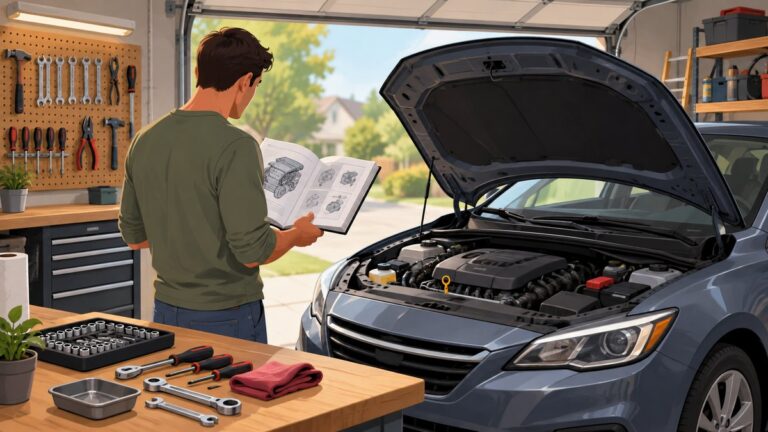
Timing-chain replacement is not simply a matter of removing an old chain and fitting a new one. The procedure may require locking or positioning the crankshaft and camshafts, supporting the engine, removing a timing cover, replacing seals, setting timing marks, applying specified sealant, and tightening fasteners to exact torque and angle requirements.
On an interference engine, incorrect timing can cause valve and piston damage when the engine is started. Some engines also require special tools, post-repair relearning, or procedures for camshaft phasers and hydraulic tensioners.
Do these 3 things before closing this tab:
1Clear out junk files and repair common Windows errors2Scan for outdated or missing drivers - takes under a minute3Repair Windows errors before they cause bigger problemsIf you are doing the work yourself, obtain a vehicle-specific timing chain repair manual or equivalent factory service information before disassembly. Confirm the exact engine and follow its timing marks, locking procedures, torque specifications, sealant instructions, and safety precautions. If the engine is difficult to time or the consequences of an error are unacceptable, professional repair is the safer option.
Oil leaks near the timing cover: does that mean the chain is bad?
No. An oil leak near a timing cover or tensioner inspection cover does not automatically prove that the chain, guide, or tensioner has failed. Oil can escape from a cover seal, gasket, tensioner-related sealing surface, crankshaft seal, or another nearby source.
The source should be confirmed before resealing or replacing parts. A manufacturer repair procedure for a particular vehicle may require inspection of the cover, tensioner, chain, or guide, but that procedure should not be generalized to every engine.
What happens if a worn timing chain is ignored?
A chain with increasing slack can produce noise and progressively incorrect valve timing. It may eventually jump teeth or break. Depending on the engine design and the amount of movement, the result can range from a no-start condition to bent valves or other internal damage.
That does not mean every rattle requires immediate chain replacement. It means a new or worsening timing-related symptom should be diagnosed promptly, especially when it is paired with a check-engine light, hard starting, misfires, stalling, low oil pressure, or loss of power. Avoid extended driving when the engine is running poorly or making severe metallic noise.
Best Value

- Provides consistent tension to help keep engine running in proper time
- Gm-recommended replacement part for your GM vehicle's original factory component
- Offering the quality, reliability, and durability of GM OE
- Manufactured to GM OE specification for fit, form, and function
- Manufactured to meet or exceed strict quality requirements
Timing chain vs. timing belt: the practical difference
| Question | Timing chain | Timing belt |
|---|---|---|
| Typical maintenance approach | Often condition- or diagnosis-based, with no universal replacement interval | Often has a scheduled replacement interval specified by the manufacturer |
| Primary maintenance concern | Oil condition, tensioner operation, guide condition, and timing accuracy | Age, mileage, belt condition, and the manufacturer’s replacement schedule |
| Can it fail? | Yes; the chain and its guides, tensioner, and sprockets can wear or fail | Yes; scheduled replacement is intended to reduce the risk of failure |
| Is generic mileage guidance safe? | No; engine-specific information is essential | No; the correct interval is still vehicle-specific |
The important point is not that chains never need service. It is that a timing-belt interval cannot be converted into a timing-chain interval without evidence for the specific engine.
Bottom line
Timing chains generally last longer than timing belts and often have no routine replacement interval, but they are not immortal. Maintain the specified oil level, grade, filter, and service schedule. Investigate startup rattles, persistent metallic noise, timing-related codes, hard starting, misfires, or stalling. Replace the chain and any supporting components when the manufacturer’s information or a sound diagnosis confirms wear, damage, incorrect timing, or a failed tensioner or guide—not simply because the vehicle has reached a particular mileage.
Frequently Asked Questions
Do timing chains have a replacement interval?
Often, no. Many vehicles do not specify a routine timing-chain replacement interval. Instead, replacement is based on the engine’s service information, measured wear, incorrect timing, component damage, or symptoms confirmed by diagnosis.
Quick wins for a faster PC:
Clear out junk files and repair common Windows errorsFree Scan →Scan for outdated or missing drivers - takes under a minuteDriver Scan →Does a startup rattle always mean the timing chain is bad?
A brief startup rattle can be caused by chain slack or a tensioner, but it can also come from variable-valve-timing parts, belt-driven accessories, low oil pressure, or other engine components. The noise should be diagnosed rather than treated as proof of chain failure.
Should the timing chain, guides, and tensioner be replaced as a set?
Not necessarily. The correct repair depends on the inspection and the engine’s service procedure. A worn chain may require new guides, a tensioner, sprockets, seals, gaskets, or phasers, while a component-specific failure may not justify replacing every part.
Should I replace a timing chain at 100,000 miles?
No. Timing-belt replacement intervals, including commonly quoted 60,000-to-100,000-mile ranges, should not automatically be applied to timing chains. Use the exact owner’s manual or factory service information for the engine.
The Bottom Line
Timing chains do not have one universal lifespan or replacement mileage. A healthy, correctly timed chain may last through much of the engine’s useful life, while poor lubrication, a failed tensioner, damaged guides, worn sprockets, or an engine-specific defect can require earlier repair. Follow the exact vehicle maintenance information and diagnose symptoms before replacing parts.
What’s actually slowing this PC down?
Pick the symptom - the matching free tool is one click away.
Quick Recap
Product prices and availability are accurate as of the date/time indicated and are subject to change. Any price and availability information displayed on Amazon at the time of purchase will apply.