What’s actually slowing this PC down?
Pick the symptom - the matching free tool is one click away.
A dash cam is a small digital video recorder for your vehicle. When it receives power, its lens and image sensor capture the road ahead—or the rear, cabin, or both—while a processor compresses the video and writes it to a microSD card or other supported storage. Most models divide footage into short clips and use loop recording: when the card fills, the oldest ordinary, unprotected clips are overwritten. A G-sensor, motion detector, manual save button, or app can protect important footage from that recycling process.
The two details that cause the most confusion are parking mode and model variation. Parking mode generally needs constant power after the ignition is switched off, and it may use motion detection, impact detection, time-lapse, low-bitrate recording, or buffered recording. Dash cams are not standardized appliances, so file lengths, memory-card limits, event buffers, parking behavior, heat limits, and cloud features vary by model and firmware.
What does a dash cam record?
A dash cam is a windshield- or dashboard-mounted camera intended primarily to document the road, traffic incidents, and the surroundings of a vehicle. Depending on the system, it may also record the rear view, the passenger compartment, side views, audio, GPS location, vehicle speed, and impact data.
- Single-channel: one forward-facing camera.
- Two-channel: front and rear cameras.
- Three-channel: front, rear, and interior cameras.
- Interior-only or rear-only: useful for rideshare, fleet, or specialized coverage.
- Mirror-style: a camera integrated into or mounted over the rear-view mirror.
- Connected: a camera with Wi-Fi, LTE, cloud storage, remote viewing, or alerts.
Resolution also varies widely. For example, Garmin’s current X-series materials list the Mini 3 at 1080p, the X210 at 1440p, and the X310 at 4K. Those are examples of the market’s range, not universal dash-cam categories; many other combinations of resolution, frame rate, and camera count are available. Garmin’s X-series announcement provides the manufacturer’s current specifications for those models.
What happens when a dash cam turns on?
In normal driving mode, the process is usually automatic:
#1 Best Overall

- UPSCALED 4K FRONT + 1080P REAR DUAL DASH CAM: The ROVE R2-4K DUAL records the road ahead and behind at the same time. The front camera captures at 2.5K (QHD) and intelligently upscales to 4K (2160P) for higher-detail playback, while the rear camera records at Full HD 1080P. This is upscaled 4K, not native 4K, engineered to show sharper everyday detail than standard 1080P dash cams, so you can read license plates, signs, and surroundings in front and rear footage.
- SONY STARVIS 2 IMX675 SENSOR + SUPER NIGHT VISION: The front camera uses a Sony STARVIS 2 IMX675 5MP image sensor with a wide F1.5 aperture (F1.8 rear) and HDR to pull in more light for clearer low-light footage. This advanced sensor enhances nighttime clarity, helping capture license plates, road signs, and surrounding vehicles with greater reliability when driving after dark, through tunnels, or in dusk and dawn conditions.
- ULTRA FAST 5.8GHz WIFI/ UP TO 20MB/s DOWNLOAD SPEED: With its built-in dual-band 5.8GHz and 2.4GHz WiFi, you can use the ROVE dash cam app to view and manage dash cam recordings instantly on your iPhone and Android smartphone. Using the ROVE app, download your recorded videos directly to your smartphone at up to 20 MB/sec, then easily share them on social media with friends and family. Additionally, manage camera settings and update the latest firmware over-the-air via the ROVE App.
- CAR CAMERA WITH GPS: The new front and rear dashcam comes with built-in GPS, which enables you to view real-time live speed and compass on the 3” IPS wide camera screen. It records precise driving routes, locations, and speed stamps directly on the video so you can watch dashcam videos with GPS data using ROVE's free GPS Player on your PC or Mac & get additional evidence when you need it.
- FEATURES WITH STATE-OF-THE-ART TECHNOLOGY INCLUDED: Experience peace of mind with this front and rear car dash cam. It comes with a free 128GB microSD card and offers advanced features such as an f1.5 aperture, motion detection, G-sensor, seamless loop recording, emergency video lock, screen saver, live speed and compass direction, voice guidance, ring of threads for optional CPL filter, a built-in supercapacitor for extended product life, support for up to 1TB microSD cards, and many more.
- Vehicle power becomes available. The camera receives power through an accessory socket, USB connection, OBD-II adapter, hardwire kit, or another approved power source.
- The camera boots. It checks its firmware, settings, and memory card. It may also acquire a GPS signal.
- The image sensor captures frames. Light passes through the lens and is converted into digital image data.
- The processor processes and compresses the video. It may apply HDR or WDR processing, noise reduction, exposure adjustments, and image stabilization.
- The camera creates short video clips. Each clip is written to the memory card rather than allowing one trip to become a single enormous file.
- Telemetry and audio are added if enabled. This can include a timestamp, GPS location, speed, microphone audio, and camera or sensor information.
- The camera continues recording. It keeps creating clips until power is removed, recording is manually stopped, a fault occurs, or storage management fails.
Many cameras start recording automatically after power-up, but a powered-on camera is not necessarily recording. A missing, incompatible, worn-out, corrupted, counterfeit, or incorrectly formatted card can prevent usable video from being saved. On Garmin’s listed dash cams, for example, the company says a compatible memory card is required and that those models do not have internal memory for storing video. Garmin’s memory-card guidance explains this requirement.
Recording can also be suspended while the camera is in its gallery, export, firmware-update, or computer-connection mode. An inadequate power adapter or cable, a loose connection, and thermal-protection shutdowns can produce the same apparent symptom: the camera looks alive, but no current footage is being saved.
The hardware inside a dash cam
Not every model includes every component, but most dash cams combine the following parts.
Lens and image sensor
The lens determines how much of the scene the camera sees and how much light reaches the sensor. The sensor converts that light into digital frames. Together with the processor, these components have a major effect on whether a license plate or traffic signal is actually visible.
Common specifications include:
- Resolution: 1080p, 1440p or 2K, and 4K are common product categories.
- Frame rate: 30 frames per second is common; some models offer 60 fps at lower resolutions.
- Aperture: a wider aperture can gather more light, although it does not guarantee good nighttime video.
- HDR or WDR: processing intended to preserve detail where bright and dark areas appear together, such as a car leaving a dark street into sunlight.
- Polarizing filter: can reduce windshield reflections, depending on the installation, filter, angle, and lighting.
- Field of view: a wider view captures more beside the vehicle but can make distant objects smaller and introduce more distortion.
A 4K specification means more pixels, not automatically better evidence. Shutter speed, motion blur, nighttime exposure, glare, windshield cleanliness, lens quality, image processing, compression, weather, and the distance or angle of a plate can matter just as much. Consumer Reports’ dash-cam buying guide similarly treats resolution as only one part of image quality.
As a current example, Garmin lists the Dash Cam Mini 3 as a 1080p camera with a 140-degree field of view and a built-in polarizer. That specification should be read as a description of that model, not a standard for every 1080p camera.
Processor and video codec
The processor is the dash cam’s control center. It handles image processing, HDR or WDR, video compression, multiple-camera synchronization, G-sensor logic, motion detection, GPS data, timestamps, file naming, and loop-recording decisions.
Video is commonly stored in an MP4 container using H.264/AVC or H.265/HEVC, but the exact format is model-specific. Garmin’s support information lists H.264 for some models, while the X210 manual specifies HEVC/H.265 MP4 for that camera. You should check the exact model’s manual if compatibility with editing software, a phone, or an evidence-management system matters. See Garmin’s Dash Cam 57 support information and the X210 owner’s manual for examples.
Microphone and speaker
A microphone may record conversations inside the car, interactions with other drivers or police, road noise, and alerts. A speaker may provide warnings or voice-command feedback. Audio is often controlled separately from video, so check whether it is enabled before carrying passengers or crossing jurisdictions with different recording rules.
GPS receiver
GPS can add location, speed, date, time synchronization, route data, and sometimes a map overlay. It does not improve the camera’s image. A GPS speed reading is also not automatically proof of the vehicle’s legal speed or evidence of fault; it is additional telemetry whose accuracy and legal significance depend on the circumstances. Garmin explains that GPS-enabled dash cams can record position and speed while recording in its Dash Cam 57 support documentation.
G-sensor
A G-sensor is an accelerometer. It measures sudden movement or acceleration of the camera and vehicle, commonly across three axes. If the measured force exceeds a selected threshold, the camera may protect the current clip as an event file.
Recommended Free Tools
It does not determine who caused an accident, recognize legal fault, or guarantee that an impact will be detected. Hard braking, potholes, speed bumps, closing doors, vibration, and rough roads can create false triggers. Sensitivity is usually adjustable:
- A setting that is too low may fail to protect a minor impact.
- A setting that is too high may protect many unimportant clips.
- Too many protected clips can eventually consume the available storage.
BlackVue’s recording-settings documentation describes its G-sensor as measuring movement across three axes and triggering event recording when significant or sudden movement is detected.
Power circuitry
The power system determines whether the dash cam runs only while driving or can remain active after the vehicle is parked.
- Switched accessory power: power turns on and off with the ignition. This is simple and usually protects the starter battery, but it normally does not support parking recording.
- Constant power: power remains available after the ignition is switched off.
- Hardwire kit: connects to the fuse box and commonly provides ignition sensing, fuse protection, and low-voltage cutoff.
- OBD-II adapter: can provide a convenient installation, but vehicle compatibility, electrical behavior, and warranty considerations vary.
- External dash-cam battery: provides a separate power reserve for parking mode, at the cost of additional expense, space, heat, and installation complexity.
Wire colors and installation procedures are not universal. Garmin’s parking-mode cable documentation, for example, identifies separate constant-power, accessory-power, and ground connections for that system.
The Tool Desk
Outbyte Driver Updater FREEFix the driver behind crashes, sound loss and screen glitchesFind Drivers →Outbyte PC Repair FREEClear out junk files and repair common Windows errorsFree Scan →How loop recording works
Loop recording is the central feature that allows a dash cam to record for long periods without requiring an enormous storage device. The camera records a clip, closes it, starts another, and eventually reuses the space occupied by the oldest ordinary clip.
New clip → storage fills → oldest unlocked clip is overwritten
                         ↘ locked/event clips are retained
The typical sequence is:
- The camera records a short video file.
- It closes that file and begins the next one.
- When available space becomes limited, it identifies the oldest ordinary, unprotected file.
- It overwrites that file with new footage.
- Event files, manually protected files, and some parking files are normally excluded from automatic deletion.
Nextbase describes loop recording as continuous recording in which older files are overwritten after the card reaches capacity, while files protected by the G-sensor or manual button remain on the card.
Why footage is split into clips
Short files are easier to transfer, play, and protect than one massive file. Segmentation also limits the damage if a file becomes corrupted and gives the camera a practical unit to lock when an event occurs.
Rank #2
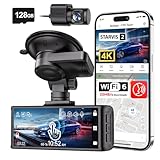
- [4K+1080P Dual Recording] REDTIGER F7N TOUCH captures your drive journey in stunning 4K UHD resolution with STARVIS 2 sensor 170° wide-angle view for the front dash cam and 1080P FHD resolution 140° wide-angle for the rear car camera. Equipped with WDR and HDR technology, the enhanced super night vision ensures better visibility even in low-light situations, providing you with reliable recordings day and night.
- [Voice Control & Touch Screen] F7NTOUCH dashcam features voice commands, allowing for hands-free control of your 4K car camera, which enhances safety by minimizing distractions. The dual camera dash cam also has smart touchscreen that can lock emergency video, turn on wifi, and capture scenery with one click. Redtiger also retains the buttons, multiple control methods are integrated.
- [Built-in GPS & 5.8GHz WiFi] Both Android and IOS users can connect to dashcam WiFi via the REDTIGER Cam app. Although the dash cam is installed wired, you can enjoy wireless control on your smartphone, faster 20MB/s download speed and share your driving experiences in real-time with friends and insurance companies. Car recorder built-in GPS provides traceable location, speed, and accurate route in the recordings.
- [Loop Recording & G-Sensor] REDTIGER F7N TOUCH dual channel dash cam automatically overwrites the oldest footage when the memory is full, ensuring endless recording with the included 128GB card. With a built-in G-sensor that detects sudden movements or impacts, it automatically locks and protects the associated footage when an event is detected on the road, ensuring it won't be overwritten during loop recording.
- [24-hour Parking Monitoring*] REDTIGER Car dashboard camera offers G-Sensor Parking Mode that automatically record when it detects any collisions or sudden motion while vehicles is parked. Time Lapse Parking Mode provides continuous surveillance by offering a condensed overview of any events that may occur during parking periods. *Please note that the parking monitoring function requires a separate hardwire kit.
Clip length differs by model. Nextbase describes approximately three-minute segments on some systems, while VIOFO’s current A229 Ultra lists selectable one-, two-, three-, five-, and ten-minute loop lengths. These are examples, not universal defaults.
Crashes, No Sound, or Screen Glitches?
Random freezes, missing sound and display glitches usually trace back to one bad driver. Find and replace yours safely.Free scan · under a minutePC Slower Than It Used to Be?
A free scan shows the junk files, broken settings and background clutter dragging Windows down - then fixes them in one click.Free scan · Windows 10 & 11What happens to an event file?
An event can be created by:
- A sudden physical movement detected by the G-sensor.
- Motion visible to the camera during a supported parking mode.
- The driver pressing a save or protect button.
- A Bluetooth remote, voice command, or smartphone app.
- An AI or driver-assistance feature on some models.
Protected files may appear in folders labeled Event, Saved, Locked, Parking, or similar. Some cameras also keep temporary or unsaved files. The exact folder names and retention behavior are model-specific; Garmin’s X210 manual, for example, lists separate locations for event, saved, parked, time-lapse, and unsaved footage.
An event file is not automatically a complete incident package. Pre-impact video exists only if the camera was already recording or buffering before the trigger. The amount of video before and after the trigger varies. Garmin’s X210 manual describes a 30-second saved clip with 15 seconds before and 15 seconds after the selected save point. California’s statutory definition for a qualifying video event recorder separately describes no more than 30 seconds before and after a triggering event. Those manufacturer and legal descriptions should not be treated as a universal dash-cam standard.
G-sensor, motion detection, and GPS are different
| Feature | What it detects or provides | Typical action |
|---|---|---|
| G-sensor | Sudden physical movement or acceleration | Protects an event clip |
| Motion detection | Movement visible in the camera’s image | Starts or saves parking footage on supported models |
| Manual save | A command from the driver, remote, voice control, or app | Protects footage around the selected moment |
| GPS | Location, speed, and time information | Adds telemetry; it does not improve video quality |
Confusing these features leads to unrealistic expectations. A camera can detect an impact with its G-sensor even when nothing visibly moves in the scene. Conversely, a person walking toward the vehicle may trigger motion detection without creating enough physical force to trigger the G-sensor.
How parking mode works
Parking mode is not one universal technology. It is a group of low-power or event-recording behaviors that operate when the vehicle is parked. Depending on the model, the camera may continuously buffer video, save only when it detects motion or impact, record at a low frame rate, record continuously at a reduced bitrate, or wake only after detecting a bump.
Why parking mode needs different power
A cigarette-lighter or accessory socket often loses power when the ignition is turned off. Therefore, parking mode usually requires an always-on 12-volt source, a hardwire kit, an OBD-II constant-power adapter, an always-on USB port, or an external dash-cam battery. Garmin states that its Parking Guard feature requires a constant power source such as an always-on 12-volt port, constant-power cable, or parking-mode cable. See Garmin’s Parking Guard explanation.
Common parking-mode types
| Mode | How it works | Advantages | Limitations |
|---|---|---|---|
| Motion and impact detection | Monitors the view and saves footage when visible movement occurs; the G-sensor may separately detect an impact. | Can capture someone approaching before contact. | May react to shadows, rain, trees, headlights, or passing traffic and uses more power than a sleeping mode. |
| Buffered parking mode | Retains recent video in temporary memory and writes footage before and after a trigger to the card. | Better chance of showing the approach to an impact. | Requires supported hardware and uses model-specific buffer lengths. |
| Time-lapse | Records at a greatly reduced frame rate, such as one frame per second. | Uses less storage and power and can show general activity over a long period. | Fast events can occur between frames; footage is not continuous real-time video. |
| Low-bitrate continuous | Records continuously at a lower data rate. | Provides more complete coverage than motion-only recording. | Uses more power than sleeping modes and produces lower-quality video. |
| Impact-only or power-saving | Remains in a low-power state and wakes when its sensor detects a bump. | Minimizes power use. | May have no pre-event footage and can miss a light scrape or contact. |
VIOFO describes buffered parking mode as retaining a pre-event cache and writing it to the card after an event; its example is 15 seconds before and 30 seconds after the event. BlackVue describes one-frame-per-second time-lapse footage that plays at 30 times normal speed, with impact events saved as normal-speed files. Its current ELITE 10 documentation says a power-saving mode can begin recording within two seconds of impact detection but does not support pre-buffering. These timings and behaviors belong to the cited systems and should not be generalized to every camera. See VIOFO’s buffered-mode explanation, the BlackVue parking-mode documentation, and the BlackVue ELITE 10 FAQ.
Battery protection matters
A camera left recording can discharge a vehicle’s starter battery. A proper parking-power solution should include:
- A low-voltage cutoff.
- An optional timer cutoff.
- Fuse protection and correct wiring.
- Compatibility with the vehicle’s electrical system.
- Settings appropriate for the vehicle’s battery and parking duration.
Cutoff values are not universal. BlackVue’s cited ELITE 10 documentation lists model-specific 12-volt cutoff options such as 11.8–12.5 volts and timer choices such as six, 12, or 24 hours. Do not copy those settings to another camera without checking its manual.
Parking mode can also fail because the camera is completely unpowered, the vehicle’s socket shuts off, ignition sensing is wired incorrectly, the camera is in an app or gallery state, the battery cutoff is reached, or the camera overheats. It is a monitoring aid—not a guarantee that every parked incident will be captured.
Memory cards: the part many owners underestimate
Most consumer dash cams use a microSD card. The recording time depends on card capacity, resolution, frame rate, bitrate, number of active cameras, audio settings, parking mode, and the number of protected files. There is no reliable universal formula such as “a 128GB card always records a certain number of hours.”
As one manufacturer-specific example, Nextbase estimates approximately two hours on 32GB, four hours on 64GB, and eight hours on 128GB for one of its 1080p configurations. Higher resolution or an added rear camera reduces the recording time. See its loop-recording guide.
What to check before buying a card
Follow the exact camera manual for:
- microSDHC versus microSDXC support.
- Maximum supported capacity.
- FAT32 versus exFAT formatting.
- Minimum speed class or sustained-write requirement.
- Whether a high-endurance card is required or recommended.
- Whether the manufacturer publishes a compatibility list.
Video recording needs sustained write performance, not merely an impressive burst-read speed. The SD Association’s speed-class standards explain the minimum sequential-performance principles used for video recording.
Quick wins for a faster PC:
Repair Windows errors before they cause bigger problemsFix Now →Scan for outdated or missing drivers - takes under a minuteDriver Scan →For a model-specific example, the Garmin Dash Cam Mini 3 manual specifies microSDHC or microSDXC, Class 10 or higher, FAT32, and capacities from 8GB to 512GB for that camera. Garmin also recommends high-endurance card families for continuous dash-cam use and warns that an ordinary consumer card may not receive the same warranty coverage in a high-endurance recording environment.
Why cards wear out
Dash cams repeatedly write and overwrite data, often in a hot vehicle. That is much more demanding than occasionally taking photographs with a phone. A worn or unsuitable card can cause warnings, beeping, gaps between clips, choppy or incomplete video, frozen screens, boot failures, shutdowns, or a camera that appears to record but produces no usable files.
VIOFO lists corruption, unsuitable cards, and a lack of periodic formatting among causes of recording problems. Garmin likewise recommends replacing cards periodically because its cameras record continuously. See the VIOFO formatting guide and Garmin’s memory-card support.
Protected files can stop the loop
Loop recording does not necessarily overwrite every file. Event, manual-save, and some parking files may be locked. If enough of them accumulate, the card can become effectively full even though loop recording is enabled. Nextbase specifically warns that protected files reduce available recording time.
Do these 3 things before closing this tab:
1Repair Windows errors before they cause bigger problems2Fix the driver behind crashes, sound loss and screen glitches3Clear out junk files and repair common Windows errorsA sensible maintenance routine is:
- Buy an authentic, compatible card from a reputable seller.
- Insert it while the camera is powered off.
- Format it in the camera if the manual recommends in-camera formatting.
- Record and review a short test clip.
- Back up important files regularly.
- Format the card only after important footage has been copied and checked.
- Replace the card when errors recur, the camera reports wear, or footage becomes unreliable.
Do not promise a universal monthly or six-month schedule. VIOFO suggests at least monthly formatting, while Garmin’s general guidance says at least every six months and periodic replacement. Actual maintenance depends on the model, card, recording hours, parking mode, and climate.
Rank #3

- 💖💖【Important Note】Due to soaring memory chip costs, many brands have eliminated memory cards entirely, requiring a separate purchase. However, to save you the hassle of buying extra accessories, we are resisting cost pressures without raising our dashcam's price. Starting June 26, 2026, this camera will include a 32GB memory card (previously 64GB) so you can still use it out of the box. For extended storage, we highly recommend purchasing a Class 10, U3, and V30 (or higher) memory card.
- 【4K 2160P Resolution Dash Cam】Capture every drive in stunning 4K UHD resolution with the Galphi front dash cam, featuring a 160-degree wide-angle lens for clear, cinematic video footage. Ideal for family cars, new drivers, and Uber/Lyft drivers, it provides reliable video evidence for accident disputes and insurance claims.
- 【Advanced 5GHz WiFi with App】 Featuring cutting-edge 5GHz WiFi and a free app, the video download speed reaches up to 8MB/s, compared to just 2MB/s with the 2.4GHz option. This greatly reduces download times and minimizes lag during video playback.
- 【No Screen & Less Distraction】This dash camerma features a screen-free design, minimizing distractions while you drive so you can stay focused on the road. Enjoy peace of mind knowing your camera is recording without taking your attention away from the journey.
- 【Compact and Super Easy to Install】The dash cam's slim and compact design ensures it won't obstruct your view. With easy installation and clear, detailed instructions included, even first-time users can set it up without any hassle.
Power, supercapacitors, batteries, and heat
Dash cams operate in a difficult environment: direct sun behind glass, high internal temperatures, vibration, cold starts, and continuous writing. High resolution, high bitrate, multiple cameras, Wi-Fi activity, and parking recording can increase the load.
Supercapacitor versus internal battery
Many dash cams use a supercapacitor rather than a large lithium-ion battery. Its main purpose is to provide enough reserve energy to close the current file and shut down safely when vehicle power disappears. It is not intended to run the camera for hours without external power.
Some models do use an internal battery, and an external parking battery is a separate accessory. An internal battery may support brief operation but can be more vulnerable to age and heat. Garmin explains the safe-shutdown purpose of supercapacitors in its support documentation.
Free tools Windows power users keep installed
One-click scans. No signup required.
Heat-related limitations
Warmth can be normal during operation. Garmin recommends keeping vents unobstructed, while VIOFO says its supercapacitor-equipped cameras may operate up to 65°C and be stored up to 70°C. Those VIOFO figures are not universal thermal ratings; consult the manual for the exact model.
If a camera repeatedly shuts down in direct sun:
- Keep vents clear and remove anything covering the camera.
- Reduce resolution or bitrate temporarily as a diagnostic step.
- Disable unneeded camera channels.
- Use a lower-power parking mode.
- Check the power supply and memory card.
- Confirm the camera is within its specified operating range.
Do not defeat thermal protection. Automatic shutdown can protect the camera, card, and stored footage. See VIOFO’s heat guidance, Garmin’s warm-camera guidance, and BlackVue’s thermal-shutdown information.
How to install and test a dash cam
The owner’s manual overrides any general installation advice, particularly for hardwiring and vehicle-specific airbag locations.
- Choose a legal, safe position. Mount the camera high behind or near the rear-view mirror when possible, with a clear view and no interference with airbags, sensors, controls, or the driver’s line of sight. Garmin’s safety information warns against obstructing the road view or interfering with airbags and controls.
- Clean and dry the glass. Adhesive mounts are stable and discreet but less convenient to move. Suction mounts are easier to reposition but can detach.
- Insert and format the card. Formatting deletes existing files, so back up anything important first.
- Connect ordinary driving power. Use the supplied adapter and cable unless the manufacturer approves an alternative. Confirm that the camera powers on with the ignition and begins recording.
- Route the cable safely. Tuck it along the headliner and trim, keeping it away from pedals and avoiding an airbag deployment path. Do not leave loose cable where it can distract or interfere with driving.
- Align the image while parked. Keep the horizon reasonably level and include enough road to show traffic while retaining signs and signals in the upper part of the frame. Keep the lens within the windshield’s wiper-swept area.
- Connect rear or cabin cameras. Test each channel separately and together. A current VIOFO troubleshooting guide recommends testing the main body, original charger, and original camera cables when channels disconnect.
- Verify the basics. Check the recording indicator, timestamp, audio setting, GPS lock if applicable, field of view, and every camera channel.
Installing parking mode
- Install the approved hardwire kit, OBD-II adapter, or external battery.
- Confirm that the system supplies power after the ignition is off.
- Confirm low-voltage protection or timer cutoff is enabled.
- Select the parking mode you want.
- Turn the vehicle off and verify that the camera changes modes.
- Restart the vehicle and confirm that normal driving recording resumes.
- Test the system for several hours or overnight; a brief successful test does not prove long-term battery safety.
Parking-mode switching varies. Garmin says Parking Guard can enter automatically when the vehicle is turned off if the camera remains powered, while BlackVue documents different trigger behavior depending on the wiring configuration. Neither behavior should be assumed for another model.
How to save and preserve footage after an incident
Do this as soon as it is safe:
- Press the camera’s save or protect button, or use its remote or voice command. Garmin’s Mini 3 documentation says its save control preserves footage before, during, and after the selected save point, but the exact behavior varies by model.
- Stop driving and park safely.
- Turn the camera off before removing the memory card.
- Copy the complete relevant file or folder to a computer.
- Make a second backup on separate storage.
- Play the copied file to confirm it is complete and readable.
- Keep the original file unchanged. Make a separate edited copy if you need to trim, annotate, or blur it.
- Do not format the card until the backup has been checked.
- Record the date, approximate time, location, and what the footage depicts.
On many systems, video is stored in a DCIM folder. Garmin’s computer-transfer instructions identify DCIM as the normal location for video and snapshots, while its X210 manual lists separate folders for event, saved, parked, time-lapse, and unsaved footage. See Garmin’s computer-transfer instructions and the X210 manual.
Wi-Fi, GPS, LTE, and cloud storage
These features are often grouped together in product advertising, but they do different jobs:
- GPS: adds location, speed, time, and route data to footage.
- Local Wi-Fi: creates a nearby private network between the dash cam and a phone for settings, live view, and file downloads.
- Internet Wi-Fi: gives the camera an internet path for supported remote or cloud features.
- LTE or cellular: allows remote communication without relying on a nearby phone or home Wi-Fi network.
- Cloud storage: may provide remote alerts, live view, or an additional copy of footage.
Local Wi-Fi usually does not mean the camera is connected to the internet. Garmin explicitly distinguishes its private camera Wi-Fi from ordinary internet Wi-Fi. Remote live view and cloud functions can require constant power, an internet connection, cellular service, and a paid subscription on some current models. See Garmin’s Wi-Fi explanation, its remote Live View requirements, and its Mini 3 Wi-Fi documentation.
Wi-Fi is convenient for downloading a short clip, but large 4K files can take a long time to transfer. A card reader or direct computer connection may be more dependable when preserving original evidence. Cloud uploads are also not guaranteed: they depend on power, signal, account status, upload completion, retention rules, and the camera’s supported features. Keep the local card copy until the remote copy has been verified.
Recommended Free Tools
What matters when choosing a dash cam?
Resolution and night performance
- 1080p: lower storage and processing demands and often adequate for documenting general incident context.
- 1440p or 2K: a middle ground with more detail than 1080p.
- 4K: more potential detail, but larger files, higher heat, greater card demands, and often slower transfers.
Do not buy solely on the 4K label. A badly exposed, glare-filled 4K frame can be less useful than a well-designed lower-resolution camera. Prioritize the sensor, lens, night exposure, HDR or WDR implementation, field of view, mounting position, windshield cleanliness, frame rate, and bitrate.
Front-only, front-and-rear, or three-channel
- Front-only: simplest installation, lowest cost, and lower storage demand.
- Front and rear: better coverage for rear-end collisions and incidents behind the vehicle.
- Front, rear, and cabin: useful for rideshare, fleet, or personal-security applications, but adds heat, storage requirements, complexity, and privacy concerns.
Other useful buying criteria
- Reliable card support: look for clear capacity, format, speed, and high-endurance requirements.
- Manual event save: useful when the G-sensor does not trigger or when you want to preserve something important that is not an impact.
- Adjustable G-sensor: helpful for reducing false locks on rough roads.
- Parking-mode power protection: require constant power, low-voltage cutoff, and a timer if parking recording matters.
- Buffered parking mode: preferable when you want footage before an impact or visible motion.
- GPS: useful for route and time context, but not essential for basic video.
- Wi-Fi: convenient for positioning and short downloads, but not automatically remote access.
- LTE and cloud: useful for remote alerts, with subscription, cellular, privacy, and account-security trade-offs.
- Audio control: particularly important when carrying passengers or crossing jurisdictions.
- Supercapacitor and thermal limits: worth prioritizing in hot climates or vehicles parked outdoors.
- Display versus screenless design: a display helps with alignment and immediate review; a screenless unit is smaller but generally relies on an app.
Common problems and recovery steps
The camera is on, but no videos are saved
- Confirm the card is fully inserted.
- Check the recording indicator rather than only the power light.
- Exit gallery, playback, update, or export mode.
- Test the original adapter and cable.
- Confirm card capacity, format, and speed compatibility.
- Back up any readable files.
- Format the card in the camera.
- Update firmware.
- Test a new, reputable high-endurance card.
- Test the main camera without rear or interior modules.
- Reset settings if necessary.
Garmin’s not-recording troubleshooting covers recording status, card compatibility, software, formatting, and replacement. VIOFO also recommends testing the original charger, alternate power sources, and the main camera by itself.
The footage is choppy, incomplete, or corrupted
Likely causes include a card that is too slow or failing, a corrupted file system, insufficient power, wireless playback limitations, the workload of high-resolution multi-channel recording, or thermal shutdown. Back up what you can, format the card, test with a compatible high-endurance replacement, use the original power equipment, and update the software. Garmin’s choppy-video troubleshooting guide provides this general sequence.
The camera missed a collision
Possible explanations include an impact below the G-sensor threshold, a camera that was not recording, storage filled with protected files, power loss, overheating, an event outside the field of view, a mode without pre-event buffering, a dirty or fogged lens, or motion blur and glare. A dash cam increases the chance of obtaining useful evidence; it cannot guarantee capture, timing, or legibility.
Parking mode does not work
- Check whether the vehicle’s socket turns off with the ignition.
- Confirm that a hardwire kit, constant-power adapter, or external battery is installed.
- Verify that parking mode is enabled.
- Check ACC or ignition-sensing wiring.
- Review the voltage cutoff and timer.
- Exit any app, gallery, or update mode that suspends parking recording.
- Check for overheating.
- Confirm OBD-II or vehicle electrical compatibility.
Garmin states that Parking Guard will not activate while certain app functions are in use, and BlackVue documents different parking triggers depending on wiring configuration. See Garmin Parking Guard and BlackVue’s parking-mode explanation.
The card fills even though loop recording is enabled
Look for too many locked event files, manually protected files, parking files stored in a protected folder, disabled loop recording, an incorrect format, or card errors that prevent deletion. Back up important footage and format the card; formatting permanently deletes its contents.
Rank #4
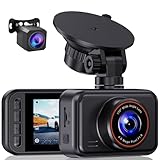
- 2.5K Front + 1080P Rear Recording: S60 records 25601440P front video and 1080P rear video to help capture what happens ahead of and behind your car. The front 170 wide-angle lens helps cover more of the road during daily drives or unexpected events
- WDR Night Vision: The starlight night vision sensor and 6-layer glass lens help improve video clarity in low-light conditions. WDR helps balance bright headlights and darker areas, making footage easier to review at night, in tunnels, parking lots, and other changing light conditions
- Loop Recording & G-Sensor Lock: Loop recording replaces older unprotected clips when the card is full. SD card is not included, and the dash cam supports cards up to 256GB. If a sudden impact, hard braking, or collision is detected, the G-sensor locks the current clip to help protect important footage
- Optional 24-Hour Parking Monitor: S60 supports a 24-hour parking monitor with time-lapse recording. This feature requires a compatible Type-C hardwire kit, not included
- 2" IPS Screen & 360 Suction Mount: The 2" IPS screen lets you check the camera view and adjust basic settings directly on the device. The 360 suction mount makes it easier to adjust the camera angle and remove or reinstall the unit
The rear camera disconnects
Test the main camera alone, the original power cable, the original rear-camera cable, fully seated connectors, an alternative cable route, current firmware, and each camera channel individually. VIOFO’s dual- and triple-channel troubleshooting recommends testing the main body, original charger, and original rear or interior cables.
Legal, privacy, and evidence considerations
This is general information, not legal advice. Mounting, audio recording, passenger notice, commercial use, and privacy rules vary by jurisdiction. Check the law where the vehicle is operated, especially when crossing state lines.
What’s actually slowing this PC down?
Pick the symptom - the matching free tool is one click away.
Windshield placement
Do not assume that a position legal in one state is legal everywhere. California Vehicle Code §26708, for example, permits a qualifying video event recorder only in specified windshield areas, including a five-inch square at the center uppermost portion or specified lower-corner areas, and requires placement outside an airbag deployment zone. It also contains passenger-notice provisions for certain recording systems. Read the California statute and check the applicable law for your location.
Audio recording
The legal issue is generally the recording of private oral communications, not simply recording visible road activity. Florida’s statute provides that interception is lawful when all parties to the communication have given prior consent in the circumstances covered by the statute. Illinois law addresses recording private conversations and generally requires consent of all parties in the circumstances it describes. See Florida Statutes §934.03 and Illinois Compiled Statutes §14-2.
Practical precautions include:
- Check the law in every jurisdiction where you drive.
- Disable cabin audio if you are uncertain.
- Inform passengers that audio may be recorded where appropriate.
- Do not assume that a visible camera satisfies every notice or consent requirement.
- Seek legal advice for rideshare, employment, commercial-fleet, or disputed-recording situations.
Privacy and cloud security
Interior footage can include passengers, children, conversations, addresses, and sensitive personal information. GPS data can reveal home, work, and travel patterns. Use a strong account password and two-factor authentication where available, be cautious with unsecured networks, and blur faces, license plates, addresses, or audio before public sharing when appropriate. Keep an untouched original separate from any edited copy.
Insurance and evidence
Footage may support an insurance claim, but do not assume it earns a premium discount. Progressive says it does not offer a dash-cam discount while noting that footage may help support a claim. Ask your insurer directly because discounts, claim procedures, and evidence policies vary by company, state, and policy. A video may be relevant evidence, but insurers, courts, and law enforcement evaluate the complete circumstances rather than automatically treating it as proof of fault.
Dash-cam alternatives
Using a smartphone
A phone can provide a good camera without a separate purchase and may offer convenient cloud backup. It also brings heat, battery drain, mounting, charging, notification, storage, and operating-system problems. Phones usually have weaker integrated loop-recording, event-protection, and parking-mode behavior, and interacting with one while driving creates an additional safety problem.
Using an action camera
An action camera can offer good optics, stabilization, and accessories for occasional trips. It may not have a G-sensor event lock, GPS overlays, parking mode, or automatic automotive overwrite logic. Action cameras are generally designed for intermittent recording rather than continuous operation behind a hot windshield. TechRadar’s dash-cam comparison highlights the importance of integrated parking, G-sensor, and GPS features when comparing the categories.
Factory-installed systems
Factory cameras can provide clean integration and vehicle-specific mounting and power. However, they may not record continuously, may use proprietary storage or software, may shut down when the vehicle is off, or may make exporting footage difficult. Coverage and retention depend on the vehicle.
Cloud or LTE security systems
LTE-connected cameras can send remote alerts, offer live view, and potentially preserve footage even if the camera is later removed. They also introduce subscriptions, cellular-coverage dependence, account security, privacy concerns, and upload failures caused by power loss or weak signal. Local SD storage remains valuable as the primary original.
Frequently Asked Questions
Does a dash cam record when the car is turned off?
Usually not from an ordinary switched accessory socket. Recording while parked requires a supported parking mode and a constant-power source, such as a hardwire kit, OBD-II adapter, always-on socket, or external dash-cam battery. The camera must also have battery protection or a timer to limit starter-battery drain.
Can a dash cam record without a memory card?
Many consumer models cannot save video without a compatible microSD card. Some cameras may power on and display an error, but that does not mean footage is being stored. Check the exact manual for card type, capacity, format, and speed requirements.
Does a G-sensor prove that another driver caused a crash?
No. A G-sensor detects sudden movement or acceleration and may protect a video file. It does not determine fault and can trigger because of hard braking, potholes, speed bumps, or vibration.
Does Wi-Fi let me view my dash cam from anywhere?
Usually not. Many cameras create a private local Wi-Fi network that works only when your phone is near the camera. Remote viewing generally requires an internet connection, constant power, cellular service or internet Wi-Fi, supported hardware, and sometimes a subscription.
Free tools Windows power users keep installed
One-click scans. No signup required.
How often should a dash-cam memory card be formatted?
There is no universal schedule. VIOFO suggests at least monthly formatting, while Garmin’s general guidance says at least every six months and periodic replacement. Always copy important footage first because formatting permanently deletes the card’s contents.
Will a 4K dash cam always show license plates better?
No. 4K provides more pixels, but plate readability also depends on sensor and lens quality, shutter speed, motion blur, exposure, glare, compression, distance, angle, weather, and nighttime lighting.
The Bottom Line
A dash cam works by capturing, compressing, and continuously cycling short video files while the vehicle has power. Normal footage is eventually overwritten; event and manually saved footage is normally protected. The most reliable setup combines a correctly installed camera, a compatible high-endurance memory card, safe power, appropriate parking-mode settings, and a habit of immediately copying important footage. Treat GPS, cloud storage, 4K resolution, and parking mode as model-specific tools—not guarantees—and check local mounting and audio rules before using the camera.
Quick Recap
Product prices and availability are accurate as of the date/time indicated and are subject to change. Any price and availability information displayed on Amazon at the time of purchase will apply.