Do these 3 things before closing this tab:
1Repair Windows errors before they cause bigger problems2Fix the driver behind crashes, sound loss and screen glitches3Clear out junk files and repair common Windows errorsBMW’s inline-six became a defining engine not through one breakthrough, but through successive redesigns aimed at different jobs: smooth power in a compact car, economical low-speed torque, sharper naturally aspirated performance, and eventually turbocharged output. The 1933 BMW 303 introduced the layout in a BMW road car; later engines added four-valve heads, variable cam timing, lighter construction and turbocharging. They share a cylinder arrangement, not one unchanged design.
How the inline-six became part of BMW’s identity
BMW’s road-car inline-six story begins with the 1933 BMW 303. Its 1.2-liter engine produced 30 hp, according to BMW’s historical account. That marks the layout’s introduction in a BMW car; it does not mean every later BMW six descended from that engine’s components or design.
The next pivotal change was about size and placement. In 1977, BMW brought a compact six-cylinder engine into the 3 Series, giving the configuration a role in a smaller, more accessible model. BMW’s history describes the M20 lineage as combining compact construction and economy with smooth running and a willingness to rev. The appeal, then, was not simply a large peak-power number: it was the way a six-cylinder engine could fit a sporting everyday car and deliver power smoothly.
Different BMW sixes, different jobs
BMW did not develop every inline-six around the same idea of “muscular.” Some versions prioritized low-speed torque and economy; others chased responsive naturally aspirated power or high output for M cars.
#1 Best Overall

- GET HANDS ON with Inline 6 engine model kit that works for adults and kids alike. Engage young minds into STEM with a working replica of a classic 6-cylinder internal combustion car engine and 4-stroke cycke, while adults enjoy the rewarding experience of building their own small Inline 6 engine kit that runs like a dream.
- REALISTIC MODEL THAT WORKS: Following our top bestseller V8 Engine, you can now deliver the action of a classic car engine with powerful pistons and interactive cables through our new Inline 6 mini engine! Watch the motor fans turn on with real engine sounds from your visible Inline 6 engine model kit, making it a perfect STEM toy for curious minds seeking a fun blend of education and entertainment.
- FUEL THE FUN: Our complete toy Inline 6 engine assembly kit provides hours of fun as you tinker with cranks, pulleys, belts, and exhaust valves, bringing this miniature engine kit to life before your very eyes! Conquer long boring days with a mini Inline 6 engine kit that runs.
- CHALLENGE ACCEPTED: Supercharge your critical thinking skills with our mini engine build kit! Expand your creativity, think logically, and refine your motor skills as you build a model Inline 6 engine kit all while having fun. Get ready for a brain-boosting build challenge that works wonders!
- POPULAR GIFT THAT INSPIRES: Make the world of STEM amazing with our DIY engine kits for adults, teens, young boys and girls! Whether it's for birthdays, holidays, or any special occasion, Playz Inline 6 engine kit will keep them captivated as they build and operate their own engine from start to finish.
| Engine or example | Engineering emphasis | What the cited BMW material establishes |
|---|---|---|
| 325e eta, 1984 | Torque and economy | BMW’s period specifications list 2.7 liters, 90 kW/122 PS and a reported 8.4 L/100 km. The fuel-consumption figure is BMW’s historical claim, not a modern standardized comparison. BMW 3 Series history |
| M50, 1989 | Improved breathing and valve timing | Four valves per cylinder and VANOS entered the six-cylinder story. BMW engine history |
| M52 and revised M52 | Lower engine weight and broader valve-timing control | The 1994 M52 introduced an aluminum crankcase in place of gray iron; a 1998 revision added double VANOS for intake and exhaust cam timing. BMW engine history |
| M54 3.0-liter 330i | Road-car response, power delivery and smooth running | BMW lists 170 kW/231 PS for the 330i and describes the M54 as a comprehensive revision of the M52. Those are manufacturer specifications and assessments, not independent comparative test results. BMW 3 Series history |
| M88 and S54 M engines | High specific performance | BMW M’s selected specifications include 277 hp for the 3,453 cm³ M1 M88 and 343 hp at 7,900 rpm for the 3,246 cm³ E46 M3 S54. These figures apply to the cited versions, not every market variant. BMW M inline-six history |
| N54 and N55 | Turbocharging and direct injection | BMW’s US-market training manual dates the N54’s 3 Series coupe debut to September 2006 and the N55’s US-market succession to spring 2010; it describes the N55 as using one turbocharger while retaining virtually the same technical data as its predecessor. BMW technical training manual |
The hardware changes that broadened the engine’s character
Four valves per cylinder and VANOS
The M50, introduced in 1989, paired a four-valve cylinder head with VANOS. More valve area can support better gas exchange, while variable cam timing lets an engine adjust when valves open and close rather than relying on one fixed timing setup. BMW’s later history describes double VANOS as adapting gas exchange and combustion to engine speed and load, with the aim of improving the torque curve.
Aluminum construction and double VANOS
For the 1994 M52, BMW replaced the previous gray-iron crankcase with aluminum, substantially reducing weight according to its historical account. A revised version in 1998 added double VANOS, varying both intake and exhaust cam timing. This was a progression in construction and control, not a single magic part that made every BMW six powerful in the same way.
Rank #2

- Includes museum issued collector's manual. Official BMW licensed product.
- 200 part kit. No glue or special tools necessary; build it yourself in about 3 hours
- 1:2 scale transparent working model; see all parts move through the high quality plastic casing
- Working five-speed gearbox; flip through the legendary BMW gearbox and witness the engineering
- Original engine sound; recorded from an actual r90 airhead flat six. Once built, press the button and experience the engine's sights and sounds
Valvetronic and the M54
BMW introduced Valvetronic for the 2001 model year, adding variable control of intake-valve lift. BMW said it was intended to improve power delivery and economy. The M54 arrived in 2000 as a comprehensive M52 revision; BMW’s 3.0-liter 330i specification was 170 kW/231 PS, with BMW highlighting response, smoothness and efficiency. The figures and evaluations are BMW’s own published material, not back-to-back independent testing.
From naturally aspirated response to turbocharged torque
The later N generation marked a shift in how BMW pursued power. BMW’s US-market technical training material identifies the naturally aspirated N52 as the start of a new six-cylinder generation in 2005, followed by the turbocharged, direct-injection N54 in a 3 Series coupe in September 2006. The N55 succeeded the N54 in the US market in spring 2010. These dates describe BMW’s US-market context and should not be treated as a universal launch chronology.
PC Slower Than It Used to Be?
A free scan shows the junk files, broken settings and background clutter dragging Windows down - then fixes them in one click.Free scan · Windows 10 & 11Crashes, No Sound, or Screen Glitches?
Random freezes, missing sound and display glitches usually trace back to one bad driver. Find and replace yours safely.Free scan · under a minuteRank #3

- ⚙【Highly Realistic Inline Twin Design】Featuring a 7.0cc inline double-cylinder layout with sporty red styling, this engine model delivers lifelike motion and structure, making it a standout high simulation mechanical model for enthusiasts.
- 🔩【 Precision CNC Metal Craftsmanship】Constructed from premium metal with CNC machining and anodized finish, ensuring durability, compact size, and a refined surface—ideal for collectors and mechanical model lovers.
- 🔥【High-Speed Stable Operation】Equipped with dual synchronous belt timing and optimized crankshaft, supporting smooth operation from 4000 to 16000RPM while reducing gear slipping risks.
- 🧠【Educational DIY Assembly Experience】Hands-on assembly reveals internal engine structure, valve mechanism, and working principles, making it a powerful STEM learning tool for mechanical understanding.
- 🎁【Collector Display & Gift Choice】Perfect as a desktop mechanical artwork, teaching aid, or gift for hobbyists. Compatible with additional ignition modules and accessories for extended functionality.a
Turbocharging changes the route to output: rather than relying only on engine speed and displacement, exhaust-driven compressors force more air into the cylinders. In everyday terms, that can support strong torque without needing the driver to keep the engine at high revs. BMW’s manual says the N55 used one turbocharger and retained virtually the same technical data as the N54; it does not establish that the engines feel identical in every car or driving condition.
Independent reader supportYour contribution helps us test, update, and keep practical guides available for everyone.How BMW M pushed the six-cylinder further
BMW M’s performance story includes engines developed for distinct applications, not simply larger versions of a mainstream 3 Series six. The M30 family was associated with the 3.0 CSL; BMW M describes the M88 as based on the M30 block but substantially developed with a four-valve head for the M1.
Rank #4
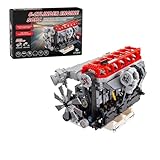
- Inline 6 Cylinder Engine Bricks: Engage into moc with a working replica of a classic 6-cylinder car engine
- Realistic Model That Works: L6 Engine features a hub-style piston, realistic camshaft mechanism, and classic fan and atomizer designs
- DIY Assembly: 17.32 x 13.19 x 11 Inches, comes with a printed paper manual and original color box, 2013 premium parts, offering premium parts that ensure a sturdy structure, smooth assembly
- Experience our new Inline 6 cylinder engine, experience our classic 6-cylinder car engine, bringing this miniature engine kit to life
- ️Perfect Gift for 6 Cylinder Engine building block enthusiasts, collectors and enthusiasts. Perfect as a gift, home decoration, or collectible
BMW M lists the 1971 3.0 CSL M30 at 2,985 cm³ and 180 hp, and the M1 M88 at 3,453 cm³ and 277 hp. These are BMW’s selected specifications for those versions, not a universal specification for every car sold under those names. For the E46 M3, BMW M lists the S54 at 3,246 cm³, 343 hp at 7,900 rpm and 365 Nm; its account says the later M3 CSL development reached 360 hp. BMW M’s engine history and specifications
The S58 carried the configuration into BMW M’s modern high-performance cars. In an article dated 20 December 2024, BMW M called it the brand’s then-current high-performance series inline-six and listed applications including the M2, M3 and M4. “Current” here reflects that dated BMW M account, rather than a claim about the lineup indefinitely.
Free tools Windows power users keep installed
One-click scans. No signup required.
Best Value
Why the inline-six suits this evolution
The inline-six’s value to BMW was its flexibility. Across these examples, the configuration served a compact 3 Series, an economy-oriented eta model, naturally aspirated road cars and high-output M applications. BMW’s own history emphasizes smooth operation and rev response in the compact M20, while later additions changed how the engines delivered torque, managed airflow and produced power.
- For an everyday road car: BMW’s account highlights smoothness, response and compact packaging in the early 3 Series six.
- For economy-oriented torque: the 325e eta shows that a BMW six could be tuned around low-speed usefulness and fuel economy rather than maximum output.
- For naturally aspirated performance: four-valve heads, variable cam timing and later valve-lift control expanded the tools available to shape response and power delivery.
- For modern high output: turbocharged N-series engines and BMW M’s S58 show how the inline-six continued to adapt beyond the naturally aspirated era.
Does this history identify the most reliable BMW inline-six?
No. The BMW historical and technical material cited here documents specifications, development dates and the manufacturer’s descriptions of engine goals; it does not provide an independent reliability ranking. Reliability comparisons need a specific engine code, model year, vehicle, maintenance record and pattern of use. A long history of BMW inline-sixes is not, by itself, evidence that one generation is the most reliable.
Quick Recap
Product prices and availability are accurate as of the date/time indicated and are subject to change. Any price and availability information displayed on Amazon at the time of purchase will apply.




