Automakers measure factory emissions by recording fuel and other direct emissions from operations as Scope 1, then accounting for purchased electricity as Scope 2. They combine those activity figures with emissions factors to produce an inventory. To cut emissions, plants can first use less energy, then switch remaining energy to lower-carbon sources and redesign energy-intensive processes such as paint-shop operations. These are factory emissions—not vehicle tailpipe emissions or a complete vehicle life-cycle footprint.
What a plant emissions inventory counts
The GHG Protocol separates operational emissions into scopes. Scope 1 covers direct emissions from sources an organization owns or controls, such as fuel burned in boilers, ovens and heaters. Scope 2 covers emissions associated with purchased electricity. These categories describe operations; they do not include a vehicle’s future use-phase emissions or, by themselves, the full lifecycle impact of making and using a vehicle.
Manufacturers define the organizational boundary for their inventories. A figure for one assembly plant is not comparable to a total for every factory, office, warehouse and other company location unless the boundaries are reconciled. Toyota North America says its FY2025 inventory follows the GHG Protocol Corporate Accounting and Reporting Standard and uses a financial-control approach. Toyota’s North American environmental sustainability report describes its accounting and emissions factors.
Activity data and emissions factors
An inventory combines activity data—such as the amount of natural gas burned or electricity purchased—with emissions factors that estimate the greenhouse gases associated with each unit of energy. In practice, records to examine include plant meters, utility invoices, fuel-purchasing records and production data. The reviewed company disclosures describe some accounting methods and factors, but do not establish one universal plant-metering protocol used by every automaker.
#1 Best Overall
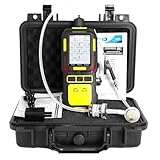
- ⚛️ DETECT: 5-gas analyzer for automobiles, performance tuning, and emissions qualification. Measures exhaust emissions, analyzing levels of carbon monoxide (CO), carbon dioxide (CO2), nitrogen oxides (NOx), oxygen (O2), and hydrocarbons (HC) to assess engine performance and environmental impact. Comes with a USA NIST calibration certificate.
- 🔬 INCLUDED: Includes waterproof hard case, water trap, filters, a stainless steel probe with an alligator clip for exhaust pipe easy mounting, and high-temperature silicone tubing.
- 🔔 SENSORS: High-performance electrochemical (CO, O2, and NO) and Infra-Red Gas Sensors (HC and CO2).
- 💪 STRONG: Robust design constructed with high-strength ABS and anti-slip grip rubber. Water-resistant, dust-resistant, and explosion-proof.
- 🕵️ TRUST: ** 1-year limited warranty ** Arrives with calibration and QA certificates ** Product tested and verified in the USA **
Factor choices can change reported Scope 2 results. Toyota reports both location-based and market-based Scope 2 figures. Its FY2025 report identifies EPA eGRID factors for U.S. location-based electricity calculations, provincial factors for Canada and a country-specific IEA factor for Mexico. Volkswagen says it calculates production-site Scope 1 and 2 emissions annually under the GHG Protocol and ESRS, using provider-specific factors for market-based calculations and VDA country factors for location-based calculations. Volkswagen Group’s Annual Report 2025 describes its approach.
Location-based and market-based electricity
Location-based accounting reflects the average emissions intensity of the electricity grid where a site consumes power. Market-based accounting reflects qualifying contractual choices and supplier-specific information, where available. The two methods answer different accounting questions; they should not be mixed casually in a comparison. State which method a figure uses and, when the company discloses them, the relevant factors or instruments.
Rank #2

- 【2-IN-1 Engine Diagnostic & Battery Tester】: Upgraded from ANCEL’s best-selling AD310/AD410 series, the AD410 PRO obd2 scanner not only offers deeper, more accurate engine fault diagnosis but also covers battery health assessment, starter motor testing, and charging system evaluation. Skip buying separate tools—save money and space while eliminating the hassle of switching between different diagnostic scan tool
- 【Silence the Check Engine Light】: Panicked when the check engine light suddenly pops on? This car code reader decodes 42,000+ SAE DTCs in seconds (e.g. “P0300 – Multiple Cylinder Misfire”)—no confusing jargon. Read codes, understand the issue, then clear the light after fixing—so you avoid guesswork and unnecessary shop fees. NOTE: It DOESN'T support ABS, SRS, or Transmission systems
- 【Comprehensive Battery System Test】: Stop guessing why your car struggles to start—is it the battery, starter, or alternator? AD410 PRO goes beyond a voltage-only check by performing battery health, cranking, and charging system tests to pinpoint where the issue is coming from. Prevent unnecessary replacements and costly repeat repairs—know what's wrong and fix it right, without the guesswork
- 【Avoid a Smog Re-Test】: No more panic before emissions tests! The dedicated I/M Readiness mode of this professional obd2 scanner diagnostic tool instantly shows your vehicle’s compliance status (green = ready, yellow = incomplete). It covers core monitoring items (misfire, fuel system, catalyst, etc.) — fix potential issues in advance so you know you’re ready before you go, avoiding wasted time and extra inspection fees
- 【Live Data for Instant Vehicle Insights】: Don’t just read codes—see what your engine is doing in real time with this car scanner. Track 50+ key live readings with visual dashboards and waveform graphs to spot overheating, sensor issues, or fuel/air issues early. Freeze frame replays the exact moment a fault happened (speed/load/temp), so you know what triggered the check engine light—no more guessing
How to compare reported results fairly
A total emissions figure and an emissions-per-vehicle figure each tell only part of the story. Absolute emissions show the reported footprint within a company’s stated boundary. An intensity metric relates emissions to output, but it can move with production volume, vehicle mix, operating hours and facility composition. Before comparing automakers or years, align the following:
- Boundary: single assembly plant, manufacturing sites, or all company locations.
- Scope: Scope 1, Scope 2, or a combined total; note whether Scope 3 is excluded or included.
- Scope 2 method: location-based or market-based, with disclosed factors or contractual instruments.
- Metric: absolute emissions or an intensity measure, including the denominator used.
- Time period: reporting year, fiscal-year calendar and target baseline.
- Operations: process mix, paint technology, heating loads, operating hours, output and vehicle mix.
- Reduction type: distinguish energy efficiency, fuel switching, electrification and renewable energy from offsets.
Company reports are primary sources for what a manufacturer says it measured and achieved, but company-reported reductions are not independent verification. The figures below illustrate why a stated boundary and method matter.
Do these 3 things before closing this tab:
1Repair Windows errors before they cause bigger problems2Scan for outdated or missing drivers - takes under a minute3Clear out junk files and repair common Windows errorsRank #3
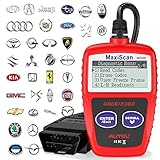
- ⚠️【Important Tips Before Purchcase】1. Compatible with standard OBD II vehicles from 1996 onward in the US market. ⚠️2. Due to the Safe Gateway (SGW) / FCA AutoAuth security system, this tool cannot access OBDII modules to clear codes for FCA vehicles (including Chrysler, Dodge, Jeep, etc.) manufactured after 2017. ⚠️And vehicle brands equipped with a SGW are not supported either. ⚠️3. Not support TPMS or other service functions. Only the basic OBDII code reader. Functions not universal, please s-end mes-sage via Ama-zon or 📞autelofficial @ outlook . com📞 to check before order.
- 🧡【How to get a PDF User Manual ?】a) Download directly via Am-azon page from Product guides and documents section. b) Mes-sage us directly via Am-azon or 📞autelofficial @ outlook . com📞, we will send you the PDF version within 0-24 hours. ⚠️📢Warm Tips: 1. It does not support the full engine system, or more advanced prameter display, if need, please consider autel MD906 PRO/ MK808BT PRO etc. 2. Autel MS309 does not listed in Autel US distributor's w-eb. It is only listed in Autel HQ w-eb. If need, please con-tact us to get w-eb.
- 🧡【How to Use The Tool?】The MS309 autel scanner is a plug-and-play tool; it does not require registration. Step 1: With the k~ in the ON position, the engine off. 2. Connect the MS309 OBDII cable to the vehicle's OBDII port. 3. Then, select the on-screen menu to perform the function. 📢Note: Autel MS309 comes with standard OBD II plug, please ensure your vehicle's port is a stardard OBDII (16 Pin) and not loose.
- 🔥【On-Screen DTC Definition, Save Time & Easy To Use】Autel MS309 OBD2 code reader for cars and trucks can retrive and clear generic(P0, P2, P3 and U0), manufacturer-specific(P1, P3 and U1) and pending codes, and display DTCs(Diagnostic Trouble Codes) meanings under the codes based on the built-in database(1000+ codes). Don't need to spend much time to search meanings on the internet. This advanced plug-and-play MS309 scanner saves you time - a must-have obd2 scanner for each DIY car owner.
- 🔥【Retrieve Freeze Frame Data & Vehicle info】The OBD2 scanner MS309 can retrieve freeze frame data, Vehicle Information such as VIN number, Calibration ID(s), Calibration Verification Nos. (CVNs), etc, which is useful to check whether the ECU matches when you are buying a used car.
| Company-reported figure | What it covers | Qualification |
|---|---|---|
| Toyota North America: 823,870 metric tons CO2e of Scope 1 plus market-based Scope 2 emissions in FY2025 | All North American locations, including assembly and unit plants, offices and warehouses | Not an assembly-plant-only total. Toyota’s FY2025 table also reports 348,000 metric tons Scope 1 and 638,818 metric tons Scope 2 on a location-based basis. Toyota North American environmental sustainability report. |
| Toyota North America: 0.42 metric tons CO2e per vehicle produced in FY2025 | Scope 1 and 2 emissions from all North American locations divided by vehicles produced in North America | Toyota says FY2025 Scope 2 uses the market-based approach, while prior years in this series used location-based values; trend comparisons therefore need caution. Toyota North American environmental sustainability report. |
| Volkswagen Group: 50.4% reduction target for production Scope 1 and 2 emissions by 2030 versus 2018 | Volkswagen Group production emissions under the company’s stated boundary and methodology | The Annual Report 2025 says the target was met ahead of time in 2024 and reports a 60% reduction by the end of 2025. These are company-reported results, not a harmonized comparison with another automaker. Volkswagen Group Annual Report 2025. |
Where factories can reduce emissions
There are three distinct operational levers: reduce the energy a plant needs, change the source of the energy it still consumes, and redesign processes that use substantial heat or electricity. Which measures are practical depends on the site’s equipment, product requirements, production schedule and retrofit constraints.
Use less energy
Volkswagen reports production-site measures including ventilation improvements, LED lighting, heat recovery, load-dependent dryer controls and plant controls that respond to utilization. These target energy demand, including energy used when production is low or equipment is idle. The company also tracks energy targets using production sites certified to ISO 50001. This is a set of Volkswagen-reported actions, not a universal package adopted by every automaker. Volkswagen Group Annual Report 2025.
Rank #4

- Comprehensive 5-Gas Measurement: Measures CO, CO2, HC, O2, and NOx with NDIR and electro-chemical sensors for precise tailpipe emissions diagnostics
- Portable & Handheld Design: Compact analyzer fits in your hand and carrying case for easy mobile or shop use
- Enhanced Engine Diagnostics: Calculates Air/Fuel Ratio, Lambda, and Combustion Efficiency for accurate fuel control assessment
- Multi-Fuel Capable: Supports Gasoline, LPG, and CNG vehicles with the same precision
- Complete Ready-to-Use Kit: Includes exhaust probe, hose, battery clips, spare filters, carrying case, and manual
Change the energy supply
Renewable electricity procurement and onsite generation can reduce the emissions assigned to electricity, depending on the inventory method and the contractual instruments or accounting treatment involved. They do not, by themselves, reduce the amount of energy a plant consumes. Direct fuel combustion is a separate challenge: fuel switching or electrifying process heat can reduce direct emissions where the technology and site conditions make it practical. The resulting benefit also depends on the emissions associated with the electricity used.
Redesign paint-shop operations
Paint shops can be important targets because they use heat and electricity for processes such as spraying and curing. Stellantis says they account for about 65% of a vehicle assembly plant’s industrial CO2 emissions. That is a Stellantis company estimate, not a universal industry average. Its examples include spray-booth air recycling, electric curing ovens, lower-bake E-coats and sealers, and updated paint processes. Such changes can affect fuel and electricity demand, but product quality, throughput, retrofit cost and production constraints matter at an individual site. Stellantis’ September 17, 2024 article on paint shops and its industrial-sites page provide the company’s account.
Best Value

- Multi-Function: This code reader for cars and trucks is like a micro mechanic, which can quickly read and clear engine error codes, live data stream (with graphic display), view freeze frame, check MIL readiness status, read I/M monitoring readiness status and collect vehicle information, display vehicle indicators in detail. You can use it to check fault codes by yourself and display code definitions, understand the health of the vehicle, be fully prepared for going to the auto repair shop for car maintenance.Note: It cannot detect battery life, gearbox faults, output current test, can only detect battery voltage, and can clear fault codes of repaired vehicles.ABS code is not supported.
- Wide Vehicle Compatibility: Multiple Uses - The OBD2 professional automatic scanner supports all OBDII protocols such as KWP2000, J1850 VPW, ISO9141, J1850 PWM and CAN.Works with most 1996 and newer US cars, 2000 EU and Asian cars, light trucks, SUVs, and newer OBD2 and CAN vehicles both at home and abroad. Please check compatibility with your model before purchasing. This car code reader supports multiple languages such as English, German, French, Spanish, Finnish, Dutch, Russian and Portuguese, making it an ideal choice for international users, deeply loved and highly recommended by customers worldwide.
- Rugged and Compact Design: The OBD2 scanner is a compact and well-designed car parts. It weighs 12 ounces and measures 8.9 x 6.9 x 1.4 inches. It comes with a 2.5-foot heavy-duty cable with a standard 16-pin OBD connector. The cable is made of a very thick flexible insulation layer and is sturdy and durable. Since OBD2 scanners can easily fall to the ground while working in the car, the structural design of the scanner is very demanding, and this OBD2 scanner can well meet the customer's needs for sturdiness and compactness.
- Accurate, Fast and Worth Having: The OBD2 code reader adopts an upgraded microprocessor, its powerful performance provides fast and accurate results and displays them on the screen, draws and records real-time vehicle sensor data, helps you understand the condition of the car, quickly diagnose and repair common car problems. 6 buttons for quick operation, plug-and-play design makes it easy to use, you can easily operate it without reading the manual. The OBD2 scanner is not only designed to be lightweight and portable, but also simple, accurate and fast to operate, affordable and more cost-effective, it is a must-have tool for home DIY diagnosis or mechanics to use in auto repair.
- Battery Tester and Advanced OBDII System Diagnostics: This advanced code reader with battery has a built-in easy-to-use battery tester for monitoring battery life and voltage, helping you quickly assess the battery health of your vehicle, prevent unexpected failures and ensure reliable car performance. At the same time, this engine fault code reader provides advanced diagnostic functions, including testing the O2 sensor and EVAP system to measure oxygen concentration, control the amount of fuel injection, reduce fuel consumption, maintain optimal combustion conditions, improve engine efficiency; reduce exhaust emissions, and better protect the environment.
In its 2024 article, Stellantis reported paint-shop energy consumption 27% lower than in 2021, an average of 321 kWh per vehicle, and a target to cut consumption 50% by the end of 2025. The 50% figure was a target stated at the time, not evidence by itself that the target was achieved.
What reported plant reductions do—and do not—show
Lower reported emissions may reflect physical changes such as efficiency improvements, electrification or cleaner energy supply, but a reported number is also shaped by the boundary, factors and method used. Changes in production volume can alter absolute totals, while a different Scope 2 method can alter the electricity component without changing the amount of power a plant used. Offsets should be reported separately from operational reductions because they do not show that a factory consumed less fuel or electricity.
There is no harmonized plant-by-plant dataset or authoritative cross-industry assembly-plant benchmark established by the cited company disclosures. For a meaningful comparison, use like-for-like sites and years, preserve each company’s stated Scope 2 method, and report absolute emissions alongside any production-intensity metric. If those details are missing, treat the comparison as incomplete rather than inferring that one automaker’s plant is cleaner from a headline total alone.
Quick Recap
Product prices and availability are accurate as of the date/time indicated and are subject to change. Any price and availability information displayed on Amazon at the time of purchase will apply.




