Airlines and airports handle winter weather through a coordinated safety operation: airport teams clear and assess runways, aircraft are checked and treated for contamination, and airport operators, airlines, ground handlers and air traffic control adjust plans as conditions change. Clearing snow alone does not make a runway or aircraft safe for departure.
1. Airport teams clear snow and ice from movement areas
Airport operators use snowplows, blowers, brooms and deicing chemicals to keep runways, taxiways and other movement areas usable. Trained crews work under a snow and ice control plan that sets out priorities and procedures. The FAA notes that snow can reduce traction and obscure pavement markings, signs and lighting, so clearing is only part of the job.
The equipment and staffing needed depend on local conditions and airport procedures. The FAA’s U.S. guidance describes the planning and snow-removal practices in AC 150/5200-30D, issued October 29, 2020 and listed as active when accessed.
2. Runway conditions are assessed and reported
After and during winter-weather operations, airport personnel assess runway conditions and communicate information that pilots and air traffic services need. In the United States, FAA AC 150/5200-30D covers field-condition assessment, the Runway Condition Assessment Matrix (RCAM), reporting and snow-removal procedures. The aim is to give flight crews a usable picture of the surface rather than treating “open” as a complete description of runway safety.
Quick wins for a faster PC:
Repair Windows errors before they cause bigger problemsFix Now →Scan for outdated or missing drivers - takes under a minuteDriver Scan →#1 Best Overall
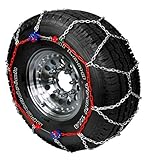
- Worry-Free Self-Tightening Ratchets Provide Automatic Tightening And Centering
- Easy Installation And Removal In Minutes
- Do Not Exceed 30 Mph With These Chains On
- Diamond Pattern Cross Chain Provides A Smoother Ride And Superior Traction
- Meets Class "S" clearance requirements, even in light truck sizes
European guidance likewise calls for reporting operationally significant runway-condition changes, including changes caused by snow, slush, ice or frost. The applicable procedures differ by jurisdiction; FAA guidance applies in the United States, while EASA rules apply within their relevant European regulatory context.
3. Aircraft surfaces must be clear before takeoff
Snow and ice on an aircraft’s wings or tail can alter the airflow the aircraft depends on. The FAA’s From Frost to Flight explainer puts the risk plainly: “Even a small amount of ice can change a plane’s aerodynamics, creating more drag and less lift.” It is the FAA’s statement, not a quotation attributed to an individual speaker.
Rank #2
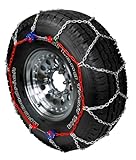
- Worry-Free Self-Tightening Ratchets Provide Automatic Tightening And Centering
- Easy Installation And Removal In Minutes
- Do Not Exceed 30 Mph With These Chains On
- Diamond Pattern Cross Chain Provides A Smoother Ride And Superior Traction
Before takeoff, contamination is removed or otherwise addressed according to the conditions and the aircraft’s applicable procedures. EASA air-operations guidance says treatment and checks are governed by the aircraft type’s provisions and the operator’s procedures, and are carried out by trained personnel.
4. Deicing removes contamination; anti-icing helps prevent its return
These are related but distinct steps:
- Deicing removes snow, ice or frost already on the aircraft.
- Anti-icing applies protection intended to help prevent contamination from returning while freezing precipitation is occurring or expected.
EASA’s March 2026 Easy Access Rules for Air Operations list removal options including mechanical tools, fluids (including hot water), infrared heat and forced air, subject to the aircraft type’s provisions. The appropriate method and subsequent checks depend on the aircraft, conditions and operator procedures; no single treatment guarantees an on-time departure.
Rank #3
- Worry-free self-tightening ratchets provide automatic tightening and centering
- Easy installation and removal in minutes
- Do not exceed 30 MPH with these chains on
- Diamond pattern cross chain provides a smoother ride and superior traction
- Note-Chains should be fitted to tire before actual use. Fitment can be affected by age of tire, tire manufacturer and/or tread type
5. Teams coordinate treatment, taxiing and traffic flow
Winter operations involve more than airport crews and pilots. Airport operators, airlines and ground handlers coordinate where and how aircraft are treated, while air traffic control manages movement in the wider system. EASA aerodrome guidance describes deicing facilities at aircraft stands or in designated remote areas. Remote facilities can be useful when icing or blowing snow is expected on the taxi route to the departure runway.
Clearing and treating aircraft takes time, and runway conditions can limit how much traffic can move safely. In the United States, the FAA may use measures such as ground delays and reroutes during winter weather. These decisions can hold departures or change routes even when an airport remains open.
Rank #4
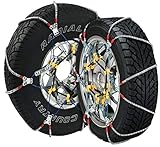
- Country of origin : China
- Designed for cars, pickups, and SUVs with very limited operating clearance around the drive tires
- Fast easy installation with no need to move the vehicle
- Designed-in rubber tightener means there is no need to stop and retighten after installation
Why a cleared airport can still have delays
An airport’s ability to operate depends on the combined picture: the condition of the runway, aircraft surface contamination, treatment and inspection time, taxi-route conditions and traffic-management constraints. A runway may be available while an individual aircraft still needs treatment, or a safe departure may be delayed to manage traffic and changing weather. Procedures vary with the jurisdiction, airport, aircraft and conditions.
Quick Recap
Best Value
- Worry-Free Self-Tightening Ratchets Provide Automatic Tightening And Centering
- Easy Installation And Removal In Minutes
- Do Not Exceed 30 Mph With These Chains On
- Diamond Pattern Cross Chain Provides A Smoother Ride And Superior Traction
- Note-Chains should be fitted to tire before actual use. Fitment can be affected by age of tire, tire manufacturer and/or tread type
Product prices and availability are accurate as of the date/time indicated and are subject to change. Any price and availability information displayed on Amazon at the time of purchase will apply.




