The car widely called the “Mazda RX-9” does not officially exist yet. Mazda has not announced an RX-9 name, production decision, price, launch date, or final specifications. What the company has actually shown is the MAZDA ICONIC SP, a compact sports-car concept unveiled at the Japan Mobility Show on October 25, 2023.
That distinction matters, but it does not make the concept uninteresting. If Mazda can turn the Iconic SP’s ideas into a production car, it could offer a genuinely unusual alternative to both traditional sports cars and mainstream electric coupes. Its potential game-changing feature is not a high-revving twin-turbo rotary driving the rear wheels. It is a two-rotor engine used as a generator in a series-hybrid electric drivetrain.
As an Amazon Associate I earn from qualifying purchases.
There is no confirmed Mazda RX-9—only a promising concept
“RX-9” is an enthusiast-created name for a possible successor to the RX-7 and RX-8. Mazda’s official name for the relevant vehicle is the MAZDA ICONIC SP. In its announcement, Mazda described it as a “compact sports car concept,” not as a production RX model.
As of August 9, 2026, Mazda has not confirmed that the concept will enter production. It has also not confirmed an on-sale date, model year, market availability, price, transmission, rear-wheel-drive layout, engine displacement, or production performance figures. Claims that a “2026 RX-9” or “2027 RX-9” is already scheduled should therefore be treated as speculation.
#1 Best Overall

- Plastic model kit-assembly required
- Glue and paint sold separately
- Manufacturer item #: 24116
The most accurate way to discuss the car is as a possible production sports car derived from the Iconic SP. That may sound less definitive than the usual internet headlines, but it prevents concept figures from being presented as specifications for a vehicle Mazda has not announced.
The concept’s unusual powertrain is the real story
The Iconic SP uses what Mazda calls a two-rotor Rotary-EV system. The rotary engine does not directly provide the primary driving force. Instead, it works as a generator, producing electricity for the battery and electric motor. Electric propulsion then drives the car.
That is a major departure from the rotary sports cars many enthusiasts remember. The RX-7 used a conventional combustion drivetrain, with the rotary engine connected to the wheels. Mazda’s concept instead uses the rotary’s compact dimensions and low mass as part of an electrified system.
What’s actually slowing this PC down?
Pick the symptom - the matching free tool is one click away.
In a series-hybrid arrangement, the engine can operate independently from vehicle speed and wheel speed. The electric motor supplies the immediate response associated with an EV, while the generator can replenish the battery when required. Mazda has also said the rotary system is compatible with carbon-neutral fuels, although fuel compatibility does not by itself solve questions surrounding emissions certification, cost, or total lifecycle impact.
This layout could give Mazda a way to preserve a compact, lightweight engine while avoiding the need for that engine to deliver all propulsion directly. It is an intriguing technical solution, but it should not be confused with confirmation of a new twin-turbo rotary coupe.
What Mazda has actually published
Mazda’s 2025 Multi-Solution Briefing lists the following figures for the Iconic SP concept:
Rank #2

- Detailed model kit in 1:24 scale.
- The high-quality kit from TAMIYA must be assembled by yourself.
- The independent assembly is accompanied by step by step or illustrated assembly instructions (English language not guaranteed). The assembly instructions are included (English language not guaranteed).
- Based on the assembly instructions (English language not guaranteed), the precise individual parts must be assembled. The parts can be painted according to your own ideas.
- Tools, glue and paints are not included with the plastic kit. These must be purchased optionally.
| Item | Published concept figure |
|---|---|
| Length | 4,180 mm |
| Width | 1,850 mm |
| Height | 1,150 mm |
| Wheelbase | 2,590 mm |
| Vehicle weight | 1,450 kg |
| Maximum output | 370 PS |
| Electric-drive range | 200 km |
These are Iconic SP concept specifications. They are not confirmed RX-9 production specifications. A production version could change significantly because Mazda would need to meet crash standards, emissions rules, noise requirements, durability targets, manufacturing constraints, and cost objectives.
Windows Errors? Fix Them Before They Spread
Repair common Windows errors and clear accumulated junk for a smoother, more stable PC - no reinstall needed.Free scan · no reinstallCrashes, No Sound, or Screen Glitches?
Random freezes, missing sound and display glitches usually trace back to one bad driver. Find and replace yours safely.Free scan · under a minuteThe 370-PS figure, for example, should not be repeated as confirmed horsepower for an RX-9. Nor has Mazda confirmed the battery capacity, charging speed, electric-motor torque, curb weight distribution, suspension design, gearbox, or driven wheels for a production vehicle.
Why the dimensions matter
The concept is relatively low and compact, measuring 4,180 mm long and 1,150 mm high, with a 2,590-mm wheelbase. Its 1,850-mm width is substantial for a small sports car, but the proportions suggest that Mazda is targeting a serious two-seat or compact-cabin sports-car profile rather than a practical family coupe.
The rotary engine’s small external dimensions are important here. Mazda says that its compact size provides packaging flexibility and supports a low center of gravity. In principle, that could allow engineers to position the generator without using the long engine bay required by a larger piston engine. The electric drive unit and battery, however, still require space and add mass, so the rotary’s compactness does not automatically make the entire car light.
At 1,450 kg, the concept is not lightweight by classic RX-7 standards. It is nevertheless notable if the figure is considered alongside a battery-electric propulsion system and a range-extending generator. Whether a production model can retain that balance will be one of the most important engineering questions.
The Tool Desk
Outbyte PC Repair FREEClear out junk files and repair common Windows errorsFree Scan →Outbyte Driver Updater FREEScan for outdated or missing drivers - takes under a minuteDriver Scan →It could offer a different answer to sports-car electrification
Most new electric performance cars use large batteries to deliver power and range. That approach can produce exceptional acceleration, but battery mass can make a car much heavier than the sports cars enthusiasts are used to driving.
Rank #3

- An import from Aoshima
- Detailed 13B engine
- Retractable headlights can be assembled in the open position
- Work Meister S1 wheels in a plated finish
- Also includes strut tower brace, muffler, special front bumper, water slide decal sheet, and window masking sheet
The Iconic SP proposes a different compromise: use electric propulsion for the driving experience, but use a compact rotary generator to reduce reliance on an extremely large battery. Mazda has quoted 200 km of electric-drive range for the concept. The company has not explained a production vehicle’s total range, charging strategy, or generator-fuel consumption, so it would be premature to call the system a complete solution to EV limitations.
Still, the concept could be distinctive in three ways:
- Instant electric response: the motor can provide propulsion without waiting for an engine to build revs or boost.
- Flexible energy packaging: a small rotary generator may occupy less space than a conventional piston engine of comparable output.
- A potentially smaller battery: the generator could provide energy for longer trips without requiring the battery capacity of a long-range battery EV.
Those advantages come with trade-offs. The system has an engine, generator hardware, battery, electric motor, cooling systems, and control electronics. That can be more complicated than either a pure EV or a conventional combustion sports car. Cost, thermal management, generator noise, servicing, and regulatory compliance would all influence whether the concept makes sense as a showroom product.
Mazda is still developing rotary technology—but that is not an RX-9 confirmation
On February 1, 2024, Mazda restarted a dedicated rotary-engine development group. The company said the group would focus on rotary engines used as generators, regulatory compliance in major markets, and carbon-neutral fuels.
Mazda, Toyota, and Subaru also said in a May 28, 2024 joint announcement that Mazda’s rotary engine was currently being used for generator applications and would continue to be developed for electrification and carbon-neutral fuels. These announcements confirm that Mazda continues to invest in rotary technology. They do not confirm a new RX-badged production car.
Mazda has already used a single-rotor engine as a range extender in the MX-30 R-EV. That application demonstrates that the company can integrate a rotary into an electrified vehicle, but it is not evidence that a sports-car program has received production approval.
Rank #4

- Plastic Model Kit-Assembly Required
- Glue and Paint sold separately
- Manufacturer Item #: 24110
The financial hurdle may be bigger than the engineering hurdle
The strongest reason to remain cautious is not that the technology is impossible. In November 2025, Mazda Chief Technology Officer Ryuichi Umeshita told Autocar that the technology was feasible, but that the outstanding issue was financial. Autocar reported that production of an Iconic SP-style car was not a priority while Mazda focused resources on its broader electric-vehicle architecture.
Quick wins for a faster PC:
Fix the driver behind crashes, sound loss and screen glitchesFind Drivers →Repair Windows errors before they cause bigger problemsFix Now →Scan for outdated or missing drivers - takes under a minuteDriver Scan →A low-volume sports car must absorb development, tooling, certification, and supply-chain costs across relatively few vehicles. A rotary-generator system adds components and development work that would be difficult to share across Mazda’s mainstream lineup. The business case would need to justify the engineering expense at a time when automakers are trying to reduce the cost of electrification.
That is why the Iconic SP can be both technically credible and commercially uncertain. Mazda may have a workable powertrain concept without having approved the investment required to manufacture it.
Independent reader supportYour contribution helps us test, update, and keep practical guides available for everyone.What would make a production version a game changer?
If Mazda builds a car close to the Iconic SP, its impact would come from its combination of traits rather than one headline number:
- a compact sports-car body;
- electric propulsion and its immediate throttle response;
- a two-rotor engine serving as a generator;
- a low-center-of-gravity packaging philosophy;
- possible compatibility with carbon-neutral fuels; and
- a design that does not simply copy either a conventional combustion coupe or a large-battery EV.
That formula could give Mazda a clear identity in a shrinking sports-car market. It would also give rotary-engine fans a new reason to care about the technology without pretending that the old RX-7 formula can simply be recreated under modern regulations.
Do these 3 things before closing this tab:
1Scan for outdated or missing drivers - takes under a minute2Repair Windows errors before they cause bigger problems3Fix the driver behind crashes, sound loss and screen glitchesBut “game changer” remains conditional. The car would need a manageable price, acceptable weight, good refinement, reliable range, straightforward servicing, and enough production volume to support parts and software over its lifetime. A technically fascinating sports car that is too expensive to build or buy would have limited influence.
Best Value
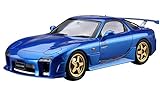
- An import from Aoshima
- This sleek vehicle comes fully equipped with Mazdaspeed's aero specification
- Featuring a front nose (type GT-C), side skirts (type 15th), rear skirt (type GT-C), and rear wing (type GT-C)
- Window frame masking stickers are included
What to watch next
Until Mazda makes a formal production announcement, the useful indicators are concrete rather than speculative renderings. Watch for:
- an official production name and program announcement;
- confirmation of the markets in which the car will be sold;
- final powertrain architecture, including whether the rotary remains a generator only;
- homologated battery, range, output, and weight figures;
- pricing and manufacturing plans; and
- evidence that Mazda has resolved the financial case identified by its technology chief.
Until those details appear in Mazda’s own communications, “RX-9” should be treated as shorthand for a hoped-for production sports car—not as an announced model.
FAQ
Is the Mazda RX-9 officially confirmed?
No. Mazda has not announced a production model called the RX-9. The relevant official vehicle is the MAZDA ICONIC SP concept, and Mazda has not confirmed that it will enter production.
Free tools Windows power users keep installed
One-click scans. No signup required.
Will the Mazda RX-9 use a twin-turbo rotary engine?
There is no confirmed RX-9 powertrain. The Iconic SP concept uses a two-rotor Rotary-EV system in which the rotary engine acts as a generator and electric drive provides propulsion.
How much power and range does the Mazda Iconic SP have?
Mazda’s published concept figures are 370 PS of maximum output and 200 km of electric-drive range. Those figures apply to the Iconic SP concept, not to a confirmed production RX-9.
When will the Mazda RX-9 go on sale?
There is no verified reveal date, production timetable, model year, or on-sale date. Mazda’s technology is still financially unresolved, according to an Autocar report citing Mazda CTO Ryuichi Umeshita in 2025.
The Bottom Line
The rumored Mazda RX-9 could be a game changer only if Mazda turns the Iconic SP concept into an affordable production car. Its two-rotor rotary generator and electric propulsion would be far more unusual than a conventional turbocharged rotary revival. For now, however, the RX-9 name, launch timing, price, drivetrain, and production specifications remain unconfirmed—and the financial case may decide the project before engineering does.
Quick Recap
Product prices and availability are accurate as of the date/time indicated and are subject to change. Any price and availability information displayed on Amazon at the time of purchase will apply.