Recommended Free Tools
Some traffic lights detect your car, but not all of them do. At an actuated intersection, sensors report that a vehicle is present, has passed through a detection zone, or is contributing to traffic on an approach. A controller in the roadside cabinet then uses that information—along with programmed timing rules—to decide when a phase can begin, continue, or end.
Other signals are pretimed or coordinated. They follow a schedule whether or not a car is waiting, which is why a light can remain red on an apparently empty road. The system is not usually identifying you, reading your plate, or understanding where you want to go. In ordinary operation, it is receiving a traffic-detection input and applying programmed logic.
As an Amazon Associate I earn from qualifying purchases.
The traffic light is only the visible part
The red, yellow, and green signal heads are the display. The decision-making happens in a controller cabinet, usually located at the side of the road. That controller manages the intersection’s signal phases and receives inputs from several sources, including:
Quick wins for a faster PC:
Clear out junk files and repair common Windows errorsFree Scan →Scan for outdated or missing drivers - takes under a minuteDriver Scan →- Vehicle detectors in or beside the roadway
- Pedestrian push buttons
- Transit-priority equipment
- Emergency-vehicle-preemption systems
- Coordination systems linking several intersections
- Programmed timing limits and schedules
When a vehicle detector identifies traffic, it may send the controller a call for a particular movement. Depending on the intersection’s programming, that call can request a green phase, keep a phase active, or help the controller determine whether traffic has developed a sufficiently long gap to end the phase.
#1 Best Overall

- You will receive 2 packs of traffic light toys, enough quantity for you and your kids to play. The light model can effectively cultivate children's safety awareness and satisfy kids' curiosity. Measures approximately 4.5 inches tall resembling real traffic signals to immerse children in pretend play scenarios of following traffic rules.
- These traffic lamps are made of plastic with maximum endurance for long-lasting durability, and can be applied for years;- friendly material, non-toxic and no irritation, and safe for children to play with. Helps with hand-eye coordination, color, and shape recognition skills as well as taking turns.
- Ideal for preschoolers during learning activities or parties. A wonderful parent-child interaction toy. This educational traffic lamp toy will keep your child entertained for infinite hours. Through a simple application method, children can easily use it and learn more about traffic safety.
- This mini traffic light toy teaches kids colors, signals, and road safety with flashing red, yellow, and green lights for stop, slow, and go. This traffic sign toy can keep your children away from mobile phones, electronic devices, computer games, etc. The good accessory for your play area!
- This mini traffic signal lamp is a wonderful early educational toy for teaching children the knowledge of road signs. Good product for birthdays, holidays, and other occasions. It can also be used as a prop for photos, videos, plays, and other types of creative performances.
That distinction matters: a detector does not independently decide to turn your light green. It supplies information to the controller, which must still follow safety intervals, minimum and maximum timings, and any coordination plan.
First, not every traffic light detects cars
Traffic signals generally fall somewhere between two broad control approaches:
| Type of control | How it works | What a waiting driver may notice |
|---|---|---|
| Pretimed or fixed-time | Changes according to a programmed schedule, without needing a vehicle call. | The signal may cycle even when a side street is empty. |
| Coordinated | Runs according to a schedule designed to work with nearby signals and traffic progression. | A light may not respond immediately to a vehicle because it must maintain the coordination plan. |
| Actuated | Uses vehicle, pedestrian, or other inputs to request service and adjust phases. | A side street may receive green only when a vehicle or pedestrian requests it, or may receive a variable green time. |
Many intersections combine these approaches. For example, a signal can be coordinated during busy periods but use detection to make limited adjustments. A driver cannot determine the control type simply by looking at the signal head.
Do these 3 things before closing this tab:
1Clear out junk files and repair common Windows errors2Fix the driver behind crashes, sound loss and screen glitches3Repair Windows errors before they cause bigger problemsHow pavement loops detect a car
The rectangular or circular cuts visible in pavement near a stop bar are often inductive-loop detectors. A loop consists of insulated wire installed in slots cut into or beneath the pavement, a lead-in cable, and detector electronics in the controller cabinet.
The electronics energize the wire as part of a tuned electrical circuit. When a conductive vehicle enters the loop’s electromagnetic field, eddy currents in the vehicle alter the loop’s inductance. The detector recognizes that change and sends the controller a presence or passage signal.
In other words, the loop is not primarily sensing the rubber in your tires, and the car does not need to touch the wire. It is responding to the vehicle’s effect on the electromagnetic circuit—especially the conductive and ferromagnetic material in the vehicle.
An intersection may use different loop arrangements for different jobs:
Rank #2

- Traffic Signal Light-Two Traffic Signal Lights can attract childrens attention and simplify the teaching of traffic rules. As children grow up, the signal lights can be compatible with all other railway toys, so their railway games can also be used
- Traffic Model Toys- When using a round base, you can place 2 traffic lights on the table top and other smooth surfaces. The accessory for your play area! The present for birthdays, holidays and other present - giving occasions
- Improve Skills- Traffic Stop Lights can automatically change lights and imitate sounds, so they are very close to real traffic lights. Playing with trains can help children understand and understand their environment in a fun way. The train function can help improve childrens spatial awareness and fine motor skills
- Best present - You can play the Traffic Light Toy with your children to enhance parent- child relationship. It can be given to children as a birthday present , Christmas or other holiday present , can teach them traffic rules, and can also make them have fun
- Materials- Traffic Light Lamps are Made of materials, suitable for children to play. This traffic signal model is suitable for teaching children road signs
- A short loop near the stop line may detect a vehicle waiting at a red light.
- A longer loop or multiple loops may measure a queue or detect vehicles approaching the intersection.
- Separate loops may serve separate lanes or movements.
- Some configurations distinguish presence from passage, depending on the detector mode and controller programming.
The markings are not always obvious. Loops can be installed beneath the pavement, covered by later resurfacing, or replaced by another type of sensor.
Presence versus passage detection
Two terms explain much of the system’s behavior:
- Presence detection tells the controller that a vehicle remains in a detection zone. This is useful for knowing that a car is stopped at the intersection.
- Passage detection registers a vehicle crossing a point or zone, often sending a brief pulse rather than a continuous signal.
In a presence mode, the detector can remain active while a vehicle occupies the zone. In a pulse or passage mode, it sends a short input when the vehicle crosses. The controller’s programming determines what happens next.
For example, a detector call might start a side-street phase, while repeated vehicle detections during a green phase might extend that green. Once the controller sees a sufficiently long gap in arriving traffic—or reaches another programmed limit—it may terminate the phase and move through the yellow and all-red clearance intervals.
Why a green light gets longer or shorter
Signal controllers use several timing concepts. The names and exact settings vary by system, but the basic logic is straightforward:
- Minimum green: the shortest time a phase can remain green, even if traffic conditions change immediately.
- Passage time or vehicle interval: a time allowance associated with vehicles arriving in succession.
- Extension: additional green time requested when another vehicle is detected.
- Maximum green: an upper limit that prevents one movement from holding the intersection indefinitely.
- Gap or gap-out: the controller ends a phase after the detected time between vehicles becomes long enough.
- Yellow and all-red clearance: safety intervals that allow a movement to end before conflicting traffic receives the right of way.
Suppose several vehicles arrive on a minor road. Each detection may keep the phase from ending immediately, subject to the maximum-green limit. If only one vehicle arrives and the detector observes a long enough gap afterward, the controller may end that green sooner. It is not making a human judgment about which driver deserves priority; it is applying timing rules to sensor inputs.
Why motorcycles and bicycles can sometimes be missed
A small motorcycle or bicycle can produce a weaker response in an inductive loop than a large automobile. Whether it is detected depends on the loop’s geometry, the detector’s sensitivity, the vehicle’s size and metal composition, its position in the zone, and the intersection’s calibration.
That is why there is no universal motorcycle position that will trigger every signal. A two-wheeler near the edge of a detection zone may produce a weaker signal than one over the most sensitive portion of the loop. Some intersections also use video, radar, magnetometers, or another technology rather than a loop.
Rank #3

- Compact and Portable Size: Each traffic light prop measures approximately 4.33 x 1.77 x 1.77 inches, making them easy to handle for small hands and convenient to carry for on-the- and play
- Interactive Educational Model: Designed to teach kids how to recognize traffic signals and understand essential traffic rules through hands-on play, enhancing their awareness in a fun and memorable way
- Durable Plastic Construction: Made from sturdy plastic material, these traffic road model are lightweight and resistant to impact, suitable for everyday use by children during playtime
- Versatile Use for Kids' Play: Ideal for role-playing, early education, and imaginative games, these traffic light model for kids encourage creativity while promoting understanding of traffic signals and pedestrian safety
- Realistic Traffic Light Simulation: This 2 pcs traffic light model features light-up signals and simulated traffic sounds to mimic real traffic conditions, providing an engaging experience that helps children learn about road safety and traffic rules
An apparent missed detection can have several explanations:
Free tools Windows power users keep installed
One-click scans. No signup required.
- The vehicle stopped beyond the actual detection area.
- It stopped between two loops or outside the lane served by that call.
- The lane’s detector is configured for a different movement.
- The intersection is following a fixed-time or coordinated plan.
- The loop or another detector is damaged, miscalibrated, obstructed, or malfunctioning.
Loop failures can involve pavement cracking, exposed cable, poor termination, installation problems, or damage from road work. A failed detector may cause a movement to be served continuously, served by a fallback timing plan, or appear not to receive a vehicle call. The exact response is determined by the local agency’s equipment and programming.
Video cameras can detect vehicles without pavement loops
Many intersections use overhead video detection instead of, or alongside, loops. The camera is aimed at lanes and defined detection zones. Image-processing software analyzes activity in those zones and sends a detection output to the signal controller.
One camera can cover several lanes from a single mounting position, and installation does not require cutting the pavement. That makes video useful where loops are difficult to install or maintain. But video performance depends on the equipment, mounting geometry, calibration, and surroundings. Shadows, glare, precipitation, poor visibility, occlusion by large vehicles, and changes in the camera’s view can affect detection.
Field evaluations of video, radar, thermal, and hybrid systems have examined performance in daytime, nighttime, rain, snow, wind, and favorable conditions. The practical lesson is not that every camera fails in a particular type of weather. It is that environmental performance is an engineering and maintenance issue, not a universal property of all video systems.
The Tool Desk
Outbyte Driver Updater FREEScan for outdated or missing drivers - takes under a minuteDriver Scan →Outbyte PC Repair FREEClear out junk files and repair common Windows errorsFree Scan →A vehicle-detection camera is also not automatically a law-enforcement camera or a license-plate reader. Its traffic-control job is generally to determine whether a vehicle is present or moving in a configured zone.
Other ways intersections detect vehicles
Traffic agencies can select from several non-intrusive and in-roadway technologies. Their capabilities overlap, but they are not interchangeable:
Rank #4

- Educational Tool: This 7.8 inch traffic light toy serves as an excellent educational tool for teaching children about traffic signals and safety rules, promoting early traffic education in a fun and interactive way
- Interactive Play: With its button control feature, kids can engage in exciting games like "red light, green light," enhancing their motor skills and understanding of stop-and-go instructions
- Vibrant Design: The bright colors and realistic appearance of this traffic light attract children's attention, making learning about traffic signs enjoyable and effective
- Construction: Made from sturdy materials, this traffic light toy is built to withstand playful handling, ensuring it lasts through countless hours of imaginative play
- Versatile Use: Perfect for classrooms, playrooms, or home learning environments, this traffic signal decor can also enhance themed parties and events, providing a playful yet educational atmosphere
| Technology | Basic principle | Possible information |
|---|---|---|
| Microwave or radar | Uses electromagnetic energy to detect vehicles across one or more lanes. | Presence, passage, speed, volume, occupancy, and sometimes direction or classification. |
| Laser radar | Scans roadway areas and can create vehicle profiles. | Presence, speed, position, and vehicle characteristics, depending on the system. |
| Passive infrared | Detects energy patterns associated with vehicles. | Presence or passage, depending on design. |
| Magnetometers | Detect changes in the Earth’s magnetic field caused by ferrous-metal vehicles. | Vehicle presence or passage in a localized area. |
| Ultrasonic or acoustic sensors | Uses sound or reflected energy to identify roadway activity. | Detection and traffic measurements, depending on configuration. |
| Video image processing | Analyzes movement or changes inside configured image zones. | Presence, passage, speed, volume, occupancy, direction, and sometimes classification. |
The best choice depends on lane layout, pavement, mounting opportunities, weather exposure, desired data, maintenance resources, and calibration. There is no single detector that is universally superior.
Why the light may stay red when nobody seems to be there
If you are waiting at an empty intersection, the red light does not necessarily mean the detector has failed. Common explanations include:
- The signal is pretimed or coordinated. It may be following a schedule regardless of current traffic.
- The detector is farther upstream than expected. The visible pavement marking near the stop line may not be the active detection zone.
- Your vehicle is outside the configured zone. Stopping too far forward, too far back, or between detection areas can prevent a call.
- A different phase is still running. Minimum green, yellow, all-red clearance, pedestrian service, or another movement may have to finish.
- The controller is operating under a recall or schedule. Some movements are served automatically even without a current vehicle call.
- The detector needs maintenance. Damage, calibration problems, obstructions, or equipment failure can affect operation.
Because several explanations look identical from the driver’s seat, it is not possible to diagnose the sensor type or fault simply by watching the signal. If a location repeatedly fails to recognize vehicles, note the intersection, lane, time, weather, and traffic movement, then report the pattern to the responsible road agency.
What does the signal know about your car?
Depending on the sensor and its configuration, the controller may receive information such as:
Best Value
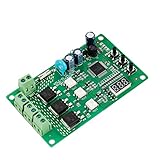
- 36 LIGHTING PATTERNS – Enjoy up to 36 selectable light sequences, including 12 authentic traffic modes. Programming is as simple as pressing a button, allowing you to switch freely between patterns and recreate the feel of real traffic lights for a relaxing and immersive experience
- USER-FRIENDLY OPERATION – Features realistic wait intervals and customizable yellow light delays. You can set traffic delays from 1–120s and yellow light delays from 1–8s via independent button controls. The digital display shows real-time delay times clearly, making operation effortless for everyday leisure use
- 3 OUTPUT CHANNELS – Equipped with three independent output channels, supporting loads from 4W up to 662W per channel. Built with solid-state relays for quiet, reliable, and maintenance-free performance that won’t disturb your daily environment
- RELIABLE PROTECTION – Constructed with FR-4 flame-retardant PCB for enhanced safety. Integrated MOV surge protection shields against voltage spikes and inductive kickback. Both MOV and fuse components comply with UL standards. Wide input voltage range: 85–265VAC
- WIDE COMPATIBILITY – Works seamlessly with all types of traffic light bulbs, including incandescent, fluorescent, and LED (even non-dimmable). A great replacement solution for older traffic lights
- Whether a vehicle is present in a zone
- Whether it passed a point
- How long the zone has been occupied
- Approximate speed or traffic volume
- Direction of travel
- Vehicle classification in systems designed to estimate it
Normally, the useful output is associated with a lane, approach, movement, or detection zone. It does not identify the driver’s name, destination, or intentions. A video detector may process image data, but that does not by itself mean it is performing facial recognition or tracking an individual driver.
The plain-English version is: the signal does not “see you” like a person does. Its controller receives a sensor-generated call or measurement and applies programmed rules.
Where to learn more
For readers who want the engineering detail behind detector inputs, gaps, extensions, and phase timing, a traffic signal timing manual is a useful technical follow-up. It is better suited to transportation students, engineers, and technically curious readers than to someone simply trying to understand why one intersection stayed red.
Outdated Drivers Are Slowing You Down
One free scan finds every outdated or missing driver and matches the right update for your exact hardware.Free scan · exact hardware matchWindows Errors? Fix Them Before They Spread
Repair common Windows errors and clear accumulated junk for a smoother, more stable PC - no reinstall needed.Free scan · no reinstallThe U.S. Manual on Uniform Traffic Control Devices provides the national standards framework for traffic-control devices. The Federal Highway Administration identifies the 11th Edition as the current national MUTCD edition and says Revision 1 became effective on March 5, 2026. States and local agencies still design, operate, and maintain their signal systems under applicable state and local requirements. See the FHWA MUTCD site for the current official publication.
Frequently Asked Questions
Do all traffic lights have sensors under the road?
No. Some intersections use inductive loops or other detectors, while pretimed and coordinated signals may operate on a schedule without detecting a waiting vehicle. Others use overhead video, radar, magnetometers, or another technology.
Do traffic lights detect the weight of my car?
Not in the ordinary inductive-loop sense. A loop detects the vehicle’s effect on an electromagnetic circuit, particularly the conductive and ferromagnetic material in the vehicle. Vehicle size, composition, position, loop geometry, and sensitivity all affect the signal.
Why do motorcycles sometimes fail to trigger a green light?
A motorcycle may produce a weaker detector response, especially near the edge of a loop or outside its most sensitive area. The signal may also be fixed-time, coordinated, improperly calibrated, damaged, or using a different sensor technology.
Can a traffic-light camera identify me?
A conventional vehicle-detection camera is generally configured to identify activity in roadway zones and report traffic information to the controller. That does not automatically make it a facial-recognition or license-plate camera. Equipment and data practices can vary by jurisdiction, so separate enforcement cameras should not be assumed to have the same function.
How do traffic lights detect emergency vehicles?
Emergency-vehicle preemption systems can use coded light or infrared signals, radio or beacon systems, GPS-based communications, or vehicle-signature technology. Preemption is a special priority request and is different from an ordinary car’s detection call.
The Bottom Line
Bottom line: a traffic light may detect your car, but it may also be following a schedule. When detection is used, pavement loops, video, radar, magnetometers, and other sensors report vehicle presence or movement to a controller. The controller—not the sensor alone—uses those inputs with minimums, maximums, gaps, clearance intervals, and coordination rules to control the signal. Most ordinary systems know that a vehicle is in a particular zone; they generally do not know who is driving it.
Quick Recap
Product prices and availability are accurate as of the date/time indicated and are subject to change. Any price and availability information displayed on Amazon at the time of purchase will apply.
What’s actually slowing this PC down?
Pick the symptom - the matching free tool is one click away.




