Short answer: the Tesla Model Y is currently advertised at up to 357 miles in the U.S., but that is the EPA estimate for the Premium RWD on 19-inch wheels—not a guaranteed highway distance. Independent testing has recorded about 240 to 270 miles during sustained 75-mph driving, while a mixed city-and-highway test of the 321-mile-rated Model Y Standard reached 337 miles.
For everyday use in moderate weather, a current Model Y can approach or even exceed its EPA figure under the right conditions. For a fast road trip, however, speed, temperature, wind, elevation, wheel size, tires, climate control, and cargo can reduce the usable distance substantially.
As an Amazon Associate I earn from qualifying purchases.
All figures in this article are U.S. figures and are based on the current lineup and research available as of August 12, 2026. Model names, equipment, wheels, batteries, and EPA ratings can differ in other markets.
Recommended Free Tools
The range number that matters depends on how you drive
There is no single universal real-world range number for the Tesla Model Y. The most useful way to understand it is to keep three figures separate:
#1 Best Overall

- Flex Level 1 EV Charger - The EVDANCE Level 1 electric car charger is compatible with J1772 electric vehicles and plug-in hybrid vehicles (North American Standard). *Tesla requires a SAE J1772 adapter.
- Convenient to Use - This charger has both NEMA 6-20 plug for 16A 240V charging (3.68kW, 10-12 mi/h) and a NEMA 6-20 to 5-15 plug adapter for 12A 120V charging (1.44kW, 2-5 mi/h). The included bag makes it easier to carry on the go. It also has a 25ft cable length, you can use it flexibly from anywhere in the garage or driveway.
- Check Your Outlet Type -This charger works with standard 120V NEMA 5-15/5-20 outlets (2-5 mph charging speed) and 240V NEMA 6-20 outlets (10-12 mph) . It's not compatible with NEMA 6-15/10-30/14-30/14-50/6-50 outlets – you'll need a NEMA 14-50/14-30/10-30/6-50 to 6-20 adapter (sold separately) to connect.
- Compatible EV Models -This EV charger works with most major electric vehicles, including Ford, Chevrolet, Hyundai, Audi, Nissan Ariya, Rivian R1S, Kia, and others. However, it's not compatible with Mini Cooper Electric Hardtop,Toyota Prus Prime/Z4X/RAV4Prime, Porsche Taycan Base/4S/Turbo/Turbo S or Tesla models (Tesla requires a J1772 to Tesla Adapter, sold separately). For a full list of compatible models, check out the Full Compatibility List on our product page.
- Indication Displays - LED display that can tell you the status as well as indicate errors while charging your electric vehicle.
- EPA range: the standardized estimate Tesla publishes for a specific trim and wheel configuration.
- Mixed-use range: what an independent test records on a route combining city and highway driving at moderate average speeds.
- Sustained-highway range: what the vehicle can cover when driven continuously at a speed such as 75 mph.
Those figures answer different questions. A Model Y can beat its EPA number on a relatively slow mixed-use loop and still fall well short of that number during a fast highway run. Treating either result as the one true range produces a misleading answer.
Tesla itself cautions that actual miles vary with driving behavior and environmental conditions. Its current U.S. Model Y listing is therefore best read as a standardized comparison figure, not a promise that every driver will travel that distance between charges.
Current U.S. Model Y range by configuration
Tesla’s current U.S. lineup identifies four relevant configurations. The Premium RWD has the highest advertised range at 357 miles, while the Performance has the lowest listed estimate at 306 miles.
| Configuration | EPA-estimated range | Wheel qualification | What to know |
|---|---|---|---|
| Model Y RWD/base | 321 miles | 18-inch wheels | The base model is also identified as available with 19-inch wheels; the published estimate is 303 miles with those wheels. |
| Model Y Premium RWD | 357 miles | 19-inch wheels | The estimate falls to 344 miles with 20-inch wheels. |
| Model Y Premium AWD | 327 miles | 19-inch wheels | The estimate falls to 303 miles with 20-inch wheels. |
| Model Y Performance | 306 miles | Tesla’s current page does not provide the same wheel-by-wheel table in the available listing | Do not assume the 306-mile figure applies identically to every optional wheel or tire combination. |
These ratings show why the trim name and wheel size must accompany any Model Y range claim. The 357-mile Premium RWD is the longest-range version in the current U.S. lineup, but a Premium RWD on 20-inch wheels is rated for 344 miles. Similarly, Premium AWD drops from 327 to 303 miles when equipped with 20-inch wheels.
Older articles may use names such as Long Range RWD or Long Range AWD. Independent publications use those older or alternative names for some vehicles that correspond broadly to the current Premium versions, but the names are not interchangeable without checking the specific model year and equipment.
What independent testing recorded
Independent testing gives a more useful picture of how much range to expect, provided the test conditions are not hidden. The available results are not an apples-to-apples comparison: one test used mixed city and highway driving, another used a fixed 75-mph highway route, and another involved a different trim with 20-inch tires.
| Test | Vehicle and conditions | Recorded result | How to interpret it |
|---|---|---|---|
| Edmunds EV Range Test | 2026 Model Y Standard; 60% city and 40% highway; approximately 40-mph average; within 5 mph of posted limits; 72°F automatic climate control | 337 miles | Sixteen miles above the vehicle’s 321-mile EPA estimate. This is a moderate mixed-use result, not a sustained-highway prediction. |
| Car and Driver 75-mph route | Model Y Long Range RWD, now positioned as Premium RWD | 270 miles | About 76% of the 357-mile EPA rating for the comparable current Premium RWD figure. |
| Car and Driver 75-mph route | Base AWD model in the publication’s 2026 range table | 240 miles | About 82% of the 294-mile EPA rating reported for that test vehicle. This is not directly the same configuration as the current Tesla-page base RWD rated at 321 miles. |
| MotorTrend real-world range test | Refreshed Model Y Long Range AWD with 20-inch Hankook tires; EPA rating of 311 miles for the tested vehicle | 252 miles | About 81% of that vehicle’s EPA rating and useful corroborating AWD context, but not a universal AWD number. |
Edmunds recorded 337 miles from a 2026 Model Y Standard on its loop and reported that it was the best Model Y result recorded on that loop at the time of publication. The procedure favored efficiency: the route averaged about 40 mph, included more city than highway driving, stayed close to posted speed limits, used the vehicle’s most efficient drive setting, and held automatic climate control at 72°F.
The same Edmunds article reported 310 miles for a previous-generation Model Y Long Range rated at 330 miles, and 327 miles for a Model Y Long Range Launch Series. Those results reinforce the importance of identifying the generation, trim, rating, and test method before comparing numbers.
Rank #2

- 【Efficient Charging】VDLPOWERVP level 2/level 1 EV charger is equipped with NEMA 6-20 Plug(220V/240V), it offers 16A current and up 3.5kW output. Two charging options, low current charging can effectively reduce battery wear and prolong service life. Choosing to connect the conversion line for charging can realize a full day's commute mileage in one night.
- 【Level 1 & Level 2 EV Charger Adapter】This portable ev charger is equipped with NEMA 6-20 plug (Level 2, 240V, 16A) and NEMA 5-15 adapter (Level 1, 110V, 12A), you can connect our electric vehicle chargers to a standard household socket or a dedicated industrial socket, use it flexibly from anywhere in the garage or driveway.
- 【Intelligent Charging-Durable and Safe】The intelligent chip design of its control box can keep monitoring the charging status at any time, provides multiple safety protections such as lightning protection and leakage protection. This electric vehicle charger is made of premuim and sturdy materials and is FCC certified. EV Control box is IP65 waterproof and dustproof.
- 【Easy Charging and Indication Displays】Just connect to the outlet and the car, the ev charger can work properly. LED indicators that can tell you the status as well as indicate errors while charging your electric vehicle. It can help you get the charging station status information quickly.
- 【Portable Design】The ev charger has a 20ft charge cable, which is long enough for you to charge without getting tangled.The appropriate cord length and weight allow you to easily put it in the trunk of an electric car whether you are visiting friends or renting a vacation house.
For highway drivers, Car and Driver’s 75-mph results are more relevant than the Edmunds loop. Its 270-mile result for the Long Range RWD/Premium RWD and 240-mile result for the base AWD model represent continuous high-speed travel rather than the stop-and-go and lower-speed conditions of a mixed route. The publication also reported 113 MPGe for its base AWD test vehicle, which describes energy efficiency on that route but should not be confused with a direct range rating.
MotorTrend’s 252-mile result for a refreshed Long Range AWD is consistent with the general pattern: highway-oriented testing commonly produces a materially lower result than the EPA estimate. Its 20-inch Hankook tires and different test procedure mean the result should be treated as context, not as the guaranteed range of every AWD Model Y.
What should you expect on a highway?
For sustained 75-mph travel in moderate conditions, the most defensible broad planning range from the available independent tests is approximately 240 to 270 miles. That is a planning envelope, not a replacement EPA rating.
Quick wins for a faster PC:
Fix the driver behind crashes, sound loss and screen glitchesFind Drivers →Repair Windows errors before they cause bigger problemsFix Now →The upper result came from a Long Range RWD/Premium RWD vehicle, while the lower result came from a different base AWD vehicle. A particular Model Y may do better or worse depending on its wheels, tires, battery state, wind, temperature, route elevation, traffic, and use of climate control.
For example, using the published figures:
- 270 miles is approximately 76% of the current Premium RWD’s 357-mile EPA estimate.
- 240 miles is approximately 82% of the 294-mile EPA figure reported for Car and Driver’s base AWD test vehicle.
- 252 miles is approximately 81% of the 311-mile EPA rating for MotorTrend’s tested Long Range AWD.
These percentages are calculations from the cited test and rating figures. They are not additional Tesla claims and should not be applied mechanically to every Model Y.
If a route requires 250 miles of continuous highway driving, treating the Premium RWD’s 357-mile EPA figure as a no-stop guarantee would be poor planning. The 270-mile test result leaves a relatively small margin before considering wind, rain, cold, detours, or a charger that is busy or unavailable. Tesla’s navigation energy prediction and a sensible charge buffer are more useful than dividing the EPA number by the trip distance.
Why highway range is lower than the EPA number
The EPA estimate comes from a standardized test cycle intended to make different vehicles comparable. It is not a measurement of how far the vehicle will travel at one fixed highway speed in every season.
At highway speeds, the vehicle spends more energy overcoming aerodynamic drag. Higher speed also leaves less opportunity for regenerative braking and low-speed efficiency to offset consumption. The result is that a vehicle can use energy much faster at 75 mph than its combined EPA test average suggests.
Rank #3

- 【Reliable Safety with PBE & LRC Tech】Powered by ELEGRP's exclusive PBE technology, this level 2 EV charger provides reliable protection against surges, leakage, and overloads—trusted by over 300 million households since 2000. The J1772 charger features advanced LRC tech for better conductivity, cooler operation, and stable charging speed
- 【Dual Charging Model】Charging speed depends on your outlet type. Use the NEMA 6-20 plug for Level 2 240V fast charging at up to 3.84kWh (11-14 miles/hr). For slower Level 1 charging 120V, use the included 5-15 adapter, offering 1.44kWh (4-5 miles/hr)
- 【Max 25FT Reach &and IP67 Weatherproof Reliability】 Our 25FT portable cable offers the maximum length allowed by NEC safety standards for garage, wall, or outdoor use. This electric car charger is IP67 waterproof and built for cold weather, from -21°F to 121°F, including heavy rain, or snow
- 【U.S.-Based Expert Support & and 2-Year Warranty】Get real help from our U.S.-based support team, available Mon–Sat (5 AM–3 PM PT) for fast, professional assistance. Every ELEGRP charger is backed by a 2-year replacement warranty, so you can charge your vehicle with confidence
- 【Universal J1772 Compatibility】Compatible with all SAE J1772 certified EVs, BEVs, and PHEVs. For Tesla owners: a J1772-to-NACS adapter (sold separately) may be required. Please verify your car compatibility before purchase and contact our support team with any questions
The EPA number also assumes conditions that may be much gentler than a real road trip. Tesla identifies the following factors as increasing energy consumption:
- Elevated speed
- Cold or hot weather
- Headwinds and other wind
- Heating or air-conditioning use
- Uphill travel
- Short trips
- Stop-and-go traffic
- Heavy cargo
- Open windows
- Under-maintained tires
- Customized vehicle settings
- Roof or trunk racks
Some of these factors can occur together. A winter highway trip with a headwind, wet pavement, cabin heat, luggage, and a roof rack can be far more demanding than any single factor considered by itself.
Temperature can overwhelm the headline range
Temperature is one of the biggest reasons an owner may see a much larger difference than the usual highway-test gap. In a 2026 AAA dynamometer study, a Tesla Model Y baseline at 75°F produced a calculated combined range of 297.7 miles. At 20°F, the calculated range fell to 157.7 miles—a 47.0% reduction. At 95°F, it fell to 233.9 miles, a 21.4% reduction.
Crashes, No Sound, or Screen Glitches?
Random freezes, missing sound and display glitches usually trace back to one bad driver. Find and replace yours safely.Free scan · under a minuteWindows Errors? Fix Them Before They Spread
Repair common Windows errors and clear accumulated junk for a smoother, more stable PC - no reinstall needed.Free scan · no reinstallThose results come from a controlled dynamometer study, not a universal prediction for every Model Y, driver, battery, or route. The AAA baseline also should not be compared directly with the current lineup’s 321-, 327-, or 357-mile ratings because the trim and test specifications are not the same. The study is valuable because it demonstrates the scale of the temperature effect.
According to AAA’s report, the cold-weather penalty was driven primarily by cold-soak conditioning, cabin heating, battery heating, and reduced battery efficiency. In hot weather, air-conditioning demand and thermal management for the battery and power electronics were major contributors.
The practical lesson is not that every Model Y loses exactly 47% at 20°F. It is that a driver planning a winter trip should not use the warm-weather EPA number—or even a mild-weather 75-mph test—as a hard limit. Cold, wind, speed, elevation, and heating can combine to reduce the margin quickly.
Wheel size has a measurable effect
The current published range table shows a clear trade-off between larger wheels and rated range:
Do these 3 things before closing this tab:
1Repair Windows errors before they cause bigger problems2Scan for outdated or missing drivers - takes under a minute3Clear out junk files and repair common Windows errors| Configuration | Smaller listed wheel | Larger listed wheel | Difference |
|---|---|---|---|
| Base Model Y | 321 miles with 18-inch wheels | 303 miles with 19-inch wheels | 18 miles |
| Premium RWD | 357 miles with 19-inch wheels | 344 miles with 20-inch wheels | 13 miles |
| Premium AWD | 327 miles with 19-inch wheels | 303 miles with 20-inch wheels | 24 miles |
The difference comes from the complete wheel-and-tire configuration rather than wheel diameter alone. Tire design, width, weight, rolling resistance, and aerodynamics all matter. For a buyer who prioritizes range, the smallest factory wheel option associated with the desired trim is generally the safer choice. That is an inference from Tesla’s published ratings, not a guarantee that every tire or driver will see the same difference.
Rank #4
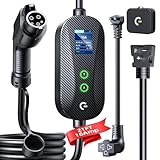
- Universal J1772 EV Charger: Compatible with all J1772-equipped EVs and PHEVs, this portable EV charger seamlessly powers brands like Ford, GM, Nissan, Audi, BMW, Kia, Hyundai, Honda, and Chevy. No more compatibility worries—just plug in and charge confidently. Whether you’re at home or on the road, this versatile electric car charger ensures your vehicle is always ready to go
- Smart Charging, Your Way: Customize your charging experience with adjustable current settings (8A, 10A, 12A, 16A) and a flexible 0–12H delay timer. Simply press and hold the “A” or “T” button for 3 seconds to start the adjustment, then press briefly to select, and finally hold again for 3s to confirm. The bright LCD screen displays real-time data like voltage, current, and power, putting you in command. Note: Once charging has started, the settings cannot be adjusted. You will need to stop charging before making any changes
- Plug Anywhere, Charge Anytime: No matter where you are, power up confidently. Supports NEMA 5-15 / 5-20 (120V丨8-12A) and NEMA 6-20 (240V丨8-16A) outlets—ideal for home, garage, or road trips. Compact and portable, it’s the perfect balance of power and freedom
- Safety You Can Trust: Built with triple overcurrent protection, a fireproof PC shell, and an IP67 waterproof rating, this portable EV charger ensures safety in any condition. It operates reliably in temperatures from -22°F to 122°F, so you can charge worry-free, rain or shine. Trust in advanced engineering that puts your safety first—because every charge should be secure
- 2-Year Professional Care & Support: If any compatibility or operational issues arise, contact the Grasside Team via Amazon Message Center for a prompt response within 12 hours. Backed by a 2-Year Grasside Care, this J1772 charger offers long-term support and peace of mind
Wheel choice also matters because a larger-wheel Model Y may begin with a lower EPA figure before real-world variables are added. If two versions meet the same daily needs, the lower-rated wheel option gives the range-focused buyer more headroom without requiring a change in driving habits.
Why the range shown on the screen can be misleading
Tesla’s displayed range is not always a route-specific prediction. The Model Y owner’s manual says the displayed driving range is an estimate based on EPA-rated consumption and may not account for a driver’s personal habits or external conditions.
Tesla distinguishes between rated consumption and projected range. Rated consumption is a constant based on standardized EPA conditions. Projected range uses remaining battery energy and average consumption, making it more responsive to how the car has recently been driven.
Free tools Windows power users keep installed
One-click scans. No signup required.
Tesla also notes that the displayed number can decrease faster than the actual distance driven. That does not necessarily mean the battery has developed a fault; it can mean recent consumption has been higher than the constant used for the estimate. The Energy app can provide an estimate based on recent consumption, which is more informative than relying only on the headline number beside the battery icon.
For an actual trip, enter the destination in Tesla navigation and pay attention to the predicted energy remaining at the destination. Tesla says the vehicle continuously monitors its energy level and nearby charging locations, while navigation predicts how much energy is expected to remain when the route is completed. That prediction is still an estimate, but it incorporates the planned route rather than treating EPA miles as a universal distance reserve.
A practical way to plan a Model Y road trip
- Confirm the exact vehicle. Check whether it is the base RWD, Premium RWD, Premium AWD, or Performance, and note the wheel and tire package. Do not use a range figure from a similarly named older Model Y without checking the generation.
- Use the destination energy prediction. Enter the full route in Tesla navigation. Look at the predicted state of charge at the destination and at each proposed charging stop, rather than simply subtracting miles from the EPA rating.
- Use the 240-to-270-mile highway envelope as a sanity check. This is the range suggested by the available 75-mph tests, not a guarantee for all trims. If a leg approaches that distance, plan a charging stop instead of relying on the maximum EPA number.
- Increase your margin in difficult conditions. Cold, heat, strong wind, rain, steep climbs, heavy cargo, traffic, and a roof rack all justify more conservative planning.
- Do not plan to arrive with no practical reserve. A detour, a missed exit, a full charger, or a destination charger problem can turn a mathematically possible leg into a stressful one. The necessary reserve depends on the route and conditions, so there is no single percentage that fits every trip.
- Recheck the estimate while driving. If actual consumption is running above the route prediction, reduce speed where safe and use the next available charging opportunity rather than waiting for the displayed range to become critical.
A 200-mile highway leg in mild weather may be comfortable for many Model Y configurations, but the same distance in freezing temperatures with a headwind is a different energy problem. The route planner can account for much of that difference; a static EPA number cannot.
Independent reader supportYour contribution helps us test, update, and keep practical guides available for everyone.How to get the most range from a Model Y
There is no accessory that turns a 321-, 327-, or 357-mile Model Y into a vehicle with a permanently higher EPA rating. The effective range improvements are mostly about configuration and energy use:
- Choose the smaller factory wheel option when range is more important than appearance or wheel size.
- Reduce sustained highway speed when practical and legal. Speed is especially important on long highway legs.
- Keep the tires properly maintained. Tesla specifically lists under-maintained tires as a factor that increases consumption.
- Limit unnecessary cargo and exterior equipment. Roof and trunk racks can affect expected range, and heavy loads require more energy.
- Account for climate control. Cabin heating in cold weather and air conditioning in hot weather can materially change consumption.
- Group short trips when possible. Tesla identifies short trips as an energy-consumption factor, particularly when the vehicle repeatedly operates before reaching efficient operating conditions.
- Watch recent consumption in the Energy app instead of treating the dashboard’s rated-mile estimate as a personalized forecast.
Useful accessories are not range upgrades
If you’re protecting the cabin, 2025–2026 Tesla Model Y floor mats can be a reasonable ownership accessory, not a range upgrade. Fitment is critical: refreshed 2025–2026 vehicles may use different liners from legacy 2020–2024 Model Ys, so verify the model year, body generation, seating configuration, and cargo layout before ordering.
Tesla’s official Tesla Model Y accessories catalog includes all-weather liners, trunk liners, roof racks, tire equipment, wiper blades, and air filters. These products may improve cleanliness or preparedness, but floor mats and cargo liners do not increase the car’s range.
Best Value
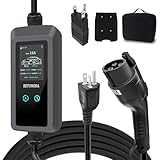
- 2026 CHARGING UPGRADE: The upgraded J1772 charger features four adjustable current levels (8A/10A/13A/16A) and an intelligent delay timer from 1 to 12 hours. Whether you're charging at night or during off-peak hours, you can enjoy smarter energy usage, lower costs, and complete convenience — all on your own schedule.
- ONE CHARGER FOR EVERY J1772 EV/PHEV: Works seamlessly with all SAE J1772 electric vehicles and plug-in hybrids—from Tesla (with adapter) to Ford, GM, Nissan, Audi, BMW, Kia, Hyundai, Honda, Chevy, and more. Ideal for both home and travel, this 16A Level 1 & 2 charger keeps your EV fully charged and ready whenever you hit the road.
- LEVEL 1 & 2 PORTABLE CHARGER ANYTIME: Designed for maximum flexibility, the BETUMODA Level 1 & 2 EV charger features both 5-15 and 6-20 plug compatibility. Whether you're charging at home, at a friend’s house, or on the road, you can stay powered up anywhere. NEMA 6-20 plug for Level 2 EV charging (240V, 16A, 3.68kW, 9–12 miles/hr) and a NEMA 5-15 adapter for Level 1 EV charging . NOTE: The 5-15 adapter is compatible only with 5-15 outlets and should not be used above 16A—protecting both your vehicle and your home’s electrical system.
- COMPLETE CONTROL INSTANTLY: Many EV chargers only show minimal information, leaving you guessing. Our upgraded charger, equipped with a 2.8-inch Touch LED display, provides comprehensive, real-time updates on voltage, current, and power load. The built-in delayed start timer lets you set charging exactly when it’s convenient for you. With just one glance, you can monitor and manage every aspect of your charging session—making each charge smarter, safer, and more efficient.
- BUILT FOR SAFETY AND DURABILITY: Charge with confidence every time. This portable EV charger is equipped with advanced protection features—including overheat, overvoltage, and overcurrent protection—and is FCC and CE certified. Its intelligent control box features a smart monitoring chip to track charging status in real time. With an IP65-rated housing, every charge is safe, reliable, and worry-free.
For roadside preparedness, Tesla’s catalog also lists an Air Compressor + Tire Repair Kit and replacement sealant. A tire-repair kit or portable inflator can be useful if a puncture occurs, but it is emergency equipment—not an efficiency product and not a way to add miles between charges. Check the product’s compatibility and understand its instructions before relying on it for a trip.
Roof racks deserve an explicit warning. Tesla sells a Model Y Roof Rack, but Tesla’s owner’s manual warns that roof or trunk racks can affect expected range. If carrying bikes, skis, or a cargo box, plan the route using the higher consumption you actually observe rather than assuming the standard EPA figure still applies.
What’s actually slowing this PC down?
Pick the symptom - the matching free tool is one click away.
How to interpret the most common range claims
- My Model Y went 337 miles. Does that prove the EPA rating is conservative?
- It proves that a 321-mile-rated Model Y can exceed its EPA estimate under a particular mixed-use test procedure. It does not prove that the same vehicle will travel 337 miles at 75 mph, in winter, or with a roof rack and a full load.
- My Model Y only went about 250 miles. Is something wrong?
- Not necessarily. A 240-to-270-mile result is consistent with the available 75-mph highway testing, and MotorTrend recorded 252 miles from a tested Long Range AWD. Before diagnosing a problem, consider speed, temperature, wind, elevation, wheels, tires, climate use, traffic, and cargo.
- Should I buy the Model Y with the biggest EPA number?
- If range is the priority, the Premium RWD’s 357-mile rating is the highest current U.S. figure, and the 19-inch configuration is rated higher than the 20-inch version. But drivetrain, winter conditions, charging access, and route requirements may matter more than the difference between two EPA ratings.
- Can I use the number on the dashboard to decide whether I can reach a charger?
- Use Tesla navigation and its predicted destination energy as the primary planning tool. The dashboard range is an estimate based partly on rated consumption and may not fully reflect current speed, weather, driving habits, or other external conditions.
Sources and scope
The current trim figures come from Tesla’s U.S. Model Y page, with wheel-specific comparisons cross-checked against Car and Driver’s Model Y coverage. The mixed-use result comes from Edmunds, the sustained-highway results come from Car and Driver and MotorTrend, the temperature study comes from AAA, and the dashboard and energy-planning explanation comes from Tesla’s Model Y owner’s manual.
The independent results should not be combined into a single laboratory-style ranking. They involve different trims, wheels, routes, temperatures, speeds, and procedures. No single test establishes the universal real-world range of every current Model Y configuration.
Frequently Asked Questions
What is the longest-range Tesla Model Y in the U.S.?
As of August 12, 2026, the Model Y Premium RWD has the highest listed U.S. EPA estimate at 357 miles with 19-inch wheels. Tesla lists 344 miles for the same configuration with 20-inch wheels.
How far can a Tesla Model Y travel on the highway?
The available independent 75-mph tests recorded approximately 240 to 270 miles, depending on trim and equipment. That is a more useful broad planning range for sustained highway travel than the maximum 357-mile EPA figure, although weather, speed, wheels, tires, wind, elevation, cargo, and climate use can move the result higher or lower.
The Tool Desk
Outbyte Driver Updater FREEFix the driver behind crashes, sound loss and screen glitchesFind Drivers →Outbyte PC Repair FREERepair Windows errors before they cause bigger problemsFix Now →How much range does a Model Y lose in cold weather?
AAA’s controlled 2026 dynamometer study calculated 157.7 miles for a Model Y baseline at 20°F versus 297.7 miles at 75°F, a 47.0% reduction. This is not a universal prediction for every Model Y trip, but it demonstrates how severely cold-soak conditioning, cabin heat, battery heating, and reduced battery efficiency can affect range.
Why does my Tesla’s displayed range fall faster than the miles I drive?
Tesla says the displayed range is based on EPA-rated consumption and may not account for personal driving patterns or external conditions. The Energy app can estimate range using recent consumption, while Tesla navigation predicts expected energy remaining at the destination for a planned route.
The Bottom Line
The Tesla Model Y’s headline range is currently 321 to 357 EPA-estimated miles in the U.S., depending on configuration. The most useful real-world highway expectation from available testing is approximately 240 to 270 miles at 75 mph, while moderate mixed driving can produce results near or above the EPA figure.
Choose the trim and wheels that fit your needs, then plan trips with Tesla’s navigation energy prediction and a reserve for weather, speed, traffic, elevation, cargo, and charger availability. The 357-mile figure is a valid EPA rating—but it should not be treated as a guaranteed highway distance.
Quick wins for a faster PC:
Scan for outdated or missing drivers - takes under a minuteDriver Scan →Repair Windows errors before they cause bigger problemsFix Now →Quick Recap
Product prices and availability are accurate as of the date/time indicated and are subject to change. Any price and availability information displayed on Amazon at the time of purchase will apply.