Hyundai Highway Driving Assist (HDA) helps maintain a set speed and following distance on eligible highways while providing lane-centering support. Highway Driving Assist 2 (HDA2) adds a further capability: conditional, driver-initiated assistance with certain highway lane changes.
Neither system is self-driving or hands-free. The driver must remain attentive, keep hands on the steering wheel, supervise the road, and be ready to steer or brake at all times. HDA2 is best understood as an evolution of HDA—not as a higher level of autonomous driving.
As an Amazon Associate I earn from qualifying purchases.
HDA vs. HDA2 at a glance
| Capability | HDA | HDA2 |
|---|---|---|
| Maintains a selected cruising speed | Yes, when conditions permit | Yes |
| Maintains a selected following distance | Yes, through Smart Cruise Control and related systems | Yes |
| Provides lane-centering or lane-following support | Yes, through linked systems such as Lane Following Assist | Yes |
| Assists with highway lane changes | Not the defining baseline capability | Yes, when Highway Lane Change Assist is equipped and available |
| Requires the driver to supervise and keep hands on the wheel | Yes | Yes |
| Works as autonomous driving | No | No |
The exact equipment, road coverage, operating limits, and controls vary by model, model year, trim, software, and market. A vehicle advertised as having Hyundai SmartSense does not necessarily include HDA2.
Recommended Free Tools
What Hyundai HDA does
HDA is Hyundai’s highway-focused driver-assistance function. When it is available and engaged, it coordinates several systems to help the vehicle:
#1 Best Overall

- UPSCALED 4K FRONT + 1080P REAR DUAL DASH CAM: The ROVE R2-4K DUAL records the road ahead and behind at the same time. The front camera captures at 2.5K (QHD) and intelligently upscales to 4K (2160P) for higher-detail playback, while the rear camera records at Full HD 1080P. This is upscaled 4K, not native 4K, engineered to show sharper everyday detail than standard 1080P dash cams, so you can read license plates, signs, and surroundings in front and rear footage.
- SONY STARVIS 2 IMX675 SENSOR + SUPER NIGHT VISION: The front camera uses a Sony STARVIS 2 IMX675 5MP image sensor with a wide F1.5 aperture (F1.8 rear) and HDR to pull in more light for clearer low-light footage. This advanced sensor enhances nighttime clarity, helping capture license plates, road signs, and surrounding vehicles with greater reliability when driving after dark, through tunnels, or in dusk and dawn conditions.
- ULTRA FAST 5.8GHz WIFI/ UP TO 20MB/s DOWNLOAD SPEED: With its built-in dual-band 5.8GHz and 2.4GHz WiFi, you can use the ROVE dash cam app to view and manage dash cam recordings instantly on your iPhone and Android smartphone. Using the ROVE app, download your recorded videos directly to your smartphone at up to 20 MB/sec, then easily share them on social media with friends and family. Additionally, manage camera settings and update the latest firmware over-the-air via the ROVE App.
- CAR CAMERA WITH GPS: The new front and rear dashcam comes with built-in GPS, which enables you to view real-time live speed and compass on the 3” IPS wide camera screen. It records precise driving routes, locations, and speed stamps directly on the video so you can watch dashcam videos with GPS data using ROVE's free GPS Player on your PC or Mac & get additional evidence when you need it.
- FEATURES WITH STATE-OF-THE-ART TECHNOLOGY INCLUDED: Experience peace of mind with this front and rear car dash cam. It comes with a free 128GB microSD card and offers advanced features such as an f1.5 aperture, motion detection, G-sensor, seamless loop recording, emergency video lock, screen saver, live speed and compass direction, voice guidance, ring of threads for optional CPL filter, a built-in supercapacitor for extended product life, support for up to 1TB microSD cards, and many more.
- Maintain the speed selected by the driver.
- Maintain a chosen distance from a vehicle ahead.
- Follow the lane and provide steering support to help keep the vehicle centered, including through some curves.
HDA is not a single sensor and does not replace the systems underneath it. In practice, it relies on functions such as Smart Cruise Control for speed and gap management and Lane Following Assist for steering support. HDA acts as a highway-oriented coordination layer that uses those capabilities together with navigation and road information.
Where HDA is intended to operate
HDA is designed for eligible controlled-access highway main sections—not unrestricted use on every road. Hyundai’s U.S. owner-manual descriptions generally identify selected Interstate and federal or state highways, with eligibility determined in part by navigation data. Interchanges and junctions are excluded from the intended operating area.
Depending on the vehicle, HDA may activate when the car enters an eligible highway main road while Smart Cruise Control and Lane Following Assist are already operating. The exact activation behavior and dashboard indication depend on the vehicle’s settings and equipment.
Windows Errors? Fix Them Before They Spread
Repair common Windows errors and clear accumulated junk for a smoother, more stable PC - no reinstall needed.Free scan · no reinstallOutdated Drivers Are Slowing You Down
One free scan finds every outdated or missing driver and matches the right update for your exact hardware.Free scan · exact hardware matchThat road restriction matters. A highway assist system may stop providing its normal support near a ramp, junction, toll area, road ending, or a section whose map and lane information do not match what the vehicle sees.
What HDA2 adds
The defining upgrade in HDA2 is Highway Lane Change Assist. When the system determines that a lane change is possible, the driver selects the direction with the turn-signal switch. HDA2 can then provide steering assistance for the maneuver.
This is not the same as telling the car to change lanes whenever it wants. The driver initiates the intended direction, and the system decides whether its operating conditions are satisfied. If the lane, traffic situation, sensors, or road geometry are unsuitable, it may refuse to assist, remain in standby, or cancel the maneuver.
Typical HDA2 lane-change requirements
Hyundai’s owner-manual descriptions identify conditions such as the following:
The Tool Desk
Outbyte PC Repair FREEClear out junk files and repair common Windows errorsFree Scan →Outbyte Driver Updater FREEScan for outdated or missing drivers - takes under a minuteDriver Scan →- HDA and Lane Following Assist must be active or in an appropriate operating state.
- The driver must have hands on the steering wheel.
- The system must detect a suitable lane line and a lane-change path.
- No relevant collision risk may be detected.
- Relevant Forward Collision-Avoidance Assist or Blind-Spot Collision-Avoidance Assist warnings must not be active.
- The road must be appropriate for the function, rather than near a sharp curve, toll booth, road ending, narrow section, or other restricted area.
The system can cancel if Smart Cruise Control, Lane Following Assist, or HDA is switched off or temporarily unavailable. It may also cancel when a hands-off warning is active, the hazard flashers are on, or a collision-avoidance warning is issued.
Rank #2

- 💖💖【Important Note】Due to soaring memory chip costs, many brands have eliminated memory cards entirely, requiring a separate purchase. However, to save you the hassle of buying extra accessories, we are resisting cost pressures without raising our dashcam's price. Starting June 26, 2026, this camera will include a 32GB memory card (previously 64GB) so you can still use it out of the box. For extended storage, we highly recommend purchasing a Class 10, U3, and V30 (or higher) memory card.
- 【4K 2160P Resolution Dash Cam】Capture every drive in stunning 4K UHD resolution with the Galphi front dash cam, featuring a 160-degree wide-angle lens for clear, cinematic video footage. Ideal for family cars, new drivers, and Uber/Lyft drivers, it provides reliable video evidence for accident disputes and insurance claims.
- 【Advanced 5GHz WiFi with App】 Featuring cutting-edge 5GHz WiFi and a free app, the video download speed reaches up to 8MB/s, compared to just 2MB/s with the 2.4GHz option. This greatly reduces download times and minimizes lag during video playback.
- 【No Screen & Less Distraction】This dash camerma features a screen-free design, minimizing distractions while you drive so you can stay focused on the road. Enjoy peace of mind knowing your camera is recording without taking your attention away from the journey.
- 【Compact and Super Easy to Install】The dash cam's slim and compact design ensures it won't obstruct your view. With easy installation and clear, detailed instructions included, even first-time users can set it up without any hassle.
Does HDA2 change lanes automatically?
Not in the fully autonomous sense. HDA2 can assist with a lane change after the driver operates the turn signal, but the driver remains responsible for checking mirrors and blind spots, confirming that the maneuver is safe, and supervising the steering.
“Driver-initiated assisted lane change” is more accurate than “automatic lane change.” HDA2 does not grant permission to stop watching traffic, remove your hands, or assume that the vehicle has identified every motorcycle, car, road hazard, or lane marking.
Some newer Hyundai owner-manual material also describes a limited positioning behavior in which the vehicle may steer slightly away from a nearby vehicle under specified conditions and speeds. This is a narrow assistance response based on detected surrounding traffic—not independent judgment, negotiation with other drivers, or autonomous decision-making.
How the systems sense the road
HDA-related hardware can include:
- A forward-facing camera.
- A front radar sensor.
- Front-corner and rear-corner radar sensors on vehicles equipped with them.
The exact sensor package is vehicle-specific. HDA2’s behavior therefore depends on more than the name printed in a brochure. Hardware, software, camera and radar calibration, navigation data, lane markings, and the operation of linked driver-assistance systems all affect availability.
This is why two Hyundai vehicles carrying similar feature names may not behave identically. One may have the hardware and software needed for Highway Lane Change Assist while another has HDA without that function. Even two vehicles with HDA2 may differ in road coverage, control layout, warning behavior, or supported conditions.
When HDA or HDA2 may be limited or cancel
These systems are heavily dependent on what the vehicle can see and what its navigation system expects to find. Potential limitations include:
- Heavy rain, snow, fog, glare, or other poor visibility.
- Worn, obscured, missing, or conflicting lane markings.
- Construction zones or temporary lane shifts.
- Tunnels or areas with weak GPS reception.
- Parallel roads, elevated roads, frontage roads, or navigation-map mismatches.
- Sharp curves, narrow lanes, toll booths, interchanges, junctions, or the end of an eligible road.
- Traffic situations in which a safe gap or target lane cannot be identified.
- Blocked, dirty, damaged, or misaligned camera and radar sensors.
- Temporary system limitations caused by excessive infotainment or vehicle-system load.
HDA and HDA2 are not intended to be relied on in poor weather, heavy or rapidly changing traffic, winding or slippery roads, or any situation in which the driver cannot clearly supervise the vehicle. Hyundai’s safety information warns that the systems will not operate in every circumstance and cannot prevent every loss of control or collision.
Quick wins for a faster PC:
Clear out junk files and repair common Windows errorsFree Scan →Scan for outdated or missing drivers - takes under a minuteDriver Scan →What happens if you take your hands off the wheel?
HDA and HDA2 monitor driver engagement. If the vehicle detects that the driver is not applying sufficient steering-wheel input, it can issue hands-off warnings. Ignoring those warnings can cause the system to deactivate and may result in a speed limitation until the driver resumes control.
Rank #3
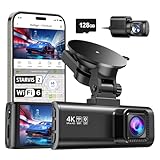
- [4K+1080P Front & Rear Recording] REDTIGER F7NP dash cam captures every detail with stunning 4K front and 1080P rear video. Featuring the advanced STARVIS 2 sensor plus the 170° front and 140° rear wide-angle lens, this dash camera delivers sharper images, balanced lighting, and reliable evidence day or night. Ideal for commuting, road trips, rideshare drivers, and new drivers.
- [STARVIS 2 Sensor & WDR Night Vision] Equipped with the advanced STARVIS 2 sensor, F1.5 large aperture, and 6-layer optical lens, F7NP 4K dual dash cam delivers clear, high-contrast footage in any lighting. WDR and HDR technology balance highlights and shadows, ensuring sharp night vision and crisp details day or night, providing reliable evidence and enhanced safety for every drive.
- [Built-in 5.8GHz WiFi & Smart App] Connect your smartphone to the dashcam’s built-in 5.8GHz WiFi to enjoy ultra-fast downloads up to 20MB/s. Using Redtiger Cam app, you can preview, download, and replay videos in real time, check GPS ata (route, speed, and location), and manage settings effortlessly, making it simple to review footage and share important moments.
- [Loop Recording & Free Memory Card] This car camera supports seamless loop recording to ensure continuous coverage without interruption. Older files are automatically overwritten when storage is full, while important events are safely locked. A free memory card is included, giving you ample space for 4K recordings and allowing you to use the camera right out of the box.
- [24/7 Parking Mode* & G-Sensor] Enjoy round-the-clock protection with two parking modes: time-lapse recording for continuous low-bitrate monitoring and G-sensor mode that records when collision is detected. The car security camera with G-sensor automatically locks important clips, ensuring crucial evidence is safely preserved even while your vehicle is parked.(*Hardwire kit needed.)
A hands-on requirement is not a technicality. The driver needs to be able to respond immediately if the lane disappears, traffic cuts in, a vehicle enters the blind spot, the road geometry changes, or the system gives an unexpected warning.
HDA, Smart Cruise Control, and Lane Following Assist: how they relate
These names describe related but different functions:
- Smart Cruise Control: Helps control cruising speed and the distance from a vehicle ahead.
- Lane Following Assist: Provides steering support intended to help the vehicle follow the detected lane.
- HDA: Combines highway-specific road and navigation information with speed, distance, and lane-following assistance on eligible roads.
- HDA2: Builds on HDA and adds conditional Highway Lane Change Assist where the vehicle is equipped for it.
Turning on Smart Cruise Control alone does not necessarily mean HDA is active. Likewise, lane-centering support by itself does not mean the vehicle has HDA2. The instrument-cluster symbols, button behavior, and activation rules should be confirmed in the owner’s manual for the specific vehicle.
How to tell whether a Hyundai has HDA or HDA2
Do not rely on a generic “SmartSense” label or a salesperson’s shorthand. Use this checklist before buying or renting a Hyundai:
- Check the exact feature name. Look for HDA or HDA2, not just a package name.
- Confirm Highway Lane Change Assist. If assisted lane changes matter to you, verify that the feature is explicitly listed.
- Check the trim and equipment. HDA2 may be standard on one grade, optional in a package, or unavailable on another.
- Review the window sticker or build sheet. This is more useful than a broad model-family description.
- Read the VIN-specific owner’s manual. Check road eligibility, activation, speed conditions, warning behavior, and sensor requirements.
- Verify the market. U.S. equipment should not be inferred from a brochure for another country or region.
Hyundai’s regional specifications show that HDA2 availability can vary by model and grade. It has been listed on selected versions of vehicles including the Santa Fe, Palisade, and IONIQ 9 in certain markets or specification materials, but that does not establish identical availability for every year, trim, or country.
Independent reader supportYour contribution helps us test, update, and keep practical guides available for everyone.What to do after windshield, bumper, or radar work
A forward camera or radar sensor can be affected by a windshield replacement, bumper repair, impact, bodywork, or sensor removal. That does not mean every repair automatically requires the same procedure, but it does mean the vehicle should be checked according to Hyundai’s instructions.
If HDA or a related driver-assistance system reports a fault, or if the vehicle has had work near its camera or radar sensors, arrange an inspection with an authorized Hyundai dealer or a qualified service provider with the equipment and procedures appropriate for that vehicle. Do not assume that an ordinary fault-code scan proves that an ADAS camera or radar is correctly aimed.
Do these 3 things before closing this tab:
1Scan for outdated or missing drivers - takes under a minute2Repair Windows errors before they cause bigger problems3Fix the driver behind crashes, sound loss and screen glitchesAfter service, test the system conservatively. A warning that disappears is not by itself proof that every sensor is correctly calibrated; follow the repairer’s documentation and the vehicle-specific owner’s manual.
Rank #4

- 【1296P front recording and night vision】 The V300 front dash cam records in 2304 x 1296P to capture everyday road details with greater clarity than standard 1080P. A 170° wide-angle lens covers multiple lanes, while the F1.7 aperture and 6-layer glass lens help improve visibility during nighttime driving and other low-light conditions.
- 【WiFi app control 】Connect your phone to the dash camera’s built-in Wi-Fi and use the VeeCar app to preview live video, play back recordings, download clips, and share files. The Wi-Fi connection is local and does not provide internet access; this dash camera for cars still requires a power cable during use.
- 【Advanced Safety Engineering】Designed with your safety in mind, Veement V300 mini dash cam incorporates an RTC circuit and eliminates traditional lithium batteries to prevent overheating. This dedication to safety guarantees reliable performance under various conditions, requiring only a continuous USB-C power supply.
- 【Seamless Connectivity & Easy Operation】Utilize the built-in WIFI and exclusive VeeCar APP to effortlessly control your WiFi front dash cam. From real-time previews to straightforward video downloads, edits, and shares, Veement V300 dash camera for cars offers an intuitive interface for managing your driving footage.
- 【Advanced Features for Complete Protection】Take advantage of cutting-edge TS stream technology in this WiFi dashcam for fast and reliable video storage. Supporting up to 256GB SD cards, seamless loop recording, and 24/7 parking mode, Veement V300 car dash cam provides comprehensive security. Its user-friendly operation ensures a seamless experience. (Note: SD card not included, must be purchased separately).
Which system is better for a buyer?
HDA2 is the more capable system if you frequently drive on eligible divided highways and value steering assistance during certain lane changes. It can reduce some of the workload involved in a highway maneuver, particularly when the road markings and traffic conditions are clear.
However, HDA2 is not automatically worth choosing over HDA for every buyer. Consider these trade-offs:
- Choose HDA confidently if your priority is adaptive highway cruising and lane-centering support, and you are comfortable making lane changes yourself.
- Look for HDA2 if conditional lane-change assistance is important and the exact vehicle includes Highway Lane Change Assist.
- Do not pay for HDA2 expecting hands-free driving. Driver supervision, hands-on operation, road limitations, and weather limitations still apply.
- Compare the complete package. Trim, comfort, visibility, collision-avoidance features, navigation hardware, and service support may matter more than the HDA label alone.
Bottom line: HDA vs. HDA2
HDA helps a properly equipped Hyundai maintain highway speed and following distance while providing lane-following support on eligible roads. HDA2 includes those core functions and adds conditional highway lane-change assistance that the driver initiates with the turn signal.
Free tools Windows power users keep installed
One-click scans. No signup required.
The practical difference is meaningful, but the marketing distinction should not be overstated. HDA2 is still a driver-supervised assistance system. It depends on lane markings, navigation data, cameras, radar, road conditions, and linked safety systems—and it can refuse or cancel assistance when those conditions are not satisfactory. Confirm the exact trim, market, hardware, and owner-manual instructions before treating either system as part of a buying decision.
Frequently Asked Questions
Is HDA2 self-driving?
No. HDA2 is a driver-assistance system. The driver must remain attentive, keep hands on the steering wheel, monitor traffic and road conditions, and be ready to take over immediately.
What is the main difference between HDA and HDA2?
HDA provides highway speed, following-distance, and lane-following assistance. HDA2 adds Highway Lane Change Assist, which can provide steering support for a lane change initiated by the driver with the turn signal when specific conditions are met.
Can HDA2 change lanes without the driver touching the controls?
The driver must select the desired direction with the turn signal, and the system only assists if it determines that the maneuver is possible. It is not unrestricted or fully autonomous lane changing.
What’s actually slowing this PC down?
Pick the symptom - the matching free tool is one click away.
Does every Hyundai with SmartSense have HDA2?
No. SmartSense is a broader collection of driver-assistance technologies. HDA and HDA2 availability depends on the exact model, year, trim, market, hardware, and software.
Why might HDA2 refuse to change lanes?
Possible reasons include an undetected lane line, an unsuitable target lane, collision risk, an active blind-spot or forward-collision warning, a hands-off warning, narrow lanes, sharp curves, toll areas, road endings, construction, or a temporary limitation affecting HDA, Lane Following Assist, or Smart Cruise Control.
The Bottom Line
HDA is highway speed, distance, and lane-following assistance. HDA2 adds conditional, driver-initiated highway lane-change assistance. Both require continuous driver supervision and vary by Hyundai model, trim, market, software, road, weather, and traffic conditions.
Quick Recap
Product prices and availability are accurate as of the date/time indicated and are subject to change. Any price and availability information displayed on Amazon at the time of purchase will apply.




