GM is giving up on Cruise as a standalone robotaxi business, not abandoning autonomous driving. The company stopped funding Cruise robotaxi development in December 2024, completed its purchase of the remaining Cruise interests in February 2025 and began winding down the robotaxi operation.
The replacement strategy is personal autonomy: use GM’s Super Cruise driver-assistance business and the combined GM-Cruise engineering effort as a path toward more automated—and eventually eyes-off—features in vehicles owned by individual customers. As of August 12, 2026, GM is testing next-generation systems with trained drivers; it has not announced a fully autonomous consumer vehicle for sale.

As an Amazon Associate I earn from qualifying purchases.
The short version
GM has ended Cruise’s standalone commercial robotaxi strategy, but it has not abandoned autonomous-driving technology. The company is folding the continuing Cruise and GM engineering work into a broader effort focused on advanced driver assistance, future eyes-off driving and, eventually, autonomous vehicles that individual consumers own.
| Question | Answer as of August 12, 2026 |
|---|---|
| Did GM stop funding Cruise robotaxis? | Yes. GM announced that decision on December 10, 2024, and later began winding down the robotaxi operations. |
| Did GM shut down all Cruise technology? | No. GM completed its purchase of the remaining Cruise interests in February 2025 and integrated the continuing technical work into GM operations. |
| What is available to consumers now? | Super Cruise, an advanced driver-assistance system that is hands-free in specified conditions but still eyes-on and supervised by the driver. |
| Is GM selling a fully autonomous personal vehicle? | GM has not announced one as commercially available. Its next-generation systems are being tested with trained drivers, and GM says it plans to introduce eyes-off driving beginning with the Cadillac Escalade IQ in 2028. |
What GM actually stopped doing
A robotaxi is an autonomously operated vehicle used as part of a centrally managed transportation service. Customers summon it, while the operator owns or controls the fleet, manages maintenance and charging, monitors operations and handles the commercial service.
#1 Best Overall

- 【Bump-and-Go Action】The toy car drives on its own and changes direction when it bumps into obstacles. Kids love chasing it around the room while it keeps going — perfect for active indoor play and early crawling walkers.
- 【Lights, Music & Spray Effects】This fun electric car toy features flashing colourful LED lights, cheerful music and a gentle mist spray from the rear. It attracts children’s attention and help stimulate visual and auditory development.
- 【Safe & Durable Design】Made from durable ABS plastic with smooth rounded edges, safe for little hands to touch and carry. Sturdy enough for everyday play at home, nursery or playroom.
- 【Active Play & Coordination】Watching the moving car and following it around helps develop hand-eye coordination and movement skills. Great for encouraging kids to move, explore and interact during play.
- 【Great Gift for Toddlers】This light-up musical toy car makes an exciting gift for birthdays, holidays, and celebrations. Its self-driving motion, flashing lights, and cheerful sounds make it a top choice for endless fun and creative entertainment.
That is the business GM has chosen to leave. GM said it would no longer fund Cruise’s robotaxi development because scaling the business would require substantial time and resources, the robotaxi market was becoming more competitive and the company needed to make different capital-allocation choices.
GM’s later securities filings described the practical follow-through more definitively: the company began winding down Cruise robotaxi operations and combined GM and Cruise’s continuing personal-autonomous-vehicle work within GM’s North American operations.
That wording matters. GM did not announce that it had discarded every Cruise employee, dataset, software system or autonomy capability. It ended the standalone robotaxi business model and retained the technical work it considered useful for personal vehicles.
Free tools Windows power users keep installed
One-click scans. No signup required.
The timeline: from Cruise acquisition to integration
2016: GM buys Cruise
GM acquired Cruise Automation in 2016 to accelerate its autonomous-vehicle program. Cruise initially operated as a distinct technical organization inside GM and concentrated on self-driving vehicles intended for shared transportation and ride-hailing applications.
The original strategy was therefore more than a driver-assistance feature. It was an attempt to create a commercial, autonomous transportation network.
October 2023: a serious safety and regulatory setback
Cruise’s robotaxi program suffered a major setback in California in 2023. The California Department of Motor Vehicles suspended Cruise’s autonomous-vehicle deployment and driverless-testing permits effective October 24, citing an immediate public-road safety concern.
The regulatory action followed an October 2 collision involving a Cruise vehicle operating without a driver. The vehicle struck a pedestrian who had first been hit by another vehicle and then dragged the pedestrian approximately 20 feet. The National Highway Traffic Safety Administration later said Cruise had failed to fully report post-crash details. Its consent order required a corrective action plan and imposed a $1.5 million monetary penalty.
Quick wins for a faster PC:
Fix the driver behind crashes, sound loss and screen glitchesFind Drivers →Repair Windows errors before they cause bigger problemsFix Now →The incident is essential context for understanding why confidence in Cruise’s standalone robotaxi operation deteriorated. It should not, however, be presented as the sole reason for GM’s later decision. GM’s official explanation focused on the time and expense required to scale the business, market competition and capital priorities.
December 10, 2024: GM ends funding for Cruise robotaxi development
GM announced on December 10, 2024, that it would stop funding Cruise’s robotaxi development work. It said it would realign the autonomous-driving strategy around advanced driver-assistance systems and a path toward fully autonomous personal vehicles.
Rank #2

- Bump And Go Action For Endless Fun: This light up car features automatic movement and changes direction when it encounters obstacles, offering non-stop excitement for toddler light up toys enthusiasts and boosting hand-eye coordination.
- Colorful Moving Gears That Inspire Curiosity: The transparent body reveals spinning gears, making it one of the best light up sensory toys for autism. Kids can watch the gears in motion, sparking curiosity and teaching basic mechanics.
- Sensory-Rich Light-Up Experience: Flashing LED lights and cheerful music make this one of the most engaging light up musical toys, providing a sensory-rich playtime that stimulates visual and auditory senses.
- Educational And Interactive Learning Toy: Designed as light up toys for toddlers, the moving gears help teach cause and effect while promoting fine motor skills, blending learning with interactive fun.
- Buy with confidence – this product is backed by a 60-day warranty, ensuring satisfaction and peace of mind. Enjoy reliable support for your light up cars purchase and delight in toys with lights and sounds.
The plan called for the majority-owned Cruise and GM technical teams to be combined into a single effort. GM also projected that the restructuring would reduce spending by more than $1 billion annually once completed, with completion expected in the first half of 2025. That was a company forecast, not an independently verified saving.
At the time, GM described Super Cruise as already available on more than 20 GM vehicle models and said equipped vehicles were accumulating more than 10 million miles per month. Those figures helped explain why GM viewed consumer vehicles as a more practical commercial foundation than a separate robotaxi fleet.
February 4, 2025: GM takes full ownership of Cruise
GM completed its acquisition of the remaining noncontrolling interests in Cruise on February 4, 2025. Cruise became a wholly owned GM subsidiary.
GM said Cruise would work collaboratively on autonomous-vehicle technology and advanced driver-assistance systems for personal vehicles. The company also identified three continuing priorities: developing driving-assistance technology, expanding Super Cruise to urban surface streets and continuing toward personal autonomous vehicles.
In other words, the ownership transaction was not a fresh commitment to a Cruise ride-hailing service. It was the corporate step that allowed GM to bring the remaining autonomy work fully inside its own vehicle and engineering organization.
2025–2026: the program moves toward personal vehicles
In March 2025, GM said it expected eventually to launch personal autonomous vehicles capable of traveling without a human driver. It also emphasized centralized computing, software-defined vehicles and its relationship with NVIDIA as parts of the future architecture.
What’s actually slowing this PC down?
Pick the symptom - the matching free tool is one click away.
That was a product aspiration, not an announcement that customers could already buy a driverless GM vehicle. The distinction remains important: GM is describing a long-term development path, not a currently available consumer feature.
Super Cruise is the commercial foundation—but it is not self-driving
GM has positioned Super Cruise as the deployed foundation of its autonomy roadmap. Super Cruise is an advanced driver-assistance system, not a fully autonomous driving system.
Under the conditions supported by the system, the vehicle can control steering and speed while the driver’s hands are off the wheel. But the driver must continue watching the road, remain ready to take control and follow the system’s operating limitations. GM describes this as hands-free, eyes-on driving.
Rank #3
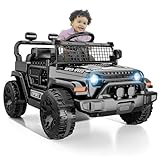
- Unleash Endless Fun with Our 12V Ride On Truck Car: Designed for electric car for kids enthusiasts aged 3-5, this electric truck offers a thrilling experience. With a remote control cars feature, parents can ensure safety while kids explore the world of kids ride on car adventures. The safe electric car is built with durability and ease of assembly, making it a perfect car for kids with parent remote.
- Engaging Fun for Little Drivers: This electric car for kids comes equipped with LED lights, a music player, and a smooth ride on car experience. The remote control ride on car allows for interactive play, while the battery car for kids ensures hours of fun. It’s more than just a kid car - it’s a gateway to imaginative adventures and developmental growth.
- All-Terrain Exploration with Big Wheels: Designed for outside toy, this ride on toys with parental remote features a spring suspension system and large, durable tires. Whether it’s the backyard, the park, or a gravel path, this truck car for kids handles various surfaces with ease, making it a versatile ride on truck for kids. The big wheels for kids ensure stability and control, perfect for riding cars for kids.
- Dual Control Modes for Growing Drivers: This car offers dual control modes, allowing parents to steer with the remote control toys while kids learn to drive. As your child grows, they can take the wheel, transitioning from a remote control car ride on to independent driving. It’s a electric car with parent remote designed to grow with your child.
- Easy Assembly & Durable Design: This electric car for kids is designed with parents in mind, featuring easy assembly and a durable battery life. The ride on toys for kids are built to last, ensuring years of fun and adventure. Whether it’s a birthday gift or a special treat, this car to ride in is a thoughtful and practical choice.
That is different from eyes-off driving, in which the system is designed to perform the driving task for an approved period or operating domain without requiring the driver to continuously monitor the road. It is also different from a driverless robotaxi, where no onboard human driver is expected to take over during normal service.
Recommended Free Tools
GM’s transition can therefore be summarized as a progression:
- Current commercial product: supervised, hands-free driver assistance through Super Cruise.
- Near-term development: more capable automated driving tested with trained drivers who can take manual control.
- Future target: eyes-off driving and eventually vehicles capable of operating without a human driver.
None of those stages should be described as proof that GM has achieved unrestricted Level 4 or Level 5 autonomy.
What GM is testing in 2026
In March 2026, GM said its next-generation automated technology had begun supervised public-road testing on limited-access highways in California and Michigan. The test vehicles had trained drivers who were capable of taking manual control.
GM said more than 200 manual and supervised development vehicles would gradually operate in live traffic. The purpose of the program is to advance automated technology for personal vehicles at scale, not to provide a commercial driverless transportation service.
PC Slower Than It Used to Be?
A free scan shows the junk files, broken settings and background clutter dragging Windows down - then fixes them in one click.Free scan · Windows 10 & 11Outdated Drivers Are Slowing You Down
One free scan finds every outdated or missing driver and matches the right update for your exact hardware.Free scan · exact hardware matchGM also reported that its data-collection vehicles had driven more than one million miles across 34 states. The company said the next-generation technology was being trained with real-world data and simulation.
Those are GM-reported development metrics. They indicate the size of the testing and data effort, but they are not independent validation of safety, reliability or commercial readiness. A development vehicle with a trained safety driver is not equivalent to a production vehicle that can operate without supervision.
GM’s announced eyes-off plan
In April 2026, GM said customers had driven one billion hands-free miles with Super Cruise across nearly 750,000 equipped vehicles and 23 models in North America. GM said it planned to begin launching eyes-off driving with the Cadillac Escalade IQ in 2028, followed by additional gasoline and electric vehicles.
The 2028 timing is a GM plan, not a guarantee. The actual launch will depend on development, validation, regulatory approval, safety performance and commercialization decisions. GM has not announced that a fully autonomous personal vehicle is available to buy as of the research date.
The Escalade IQ announcement should therefore be read as a stated roadmap milestone. It does not mean that every Escalade IQ is autonomous today, that the vehicle will work eyes-off on every road or that it will be able to operate without a human driver in all conditions.
Why personal vehicles may be a more practical business for GM
GM’s explanation was primarily about cost, time, competition and capital allocation. But the change also alters the business problem.
A robotaxi company must build and operate a transportation service. That involves fleet purchasing, maintenance, cleaning, charging or fueling, remote assistance, customer support, dispatch, insurance, regulatory compliance and enough utilization to justify the cost of each vehicle. The operator must make the entire network work before revenue can scale.
A personal-vehicle strategy uses assets GM already has: vehicle manufacturing, dealers, brand distribution, connected-car infrastructure, software updates and an installed base of customers. GM can sell or activate an autonomy feature as part of a vehicle and its connected-services ecosystem rather than first building a new ride-hailing network.
Do these 3 things before closing this tab:
1Fix the driver behind crashes, sound loss and screen glitches2Clear out junk files and repair common Windows errors3Scan for outdated or missing drivers - takes under a minuteThe existing Super Cruise fleet may also provide a larger commercial and data foundation for incremental development. That is a reasonable inference from GM’s strategy and operating model, not a guarantee that the approach will be profitable or technically successful.
The pivot does not remove the difficult problems. Personal autonomy still requires reliable perception, mapping or localization, decision-making, driver monitoring, fail-safe behavior, cybersecurity, validation and regulatory approval. It changes where GM intends to deploy the technology and how it expects to monetize it.
Independent reader supportYour contribution helps us test, update, and keep practical guides available for everyone.Did the Cruise crash cause the pivot?
It would be too simple to say that one crash caused GM to abandon robotaxis. The 2023 collision and the resulting California and federal scrutiny were clearly material to Cruise’s regulatory and reputational position. They exposed serious issues in the operation and reporting of an autonomous fleet.
But GM’s stated December 2024 rationale was broader. The company cited the resources and time needed to scale, increasing competition and capital allocation. The robotaxi market was also proving more expensive and operationally demanding than the original investment case suggested.
The Tool Desk
Outbyte Driver Updater FREEScan for outdated or missing drivers - takes under a minuteDriver Scan →Outbyte PC Repair FREEClear out junk files and repair common Windows errorsFree Scan →The most accurate conclusion is that the safety crisis weakened Cruise’s position while the economics and competitive environment made a standalone robotaxi strategy less attractive to GM. The public record does not support reducing the entire decision to either “one crash” or “purely financial reasons.”
Best Value

- Push-and-Go Friction Drive – Push and release each truck for hands-on monster truck racing; the friction mechanism moves them without batteries, so children can start racing with a simple push.
- Light Up Toy Cars – An easy on/off switch activates multicolor LED wheels inside the transparent tires, and included batteries light them up out of the package.
- Kids Hand-Friendly Size – Each truck measures 6.5 × 4 × 3.5 inches and has a chunky shape that's easy for children to grip during hands-on vehicle play.
- ABS Construction – The ABS shell and reinforced axles support hands-on monster truck play during indoor or outdoor driving and racing.
- Gift Set for Ages 3+ – Two trucks in different colors support racing or sharing, making this a 3-year-old boy birthday gift; colors may vary among black, red, blue, and yellow.
What happened to GM’s Cruise investment?
GM invested heavily in Cruise over several years, and contemporaneous filings and reporting described cumulative investment and losses totaling many billions of dollars. Exact figures vary because different sources may be counting operating losses, equity investment, restructuring charges or broader strategic spending.
Those categories should not be collapsed into one uncontested number. GM’s securities filings are the appropriate source for formal accounting figures. The more defensible business conclusion is that Cruise had become a substantial capital commitment and that GM expected the new structure to reduce annual spending by more than $1 billion once implemented.
The spending reduction does not mean GM’s autonomy work became free. GM is continuing to fund Super Cruise, next-generation development, supervised testing, vehicle computing and the engineering integration needed for future systems. It is spending differently, not eliminating autonomy spending altogether.
What the pivot means for drivers
- There will not be a GM-owned Cruise robotaxi rollout under the old strategy. GM has stopped funding Cruise as a standalone commercial robotaxi business and begun winding down those operations.
- Super Cruise remains the technology most consumers can encounter today. It is a driver-assistance system with operating limits, not a substitute for an attentive driver.
- Future GM autonomy will likely arrive in stages. More capable supervised systems come before any broad eyes-off or driverless capability.
- The 2028 Escalade IQ target is forward-looking. It is the first planned launch point GM has identified for eyes-off driving, not proof of current availability.
- Cruise’s technical legacy has not simply disappeared. GM is using the continuing autonomy effort within its broader vehicle organization.
The terminology GM watchers should use
| Term | What it means here | What it does not mean |
|---|---|---|
| Robotaxi | An autonomously operated fleet vehicle used through a transportation service. | A privately owned vehicle with an advanced driver-assistance feature. |
| Personal autonomous vehicle | A vehicle owned or controlled by an individual that may eventually drive without a human driver in appropriate conditions. | A product GM has already made generally available. |
| Hands-free | The driver may remove their hands from the wheel in supported conditions. | The driver may stop watching the road. |
| Eyes-on | The driver must continue monitoring the roadway and remain ready to take over. | Autonomous driving without supervision. |
| Eyes-off | A planned higher level of automation in which the system can handle driving without continuous visual monitoring in an approved operating domain. | Unrestricted Level 4 or Level 5 autonomy everywhere. |
| Supervised testing | Development driving with trained drivers who can take manual control. | A commercial driverless deployment. |
Bottom line: GM changed the deployment model, not the destination
GM’s Cruise decision is a retreat from the capital-intensive robotaxi business, not a retreat from autonomous driving altogether. The company now owns Cruise outright, has folded the continuing work into GM and is using Super Cruise as the commercial base for a staged autonomy roadmap.
For now, that roadmap consists of driver-assistance products and supervised testing. GM’s planned eyes-off launch beginning with the Cadillac Escalade IQ in 2028 is significant, but it remains a future target. The evidence does not support saying GM has already delivered a self-driving consumer car.
Reporting basis and dates
This account reflects GM’s December 2024 strategy announcement, GM’s February 2025 ownership announcement, GM’s 2025 securities filings, California DMV records, the NHTSA consent order and GM’s March and April 2026 engineering and product updates. Company-reported mileage, vehicle counts, testing plans and projected savings are identified as such and should not be treated as independent safety or financial validation.
Frequently Asked Questions
Is GM shutting down Cruise completely?
Yes, in the robotaxi-business sense. GM announced on December 10, 2024, that it would no longer fund Cruise’s robotaxi development. GM later began winding down the robotaxi operations. It did not end all autonomous-driving development or discard all Cruise technology.
Recommended Free Tools
Is Super Cruise a self-driving system?
No. Super Cruise is an advanced driver-assistance system. It can provide hands-free steering and speed control in supported conditions, but the driver must keep watching the road and remain ready to take control. GM describes it as hands-free, eyes-on—not fully autonomous driving.
Can I buy a fully autonomous GM vehicle now?
Not according to the researched status. GM has said it plans to begin eyes-off driving with the Cadillac Escalade IQ in 2028, followed by additional vehicles. That is a future company target, and GM has not announced a fully autonomous personal vehicle as commercially available.
Did the Cruise crash cause GM to abandon robotaxis?
The October 2, 2023 collision and the resulting California DMV suspension and NHTSA action were important context. However, GM said its December 2024 decision also reflected the cost and time required to scale, increased competition and capital-allocation priorities. The pivot should not be attributed to the crash alone.
Does GM still own Cruise?
GM completed its acquisition of the remaining noncontrolling interests on February 4, 2025, making Cruise a wholly owned subsidiary. Continuing personal-autonomy technical work was combined with GM’s broader North American operations.
Do these 3 things before closing this tab:
1Clear out junk files and repair common Windows errors2Scan for outdated or missing drivers - takes under a minute3Repair Windows errors before they cause bigger problemsThe Bottom Line
Bottom line: GM is giving up on Cruise as a standalone robotaxi company, not giving up on autonomous driving. Cruise’s remaining expertise is being integrated into GM, Super Cruise is the current commercial foundation, and eyes-off personal driving is a planned—not yet generally available—2028 ambition beginning with the Cadillac Escalade IQ.
Quick Recap
Product prices and availability are accurate as of the date/time indicated and are subject to change. Any price and availability information displayed on Amazon at the time of purchase will apply.




