The 1992 Lotus Elan was a front-wheel-drive roadster—and, in Car and Driver’s test, that break with Lotus tradition did not prevent it from feeling like a Lotus. The magazine found brisk performance, balanced handling, little torque steer and a more composed ride than the car’s unconventional layout might suggest. Its verdict came with caveats: the test car’s roof leaked and its high-beam switch was faulty.
Why did Lotus make the Elan front-wheel drive?
The Elan Type 100 was a deliberate departure for Lotus. The company describes it as the only front-wheel-drive car it had produced, and says the redesigned roadster relaunched in 1989 with a 1,588cc DOHC 16-valve engine and an innovative “raft” suspension design. Lotus’s official history does not give a specific reason for choosing front drive, so it is safer to treat the layout as a defining engineering decision than to assign it a single stated motive. Lotus’s Type 100 history

In the U.S.-market 1992 SE tested by Car and Driver, the engine was turbocharged and intercooled, and drove the front wheels through a five-speed manual transaxle. The magazine attributed the engine and transaxle to Isuzu. That foreign drivetrain did not erase the car’s Lotus character in the tester’s view: Dick Kelley wrote, “Even with its tradition-breaking layout and foreign drivetrain, the Elan feels very much a part of the Lotus heritage.” The story first appeared in the August 1991 issue and is republished in Car and Driver’s archive.
How fast was the 1992 Lotus Elan?
Car and Driver’s formal specifications for its 1992 U.S.-market test car list 162 hp at 6,600 rpm and 148 lb-ft of torque at 4,200 rpm. The magazine recorded 6.6 seconds to 60 mph in its specifications, while the article’s narrative gives 6.4 seconds; the published figures differ, so neither should be presented as an uncontested single result.
#1 Best Overall
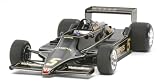
- 1: 20 Scale
- Length Model 220 mm
- Model number: 300020060
- The package dimension of the product is: 29"L x19"W x7"H
| Measure | Car and Driver’s 1992 U.S.-market test |
|---|---|
| Engine | Turbocharged and intercooled 1,588cc inline-four |
| Power | 162 hp at 6,600 rpm |
| Torque | 148 lb-ft at 4,200 rpm |
| Transmission and drive | Five-speed manual; front-wheel drive |
| 0–60 mph | 6.6 seconds in the formal specifications; 6.4 seconds in the narrative |
| Quarter-mile | 15.1 seconds at 91 mph |
| Top speed | 131 mph |
| 70–0 mph braking | 190 feet |
| 300-foot skidpad | 0.86 g |
These are results from one magazine test car, not a guarantee of how every surviving Elan will perform. Lotus’s Type 100 history gives a different SE specification—165 bhp and 1,075 kg—rather than the U.S. test car’s 162 hp and 2,452 lb. The sources do not establish why those figures differ, so they should remain attributed to their respective sources and contexts.
Did front-wheel drive compromise the handling?
Not in the way Kelley’s test described the car. He praised the Elan’s balanced responses despite its front-heavy weight distribution, along with steering feel and composed road manners. The magazine also noted a near absence of torque steer—the steering tug often associated with powerful front-drive cars—and linear turbo response. The front tires were Goodyear Eagle GS-D 205/45ZR-16s, which the article says were developed especially for the U.S. market.
Rank #2

- Detailed model kit in scale 1:24, length: 139 mm, width: 61 mm
- The high-quality kit from Tamiya must be assembled by yourself.
- Tools, glue and paints are not included with the plastic kit. These must be purchased optionally.
- International products have separate terms, are sold from abroad and may differ from local products, including fit, age ratings, and language of product, labeling or instructions.
The Elan was not presented as a neutral substitute for a rear-drive sports car. Its significance was that the front-drive layout still delivered handling balance and distinctive character in this road test. Car and Driver’s period scorecard awarded four categories to the Chevrolet Corvette convertible and two each to the Porsche 944S2 Cabriolet and Lotus. That is the magazine’s judgment in its contemporary comparison, not an objective ranking of all three cars.
What was the 1992 Elan like to live with?
Car and Driver described useful cabin room for a Lotus and a small trunk, while finding the ride comparatively refined. Those qualities made the car less single-minded than its sports-car image might imply. The test also recorded two faults on the individual car: a leaky soft top and a faulty high-beam switch. Those are observations about the road-test vehicle, not evidence of a model-wide defect rate.
Rank #3

- Detailed model kit in scale 1:24, length: 168 mm, width: 73 mm
- The high-quality kit from Tamiya must be assembled by yourself.
- Tools, glue and paints are not included with the plastic kit. These must be purchased optionally.
- International products have separate terms, are sold from abroad and may differ from local products, including fit, age ratings, and language of product, labeling or instructions.
The period comparison with the Corvette convertible and Porsche 944S2 Cabriolet involved more than drivetrain layout. The magazine’s discussion also touched on cabin quality, roof sealing, control feel, structural rigidity, acceleration, handling, value and exclusivity. Its account presents the Lotus as distinctive and appealing for its balance, but does not make it the category winner across the board.
Independent reader supportYour contribution helps us test, update, and keep practical guides available for everyone.Is the 1992 Lotus Elan really a Lotus?
By the manufacturer’s account, yes: the Type 100 was a Lotus-designed roadster with an unusual drivetrain choice, rather than a car whose front-wheel drive disqualified it from the marque. Lotus says the model received a British Design Council award in 1991. The engineering departure and the handling qualities praised in the period road test can both be true.
Rank #4
![Hot Wheels Lotus Emira, Factory Fresh 3/5 [Gray] 121/250](https://m.media-amazon.com/images/I/41OqSnePudL._SL160_.jpg)
- die cast metal & plastic parts
Keep the 1992 U.S. SE separate from the full Type 100 production story. Lotus lists 3,167 SE cars built from 1989 through 1992. The S2 returned for 1994–1995, was turbo-only, and received revised suspension and steering plus 16-inch wheels; Lotus puts S2 production at approximately 800 cars. Most Type 100s were turbo SE models, and the SE had power steering and 15-inch wheels as standard, according to the company’s heritage page.
Quick Recap
Best Value
Product prices and availability are accurate as of the date/time indicated and are subject to change. Any price and availability information displayed on Amazon at the time of purchase will apply.
Quick wins for a faster PC:
Clear out junk files and repair common Windows errorsFree Scan →Scan for outdated or missing drivers - takes under a minuteDriver Scan →



