What’s actually slowing this PC down?
Pick the symptom - the matching free tool is one click away.
The Ford SuperCab is the smaller extended-cab configuration, while the Crew Cab is Ford’s full-size four-door layout. On the F-150, Ford calls that larger cab the SuperCrew; on the F-250 and F-350 Super Duty, it is called the Crew Cab. The SuperCab has smaller rear-hinged doors and considerably less rear legroom, while the SuperCrew or Crew Cab is much better for adults, children in car seats, pets, and frequent passengers.
The SuperCab’s advantage is packaging. In the 2026 F-150, it combines a 6.5-foot bed with a 145.4-inch wheelbase. A SuperCrew with the same 6.5-foot bed uses a longer 157.2-inch wheelbase. That makes the SuperCab the shorter way to get a useful bed, while the Crew Cab provides the more comfortable passenger compartment. Current specifications are available from Ford’s 2026 F-150 model pages and 2026 Super Duty model pages.



SuperCab vs. Crew Cab at a glance
| Category | SuperCab | Crew Cab/SuperCrew |
|---|---|---|
| Ford name | SuperCab on both F-150 and Super Duty | SuperCrew on F-150; Crew Cab on Super Duty |
| Rear doors | Smaller rear-hinged doors | Four full-size doors that open independently |
| 2026 F-150 rear legroom | 33.5 inches | 43.6 inches |
| Maximum F-150 seating | Up to six, depending on the front seat | Up to six, depending on the front seat |
| F-150 bed pairing | 6.5-foot bed | 5.5- or 6.5-foot bed |
| Best suited to | Work use, occasional passengers, enclosed storage, and buyers who want a shorter truck with a 6.5-foot bed | Families, frequent rear passengers, car seats, pets, and maximum passenger comfort |
| Main compromise | Tight rear seating and less convenient access | More length, weight, and often a higher price |
Both cab styles can look like four-door trucks at a glance, but the difference is substantial in daily use. A SuperCab technically has four doors, yet its rear doors are smaller and rear-hinged. The front door normally must be opened before the rear door, and access to the second row is less convenient. A SuperCrew or Crew Cab has conventional full-size rear doors and a much roomier second row.
What is a Ford SuperCab?
SuperCab is Ford’s name for its extended cab. It places a smaller second-row seating and storage area behind the two full-size front doors. The rear doors are hinged at the back, so they open toward the rear of the truck rather than from a conventional center pillar.
#1 Best Overall
That arrangement works well when the back seat is used occasionally. It also gives the SuperCab a useful enclosed area for tools, jackets, groceries, or other equipment without requiring the longer wheelbase associated with an F-150 SuperCrew and 6.5-foot bed. Ford’s current F-150 XL, STX, and XLT pages identify a 170-degree rear-door opening as a SuperCab feature; equipment can vary by trim and configuration. See the F-150 XL, F-150 STX, and F-150 XLT pages for current details.
Current F-150 SuperCab models use a 60/40 flip-up rear bench. That makes the second row useful as flexible cargo space, but it does not turn the SuperCab into a full-size family back seat. The seats are best thought of as occasional passenger seats that can also carry cargo.
What is a Crew Cab or SuperCrew?
A Crew Cab has four full-size doors and a substantially larger rear passenger compartment. Ford calls this configuration SuperCrew on the F-150 and Crew Cab on the Super Duty. These are not two different Ford cab sizes; they are series-specific names for the larger four-door configuration.
The full-size rear doors open independently, which matters in crowded parking lots, narrow driveways, and curbside loading. Rear passengers do not need to wait for a front occupant to move or rely on the front door being opened first. The larger rear compartment is also more useful for luggage, coolers, pets, tools, and child-seat accessories.
On applicable F-150 trims, Ford lists features such as a fully flat rear load floor and rear B-pillar grab handles for SuperCrew models. Exact features depend on trim and equipment, so the model configurator should be checked before assuming a particular item is included.
Rear-seat space: the biggest practical difference
For the current U.S.-market 2026 F-150, the key measurements are:
| Rear-seat dimension | SuperCab | SuperCrew |
|---|---|---|
| Headroom | 40.3 in. | 40.4 in. |
| Shoulder room | 66.1 in. | 66.0 in. |
| Hip room | 62.6 in. | 62.6 in. |
| Legroom | 33.5 in. | 43.6 in. |
These figures show why the SuperCrew feels much larger even though the cabs have similar width and headroom. The major difference is 10.1 inches of rear legroom. That extra space makes a noticeable difference for adults on longer trips and gives rear-facing child seats more room to coexist with the front seats.
What that means for real passengers
- SuperCab: Suitable for occasional adults, children, pets, or emergency seating. It is also useful when the rear seat will often be folded or raised for cargo.
- SuperCrew: Better for adults who regularly ride in back, families, passengers who need to enter and exit independently, and dogs that need floor space.
- Children and car seats: The SuperCab may work, but the 33.5-inch legroom figure does not guarantee that every rear-facing seat or booster will fit comfortably.
Do not choose based only on Ford’s seating-capacity number. Physically test the exact child seat in the truck with the driver and front passenger seats positioned for the people who will actually use them. A rear-facing seat may require the front seat to move forward, which can compromise driving position.
Quick wins for a faster PC:
Fix the driver behind crashes, sound loss and screen glitchesFind Drivers →Repair Windows errors before they cause bigger problemsFix Now →Scan for outdated or missing drivers - takes under a minuteDriver Scan →Do both cabs seat five or six people?
On the 2026 F-150, both SuperCab and SuperCrew can be configured to carry up to six occupants when the truck has a front bench seat or available front center seating. Ford lists both configurations with a maximum seating capacity of six and a minimum of five. A truck with front bucket seats and a center console will generally seat five instead.
That means “six-passenger seating” does not describe the rear-seat experience. Six people may technically fit in either configuration, but six adults will have substantially more usable space in a SuperCrew. On Super Duty trucks, seating and equipment depend on the specific trim and seat configuration; consult Ford’s 2026 Super Duty technical specifications for the exact build.
F-150 bed lengths, wheelbases, and maneuverability
The F-150 cab choice affects how much bed you can have without making the truck longer. Ford’s current combinations are:
| F-150 cab | Bed | Wheelbase |
|---|---|---|
| SuperCab | 6.5 ft. | 145.4 in. |
| SuperCrew | 5.5 ft. | 145.4 in. |
| SuperCrew | 6.5 ft. | 157.2 in. |
The important comparisons are:
- A SuperCab with the 6.5-foot bed and a SuperCrew with the 5.5-foot bed share the same 145.4-inch wheelbase. Buyers can therefore get the larger cab without automatically moving to the longer F-150 chassis, but they give up one foot of bed length.
- A SuperCab with the 6.5-foot bed has an 11.8-inch shorter wheelbase than a SuperCrew with the 6.5-foot bed.
- The shorter SuperCab/6.5-foot-bed package will generally be easier to park and maneuver in confined spaces than the longer SuperCrew/6.5-foot-bed package. That conclusion follows from the wheelbase difference; it is not a claim that the SuperCab has a universally smaller turning circle.
The current F-150 configuration information lists the 6.5-foot bed with the SuperCab and the 5.5- or 6.5-foot bed with the SuperCrew. The 8-foot F-150 bed is associated with the Regular Cab in Ford’s current configuration information. Do not assume that a SuperCab can be ordered with an 8-foot bed simply because older trucks or other Ford series offered that combination.
Super Duty cab and bed combinations
Super Duty uses a different chassis and a different set of dimensions from the F-150. Ford’s 2026 consumer specification table lists the following combinations for SuperCab and Crew Cab trucks:
| Cab | Bed | Wheelbase | Overall length |
|---|---|---|---|
| SuperCab | 6¾ ft. | 147.8–147.9 in. | 238.2 in. |
| SuperCab | 8 ft. | 164.1 in. | 254.4 in. |
| Crew Cab | 6¾ ft. | 159.7 in. | 250.0 in. |
| Crew Cab | 8 ft. | 175.9 in. | 266.2 in. |
Unlike the F-150, Super Duty offers both SuperCab and Crew Cab with either a 6¾-foot or 8-foot bed in the current specifications. With either bed length, the SuperCab is shorter than the comparable Crew Cab. The SuperCab/6¾-foot-bed combination is particularly compact for a second-row Super Duty, while the Crew Cab/8-foot-bed combination provides the most passenger and bed space but is also the longest.
Ford’s technical-specification PDF uses slightly different rounded figures in some tables, including 164.2, 159.8, and 176.0 inches. Those 0.1-inch differences are a documentation-rounding discrepancy, not a meaningful difference between trucks. When comparing a specific vehicle, use one Ford table consistently and verify the actual configuration.
Does cab size affect towing or payload?
Cab size alone does not determine towing capacity. A SuperCab is not automatically the better tow vehicle, and a Crew Cab is not automatically the stronger one.
Crashes, No Sound, or Screen Glitches?
Random freezes, missing sound and display glitches usually trace back to one bad driver. Find and replace yours safely.Free scan · under a minuteWindows Errors? Fix Them Before They Spread
Repair common Windows errors and clear accumulated junk for a smoother, more stable PC - no reinstall needed.Free scan · no reinstallFord’s 2026 towing guides show that the rating depends on the entire truck and trailer combination, including:
- Engine and transmission
- Cab and wheelbase
- Two-wheel drive or four-wheel drive
- Axle ratio
- Trim and optional packages
- Max Tow or other towing equipment
- Bed length
- Payload, passengers, accessories, and cargo
A comparable SuperCab may weigh less than a Crew Cab, potentially leaving more available payload. However, that is only a possibility; equipment, engine, drivetrain, axle ratio, and options can change the result. A longer-wheelbase Crew Cab may be desirable for a particular towing setup, but the manufacturer’s rating and the truck’s weight limits control what is legal and practical.
For any serious towing purchase, check the exact Ford table for the engine and configuration, then read the payload label on the driver-side doorjamb of the actual truck. Trailer tongue weight, passengers, and cargo all count against payload. The combination must remain within the truck’s GVWR, rear GAWR, hitch limits, axle limits, and the manufacturer’s stated trailer rating. Ford provides separate guides for the 2026 F-150 and 2026 Super Duty.
Fifth-wheel and gooseneck towing
For fifth-wheel and gooseneck trailers, cab labeling is only one part of the decision. Bed length, hitch position, trailer-to-cab clearance, payload, rear-axle rating, and approved hitch equipment all matter. A Crew Cab does not compensate for insufficient payload, and switching from a Crew Cab to a SuperCab does not turn an F-150 into a Super Duty. If the requirement is an 8-foot bed, high payload, diesel power, a gooseneck, or a fifth-wheel trailer near the F-150’s limits, compare the appropriate F-250 or F-350 rather than treating cab style as the solution.
Do these 3 things before closing this tab:
1Scan for outdated or missing drivers - takes under a minute2Clear out junk files and repair common Windows errors3Fix the driver behind crashes, sound loss and screen glitchesWhich cab has more interior storage?
The SuperCrew or Crew Cab has the larger rear compartment and is the better choice for carrying bulky items inside the cab. It provides more practical room for:
- Toolboxes and equipment
- Coolers and luggage
- Pets
- Child-seat accessories
- Work gear that should not be left in the bed
- Large items with the rear seats folded
The SuperCab’s 60/40 flip-up bench is useful for tools and smaller cargo, but the tighter rear area limits what can fit behind the front seats. Exact cargo-volume figures should not be transferred between the F-150 and F-250 or generalized across model years. Published secondary figures for a particular F-250 configuration are not reliable evidence of the cargo volume in every F-Series truck.
Price and trim availability
A SuperCab is often the less expensive way to obtain a Ford pickup with a second row, but there is no universal SuperCab discount. The difference changes with trim, engine, drivetrain, bed length, destination charge, packages, incentives, dealer pricing, and whether the truck is a retail or fleet configuration.
For a valid comparison, configure otherwise matching trucks. Compare the same engine, 4×2 or 4×4 drivetrain, axle ratio, equipment packages, bed, destination charge, and incentives. Do not reuse older MSRP figures as current pricing: 2024 F-150 prices cited in older coverage do not describe what a 2026 buyer will pay. Ford’s current F-150 configurator is the appropriate starting point, although its base-model prices are not necessarily a direct SuperCab-versus-SuperCrew comparison.
Free tools Windows power users keep installed
One-click scans. No signup required.
For the 2026 F-150, Ford’s current model pages explicitly document SuperCab configurations for the XL, STX, and XLT. Higher trims are predominantly offered as SuperCrew trucks, but availability can vary by model year, trim, drivetrain, order status, and inventory. For Super Duty, Ford’s current F-250 XL page lists Regular Cab, SuperCab, and Crew Cab, with SuperCab and Crew Cab bed availability depending on the configuration.
Because Ford can change combinations during a model year, check the live configurator or the window sticker for the specific truck instead of relying on a general claim that a cab is available—or unavailable—on every trim.
Which one should you buy?
Choose the SuperCab if:
- Rear passengers are occasional rather than daily.
- The truck is primarily a work vehicle.
- A 6.5-foot F-150 bed matters more than maximum rear-seat comfort.
- You want that bed without the 157.2-inch wheelbase of an F-150 SuperCrew with the same bed.
- Most rear occupants will be children, pets, or occasional adults.
- The rear seat will often carry tools or cargo instead of people.
- You want a potentially less expensive, lower-trim configuration.
- You regularly work in tight parking areas or confined job sites.
Choose the Crew Cab or SuperCrew if:
- Adults regularly ride in the second row.
- Children use rear-facing seats, boosters, or bulky child restraints.
- The truck is also the family’s primary vehicle.
- Passengers need to get in and out independently.
- You carry dogs, luggage, coolers, or bulky equipment inside.
- Rear-seat comfort matters on long trips.
- You want the most SUV-like passenger experience from a pickup.
- The trim or features you want are offered primarily with the larger cab.
Choose an F-150 SuperCrew with the 5.5-foot bed if:
You need the full-size rear seat but do not require a 6.5-foot bed. This configuration shares the 145.4-inch wheelbase with the SuperCab/6.5-foot-bed F-150, giving you the larger cab without the longer wheelbase of the SuperCrew/6.5-foot-bed truck.
Choose an F-150 SuperCrew with the 6.5-foot bed if:
You need both full-size rear seating and a longer bed, and you have confirmed that the 157.2-inch wheelbase will fit your garage, driveway, parking space, or usual work locations. It is a sensible combination for family travel, camping, motorcycles, and larger cargo, but it is a noticeably longer truck.
Consider a Super Duty instead of changing cab styles if:
- The real requirement is payload, fifth-wheel towing, or gooseneck towing.
- An 8-foot bed is essential while retaining a second row.
- Your loaded trailer or cargo is approaching the F-150’s limits.
- You need a diesel engine, higher GVWR, or a dual-rear-wheel truck.
Cab style changes passenger and cargo packaging; it does not change the truck class. An F-150 and an F-250 or F-350 have different frames, axles, payload ratings, towing limits, and powertrains.
Independent reader supportYour contribution helps us test, update, and keep practical guides available for everyone.What to check when buying a used Ford truck
“SuperCab” does not guarantee that every Ford truck from every year has identical doors, seats, dimensions, or trim availability. Older F-Series generations used different rear-door designs and seating arrangements, and used or fleet trucks may have unusual factory combinations.
Before buying a used truck, verify:
- Whether the rear doors are rear-hinged or conventional full-size doors.
- That the rear seats are present and operate correctly.
- The actual bed length, rather than relying on the seller’s description.
- The VIN equipment list, doorjamb payload label, and window sticker if available.
- Whether the truck is an F-150, F-250, or F-350, since the names and ratings are not interchangeable.
- Child-seat fit, if applicable, using the actual seats you plan to install.
- Clearance and maneuverability at home, work, and in the parking areas you use most.
A listing may use “extended cab” as a generic term, but the photographs and physical truck should control. Manufacturer terminology and specifications can differ substantially between older F-150 generations, Super Duty generations, and model years.
A brief note on Ford’s terminology
Ford has used the SuperCab name for its larger-than-Regular-Cab configuration for decades. Ford’s historical material identifies the larger SuperCab as arriving in 1974 and the F-150 SuperCrew’s second-row seating as arriving in 2001. Those milestones are useful context, but older trucks should not be assumed to match the dimensions or equipment of a 2026 model. See Ford’s truck-history material and F-Series historical timeline.
Recommended Free Tools
Best Value
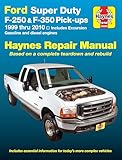
- Step-by-step procedures written from a complete teardown and rebuild, giving you the confidence to tackle repairs at any skill level.
- Over 700+ clear photos and diagrams that simplify complex systems, helping you complete jobs faster and with fewer mistakes.
- Comprehensive troubleshooting and fault-finding guides to quickly diagnose problems and reduce costly downtime.
Final verdict
If the back seat is a frequent passenger area, buy the Crew Cab or SuperCrew. Its full-size rear doors and 43.6 inches of F-150 rear legroom make it the clear choice for adults, families, car seats, and pets.
If the back seat is mostly occasional seating or enclosed storage, and you value a shorter truck with a useful 6.5-foot bed, the SuperCab is the more practical compromise. For towing, do not choose by cab name alone: compare the exact engine, drivetrain, axle ratio, bed, payload label, and Ford towing table for the truck you are actually buying.
Frequently Asked Questions
Does a Ford SuperCab have four doors?
Current SuperCab trucks have two full-size front doors and two smaller rear-hinged doors. They are technically four-door trucks, but the rear doors are less convenient than the independently opening full-size doors on a SuperCrew or Crew Cab.
Is a SuperCab or Crew Cab better for a family?
The Crew Cab or SuperCrew is usually better for a family because it has 10.1 more inches of rear legroom in the 2026 F-150, easier rear-door access, and more room for child seats, passengers, pets, and luggage. Test-fit any child seat before buying.
Can an F-150 SuperCab have an 8-foot bed?
Ford’s current 2026 F-150 configuration information lists the SuperCab with a 6.5-foot bed. The 8-foot F-150 bed is associated with the Regular Cab. Current Super Duty trucks offer more combinations, including SuperCab and Crew Cab trucks with 8-foot beds.
Does a SuperCab F-150 tow more than a SuperCrew?
Not necessarily. Towing depends on the exact engine, drivetrain, axle ratio, bed, wheelbase, trim, towing equipment, payload, passengers, and cargo. Use Ford’s towing guide and the actual truck’s doorjamb payload label rather than assuming one cab style has the higher rating.
The Bottom Line
Choose SuperCab for a shorter, work-oriented truck with occasional rear seating and a useful bed. Choose SuperCrew or Crew Cab for regular passengers, families, car seats, pets, and easier rear access. In either case, verify the exact bed, wheelbase, payload, towing rating, trim, and price for the specific 2026 truck or used vehicle.
Quick Recap
Product prices and availability are accurate as of the date/time indicated and are subject to change. Any price and availability information displayed on Amazon at the time of purchase will apply.
The Tool Desk
Outbyte Driver Updater FREEScan for outdated or missing drivers - takes under a minuteDriver Scan →Outbyte PC Repair FREERepair Windows errors before they cause bigger problemsFix Now →



