The Ford F-150 Raptor has three generations, not a new generation for every model year. The first-generation SVT Raptor covered 2010–2014, Ford skipped 2015 and 2016, the second-generation Raptor ran from 2017–2020, and the third generation began in 2021 and continues through the 2026 model year. The biggest changes were the move from V8 power to EcoBoost power in 2017, electronically controlled FOX suspension in 2019, the five-link coil-spring rear suspension and factory 37-inch tires in 2021, and the supercharged V8 Raptor R in 2023.
This guide uses U.S. model-year specifications. International Raptors can have different engines, equipment, power ratings, and availability, so metric horsepower figures or overseas specifications should not be mixed with the U.S. timeline.


As an Amazon Associate I earn from qualifying purchases.
Ford F-150 Raptor generations at a glance
| Generation | Model years | Defining characteristics |
|---|---|---|
| First generation | 2010–2014 | SVT Raptor, naturally aspirated V8 power, widened body, long-travel suspension, FOX dampers, leaf-spring rear suspension |
| Second generation | 2017–2020 | 450-hp twin-turbocharged 3.5-liter EcoBoost V6, aluminum body, 10-speed automatic, Terrain Management System, and later Live Valve shocks |
| Third generation | 2021–present | Five-link coil-spring rear suspension, available factory 37-inch tires, advanced FOX Live Valve damping, and the V8-powered Raptor R |
The 2025 and 2026 Raptors are updated versions of the third-generation truck, not a fourth-generation redesign. The standard 2026 Raptor uses Ford’s 450-horsepower high-output 3.5-liter EcoBoost V6, while the 2026 Raptor R uses a supercharged 5.2-liter V8 rated at 720 horsepower.
Recommended Free Tools
First generation: 2010–2014 SVT Raptor
Ford introduced the F-150 SVT Raptor for the 2010 model year as a desert-racing-inspired, high-speed off-road pickup. It was not simply an appearance package with aggressive wheels and graphics. Ford developed the Raptor around suspension travel, tire performance, four-wheel-drive engineering, underbody protection, and control at speed on loose terrain.
#1 Best Overall
What defined the first-generation Raptor?
- Widened bodywork: The broader stance created room for the Raptor’s suspension and all-terrain tires.
- Long-travel suspension: The truck was engineered to absorb whoops, jumps, ruts, and uneven desert surfaces at speeds well beyond those expected of an ordinary F-150.
- Specialized FOX dampers: The shock package was central to the Raptor’s ability to control the body and wheels off-road.
- All-terrain tires and underbody protection: These helped the truck survive and maintain traction away from paved roads.
- Leaf-spring rear suspension: Unlike the third-generation Raptor, the first-generation truck retained a conventional leaf-spring rear arrangement.
The earliest trucks used a 5.4-liter V8. The 6.2-liter naturally aspirated V8 became the defining engine of the later first-generation Raptor, giving used buyers a particularly important distinction to check. The change occurred early enough in the generation that a buyer should verify the exact model year, VIN, and factory equipment rather than assume every 2010–2014 truck has the same engine.
From 2011 through 2014, the basic Raptor formula remained intact while Ford refined the package. These are continuation years rather than separate redesigns. The final first-generation model year was 2014.
Why the first generation still matters
The first-generation Raptor established nearly every trait that separates the truck from a regular F-150: a wide body, long-travel suspension, specialized dampers, large all-terrain tires, extra protection, and a drivetrain calibrated for fast off-road driving. Its later 6.2-liter V8 also gives it a naturally aspirated character that the subsequent EcoBoost generations do not replicate.
Do these 3 things before closing this tab:
1Fix the driver behind crashes, sound loss and screen glitches2Clear out junk files and repair common Windows errors3Scan for outdated or missing drivers - takes under a minuteThat does not automatically make an older Raptor the best purchase. Age, corrosion, previous desert use, suspension wear, crash repairs, modifications, and maintenance history matter more than the badge alone. A carefully maintained 2010–2014 truck can be appealing to a V8 enthusiast, but the newest truck is not necessarily the most expensive to own if an older example needs major suspension or drivetrain work.
2015 and 2016: the Raptor model-year gap
Ford did not offer a first- or second-generation Raptor model-year truck for 2015 or 2016. The next Raptor arrived for 2017 as an entirely new second-generation model.
This gap can create confusion in used-truck listings and search results. A truck registered in 2015 or 2016 may be a regular F-150, a previous-model-year Raptor sold later, or a vehicle described incorrectly by a seller. Check the VIN, title, build information, and factory equipment before treating it as a Raptor model year.
Second generation: 2017–2020
The second-generation Raptor represented the largest change in the truck’s powertrain philosophy up to that point. Ford replaced the previous V8 with a high-output twin-turbocharged 3.5-liter EcoBoost V6 rated at 450 horsepower and 510 lb-ft of torque in U.S. specification.
The Tool Desk
Outbyte PC Repair FREERepair Windows errors before they cause bigger problemsFix Now →Outbyte Driver Updater FREEScan for outdated or missing drivers - takes under a minuteDriver Scan →The new engine was paired with a 10-speed automatic transmission. Ford also used the aluminum-alloy body of the contemporary F-150 while retaining a Raptor-specific high-strength steel frame. Depending on configuration, Ford said the second-generation truck could be up to 500 pounds lighter than its predecessor. The aluminum body should not be mistaken for an aluminum frame.
2017: the second-generation launch
The 2017 Raptor brought several changes that made it more than a new engine in the old body:
- 450-hp high-output 3.5-liter EcoBoost V6 replacing the previous naturally aspirated V8 approach
- 10-speed automatic transmission with closer ratios and a wider range of operating choices
- Aluminum-alloy body over a Raptor-specific high-strength steel frame
- Electronically controlled transfer case and differentials
- Terrain Management System with selectable drive modes
- Larger FOX dampers and increased suspension travel compared with the first-generation truck
The terrain modes included Normal, Sport, Weather, Mud/Sand, Rock Crawl, and Baja. They changed the truck’s throttle, transmission, traction, four-wheel-drive, and stability-control behavior for different surfaces and driving conditions. The exact feature mix can vary by model year and configuration, but the underlying change was important: the Raptor became more electronically integrated without abandoning its mechanical off-road hardware.
2018: continuation of the 2017 package
The 2018 Raptor is primarily a continuation of the second-generation truck introduced for 2017. It retains the high-output EcoBoost V6, 10-speed automatic, aluminum body, terrain-management system, and Raptor-specific suspension architecture. It should not be described as a new generation or a major clean-sheet redesign.
Free tools Windows power users keep installed
One-click scans. No signup required.
2019: Trail Control and FOX Live Valve
The 2019 model year is the most significant second-generation update. Ford added Trail Control, a low-speed off-road cruise-control aid that helps the driver maintain a selected pace while the truck manages throttle and braking. It is intended for technical terrain rather than high-speed Baja-style driving.
Rank #2
The Raptor line also gained FOX Live Valve electronically controlled shock technology for the 2019 model year. Instead of relying only on fixed mechanical damping characteristics, the system can adjust damping electronically as conditions change. That gives the truck a broader range between controlled on-road behavior and high-speed off-road suspension performance.
For buyers comparing second-generation trucks, 2019–2020 examples are especially relevant if Trail Control and Live Valve suspension are priorities. A 2017 or 2018 Raptor still has the important 450-hp EcoBoost and 10-speed combination, but it does not represent the full later-generation technology package.
2020: the final second-generation year
The 2020 Raptor was the final model year of the second generation. It continued the 3.5-liter EcoBoost V6, 10-speed automatic, aluminum-bodied platform, Terrain Management System, and FOX suspension technology. The next major change arrived with the 2021 third-generation truck.
Crashes, No Sound, or Screen Glitches?
Random freezes, missing sound and display glitches usually trace back to one bad driver. Find and replace yours safely.Free scan · under a minuteWindows Errors? Fix Them Before They Spread
Repair common Windows errors and clear accumulated junk for a smoother, more stable PC - no reinstall needed.Free scan · no reinstallThird generation: 2021–present
Ford unveiled the third-generation Raptor in February 2021. The defining engineering change was underneath the rear of the truck: Ford replaced the previous leaf-spring arrangement with an all-new five-link coil-spring rear suspension.
The system uses extra-long trailing arms, a Panhard rod, and long coil springs. The purpose was not merely to improve ride comfort. The new layout gives Ford greater control over axle movement, traction, stability, and wheel travel during high-speed off-road driving.
2021: five-link rear suspension and factory 37s
The 2021 Raptor retained a high-output 3.5-liter EcoBoost V6, but its chassis and suspension were substantially revised. It introduced:
- Five-link coil-spring rear suspension in place of the earlier leaf-spring layout
- New-generation FOX Live Valve internal-bypass shocks
- Available factory 37-inch tires, a first for a production light-duty full-size pickup according to Ford
- Revised suspension geometry and chassis packaging to accommodate the larger tires
- Newer connected and in-cabin technology, including the SYNC 4 generation of Ford’s infotainment system
With 35-inch tires, Ford listed 14 inches of front wheel travel and 15 inches of rear wheel travel. The available 37-inch configuration increased ground clearance and improved the approach, departure, and breakover angles, but it also traded away some wheel travel compared with the 35-inch setup. The 37-inch package required additional engineering changes to provide tire clearance and maintain acceptable operation.
This is why the 2021 Raptor should not be viewed as a styling update to the 2017–2020 truck. The rear suspension architecture changed, the shock system advanced, and the factory tire strategy became a central part of the model’s identity.
2022: V6 continuation before Raptor R
The standard V6 Raptor continued for 2022. The major news was what Ford was preparing next: the Raptor R, a higher-performance variant built on the third-generation platform and launched as a 2023 model.
2023: the Raptor R arrives
The 2023 Raptor R added a supercharged 5.2-liter V8 rated at 700 horsepower and 640 lb-ft of torque. It was not a separate generation. It used the third-generation Raptor’s long-travel chassis concept, FOX Live Valve shocks, and standard 37-inch tires, with R-specific powertrain, cooling, and supporting hardware.
The Raptor R restored V8 power to the modern Raptor range, but it is not the same kind of V8 as the naturally aspirated 6.2-liter engine used in later first-generation trucks. The first-generation V8 is part of the original SVT Raptor formula; the Raptor R is a supercharged flagship variant with a different powertrain and a much higher performance ceiling.
What’s actually slowing this PC down?
Pick the symptom - the matching free tool is one click away.
2024: third-generation mid-cycle refresh
The 2024 model year brought a mid-cycle update rather than a fourth-generation redesign. Ford listed the standard Raptor at 450 horsepower and 510 lb-ft, while the Raptor R rose to 720 horsepower and 640 lb-ft.
Rank #3
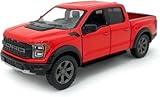
- Offical Licensed 2022 FORD F-150 Raptor
- Die Cast Metal Body w/ Plastic Parts
- 1:46 Scale, 46 Times Smaller The the Real F-150
- 5" 4 Set - Black, White, Red, Blue
- Front Doors Open - Pullback Action
The Raptor R’s 20-horsepower increase was the most obvious mechanical change. The refresh also brought updated FOX electronically controlled continuously variable compression-damping shocks and expanded Dual Live Valve technology. In practical terms, the newer system provides more sophisticated control of compression and rebound behavior across suspension positions and driving conditions.
The 2024 technical specification also continued the five-link coil-spring rear suspension. The standard Raptor used 35-inch tires, with 37-inch tires available; 37-inch tires were standard on the Raptor R.
2025: continuation within the third generation
Ford’s 2025 order information listed the Raptor, Raptor 37, and Raptor R equipment groups. These labels describe versions or equipment configurations within the third-generation family. They do not indicate a fourth generation.
When comparing a 2025 Raptor with a 2024 truck, focus on the equipment group, tire package, options, pricing, and market availability rather than assuming a fundamental chassis redesign.
2026: current third-generation lineup
For 2026, Ford lists two principal Raptor powertrains:
- Standard Raptor: high-output 3.5-liter EcoBoost V6 with 450 horsepower
- Raptor R: supercharged 5.2-liter V8 with 720 horsepower
The current truck continues with the five-link rear suspension. Depending on configuration, it uses FOX Live Valve or Dual Live Valve shock technology. The standard Raptor offers 37-inch tires as an available feature, while the Raptor R includes them as standard equipment.
Current off-road assistance features include Trail Control, Trail 1-Pedal Drive, and Trail Turn Assist. Trail 1-Pedal Drive is intended to simplify low-speed technical driving by coordinating acceleration and braking inputs. Trail Turn Assist can tighten the vehicle’s turning path in suitable low-speed off-road situations by managing wheel-speed behavior. These aids supplement, rather than replace, proper line choice, tire placement, recovery planning, and driver judgment.
Quick wins for a faster PC:
Fix the driver behind crashes, sound loss and screen glitchesFind Drivers →Clear out junk files and repair common Windows errorsFree Scan →Scan for outdated or missing drivers - takes under a minuteDriver Scan →Every U.S. Raptor model year in one table
| Model year | Generation or status | What matters |
|---|---|---|
| 2010 | First-generation launch | F-150 SVT Raptor debuts as a purpose-built high-speed off-road truck with widened bodywork, long-travel suspension, specialized dampers, all-terrain tires, and four-wheel-drive engineering. |
| 2011 | First-generation continuation | Early first-generation powertrain and equipment transition; verify whether a specific truck has the 5.4-liter or later 6.2-liter V8. |
| 2012 | First-generation continuation | The later 6.2-liter V8 becomes the defining first-generation engine; the basic suspension and off-road formula continues. |
| 2013 | First-generation continuation | Refinement of the original SVT Raptor package rather than a new generation. |
| 2014 | First-generation final year | Final model year of the SVT Raptor generation, with the later 6.2-liter V8 central to the used-market story. |
| 2015 | Raptor gap | No Raptor model-year truck. |
| 2016 | Raptor gap | No Raptor model-year truck; the second generation arrives for 2017. |
| 2017 | Second-generation launch | 450-hp twin-turbo 3.5-liter EcoBoost V6, 10-speed automatic, aluminum-alloy body, high-strength steel frame, new terrain-management hardware, and larger FOX dampers. |
| 2018 | Second-generation continuation | Continuation of the 2017 platform and powertrain. |
| 2019 | Second-generation update | Trail Control and FOX Live Valve electronically controlled shock technology become key additions. |
| 2020 | Second-generation final year | Final year of the second-generation Raptor. |
| 2021 | Third-generation launch | Five-link coil-spring rear suspension, new FOX Live Valve dampers, available factory 37-inch tires, and updated connected technology. |
| 2022 | Third-generation continuation | Standard V6 Raptor continues; Raptor R is prepared for the following model year. |
| 2023 | Third-generation Raptor R launch | Supercharged 5.2-liter V8 Raptor R arrives with 700 horsepower and 640 lb-ft, standard 37-inch tires, and R-specific powertrain and cooling hardware. |
| 2024 | Third-generation refresh | Raptor R rises to 720 horsepower; updated FOX shock technology and refreshed equipment continue the third-generation architecture. |
| 2025 | Third-generation continuation | Ford lists Raptor, Raptor 37, and Raptor R equipment groups; no fourth-generation redesign. |
| 2026 | Third-generation continuation | 450-hp V6 Raptor and 720-hp V8 Raptor R remain available, with five-link rear suspension, current FOX damping systems, 37-inch tire availability, Trail Control, Trail 1-Pedal Drive, and Trail Turn Assist. |
The five changes that matter most
1. The Raptor moved from naturally aspirated V8 power to EcoBoost power
The first generation is associated with naturally aspirated V8 power: initially the 5.4-liter engine and later the 6.2-liter V8. The 2017 second generation changed direction with a 450-hp twin-turbocharged 3.5-liter EcoBoost V6 and a 10-speed automatic.
The third generation retained the high-output V6 as the standard engine but added a separate answer for buyers who specifically want V8 power: the supercharged 5.2-liter Raptor R. Therefore, “V8 Raptor” can mean two very different used-market choices—the naturally aspirated first-generation truck or the supercharged third-generation Raptor R.
2. The rear suspension changed from leaf springs to five-link coils
Both the first- and second-generation Raptors used leaf-spring rear arrangements. The 2021 truck introduced a five-link coil-spring rear suspension with a Panhard rod and long trailing arms.
This is one of the clearest dividing lines when comparing generations. The change was intended to improve axle control, traction, stability, and wheel travel in high-speed off-road use. It also means suspension parts, service procedures, fitment, and modification choices are not interchangeable across all Raptor years.
3. FOX dampers became electronically controlled
The original Raptor used specialized FOX dampers. The second-generation truck later added FOX Live Valve technology for 2019. The third-generation truck advanced the electronically controlled internal-bypass system, and the 2024 refresh introduced more sophisticated FOX Dual Live Valve technology on applicable configurations.
Rank #4

- 1:18 Special Edition. Detailed die-cast precision model. Large - approx 9.5" replica.
- Die-cast metal body. Opening doors and engine compartment.
- Full functioning steering. Four-wheel suspension.
- Detailed chassis with separate exhaust system.
- Mounted on plastic stand.
Do not treat every replacement shock as a universal Raptor part. A Live Valve-equipped truck may require electronically compatible components and different calibration from a mechanically damped truck. If suspension work is on the agenda, a FOX Raptor replacement shocks search should always be narrowed by model year, tire package, and exact equipment before purchase.
4. Factory tire size became part of the model’s engineering
The 2021 Raptor made factory 37-inch tires available, and the Raptor R made them standard. The larger tires improve clearance and approach, departure, and breakover angles, but they are not a free upgrade: Ford’s 37-inch package involved engineering changes and traded some wheel travel for clearance.
For replacement tires, search for Raptor all-terrain replacement tires by the truck’s actual wheel and tire package. Confirm diameter, wheel size, load rating, speed rating, clearance, gearing implications, spare-tire fitment, and intended use. A tire that fits the wheel may still be a poor choice for a heavy truck used at speed off-road.
5. Electronic trail assistance expanded with each generation
The second generation added a more sophisticated Terrain Management System, an electronically controlled transfer case and differentials, and later Trail Control. The third generation added newer connected technology, SYNC 4, over-the-air update capability, and additional trail functions such as Trail 1-Pedal Drive and Trail Turn Assist on current models.
These systems make the truck easier to use in specific conditions, but they do not eliminate the need to understand four-wheel-drive modes, tire pressures, terrain, recovery points, and vehicle limits. Electronic aids are most useful when they complement sound driving technique.
Independent reader supportYour contribution helps us test, update, and keep practical guides available for everyone.Which Raptor generation is best for a buyer?
Choose a later first-generation Raptor for V8 character
A later 2010–2014 Raptor with the 6.2-liter V8 is the clearest choice for buyers who want the original truck’s naturally aspirated V8 character. It also offers the historical appeal of the SVT Raptor name and the original leaf-spring, long-travel package.
The trade-off is age. Condition, corrosion, drivetrain service, suspension wear, accident history, and evidence of hard off-road use should determine whether a particular example is worth buying.
Choose a 2017–2018 Raptor for the second-generation formula
The 2017–2018 trucks deliver the major second-generation changes: 450-hp EcoBoost V6 power, a 10-speed automatic, aluminum body panels, revised terrain management, and a lighter platform relative to the previous generation. They are the entry point for the modern EcoBoost Raptor concept.
Choose a 2019–2020 Raptor for later Gen 2 technology
The 2019–2020 trucks are the most relevant second-generation choices if Trail Control and FOX Live Valve technology matter to you. They retain the Gen 2 platform while adding the most meaningful later-cycle features.
Choose a 2021–2022 Raptor for the new chassis without Raptor R pricing
The 2021–2022 standard Raptor brings the five-link rear suspension, updated FOX Live Valve dampers, and available 37-inch tires without requiring the supercharged-V8 Raptor R. These are the key years for buyers who want the third-generation chassis and tire strategy but prefer the standard V6 model.
Choose a 2023 Raptor R for the first supercharged V8 version
The 2023 Raptor R is the first model year of the supercharged 5.2-liter V8 variant and is rated at 700 horsepower. It uses the third-generation off-road architecture but adds a more powerful engine, R-specific cooling and powertrain hardware, and standard 37-inch tires.
What’s actually slowing this PC down?
Pick the symptom - the matching free tool is one click away.
Choose a 2024–2026 Raptor R for 720 horsepower
The 2024 and newer Raptor R increases output to 720 horsepower and receives the refreshed shock and equipment package. The standard 2024–2026 Raptor remains a 450-hp V6 truck, so buyers should confirm that a listing is actually an Raptor R rather than assuming every late-model Raptor has the V8.
Best Value
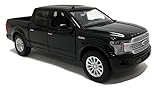
- Box Real rubber tires. Folding side mirrors. Has opening front doors. Detailed interior, exterior. Made of diecast with some plastic parts. Dimensions approximately L-8.5, W-3.75, H-2.75 inches.
- Brand new in box Genuine rubber tyres. Folding side mirrors. It has front doors that open. Detailed interior and exterior. Made of cast iron with some plastic parts. Approximate dimensions: 8.5 x 3.7 x 2.8 inches
- Item Package Dimensions: 10.2L x 11.3W x 25.3H cm
Used Raptor inspection checklist by generation
Because Raptors are designed for demanding off-road use, the odometer alone does not describe the truck’s life. Before buying any used example, ask how it was used and inspect the hardware that separates a Raptor from a regular F-150.
- Verify the model year and engine. Pay particular attention to the 2010–2014 5.4-liter versus 6.2-liter distinction, the 2015–2016 model-year gap, and the difference between a standard V6 Raptor and a Raptor R.
- Inspect the underside. Look for impacts, bent protection, damaged suspension mounts, leaks, scraped wiring, and signs that the truck was repeatedly driven over rocks or landed hard.
- Check the FOX dampers. Look for oil leakage, damaged bodies, worn mounts, and unusual bouncing or control. Identify whether the truck has conventional, Live Valve, or Dual Live Valve equipment before pricing repairs.
- Examine tires and wheels. Uneven wear can indicate alignment, suspension, or impact problems. Confirm that the tires match the intended use and that a 35-inch or 37-inch package has not been fitted carelessly.
- Test four-wheel-drive and terrain functions. Verify that the transfer case, selectable modes, locking functions, cameras, Trail Control, and other driver aids operate without warning messages.
- Look for modifications. Lift kits, wheel offsets, altered bumpers, engine tuning, and deleted or bypassed electronic systems can affect clearance, calibration, warranty support, and reliability.
- Demand maintenance documentation. The correct service information differs significantly between generations. A Ford F-150 Raptor repair manual by model year can be useful for an owner, but it must match the truck’s generation, engine, suspension system, and electrical equipment.
Raptor parts and accessory fitment: do not shop by name alone
“F-150 Raptor” covers three different chassis generations and multiple suspension, tire, engine, and electronic configurations. Parts described as fitting a Raptor may not fit every Raptor.
- Suspension: Separate first- and second-generation leaf-spring parts from third-generation five-link coil-spring parts. Live Valve and Dual Live Valve components require additional care.
- Tires: Distinguish factory 35-inch and 37-inch configurations, and verify wheel, load, clearance, and spare-tire requirements.
- Interior accessories: Floor liners and mats must match the model year, cab configuration, floor shape, and retention points.
- Recovery equipment: Choose recovery boards, straps, shackles, and compressors by their ratings and intended task—not because a listing uses the word “Raptor.”
If you carry Raptor off-road recovery gear, verify the working load limits of every component, use rated recovery points, and follow the manufacturer’s instructions. Recovery straps, shackles, and winching equipment are safety-critical items; decorative or incorrectly rated hardware should never be substituted.
Do these 3 things before closing this tab:
1Repair Windows errors before they cause bigger problems2Fix the driver behind crashes, sound loss and screen glitches3Clear out junk files and repair common Windows errorsWhat the generation labels do—and do not—tell you
A generation label is useful, but it does not answer every buying question. Within one generation, Ford can change equipment, shock calibration, software, tire packages, colors, option groups, and powertrain availability. Conversely, a late model year may be mechanically close to the preceding year.
The most reliable comparison method is to identify four things separately:
- Generation: first, second, or third
- Model year: for example, 2017, 2019, 2021, or 2024
- Variant: standard Raptor or Raptor R
- Equipment: 35-inch or 37-inch tires, Live Valve or Dual Live Valve shocks, and the specific technology package
That approach prevents common mistakes such as calling 2024 a fourth generation, treating every 2010–2014 truck as a 6.2-liter model, assuming every third-generation Raptor is a Raptor R, or buying a suspension part solely because an online listing says “Raptor compatible.”
Specifications and model-year references in this article use the supplied Ford-oriented U.S. research dossier. Power ratings, equipment, and availability can vary by market and configuration. For a new 2026 truck, Ford’s current U.S. model information should take priority over older media specifications; for an older truck, verify the applicable model-year documentation and the vehicle’s VIN.
Frequently Asked Questions
Was there a 2015 Ford F-150 Raptor?
No. Ford skipped the 2015 and 2016 Raptor model years. The second-generation Raptor returned for 2017.
Which Ford Raptor generation has a five-link rear suspension?
The third-generation Raptor, introduced for 2021, uses a five-link coil-spring rear suspension with long trailing arms, a Panhard rod, and long coil springs. The first- and second-generation trucks used leaf-spring rear arrangements.
What year did the Raptor get a V8 again?
The Raptor R arrived for the 2023 model year with a supercharged 5.2-liter V8 producing 700 horsepower and 640 lb-ft. For 2024 and later listings, Raptor R output increased to 720 horsepower.
Are 2025 and 2026 Ford Raptors a new generation?
No. The 2025 and 2026 trucks continue the third-generation architecture introduced for 2021. They receive ongoing equipment and technology updates but are not fourth-generation Raptors.
Which Raptor has the 6.2-liter V8?
The later first-generation SVT Raptor used the naturally aspirated 6.2-liter V8. Early first-generation trucks used a 5.4-liter V8, so buyers should verify the exact model year and vehicle documentation.
The Bottom Line
The cleanest way to understand the F-150 Raptor is as three major engineering eras: the 2010–2014 naturally aspirated V8 SVT Raptor, the 2017–2020 EcoBoost and 10-speed second generation, and the 2021–present five-link third generation that added factory 37-inch tires and the Raptor R. For a used purchase, the most important distinctions are not cosmetic: verify the engine, rear suspension, shock technology, tire package, and whether the truck is a standard Raptor or a Raptor R.
Quick Recap
Product prices and availability are accurate as of the date/time indicated and are subject to change. Any price and availability information displayed on Amazon at the time of purchase will apply.




