Quick wins for a faster PC:
Scan for outdated or missing drivers - takes under a minuteDriver Scan →Clear out junk files and repair common Windows errorsFree Scan →Ford has ended FNV4 as a standalone next-generation vehicle software and electrical-architecture program, but it has not abandoned the work behind it. In a May 2, 2025 announcement, Ford said it was combining FNV4 with its evolving FNV3 architecture and calling the broader effort FNV3.X. Reuters described the change more bluntly as the cancellation of FNV4 after costs and delays grew, with Ford retaining the program’s engineering lessons and continuing advanced work through its California-based “skunkworks” team.
The result is a two-track strategy: FNV3.X is intended to spread better software, over-the-air updates, digital features, security, and driver assistance across Ford’s electric, gasoline, hybrid, truck, SUV, and van lineups, while a separate clean-sheet Universal Electric Vehicle platform is being developed for Ford’s next generation of affordable EVs.
What happened to Ford FNV4?
FNV4—Ford’s internal shorthand for “fully-networked vehicle”—will not continue as an independent production-architecture program. Ford says it decided to merge FNV4 with FNV3, an architecture that was already being evolved, and named the combined direction FNV3.X.
That wording matters. “Merged” does not mean that every FNV4 component will appear in a production Ford, and it does not mean FNV4 became a retail feature or a vehicle platform under that name. It means Ford is carrying forward the knowledge and technology it considers useful while changing the program’s scope and deployment strategy.
#1 Best Overall

- CEL Doctor: The ANCEL AD310 is one of the best-selling OBD II scanners on the market and is recommended by Scotty Kilmer, a YouTuber and auto mechanic. It can easily determine the cause of the check engine light coming on. After repairing the vehicle's problems, it can quickly read and clear diagnostic trouble codes of emission system, read live data & hard memory data, view freeze frame, I/M monitor readiness and collect vehicle information
- Sturdy and Compact: Equipped with a 2.5 foot cable made of very thick, flexible insulation. It is important to have a sturdy scanner as it can easily fall to the ground when working in a car. The AD310 OBD2 scanner is a well-constructed mechanic tool with a sleek design. It weighs 12 ounces and measures 8.9 x 6.9 x 1.4 inches. Thanks to its compact design and light weight, transporting the device is not a problem. The buttons are clearly labelled and the screen is large and displays results clearly
- Accurate Fast and Easy to Use: The AD310 scanner can help you or your mechanic understand if your car is in good condition, provides exceptionally accurate and fast results, reads and clears engine trouble emission codes in seconds after you fixed the problem. This device will let you know immediately and fix the problem right away without any car knowledge. No need for batteries or a charger, get power directly from the OBDII Data Link Connector in your vehicle
- OBDII Protocols and Car Compatibility: Many cheap scan tools do not really support all OBD2 protocols. AD310 scanner as it can support all OBDII protocols such as KWP2000, J1850 VPW, ISO9141, J1850 PWM and CAN. This device also has extensive vehicle compatibility with 1996 US-based, 2000 EU-based and Asian cars, light trucks, SUVs, as well as newer OBD2 and CAN vehicles both domestic and foreign. Pls confirm with our customer service whether it is compatible with your vehicle before purchasing
- Home Necessity and Worthy to Own: This is an excellent code reader to travel or home with as it weighs less and it is compact in design. You can easily slide it in your backpack as you head to the garage, or put it on the dashboard, this will be a great fit for you. The AD310 is not only portable, but also accurate and fast in performance. Moreover, it covers various car brands and is suitable for people who just need a code reader to check their car
Reuters’ contemporaneous reporting used the sharper description that Ford had killed the standalone next-generation electrical-architecture project because of escalating costs and delays. Ford reportedly told selected employees about the change in a company video. Ford’s public statement emphasized convergence and reuse, while Reuters emphasized the end of the independent effort. Those accounts can both be accurate:
- FNV4 ended as a separate program.
- Its engineering work and lessons were not necessarily discarded.
- The resulting work is being directed into FNV3.X and a separate clean-sheet EV effort.
The most precise summary is that Ford ended FNV4 as a standalone program and folded its learnings into a broader FNV3.X/current-architecture strategy. There is no public evidence that FNV4 itself became a production system under that name.
Reporting note: Ford’s May 2, 2025 announcement is the basis for the company’s “FNV3.X” terminology and stated strategy. Reuters provides the contemporaneous reporting on cost, delay, and the end of the standalone program. Future capabilities and dates in this article remain Ford plans unless specifically described as already delivered.
FNV4 explained: the problem Ford was trying to solve
Modern vehicles are not controlled by one computer. They typically contain a large collection of electronic control units, sensors, communication networks, and software packages. Jim Farley has described Ford vehicles as having roughly 150 modules, with software frequently supplied or controlled by different companies.
Free tools Windows power users keep installed
One-click scans. No signup required.
That arrangement can work, but it creates problems for a carmaker trying to behave more like a software company. A change to one vehicle function may need to be coordinated with several other modules and suppliers. Testing becomes more complicated. A software update may have to pass through multiple ownership and validation boundaries. Features that should be reusable across several models can instead require separate integrations.
FNV4 was conceived as Ford’s answer to that fragmentation. Reuters described the intended architecture as a more centralized, zonal system: local computing units would manage functions in different physical areas of the vehicle and communicate with a more powerful central computer.
What “zonal” means in practical terms
In a traditional vehicle architecture, control modules are often organized around individual functions—such as the powertrain, body controls, airbags, seats, or infotainment—or around the suppliers that provide them. A zonal architecture instead groups many functions by location. A controller in the front, rear, left, or right portion of the vehicle can connect nearby sensors and actuators, while higher-performance computers handle broader vehicle services.
The intended advantages include:
- Less duplicated computing hardware.
- Shorter and simpler wiring harnesses.
- Fewer software integration boundaries.
- More centralized control of vehicle data and software services.
- Faster and more coordinated over-the-air updates.
- Greater ability to add software-enabled functions after a vehicle is built.
A zonal architecture is not automatically better in every respect. It can introduce new cybersecurity, functional-safety, thermal-management, networking, and software-validation challenges. It also requires a manufacturer to take greater responsibility for system integration instead of relying on a collection of separately supplied modules. FNV4 was therefore not just an infotainment upgrade; it was an attempt to change the electronic foundation of the vehicle.
Crashes, No Sound, or Screen Glitches?
Random freezes, missing sound and display glitches usually trace back to one bad driver. Find and replace yours safely.Free scan · under a minuteWindows Errors? Fix Them Before They Spread
Repair common Windows errors and clear accumulated junk for a smoother, more stable PC - no reinstall needed.Free scan · no reinstallWhy Ford moved from FNV4 to FNV3.X
Ford’s stated reason was portfolio breadth. A clean-sheet architecture designed mainly around future EVs would not immediately serve the much larger population of gasoline and hybrid Ford vehicles. Ford sells and builds F-150 pickups, Mustangs, Broncos, Rangers, Transit vans, SUVs, and other products with different powertrains, packaging requirements, prices, and production cycles.
Rank #2

- 【Diagnose Check Engine Light in Seconds – No Mechanic Needed】The FOXWELL NT301 OBD2 scanner instantly reads & clears engine fault codes (DTCs) with one click. Simply plug into the 16-pin DLC port, turn ignition on, and get accurate results within seconds—No prior car knowledge required. Save hundreds on dealership fees by knowing exactly what’s wrong before you visit a shop. The #1 choice car scanner for DIYers and car owners who want to take control of their vehicle’s health
- 【Clear & Reset CEL with Confidence】Unlike cheap code readers that just erase codes temporarily, NT301 works like all professional vehicle code readers: It clears the check engine light only after you’ve fixed the underlying issue. If the problem isn’t fully repaired, the fault code will reappear. So you’ll never get a false pass. Use the foxwell scanner to verify your repair work and drive with peace of mind
- 【Sm-og Check Helper – Know Your Pass/Fail Status Before the Test】With dedicated one-click I/M readiness hotkeys and a simple Red-Yellow-Green LED indicator, you’ll instantly know if your vehicle is ready for annual testing. Built-in speaker provides clear audio feedback. No guesswork—just confidence before you head to the test center. One less thing to worry about when inspection day comes
- 【Advanced OBDII Modes – O- 2 Sensor & EVAP Testing】NT301 go beyond basic code reading with enhanced OBD2 modes. Run an EVAP system check to assess fuel tank condition, and use the O- 2 sensor test to optimize air-fuel ratio, boosting fuel economy, cutting em- issions, and saving you money at the pump. The code reader for cars and trucks is like having a mini em-issions lab in your glove box
- 【Live Data Graphing – Spot Engine Issues in Real Time】View and log live sensor data in easy-to-read graphs with this OBD2 scanner diagnostic tool. Monitor ox- ygen sensors, fuel trims, coolant temperature, RPM, and more to spot suspicious values instantly. This obd scanner gives you professional-grade insight without the pro price tag—a feature you won’t find on basic $20 car code readers
Ford also said EV adoption was progressing more slowly than the company had expected when some future-vehicle plans were made. That changed the business case for waiting on an architecture aimed primarily at an all-electric future. Ford wanted software improvements to reach gasoline and hybrid customers as well as EV buyers.
The choice is therefore a deployment and business decision as much as a technical one:
| Approach | Potential advantage | Trade-off |
|---|---|---|
| Clean-sheet architecture across a new vehicle generation | Maximum opportunity to simplify hardware, centralize software, and redesign vehicle electronics from the ground up | High cost and execution risk; benefits may arrive first on a smaller number of new vehicles |
| Incremental evolution through FNV3.X | Can spread software improvements across more powertrains and vehicle lines and reduce the need to maintain separate software worlds | May preserve more legacy complexity than a complete redesign |
Ford’s argument is that a smaller number of shared software and electrical platforms can give customers a more consistent experience and let the company reuse features across a much broader portfolio. The compromise is that FNV3.X may not represent the same degree of clean-sheet simplification originally envisioned for FNV4.
What FNV3.X is supposed to deliver
Ford presented FNV3.X as a portfolio-wide evolution intended to improve the software experience across EVs, internal-combustion vehicles, hybrids, trucks, SUVs, and vans. The company specifically cited vehicles such as the F-150, Mustang, Bronco, Ranger, and Transit as part of the broad product context.
Ford identified four main customer-facing goals.
1. More over-the-air updates
Ford said it had delivered more than 63 million over-the-air updates by May 2025, including 9.5 million during the first quarter of that year. The company said the revised architecture strategy should accelerate the number of customers able to receive software updates.
More OTA capability does not mean every update changes how a vehicle drives. Updates can include infotainment improvements, navigation data, bug fixes, cybersecurity patches, connected services, driver-assistance refinements, and changes to other eligible systems. Availability depends on the vehicle’s hardware, software architecture, model year, market, and the feature being updated.
2. Broader access to Ford’s digital features
Ford said the strategy could help extend experiences such as Ford Digital Experience, BlueCruise, intelligent navigation, phone-as-key functionality, and security features to more models instead of concentrating them in selected EVs or higher-end vehicles.
That is a stated direction, not a promise that every named feature will be available on every Ford. BlueCruise, phone-as-key, navigation functions, and connected services can depend on hardware, subscription or service arrangements, trim level, geography, cellular connectivity, regulatory approval, and model-year implementation.
3. Better software testing and quality management
Ford also described a broader modernization of software quality processes. That includes testing, quality management on the production line, dealer service processes, and connected-data monitoring.
Rank #3
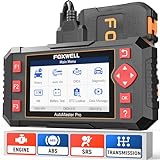
- [Easy to Use—Work Out of the Box] + [FOXWELL 2026 New Version] FOXWELL NT604 Elite scan tool is the 2026 new version from FOXWELL, designed for car owners who want to figure out the cause of issues before fixing car problems by scanning common systems like ABS, SRS, engine, and transmission. The NT604 Elite obd2 scanner diagnostic tool comes with the latest software—no need to waste time downloading software first. Plug the scanner into the OBDII port with OBDII cable to start the diagnosis.
- [Affordable] + [Reliable Car Health Monitor] Will you be confused what happens when the warning light of ABS/SRS/transmission/check engine flashes? Instead of taking your cars to dealership, this FOXWELL scanner will help you do a thorough scanning and detection for your cars and pinpoint the root cause. Note:The device is a diagnostic tool, not a repair tool. To turn off a warning light, you must first physically repair the issue causing it. Only then can the scanner be used to clear the corresponding fault code.
- [5 in 1 Car Diagnostic Scanner] Compared with obd scanners (50-100), NT604 Elite code scanner not only includes their OBDII diagnosis but also serves as ABS/SRS scanner, transmission and check engine code reader. When it’s an odb2 scanner, you can use it to check if your car is ready for annual test through I/M readiness menu. In addition, live data stream, built-in DTC library, data play back and print, all these features are a big plus for it. Note: doesn't support maintenance functions like reset or relearn. For the SRS system, NT604 Elite can read and clear common fault codes not caused by a crash, but crash/collision data cannot be cleared.
- [Fantastic AUTOVIN] + [No extra software fee] Through the AUTOVIN menu, this NT604 Elite car scanner allows you to get your V-IN and vehicle info rapidly, no need to take time to find your V-IN and input one by one. What's more, the NT604 Elite ABS SRS scanner supports 60+ car brands from worldwide (America/Asia/Europe). You don’t need to pay extra software fee. AUTOVIN may not work on some older vehicles or certain vehicle brands. If AUTOVIN fails, please input the vin code manually or go to the Diagnostic Menu to select your vehicle model.
- [Solid protective case KO plastic carrying bag] + [Lifetime update] Almost all same price-level car scanner diagnostic tool only offers plastic bag to hold the scanner.However, NT604 Elite automotive scanner is equipped with solid protective case, preventing your obd2 scanner from damage. Then you don’t need to pay extra money to buy a solid toolbox.
This is important because software problems are not limited to the vehicle after it reaches a customer. A more integrated process could help Ford identify issues during development, verify software during manufacturing, give dealers better diagnostic and service tools, and monitor connected systems after delivery. Ford’s public statements describe this as an intended benefit; they do not independently establish that FNV3.X has already delivered a measurable quality improvement across the lineup.
4. A more consistent ownership experience
Ford wants customers to encounter a recognizable digital experience across products such as the Bronco, Mustang Mach-E, F-150, and other models. Shared interfaces and software services could make it easier for owners to move between Ford vehicles without learning an entirely different system each time.
What’s actually slowing this PC down?
Pick the symptom - the matching free tool is one click away.
Consistency is also useful for Ford’s dealers and internal engineering teams. A common software foundation can potentially reduce duplicated development work, simplify training, and make fixes easier to distribute. Whether that happens will depend on how much hardware and legacy software FNV3.X ultimately shares across production vehicles—a level of detail Ford has not publicly mapped.
What Ford has not disclosed about FNV3.X
Ford has not published a complete technical specification for FNV3.X. The available public material does not establish:
- Which specific production vehicle, model year, or trim uses FNV3.X.
- Whether FNV3.X has a fully zonal network, a partially zonal network, or a different transitional arrangement.
- Which processors, operating systems, middleware, or communications protocols it uses.
- How many modules it eliminates or consolidates.
- Which software functions Ford owns internally and which remain supplier-controlled.
- Which individual FNV4 components were transferred, redesigned, or abandoned.
- Whether every feature Ford mentioned will be supported throughout the lineup.
Consequently, it would be inaccurate to label a particular current Ford as an “FNV3.X vehicle” without a Ford production announcement or technical documentation identifying it. FNV3.X is best understood as a development and platform direction until Ford publishes a vehicle-by-vehicle implementation map.
FNV3.X is not the same as Ford’s Universal Electric Vehicle platform
Ending standalone FNV4 work did not end Ford’s clean-sheet EV effort. Ford said its California-based EV “skunkworks” team would continue developing a ground-up software and electrical architecture.
Do these 3 things before closing this tab:
1Scan for outdated or missing drivers - takes under a minute2Clear out junk files and repair common Windows errors3Fix the driver behind crashes, sound loss and screen glitchesFord’s April 15, 2026 organizational announcement described that separate effort as the Universal Electric Vehicle, or UEV, platform. Ford says the UEV platform is designed around:
- A fully zonal electrical architecture.
- In-house software controls.
- Advanced driver-assistance capability.
- Support for multiple vehicle types and battery chemistries.
- A high-performance computing center that consolidates major vehicle functions.
The UEV should not be described as “FNV4 renamed.” Ford’s public materials identify it as a separate clean-sheet EV architecture. It may benefit from knowledge developed during earlier software and electrical-architecture work, but Ford has not said that UEV is simply the old FNV4 program under a new label.
Ford’s new high-performance compute approach
Ford’s 2026 materials describe an in-house high-performance compute center that combines infotainment, ADAS, audio, and networking in one compact module. Ford says the module is nearly half the size of previous solutions, costs less to produce, and gives the company greater control over critical semiconductors.
Rank #4
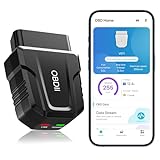
- 【Comprehensive Performance Testing】V011 OBD2 Scanner provides a complete diagnostic solution, giving you a thorough understanding of your vehicle's condition. It supports a variety of performance tests, support 9 protocols,👍automotive fault clearing,including fast reading of DTCs, access to electronic emission readiness, turning off CEL or MIL, resetting monitors, reading live data and retrieving the vehicle's VIN, freeze frame, sensor data, data streaming, diagnostic reports, onboard monitoring, live data streaming, and more. With these features, you can monitor your car's performance in real time and discover potential problems before they become major issues.
- 【Convenience and Savings for All Users】Designed with user-friendliness in mind, the V011 OBD2 Scanner is perfect for both novices and seasoned car enthusiasts. The intuitive app helps you interpret the check engine light, and suggests possible fixes. This can help you avoid unnecessary trips to the repair shop and prevent you from being overcharged for repairs. The product also includes helpful how-to guides and video tutorials, empowering you to clear the check engine light yourself and save significantly on repair bills.The fault code can only be cleared after the car is repaired. ⚠️ Notice:lf the car is not repaired,the fault code can only be cleared by the computer in the 4s shop.
- 【Intuitive Data Visualization】Understanding car diagnostics has never been easier. The V011 OBD2 Scanner displays detected data in clear, easy-to-read charts. Whether it's engine coolant temperature, engine speed, vehicle speed, or control module voltage, the visual representation helps you quickly grasp your car’s status. Even beginners can compare these readings against normal values to determine if their car needs any repairs.
- 【Broad Compatibility】The newly upgraded V011 OBD2 Scanner supports over 96% of car makes and models, making it one of the most versatile diagnostic tools on the market. It is compatible with a wide range of brands including Toyota, Honda, Chevrolet, Ford, Mercedes-Benz, Jeep, BMW, Porsche, Subaru, Nissan, Cadillac, Volkswagen, and Lexus, covering vehicles from 1996 to the present. This ensures that almost any vehicle owner can benefit from its extensive features. The device also supports multiple languages, including English, German, Spanish, Finnish, French, Italian, Dutch, Portuguese, and Chinese, ensuring accessibility for a global audience.
- 【Advanced Bluetooth 5.4 Connectivity】Say goodbye to the hassle of traditional wired connections. The V011 OBD2 Scanner features an upgraded Bluetooth 5.4 system, providing faster and more reliable connections. This seamless connectivity ensures you can start diagnosing your vehicle without any delays.Tips: 1. The car must be started (power on and ignition), 2. The mobile phone Bluetooth is turned on. Note that Apple phones only need to turn on Bluetooth, do not connect Bluetooth in the phone settings to turn on OBD Home, the APP will automatically connect (this product is only suitable for OBD home)
Those are Ford-provided claims, not independent test results. They describe the design goals and claimed advantages of the UEV hardware; they do not prove that the same compute center is used by FNV3.X or that its cost and size advantages have already been realized in customer vehicles.
The Tool Desk
Outbyte PC Repair FREEClear out junk files and repair common Windows errorsFree Scan →Outbyte Driver Updater FREEScan for outdated or missing drivers - takes under a minuteDriver Scan →Ford’s 2026 UEV roadmap
Ford’s public roadmap gives the UEV program a more specific near-term launch path than it has provided for FNV3.X.
| Target | Ford’s stated plan | How to interpret it |
|---|---|---|
| 2027 | Launch the first UEV product, a midsize, four-door electric pickup | A planned production vehicle, not a delivered product as of the public 2026 announcements |
| 2027 | Begin bringing new hardware and software from Ford’s in-house teams to the UEV platform | Ford’s stated timing for the first wave of in-house technology |
| 2028 | Target road-ready Level 3 “eyes-off” driving | A forward-looking company target, not confirmation that the capability has been delivered or approved in every market |
| 2029 | Refresh 80% of Ford’s North American portfolio by volume and 70% of its global portfolio by volume | A portfolio-volume goal, not a claim that those vehicles will all use identical architecture |
| 2030 | Have 90% of vehicles by volume feature updated electrical architectures, in-house-developed user experiences and hardware, and next-generation OTA capability | A company roadmap target subject to product timing and execution |
Ford’s integrated reporting identifies the first UEV product as a midsize electric pickup to be assembled at Louisville Assembly Plant for U.S. and export markets, with launch scheduled for 2027. Ford also says the UEV technology could later influence future hybrids and other products. That possibility helps explain how the two-track strategy could eventually converge: FNV3.X is the broad, incremental path today, while UEV is the clean-sheet laboratory for a newer generation of vehicles.
Independent reader supportYour contribution helps us test, update, and keep practical guides available for everyone.Why the distinction matters to Ford owners
For existing owners, this announcement is primarily about Ford’s future engineering strategy—not a software package that can be installed in an older vehicle.
There is no public indication that an owner can:
- Buy an aftermarket FNV4 conversion.
- Install FNV3.X with an OBD adapter or diagnostic tool.
- Convert a conventional Ford electrical system into a zonal architecture through an OTA update.
- Unlock all future Ford Digital Experience, BlueCruise, phone-as-key, or ADAS capabilities through software alone.
An OTA update can improve a vehicle only within the capabilities of its existing hardware, networks, sensors, processors, and regulatory configuration. A genuinely different electrical architecture generally requires the vehicle to be designed and built around that architecture.
Current Ford owners may continue to receive ordinary software and security updates when their vehicle is eligible. Those updates should not be confused with an FNV3.X or UEV retrofit. Owners should check Ford’s official vehicle-specific update and feature information rather than assume that a platform announcement applies to a particular VIN, model year, trim, or country.
The organizational change behind the software strategy
Ford’s April 15, 2026 announcement also changed how the company organizes product development. Ford created a Product Creation and Industrialization organization led by COO Kumar Galhotra.
The group combines Ford’s Electric Vehicle, Digital and Design organization with its global Industrial System. In practical terms, that places advanced software, vehicle development, purchasing, manufacturing, and industrial execution in a more connected structure.
This is significant because Ford’s challenge is not only to invent a better architecture. It must also industrialize it across factories, suppliers, vehicle programs, service operations, quality processes, and multiple powertrains. Bringing those functions together suggests a shift from a primarily technology-centered transformation effort toward an integrated product-creation and manufacturing approach.
Recommended Free Tools
Best Value

- Wide Vehicle Compatibility: Offers extensive coverage Compatible with Ford, Lincoln, and Mercury cars and trucks from 1981 to 1995.Effortlessly interfaces with EEC-IV and MCU-based systems
- Code Definitions Display: Features a 2.4" LCD screen that shows code numbers and their definitions instantly. Eliminates the need to count blinking lights or consult manuals. (Does not support ABS code)
- Professional Diagnostic Modes: Perform comprehensive checks with three key tests: Key On Engine Off (KOEO), Continuous Memory (CM), and Key On Engine Running (KOER) self-tests
- User-Friendly Design: Built with a drop-proof construction, reinforced nickel-plated pins, an ergonomic handle, and a long 9-foot cable for convenient in-seat operation. Runs on 2 AA batteries (not included). Manual in English, French and Spainish
- Simple Plug-and-Play Operation: Designed for ease of use. Quickly diagnose issues, clear check engine lights, and get early warnings to prevent minor problems from becoming major repairs. Simple to use, even for total beginners
The same announcement said Doug Field would leave Ford after an approximately one-month transition. The announcement establishes the transition, but it does not by itself establish the exact completion date or name a permanent successor for every part of Field’s former responsibilities. It is therefore better to describe the event as an organizational handoff than to infer a specific successor structure that Ford has not publicly detailed.
What this says about Ford’s software-defined vehicle strategy
The central strategic change is not that Ford has given up on software-defined vehicles. Ford is changing where and how quickly it intends to deploy them.
FNV4 represented the appeal—and risk—of a broad clean-sheet next-generation architecture. FNV3.X represents a more incremental attempt to deliver common software and digital services across the vehicles Ford sells now, including gasoline and hybrid products. UEV is the separate clean-sheet EV platform where Ford can pursue a more complete zonal and centralized-computing design.
That gives Ford a portfolio strategy with two different time horizons:
Ford’s two architecture tracks
- FNV3.X: evolve the current architecture and distribute software improvements across a wide range of EVs, hybrids, internal-combustion vehicles, trucks, SUVs, and vans.
- UEV: build a new, fully zonal EV platform with in-house controls and centralized high-performance computing, beginning with a planned 2027 midsize electric pickup.
The benefit of this approach is reach. Ford does not have to wait for every customer to switch to an EV before improving software across the portfolio. The risk is complexity: an incremental architecture may be harder to standardize than a single clean-sheet platform, and Ford will have to maintain the transition between current vehicles, FNV3.X products, and UEV vehicles.
Execution will determine whether Ford can actually deliver the promised gains in OTA speed, quality, feature reuse, serviceability, and cost. The public announcements establish the direction and targets, but not yet a complete production record demonstrating that those goals have been met.
Further reading for the technical side
Readers who want background on the concepts behind this story—not a Ford service manual or an FNV4 implementation guide—may find The Software-Defined Vehicle by Dirk Slama, Achim Nonnenmacher, and Thomas Irawan useful as a general software-defined vehicle book. It covers electronic/electrical architecture, vehicle APIs, service-oriented architecture, and over-the-air software. It should be treated as general technical context rather than evidence that Ford uses any particular architecture, supplier, or software stack.
Confirmed versus still unknown
Confirmed in Ford’s public statements
- FNV4 was Ford’s internal name for a future-state software project.
- Ford decided to combine FNV4 with the evolving FNV3 architecture and call the resulting effort FNV3.X.
- Ford intended FNV3.X to address EVs, gasoline vehicles, hybrids, trucks, SUVs, and vans.
- Ford’s California-based EV skunkworks effort continued separately after the FNV4 decision.
- Ford’s UEV platform is designed around zonal electronics, in-house controls, ADAS, and high-performance computing.
- Ford planned the first UEV vehicle as a midsize electric pickup for 2027.
Not confirmed in the reviewed public material
- A production-vehicle-by-production-vehicle list showing which Ford models use FNV3.X.
- A complete FNV3.X technical specification, including processors, operating systems, network topology, module count, or software ownership boundaries.
- A public inventory of which FNV4 components were retained, discarded, or transferred.
- Evidence that all promised FNV3.X features are already available across Ford’s full lineup.
- Evidence that UEV is a direct continuation or rebranding of FNV4.
- Independent validation of Ford’s claimed size, cost, quality, or performance improvements for its new compute architecture.
Frequently Asked Questions
Is Ford FNV4 canceled?
FNV4 is canceled or ended as a standalone program, but Ford says its work and lessons are being folded into the broader FNV3.X strategy. It is not accurate to say that all FNV4 technology was discarded.
Outdated Drivers Are Slowing You Down
One free scan finds every outdated or missing driver and matches the right update for your exact hardware.Free scan · exact hardware matchPC Slower Than It Used to Be?
A free scan shows the junk files, broken settings and background clutter dragging Windows down - then fixes them in one click.Free scan · Windows 10 & 11Did Ford rename FNV4 as the Universal Electric Vehicle platform?
No. Ford’s public materials describe UEV as a separate clean-sheet EV architecture. UEV may benefit from earlier engineering work, but Ford has not identified it as FNV4 under a new name.
Which Ford vehicles use FNV3.X?
Ford has described FNV3.X as a broad strategy covering products such as the F-150, Mustang, Bronco, Ranger, Transit, and other vehicles, but it has not published a complete production-vehicle or model-year map identifying which vehicles use the architecture.
Can an existing Ford owner install FNV3.X or FNV4?
No public information supports an aftermarket conversion. Vehicle architecture depends on built-in processors, wiring, networks, sensors, and control modules. Eligible Ford vehicles may receive ordinary OTA updates, but those updates are not the same as converting the vehicle to FNV3.X or UEV.
When is Ford’s first UEV vehicle expected?
Ford has said the first UEV product will be a midsize, four-door electric pickup scheduled for 2027, with production plans tied to Louisville Assembly Plant for U.S. and export markets. The date is a company plan, not a completed launch as of the public 2026 announcements.
The Tool Desk
Outbyte PC Repair FREEClear out junk files and repair common Windows errorsFree Scan →Outbyte Driver Updater FREEScan for outdated or missing drivers - takes under a minuteDriver Scan →The Bottom Line
Bottom line: Ford did not abandon vehicle software; it abandoned FNV4 as an independent architecture program. The company is using FNV3.X to pursue broader, more incremental software improvements across its mixed-powertrain lineup, while developing the separate, fully zonal UEV platform for a new generation of EVs. Until Ford publishes production-specific technical details, FNV3.X should be treated as a strategy and development direction—not a retrofit, a retail product, or a confirmed feature set for every Ford model.
Quick Recap
Product prices and availability are accurate as of the date/time indicated and are subject to change. Any price and availability information displayed on Amazon at the time of purchase will apply.




