PC Slower Than It Used to Be?
A free scan shows the junk files, broken settings and background clutter dragging Windows down - then fixes them in one click.Free scan · Windows 10 & 11Outdated Drivers Are Slowing You Down
One free scan finds every outdated or missing driver and matches the right update for your exact hardware.Free scan · exact hardware matchThe 3.5L EcoBoost is the better 2026 U.S. F-150 engine for maximum towing, payload, and low-rpm torque. The 5.0L V8 is the better choice for drivers who want naturally aspirated V8 character and whose real-world capability needs fit its exact configuration.
For a current U.S.-market Ford F-150, the 3.5L EcoBoost V6 is the better choice when maximum towing, payload, and low-rpm torque are the deciding factors. The 5.0L Ti-VCT V8 is the better choice when you specifically want a naturally aspirated V8’s response and character and do not need the EcoBoost’s extra capability.
That conclusion is deliberately narrow. “3.5 EcoBoost versus 5.0 V8” spans several generations of F-150s and other Ford vehicles, whose outputs, equipment, calibrations, and ratings differ. The figures below are Ford’s current ratings for the 2026 U.S. F-150; they are not universal specifications for every used F-150, Raptor, Expedition, or non-U.S. Ford.
2026 Ford F-150: the important numbers
| Factor | 3.5L EcoBoost V6 | 5.0L Ti-VCT V8 | Why it matters |
|---|---|---|---|
| Peak horsepower | 382 hp on Ford’s current XLT details page* | 400 hp | The V8 has the higher listed peak-horsepower figure on that page. |
| Peak torque | 500 lb-ft at 3,100 rpm | 410 lb-ft at 4,250 rpm | The EcoBoost has 90 lb-ft more torque and reaches its listed peak earlier. |
| Induction | Twin intercooled turbochargers | Naturally aspirated | The engines deliver their power differently; neither layout alone settles the buying decision. |
| Fuel injection | Port and direct injection | Port and direct injection | This is not simply an “old-school V8” versus “modern turbo” comparison. |
| Maximum rated towing | 13,500 lb | 12,800 lb | Those are qualifying-configuration maximums, not ratings for every truck. |
| Maximum rated payload | 2,440 lb | 2,235 lb | The actual truck’s door-jamb label is the controlling number. |
*Ford’s current 2026 materials are not fully consistent: a performance page lists the 3.5L EcoBoost at 400 hp and 500 lb-ft, while a recently crawled current XLT details page lists 382 hp and 500 lb-ft. Treat 500 lb-ft as the common listed torque figure, but do not silently choose between the two horsepower claims for a specific truck. Confirm the window sticker, order guide, or VIN-specific configuration before buying or publishing a specification.
Quick wins for a faster PC:
Repair Windows errors before they cause bigger problemsFix Now →Fix the driver behind crashes, sound loss and screen glitchesFind Drivers →Clear out junk files and repair common Windows errorsFree Scan →#1 Best Overall
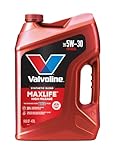
- Formulated for engines with 75,000 miles or more, Valvoline MaxLife High Mileage synthetic blend is formulated with seal conditioners to help prevent oil leaks and reduce oil consumption
- Delivers 20% better wear protection and 15% better sludge defense than industry standards to help prevent engine breakdown
- Extra detergents safeguard against friction, corrosion and deposits to keep high-mileage engines clean
- Advanced friction-fighting additives help maximize performance and improve fuel efficiency
- Provides performance benefits for high mileage, new and re-built engines alike
Choose the 3.5L EcoBoost if capability is the priority
The EcoBoost is the evidence-based choice for frequent heavy conventional-trailer work or for buyers who want the greatest current non-hybrid F-150 capability from these two engines. Ford rates it at up to 13,500 pounds of towing and 2,440 pounds of payload, versus 12,800 pounds and 2,235 pounds for the 5.0L.
The more meaningful day-to-day distinction is torque. Ford lists 500 lb-ft at 3,100 rpm for the 3.5L, compared with 410 lb-ft at 4,250 rpm for the V8. That does not mean the V8 cannot tow confidently. It means the EcoBoost has substantially more listed peak torque available at a lower engine speed, which is a useful advantage when pulling weight, merging with a loaded trailer, or climbing grades.
Do not turn the 13,500-pound figure into a promise for every 3.5L truck. Tow rating is determined by the exact cab, bed, drivetrain, axle ratio, wheel-and-tire package, towing equipment, payload, and trailer setup. A configuration that reaches a headline tow maximum may not also be the configuration that reaches the headline payload maximum. Use the model-year Ford towing guide and the labels on the truck being considered.
Choose the 5.0L V8 if the V8 experience is the priority
The 5.0L makes the strongest case for the buyer who prefers a naturally aspirated V8: linear response, the way it builds power with rpm, and the sound and character that come with that layout. Ford lists 400 hp for the current V8, which is 18 hp above the 382-hp figure shown on Ford’s XLT page for the 3.5L EcoBoost.
Rank #2

- Designed for vehicles with 75,000 miles or more, Valvoline MaxLife Full Synthetic High Mileage Motor Oil helps maximize engine life and performance for the many miles still ahead
- Formulated with seal conditioners to help prevent oil leaks, reduce oil consumption, and improve fuel economy
- Delivers 50% stronger wear protection than industry standards for superior defense against friction and wear
- Provides 20% stronger sludge defense than industry standards to protect against harmful buildup and deposits
- Offers 2.5X better heat protection than industry standards to safeguard engines in extreme conditions
That horsepower edge does not erase the EcoBoost’s torque advantage. The V8 gives up 90 lb-ft of listed peak torque, and its listed peak arrives 1,150 rpm later. If your real need is near the upper end of F-150 towing or payload capability, the 3.5L has more margin. If your trailer and cargo needs are comfortably inside the exact 5.0L truck’s ratings, choosing the V8 for its character is a sound preference-based decision.
Do not assume an MPG, reliability, or repair-cost winner
It is tempting to reduce this comparison to “turbo V6 equals efficient but complicated” or “naturally aspirated V8 equals simple and durable.” The available evidence does not support those as universal conclusions.
- Fuel economy: EPA results depend on the precise model year and configuration, including 4×2 or 4×4, cab, bed, axle ratio, tires, and packages. A validated, like-for-like pair of official 2026 EPA labels was not established here, so there is no responsible blanket mpg winner.
- Reliability: Ford’s reviewed sources do not provide a matched, independent long-term failure-rate comparison for all 3.5L EcoBoosts against all 5.0Ls. Individual model years, maintenance records, modifications, towing history, and prior repairs matter far more than internet shorthand.
- Repair costs: A turbocharged engine and a naturally aspirated V8 have different systems, but that fact alone does not establish which will cost less over a particular owner’s term. Age, mileage, warranty coverage, maintenance history, and the actual fault determine the bill.
Current F-150 powertrain coverage is 5 years or 60,000 miles. That is useful coverage information, not a forecast that either engine will last longer.
Used-truck buyers: make the comparison VIN-specific
A federal recall filing covers specified 2017–2018 F-150s with the 3.5L EcoBoost. That is a reason to run a VIN-specific recall check on an affected-era truck; it is not evidence that every 3.5L EcoBoost is unreliable or that every 5.0L is a safer used purchase.
Rank #3
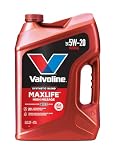
- Formulated for engines with 75,000 miles or more, Valvoline MaxLife High Mileage synthetic blend is formulated with seal conditioners to help prevent oil leaks and reduce oil consumption
- Delivers 20% better wear protection and 15% better sludge defense than industry standards to help prevent engine breakdown
- Extra detergents safeguard against friction, corrosion and deposits to keep high-mileage engines clean
- Advanced friction-fighting additives help maximize performance and improve fuel efficiency
- Provides performance benefits for high mileage, new and re-built engines alike
For either engine, ask for service records and verify open recalls, warranty status, and the exact maintenance schedule for that vehicle. Ford directs owners to the appropriate owner manual and maintenance information by year/model or VIN. Do not rely on a generic online oil capacity, oil grade, interval, or part number: those details can change by model year and configuration.
How to compare two actual F-150s
- Confirm the market and model year. These current figures are for the 2026 U.S. F-150, not a blanket specification for all Ford trucks.
- Identify the full configuration. Record trim, cab, bed, 4×2 or 4×4, axle ratio, wheels and tires, and tow package.
- Read the window sticker. It identifies the engine and installed equipment rather than assumed equipment.
- Read the driver-door payload label. This is the truck-specific payload limit. Passenger weight, cargo, accessories, and trailer tongue weight all consume payload.
- Use the correct model-year towing guide. Match the truck’s exact configuration; do not shop from a single maximum-tow headline.
- For used trucks, run the VIN. Check open recalls, warranty status, service history, and whether aftermarket tuning or hardware changes could affect coverage or capability.
Availability is configuration-dependent
Both engines are offered on the 2026 F-150 XLT, but availability is not necessarily identical across every trim, cab, bed, and drivetrain combination. Ford’s 2026 updates describe the 3.5L EcoBoost as standard in selected configurations and the 5.0L as optional in specified configurations. Build or price the exact truck rather than assuming either engine can be paired with every body and equipment choice.
Independent reader supportYour contribution helps us test, update, and keep practical guides available for everyone.A practical decision
| If this describes you | Better fit | Reason |
|---|---|---|
| You tow heavy often or want the most headroom between these engines. | 3.5L EcoBoost | Higher Ford-rated maximum towing and payload, plus 500 lb-ft of listed torque at lower rpm. |
| You need strong truck capability but your exact V8 configuration covers your trailer and cargo. | Either | Compare the actual door label, towing guide, equipment, price, and driving preference. |
| You value a naturally aspirated V8’s feel and sound more than maximum ratings. | 5.0L V8 | It delivers the V8 experience and has the higher listed peak horsepower on Ford’s XLT page. |
| You are choosing primarily on claimed mpg, reliability, or repair cost. | Pause and compare exact trucks | The available official information does not establish a universal winner in any of those categories. |
Service-manual note
A repair manual that explicitly covers the exact F-150 model year and the installed 3.5L EcoBoost or 5.0L V8 can be a useful supporting purchase for an owner who performs appropriate maintenance or wants to understand procedures. Verify year and VIN compatibility first. Ford also provides digital manuals by year/model or VIN and offers physical manuals.
Frequently Asked Questions
Can every 3.5L EcoBoost F-150 tow 13,500 pounds?
No. Ford’s current maximum ratings are 13,500 pounds for the 3.5L EcoBoost and 12,800 pounds for the 5.0L, but those figures require qualifying configurations. Match the exact truck’s cab, bed, drivetrain, axle ratio, equipment, door-jamb payload label, and model-year towing guide.
Do these 3 things before closing this tab:
1Repair Windows errors before they cause bigger problems2Fix the driver behind crashes, sound loss and screen glitches3Clear out junk files and repair common Windows errorsRank #4

- 6X better wear protection on critical engine parts than industry standards**
- 1.3X better sludge protection than industry standards*
- 3X Stronger against viscosity breakdown than leading full synthetic^
- Protection for 10,000 miles between oil changes
- Meets or exceeds the following specifications: API SP/SN PLUS/SN | ILSAC GF-6 | GM dexos1 Gen 3 | Meets Ford WSS-M2C947-B1 | Meets Ford WSS-M2C962-A1 |
Which engine gets better fuel economy?
Not from the evidence reviewed here. EPA results vary by exact configuration, and a validated like-for-like pair of official 2026 labels was not established. Compare the EPA labels for the specific trucks you are considering.
Is the 5.0L V8 more reliable than the 3.5L EcoBoost?
No. The reviewed official sources do not provide a matched independent long-term failure-rate comparison. A VIN-specific inspection, maintenance history, recall check, and warranty status are more useful when buying used.
Why are different 3.5L EcoBoost horsepower figures reported?
Ford’s 2026 materials conflict: a current XLT details page lists 382 hp and 500 lb-ft, while a performance page lists 400 hp and 500 lb-ft. Verify the specific truck’s window sticker, order guide, or VIN configuration before relying on a horsepower figure.
The Bottom Line
Buy the 3.5L EcoBoost for the higher-rated towing, payload, and low-rpm torque; buy the 5.0L V8 because you prefer a naturally aspirated V8 and its exact truck meets your needs. In either case, the window sticker, door-jamb payload label, and correct model-year towing guide matter more than a headline engine comparison.
The Tool Desk
Outbyte Driver Updater FREEScan for outdated or missing drivers - takes under a minuteDriver Scan →Outbyte PC Repair FREEClear out junk files and repair common Windows errorsFree Scan →