Effective fleet management treats every vehicle as a lifecycle asset: choose and allocate it for the work, operate it safely, maintain it, control fuel or energy and compliance, then decide when to reassign, replace, or dispose of it. The most dependable route to lower costs is not a particular device or software package; it is making decisions from complete vehicle-level data and assigning people to act on what that data shows.
This guide is for fleet managers, owner-operators, and operations leaders. U.S. federal fleet guidance and UK commercial roadworthiness rules appear as jurisdiction-specific examples, not universal requirements.
What is fleet management?
Fleet management is the coordinated work of planning, operating, maintaining, and renewing an organization’s vehicles. It covers more than dispatch or tracking: it brings together asset selection, utilization, safety, maintenance, fuel or energy, regulatory duties, cost control, and end-of-life decisions.
The International Organization for Standardization’s overview of fleet management includes acquisition and resale, maintenance, fuel, performance monitoring, logistics, tracking, driver training, cost control, and regulatory compliance. In practice, these responsibilities connect. A vehicle that is inexpensive to buy may be costly to operate; an underused vehicle may still be essential for a peak period; and a maintenance delay can affect safety, availability, and service reliability at once.
Do these 3 things before closing this tab:
1Repair Windows errors before they cause bigger problems2Scan for outdated or missing drivers - takes under a minute3Clear out junk files and repair common Windows errors#1 Best Overall

- 【Diagnose Check Engine Light in Seconds – No Mechanic Needed】The FOXWELL NT301 OBD2 scanner instantly reads & clears engine fault codes (DTCs) with one click. Simply plug into the 16-pin DLC port, turn ignition on, and get accurate results within seconds—No prior car knowledge required. Save hundreds on dealership fees by knowing exactly what’s wrong before you visit a shop. The #1 choice car scanner for DIYers and car owners who want to take control of their vehicle’s health
- 【Clear & Reset CEL with Confidence】Unlike cheap code readers that just erase codes temporarily, NT301 works like all professional vehicle code readers: It clears the check engine light only after you’ve fixed the underlying issue. If the problem isn’t fully repaired, the fault code will reappear. So you’ll never get a false pass. Use the foxwell scanner to verify your repair work and drive with peace of mind
- 【Sm-og Check Helper – Know Your Pass/Fail Status Before the Test】With dedicated one-click I/M readiness hotkeys and a simple Red-Yellow-Green LED indicator, you’ll instantly know if your vehicle is ready for annual testing. Built-in speaker provides clear audio feedback. No guesswork—just confidence before you head to the test center. One less thing to worry about when inspection day comes
- 【Advanced OBDII Modes – O- 2 Sensor & EVAP Testing】NT301 go beyond basic code reading with enhanced OBD2 modes. Run an EVAP system check to assess fuel tank condition, and use the O- 2 sensor test to optimize air-fuel ratio, boosting fuel economy, cutting em- issions, and saving you money at the pump. The code reader for cars and trucks is like having a mini em-issions lab in your glove box
- 【Live Data Graphing – Spot Engine Issues in Real Time】View and log live sensor data in easy-to-read graphs with this OBD2 scanner diagnostic tool. Monitor ox- ygen sensors, fuel trims, coolant temperature, RPM, and more to spot suspicious values instantly. This obd scanner gives you professional-grade insight without the pro price tag—a feature you won’t find on basic $20 car code readers
The vehicle lifecycle at a glance
| Lifecycle stage | Key decisions and work | Useful records |
|---|---|---|
| Plan and acquire | Define the vehicle’s job, capacity, range, safety needs, and expected service life; compare purchase, lease, reassignment, and other ways to meet the need. | Mission requirements, acquisition cost, specifications, and expected operating needs. |
| Allocate and operate | Assign vehicles to routes, sites, or teams; manage dispatch, utilization, driver practices, and service reliability. | Mileage, engine hours, trips, days in use, assignment, fuel or energy, and downtime. |
| Maintain and comply | Schedule maintenance, complete inspections and required records, address defects, and supervise safe operation. | Work orders, service history, inspections, faults, costs, and completion dates. |
| Review and renew | Reassign, pool, right-size, replace, or dispose of assets based on their mission fit and lifecycle cost. | Utilization, operating and maintenance costs, condition, resale or disposal proceeds, and replacement needs. |
This lifecycle view is consistent with the scope described by ISO and with the U.S. Department of Energy’s federal fleet framework. The federal framework is designed for government fleets; its planning principles can inform a business process, but federal reporting obligations do not automatically apply to private fleets.
How can fleet managers reduce operating costs?
Start with a reliable cost and use baseline for each vehicle, rather than relying only on purchase price, fuel bills, or fleet-wide averages. The U.S. Department of Energy’s Federal Energy Management Program (FEMP) recommends accurate inventory, cost, and use data, including operating, maintenance, acquisition, and disposition costs, followed by mission-based utilization analysis and right-sizing.
Build an asset-level baseline
For each vehicle, record its identifier, type, assignment, age or service period, and intended role. Capture mileage and, where relevant, engine hours, trip counts, and days in use. Track acquisition, fuel or energy, maintenance, operating, and disposal costs. Include indirect expenses such as staff time spent managing the fleet when practical: incomplete cost information can make an apparently economical option look better than it is.
The U.S. Government Accountability Office (GAO) found that agencies it reviewed lacked some recommended fleet data, particularly costs that included indirect personnel costs, and that some systems were not integrated with other agency systems. Those findings concern the reviewed federal agencies, not every public or commercial fleet. In a 2013 report, GAO described federal agencies’ acquisition, operation, and maintenance of civilian and non-tactical military vehicles—excluding the U.S. Postal Service—as costing about $3 billion annually for a fleet of about 450,000 vehicles. These are historical federal figures, not current totals or a private-sector benchmark.
Rank #2
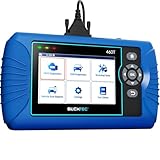
- [All System Diagnostics, Professional-Level Scanner] - BLCKTEC 460T is the ultimate OBD2 diagnostic tool for home mechanics and professionals. It supports all 10 OBD2 modes, reads and clears Engine/Transmission/ABS/SRS codes, performs All-System Diagnostics, offers workshop reset tools, and provides real-time live data. It helps you pinpoint issues, assess your car's condition, and prepare for SMOG checks with ease. NOTE: Function availability depends on your vehicle. Before you buy, be sure to use the Compatibility Checker on BLCKTEC website or contact our customer support to verify that the features you need are supported for your vehicle’s specific year, make, and model.
- [12+ Most Popular Reset Functions] - BLCKTEC 460T OBD2 scanner offers 12+ dealer-level service functions, including Oil Maintenance Reset, ABS Bleeding, EPB Reset, SAS(Steering Angle Sensor) Recalibration, DPF(Diesel Particulate Filter) Reset, Throttle Body Relearn, Battery Reset/Initialization, TPMS Relearn, Transmission Reset, Fluid Change Reset, Maintenance Reset and more, enabling you to perform workshop services like a pro. NOTE: Function availability depends on your vehicle. Be sure to use the Compatibility Checker on BLCKTEC website to verify that the features you need are supported for your vehicle.
- [Real-Time OBD2 and OEM Live Data, Freeze Frame Data] - BLCKTEC 460T helps diagnose vehicle issues when warning lights like Check Engine Light or ABS/SRS Light appear. It offers detailed DTC info, ECU Freeze Frame Data, and real-time OBD2 and advanced OEM live data, including Engine, Transmission, ABS, SRS, and more, making it easy to diagnose and resolve vehicle problems. You can view, graph, record, replay, and overlay up to four live data streams in a single graph for better analysis.
- [AutoVIN, AutoReLink, AutoScan, 3X Faster] - Equipped with AutoVIN technology, 460T automatically retrieves the VIN to save you time. Its AutoScan and AutoReLink features scan all of the vehicle's ECUs and detect any fault codes immediately after you plug the scanner into the vehicle's OBD2 port - no button presses required. Additionally, it regathers DTC and I/M readiness information every 30 seconds, simplifying monitor tests. 460T's advanced technology makes it 3X faster than other products.
- [Get RepairSolutions2, the #1 Auto Repair App for Free] - When paired with RepairSolutions2(RS2) App, 460T becomes even more powerful. RS2's Verified Fix Database built by master technicians, provides the parts needed for the repair. Additionally, RS2 gives you access to OEM warranty info, maintenance schedules, TSB, and dealership recall info, making car care easier than ever. RS2 is free with no subscription fees and it stores your car scan reports in the cloud, allowing you to access, share, or print them anytime and anywhere.
Match vehicles to the work
Compare actual use with the job each vehicle is meant to perform. Look for assets that are persistently underused, duplicated across teams, poorly matched to their routes, or routinely unavailable. Before buying replacements, consider whether the need can be met by reassignment, pooling, dispatch changes, route adjustments, or a vehicle better sized to the mission. A low utilization figure is a prompt to investigate, not proof that a vehicle is unnecessary: seasonal peaks, emergency coverage, and service commitments may justify spare capacity.
Prioritize actions by total effect
Evaluate possible changes against lifecycle cost, safety, service reliability, and the work required to implement them. Reassignment may avoid an acquisition; a maintenance intervention may reduce downtime; driver coaching may address fuel use and wear. The right choice depends on the fleet’s mission and evidence. The sources do not establish universal cost targets or savings benchmarks for private fleets.
How should a fleet management program be organized?
FEMP presents a four-part framework for federal fleets: plan, collect, strategize, and implement. Adapted as an operating discipline, it gives a business fleet a repeatable way to move from information to action without importing federal reporting requirements.
- Plan: Define why the fleet exists, what services it must provide, safety goals, cost priorities, and the planning horizon. Establish who owns vehicle, driver, maintenance, finance, and compliance decisions.
- Collect: Build the vehicle inventory and capture use, mileage, fuel or energy, acquisition, operating, maintenance, and disposition information. Record data definitions consistently so that vehicles and periods can be compared.
- Strategize: Compare utilization and costs with mission requirements. Select appropriate actions—such as reassignment, pooling, right-sizing, routing changes, maintenance interventions, driver training, or fuel-efficiency measures.
- Implement and review: Assign an owner and due date to each action. Review a small, stable set of measures on a regular cadence, investigate exceptions, and adjust the plan when operating needs change.
Choose measures that lead to decisions
Useful measures can include cost per vehicle or mile, utilization, downtime, fuel or energy use, preventive-maintenance completion, safety events, and service reliability. Define each measure and its time period before comparing results. These are practical measures, not universal benchmarks: a target that suits a delivery fleet may be misleading for emergency-response vehicles or equipment that works seasonally.
Rank #3
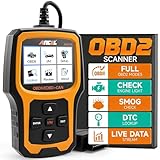
- Understand Your Check Engine Light – The ANCEL AD410 OBD2 scanner helps everyday drivers quickly read and clear engine-related fault codes, view code definitions, and understand why the check engine light is on before visiting a repair shop. With 42,000+ built-in DTC lookups, this car code reader helps reduce guesswork and makes basic vehicle diagnostics easier for beginners and DIY users
- Full OBD2 Diagnostics Made Simple – More than a basic engine code reader, this OBD2 scanner diagnostic tool supports key OBDII functions including reading/clearing codes, live data, freeze frame, I/M readiness, O2 sensor test, EVAP test, vehicle information, and MIL status. It helps you check your car’s condition, verify repairs after the issue is fixed, and communicate with mechanics more confidently
- Live Date & Real-time Vehicle Insights – View real-time engine data such as RPM, coolant temperature, fuel trim, oxygen sensor readings, and other available OBD2 parameters directly on the screen. These live data readings help you better understand how your vehicle is running, spot abnormal patterns, and make more informed repair decisions instead of relying only on a warning light
- Smog Check Readiness At A Glance – Use the I/M readiness function before a smog check or emissions inspection to see whether your vehicle’s monitors are ready. This OBD2 code scanner helps you confirm if recent repairs have brought the system back to a ready state, reducing the chance of failed inspections, retests, wasted trips, and unnecessary inspection fees
- Works With Most OBD2 Vehicles – Compatible with most 1996 and newer U.S.-based OBD2 cars, SUVs, and light trucks, as well as many 2000 and newer EU/Asian OBD2 vehicles. Supports major OBDII protocols including CAN, ISO9141, KWP2000, J1850 VPW, and J1850 PWM. This automotive diagnostic scanner is designed for wide vehicle coverage; please check compatibility with your vehicle before purchase
FEMP describes a centralized federal fleet management information system as a means to identify, collect, and analyze asset-level data and report costs. Its framework connects utilization results with vehicle allocation and acquisition or replacement decisions. A commercial operation does not need to copy a federal system to use the same principle: make vehicle-level information accessible to the people who plan, maintain, finance, and operate the fleet.
What should a fleet management system track?
Choose records based on the decisions your fleet must make. A system that collects large amounts of information is not automatically useful; it should help staff answer operational questions, preserve trustworthy records, and move work forward.
- Assets and assignments: vehicle identity, type, configuration, assignment, and intended role.
- Use and availability: mileage, engine hours where relevant, trips, days in use, utilization, and downtime.
- Cost and energy: acquisition, fuel or energy, operating, maintenance, and disposal costs, with indirect fleet-management labor where feasible.
- Maintenance and condition: scheduled service, work orders, inspections, open defects, diagnostic faults, and completion status.
- Safety and performance: relevant safety events, driver-behavior indicators, and service reliability, handled under appropriate organizational policies.
- Compliance records: the inspections, documents, and reporting required for the fleet’s jurisdiction, vehicle category, and operation.
Consistent definitions matter. If one department records downtime from the first missed shift and another from the date a repair order opens, their figures do not describe the same thing. Establish ownership for data quality and decide how information moves between fleet, finance, fuel, dispatch, and maintenance systems.
How does telematics help manage a fleet?
Telematics can make vehicle location, diagnostics, utilization, and driver-behavior information more readily available. FEMP describes a common arrangement in which a device receives GPS and diagnostic data from a vehicle’s onboard diagnostic port and sends information over a cellular network to a cloud platform. Depending on the vehicle and system, available data may include miles, engine hours, trip counts, days in use, fuel or energy use, fault codes, battery and engine status, tire pressure, and scheduled maintenance information.
Outdated Drivers Are Slowing You Down
One free scan finds every outdated or missing driver and matches the right update for your exact hardware.Free scan · exact hardware matchWindows Errors? Fix Them Before They Spread
Repair common Windows errors and clear accumulated junk for a smoother, more stable PC - no reinstall needed.Free scan · no reinstallRank #4

- OBD2 SCANNER & BATTERY TESTER IN ONE – The INNOVA 5210 OBD2 scanner not only reads and clears check engine light and ABS codes (coverage may vary) but also functions as a car battery tester to check alternator health and prevent unexpected breakdowns.
- LIVE DATA & REAL-TIME DIAGNOSTICS – Get instant access to OBD2 live data, including RPM, engine temperature, fuel trims, and oxygen sensor readings. The drive cycle readiness feature helps pass smog tests and emissions inspections with ease.
- ENGINE CODE READER – This automotive diagnostic tool works with most US, Asian, and European vehicles from 1996 and newer, including Toyota, Ford, Honda, Chevrolet, Nissan, Dodge, and more. Read and erase ABS (coverage may vary) and engine trouble codes with pinpoint accuracy. Please use Innova's Coverage Checker to verify coverage.
- OIL RESET & SMOG CHECK READINESS – The built-in oil light reset feature allows DIYers and mechanics to properly reset maintenance lights after an oil change. Check I/M readiness status to ensure your car is ready for an emissions test.
- NO SUBSCRIPTIONS – VERIFIED FIXES WITH FREE APP – Unlike other OBD2 code readers, the INNOVA 5210 provides verified fixes based on real-world repairs from ASE-certified mechanics. Trusted by 4M users, the RepairSolutions2 app on iPhone & Android gives you step-by-step repair guidance, suggested parts, and cost estimates—no extra fees or hidden subscriptions!
Turn data into operational workflows
- Utilization and allocation: Use activity data to identify vehicles for investigation, reassignment, pooling, or possible removal.
- Maintenance planning: Use fault and service information to flag issues and plan work. Alerts support maintenance decisions but do not replace inspections, qualified judgment, or required records.
- Driver coaching: Review relevant behavior indicators and use them to guide training or operational changes, with appropriate safety and privacy policies.
- Fleet planning: Use vehicle-use patterns to inform right-sizing, replacement, or other choices about how to meet a mission.
- Reporting: Automate some mileage and fuel reporting where the data is accurate and the platform fits the organization’s process.
FEMP’s 2025 guide says real-time feedback and behavior monitoring can reduce fuel use by 10–25%. The guide passage does not identify the underlying study, sample, or calculation method, so this is a stated potential—not a guaranteed result, an independently validated estimate, or a universal benchmark. Reducing idling, speeding, and harsh driving may help fuel use and vehicle wear, but actual outcomes depend on the vehicles, routes, drivers, policies, and implementation.
Telematics has value only when its data is reliable, relevant, and connected to an accountable workflow. A fault alert without a process for triage and repair does not resolve a defect; a utilization dashboard that nobody uses does not improve allocation. Confirm vehicle compatibility and data quality, plan who will respond to alerts, and ensure staff can act on what the system reports.
Independent reader supportYour contribution helps us test, update, and keep practical guides available for everyone.How do you compare fleet software and telematics?
There is no universally established product winner. Compare systems against the fleet’s actual vehicle mix, required workflows, integration needs, staff capacity, security requirements, and total cost over the expected lifecycle.
- Vehicle compatibility: Verify support for the makes, model years, existing telematics equipment, and onboard diagnostic hardware in your fleet.
- Workflow fit: Identify whether you need maintenance, dispatch, routing, utilization, fuel, driver safety, inspections, or jurisdiction-specific reporting.
- Data rights and portability: Review access, export, retention, and ownership terms before committing.
- Integration: Check whether the system can work with existing fleet, finance, fuel-card, dispatch, or maintenance tools, and clarify what integration entails.
- Security: Assess security requirements and any applicable vendor authorization for your industry and jurisdiction. A qualification cited for a government deployment should not be assumed to apply to every product, region, or commercial buyer.
- Total cost: Account for installation, cellular or data service, subscription, training, support, migration, and ongoing administration—not just the initial device price.
FEMP names Geotab, Samsara, and Verizon Connect as examples of platforms that can integrate with existing federal fleet management information systems. That is an example of integration, not a ranked shortlist, endorsement, or comparative performance test. The guide is explicitly about federal fleets. It describes a GSA telematics arrangement for GSA-leased vehicles in which installation and data-plan costs are incorporated into the monthly lease rate, and discusses a federal FedRAMP-authorized solution; those details should not be generalized to commercial buyers or assumed current without checking applicable terms. GSA’s telematics page, last updated September 22, 2025, says telematics is included at no additional cost in the context of GSA-leased vehicles.
The Tool Desk
Outbyte PC Repair FREERepair Windows errors before they cause bigger problemsFix Now →Outbyte Driver Updater FREEScan for outdated or missing drivers - takes under a minuteDriver Scan →Best Value

- 【6-Pin, 9-Pin & 16-Pin. Ready for More Trucks】Built for fleets, owner-operators, and diesel technicians, this heavy duty truck scanner includes a built-in 16-pin OBDII connector plus professional 6-pin and 9-pin adapters to support older and newer commercial vehicles. Compatible with J1939, J1708, J1587, and OBDII protocols, it works with major truck brands including Cummins, PACCAR, Detroit, Caterpillar, Freightliner, Kenworth, Peterbilt, International, Mack Diesel engines. Tips: For Chevrolet, For Ford, For GMC, and For Ram pickup trucks, even if all the above vehicles are equipped with diesel engines, it is recommended that all enter the WWW-OBD menu of HD301 for testing.
- 【2 in 1 Diesel Code Reader & Advanced HD OBDII】Equipped with professional-grade diesel scanner capabilities, the HD301 diesel scanner features intuitive Read/Erase codes and turn off the "Check Engine" light. With the built-in DTC Lookup library, you can instantly access fault code definitions on-device without searching the internet. It also retrieves hundreds of essential live sensor data—such as coolant temperature, fuel pressure, and engine RPM—in a stable text format for precise and rapid troubleshooting. (Please note that the HD301 can not support DPF Regen.)
- 【Full System Truck Diagnostic】The FOXWELL HD301 heavy duty scan tool is engineered to deeply access and scan all available electronic control modules specifically for truck, including Engine, Transmission, ABS, SRS, Chassis, and Body Control. This professional truck scanner diagnostic tool allows you to identify issues across the entire vehicle, ensuring your rig stays in peak condition for the long haul.
- 【Versatile for most big Rigs: Commercial, Passenger & Beyond】Engineered for more than just trucks, this heavy duty scan tool offers extensive coverage for pickups, buses, trailers, and even marine vessels. From construction machinery (excavators, loaders) to agricultural equipment (tractors, harvesters), it provides a true all-in-one diagnostic solution.
- 【Plug-and-Play & No Subscription】Designed for the road! No WiFi, no batteries, and no complex App setup required. Simply plug it into your vehicle’s diagnostic port to start scanning immediately. Enjoy lifetime free software updates to keep your HD301 diesel truck scanner current with the latest vehicle models and features—without any hidden subscription fees—While overcoming language barriers with support for Spanish and English.
How should fleets manage maintenance, safety, and compliance?
Set a maintenance process that specifies who inspects vehicles, how defects are reported and assessed, who authorizes repairs, how work is recorded, and how a vehicle is cleared for service. Use manufacturer requirements and applicable local rules to determine schedules; no single maintenance interval fits every vehicle or jurisdiction. Telematics can help surface faults or service needs, but it cannot substitute for human oversight or required checks.
For UK operators of commercial goods vehicles and passenger-carrying vehicles, the Driver and Vehicle Standards Agency’s Guide to maintaining roadworthiness: commercial goods and passenger carrying vehicles, updated April 28, 2025, distinguishes legal duties (“must”) from recommended practice (“should”). The guide states: “It is not enough to rely on a maintenance system alone, because this cannot ensure that vehicles are roadworthy.” Its central practical point is that good maintenance processes need suitable skills, supervision, and management alongside them. Some principles may also be useful for smaller vehicles, but the guide’s stated scope is those UK commercial operators.
The DVSA guide says maintaining vehicles to manufacturer standards can increase fuel efficiency and reduce harmful emissions. It also says effective driver training can reduce fuel consumption and related maintenance costs, including brake and tire wear. These are reasons to coordinate maintenance and training; they do not establish a guaranteed saving for an individual fleet. For U.S. fleets, identify and follow the requirements that apply to the vehicle and operation in the relevant jurisdiction; the UK guide is not a statement of U.S. law.
How do you put a fleet improvement plan into practice?
- Set the scope: List the vehicles, operating locations, service commitments, and roles included in the review.
- Check the baseline: Identify missing or inconsistent inventory, cost, use, maintenance, and downtime records. Assign owners to fill the highest-impact gaps.
- Find decision points: Review underused or poorly matched assets, recurring repair issues, avoidable downtime, route or dispatch inefficiencies, and fuel or energy patterns.
- Compare interventions: For each candidate action, assess mission fit, safety impact, lifecycle cost, service reliability, and the staff effort or system changes required.
- Assign accountability: Name the person responsible, define the intended outcome, and set a date to review the result.
- Learn and adjust: Compare results using consistent measures, investigate unexpected outcomes, and update allocation, maintenance, training, or replacement plans as needed.
A sound fleet program is iterative: collect usable information, make a decision tied to the work vehicles must do, and verify whether the change improved cost, safety, availability, or service. Legal obligations, software features, security status, device compatibility, and program terms can change, so check current requirements and conditions before relying on them.
Recommended Free Tools
Quick Recap
Product prices and availability are accurate as of the date/time indicated and are subject to change. Any price and availability information displayed on Amazon at the time of purchase will apply.




