Factorial Energy’s 106-Ah solid-state battery milestone was a development breakthrough, not a consumer product launch. In June 2024, the Massachusetts-based U.S. cell maker shipped its first announced automotive B-sample cells to Mercedes-Benz, moving its technology from A-sample development toward more demanding OEM design validation.
The cell used Factorial’s FEST platform, which the company describes as quasi-solid-state. Factorial calls its separate Solstice platform all-solid-state. Subsequent Dodge Charger Daytona and Mercedes-Benz EQS test-vehicle demonstrations, plus drone deployments, show meaningful progress—but as of August 12, 2026, manufacturing scale, cost, durability, safety, and production approval remained open questions.
What happened in June 2024
Factorial Energy shipped its first announced 106-Ah automotive B-sample cells to Mercedes-Benz in June 2024. The Massachusetts-based U.S. battery company had previously shown a 100-Ah-plus cell at CES 2023, begun shipping 100-Ah A-sample cells to automotive partners in October 2023, and delivered more than 1,000 A-sample cells to Mercedes-Benz alone.
That makes the shipment a meaningful engineering milestone, but not the debut of a production battery. A B-sample is still a validation-stage design. It must go through additional testing, pack and vehicle integration, manufacturing-process validation, safety and durability work, and OEM approval before it can support a consumer EV.
Quick wins for a faster PC:
Repair Windows errors before they cause bigger problemsFix Now →Fix the driver behind crashes, sound loss and screen glitchesFind Drivers →Clear out junk files and repair common Windows errorsFree Scan →#1 Best Overall

- Huge Capacity 50000mAh Portable Charger - The 50000mAh power bank ultra-high massive capacity will keep your phone and other device running for many days!Without extra worry about low phone battery. Ideal for traveling, camping and hiking.
- Latest PD 22.5W High-Speed Charging - OHOVIV 50000mAh Portable phone charger adopts the latest Super Charger Protocol and Fast Charger Protocol with 22.5W output USB-C port.Support QC4.0 QC3.0 huge capacity power bank with fast charging, it only takes 30 minutes to charge your iPhone 14 from 0% to 55%.(NOTE: The 50000mAh PORTABLE CHARGER ARE NOT ALLOWED ON AIRPLANE!!)
- Power 3 Devices at Once - Cell phone external battery pack is equipped with 2 USB-A (22.5W output) ports, 1 USB-C (18W input/22W output) port and 1, and it can charge three devices at the same time. The portable power bank is universally compatible with all products via USB charging cable, including all iOS and Android smartphones, watch, bluetooth headsets and so on.
- LED Digital Display & Compact Design - OHOVIV 50000mAh Cell phone portable charger comes with smart LED digital display, accurately keep track of remaining juice, allowing you to easily operate your power.Our battery pack charger portable is 13.4*7*3.4cm(5.27*2.75*1.33in), and weigh 613g (21.6oz), which is easy to carry.
- Safe Powerful Phone Charger - OHOVIV 50000mAh portable charger power bank with premium Li-polymer battery, this portable battery charger can charge your devices multiple times.Battery bank adopt smart chips to prevent overcharge, overvoltage, overcurrent, and short circuit to ensure customer safety.
The wording also needs a technical qualification. The 106-Ah cell was based on Factorial’s FEST platform, which the company describes as quasi-solid-state. Factorial separately describes its Solstice platform as all-solid-state. In other words, the milestone was progress for Factorial’s lithium-metal, quasi-solid-state FEST technology—not proof that its fully solid-state Solstice cells had entered production.
Why moving from A-sample to B-sample matters
Battery companies do not normally jump straight from a promising laboratory cell to a battery pack in a showroom vehicle. Automotive development uses successive sample generations to expose problems that may not appear in early laboratory work.
| Stage | What it generally demonstrates | What it does not prove |
|---|---|---|
| A-sample | A production-intent cell in a representative format and capacity, suitable for laboratory and sometimes real-world safety and performance testing. | That the design is final, economical to manufacture, or ready for vehicle production. |
| B-sample | Part-to-part design validation at the cell and module level, including optimization for pack and vehicle use. | That the cell has passed every automotive qualification or that a factory can make it consistently at high volume. |
| C- and D-sample | Later-stage production-process validation, quality consistency, and eventual production approval. | That every vehicle using the technology will have the same laboratory headline specifications. |
Factorial’s own commercialization explanation places production-scale process validation after B-sample development. That distinction is the key to interpreting the 106-Ah shipment: Mercedes-Benz and other automakers could begin testing a more mature, representative design, while Factorial still had to prove that the design could be manufactured repeatedly and integrated into a safe, durable, cost-effective vehicle.
Readers who want the underlying chemistry and manufacturing context may find a solid-state battery design reference useful. Springer lists Solid State Batteries: Design, Challenges and Market Demands, which covers solid electrolytes, electrodes, interfaces, and commercialization challenges. It is background reading, not a guide to Factorial’s proprietary cells and not evidence that the technology is ready for retail purchase.
What does 106 Ah actually tell us?
Ampere-hours measure electrical capacity, not the complete amount of energy a battery can store. The energy figure also depends on voltage, and the usable energy available to a vehicle depends on factors such as the permitted state-of-charge window, temperature, power limits, cooling, and pack design.
Consequently, a 106-Ah cell cannot by itself establish an EV’s range, charging time, pack size, or weight. It is best understood as evidence that Factorial had produced an automotive-format cell with a capacity relevant to vehicle development. Cell-level capacity is only one part of the engineering equation.
The more important part of the announcement was the sample stage and customer involvement. A B-sample lets an automaker evaluate not just a cell in a laboratory fixture, but how multiple cells behave together in modules and packs, how the battery communicates with the vehicle, and how the design responds to automotive operating conditions.
FEST and Solstice are not the same technology
Factorial uses two related but distinct platforms:
| Platform | Factorial’s description | Why the distinction matters |
|---|---|---|
| FEST | Factorial Electrolyte System Technology, combining a lithium-metal anode, a quasi-solid electrolyte, and a high-capacity cathode. | This was the platform associated with the 106-Ah B-sample shipment and the later vehicle demonstrations. |
| Solstice | An all-solid-state platform using a sulfide-based electrolyte and a dry-coating process. | It represents a separate Factorial technology path and should not automatically be treated as the cell used in FEST announcements. |
Factorial presents FEST as compatible with existing lithium-ion manufacturing processes. That could lower the amount of entirely new factory equipment required if the claim holds up at production scale. Solstice is described with a sulfide electrolyte and dry-coating process, reflecting a different manufacturing and materials approach.
Rank #2

- Power 3 Devices at Once—No More Waiting! This powerful portable charger lets you charge up to 3 devices at once—perfect for your phone, tablet, and earbuds all at the same time. Whether you are traveling, commuting, or just tackling a busy day, you'll never have to choose which gadget gets power first. Equipped with dual USB-A ports and a USB-C port, it delivers smart and safe charging to virtually any device. Slim, reliable, this is the ultimate sidekick for students, remote workers, gamers.
- USB-C Bidirectional Power Bank: Designed with USB-C input & output, this power bank brings ultimate convenience. Use the same USB-C port to recharge the battery pack and power your phone, tablet, earbuds, laptop and other devices. Bidirectional charging saves time and simplifies your carry. Miady phone portable charger — your smart charging solution.
- 2-Pack 10000mAh Power Bank: Double the power, double the peace of mind! This 2-pack battery pack set keeps one charged at home and one ready on the go—so you're never left powerless. Perfect for couples, families, or backup when you need it most. Share the charge, share the convenience!
- Ultra Slim Phone Portable Charger: Ultra-thin. Ultra-light. Its compact dimensions of 5.5*2.6*0.6 in, weight: 7.68 Oz. This sleek power bank fits anywhere—pocket, purse, or palm—so you get powerful backup without the weight or bulk. Power that moves with you!
- Your Ultimate Blackout Lifesaver: Blackout? When a sudden power outage strikes, panic sets in—phones die, lights go out, and connection is lost. Stay powered! This compact power bank is your emergency essential—keeping phones charged when the electricity fails. Peace of mind, packed in your pocket.
Both platforms are discussed under the broad commercial label of solid-state batteries, but a technically careful description should preserve the difference between quasi-solid-state FEST and all-solid-state Solstice. The terms are not interchangeable, and a result demonstrated by FEST should not be presented as a result for Solstice unless Factorial specifically says so.
Why solid-state cells are attractive to automakers
Solid-state battery designs generally aim to replace at least part of the liquid electrolyte used in conventional lithium-ion cells with a solid or solid-like electrolyte. Factorial’s stated value proposition includes higher energy density, lower battery mass, faster charging, and improved thermal behavior. Those are company claims and development goals, not guaranteed specifications for a future production vehicle.
A lithium-metal anode is particularly important to Factorial’s approach. If it can be used reliably, it may store more energy for a given mass than the graphite anodes common in many current lithium-ion cells. Higher cell-level energy density could allow an automaker to build a lighter pack for the same range, increase range without adding as much mass, or use the saved mass for other vehicle requirements.
However, cell-level energy density does not equal pack-level energy density. A vehicle pack also needs structural components, cooling or thermal-management hardware, electrical connections, sensors, control electronics, crash protection, insulation, and safety systems. The conversion from a laboratory or cell figure to a production vehicle’s range is therefore not one-to-one.
The Tool Desk
Outbyte Driver Updater FREEScan for outdated or missing drivers - takes under a minuteDriver Scan →Outbyte PC Repair FREEClear out junk files and repair common Windows errorsFree Scan →What has happened since the 2024 B-sample shipment?
Stellantis: from planned fleet to development vehicle
In October 2024, Stellantis and Factorial announced a demonstration fleet of Dodge Charger Daytona vehicles using the STLA Large platform. Stellantis said the vehicles were intended for road use by 2026, with the purpose of validating FEST in real-world driving rather than launching a production model.
The program materials cited a FEST specific energy density above 390 Wh/kg. In June 2026, Stellantis and Factorial announced that FEST cells had been integrated into a Dodge Charger Daytona development vehicle. They described this as the first integration of Factorial’s solid-state cells into a Stellantis vehicle and the first automotive integration of the technology in North America.
Road testing and calibration were underway to assess pack performance, reliability, charging, driving behavior, and vehicle safety. That is a more advanced step than shipping loose development cells, but it remains a development program.
The June 2026 announcement also attributed the following results to testing conducted in 2025:
Free tools Windows power users keep installed
One-click scans. No signup required.
Rank #3
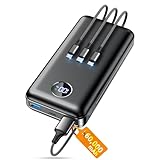
- Huge Capacity 60000mAh Power Bank: ZZI portable charger features a new high-density polymer battery that provides 10 charges for iPhone 15, freeing you from battery anxiety. Compatible with almost all types of smart devices on market including iPhone 17/16/15/14/13/12 Series, iPad, Samsung, Google Pixel series, Switch, and other Android phones and tablets.(IMPORTANT: 60000MAH PORTABLE CHARGER ARE NOT ALLOWED ON AIRPLANE)
- Charge 5 Devices Simultaneously: Portable charger power bank comes with a 3-in-1 high-strength nylon braided cable (Type-C / iOS / Micro USB) that has passed over 10,000 folding and plug-in/unplug tests, ensuring long-term durability and wear resistance. Charge up to five devices at once—suitable for home, travel, camping, hiking, vacation and outdoor trips
- 22.5W Super Fast Charging & Battery Protection: The battery charger can charge your iPhone 15 to 60% in just 30 minutes — 3 times faster than a standard portable phone charger. Built-in smart recognition chip automatically adjusts power output for different devices, delivering efficient and safe charging that protects your battery—so you can enjoy worry-free charging every time
- Ultra Compact & Smart LED Display: With its massive 60,000mAh capacity, ZZI battery bank provides long-lasting power without feeling bulky. Measuring only 5.8×2.9×1.1in, its size is similar to an iPhone 15, about twice the thickness, striking an ideal balance between capacity and portability. The LED digital display of portable battery shows the remaining battery in real time, allowing precise control over every charge
- Reliable 5-Layer Safety Protection: The battery pack portable charger features overcharge, overcurrent, overdischarge, overvoltage, and short-circuit protection, keeping your devices safe at all times, giving you complete confidence with every charge. What You Get: 1* power bank, 1* 3-in-1 USB cable, and 1* user manual
- 375 Wh/kg specific energy density;
- charging from 15% to 90% in 18 minutes; and
- operation across a reported temperature range of -30°C to 45°C.
These figures should not be read as guaranteed specifications for a production Dodge, or as directly interchangeable with the earlier statement of more than 390 Wh/kg. The tests may refer to different cells, configurations, conditions, or stages of the program. In either case, the figures were attributed to Stellantis and Factorial testing, not independently established consumer-vehicle results.
Mercedes-Benz: a long-distance EQS demonstration
Factorial’s June 2026 market-listing announcement said Mercedes-Benz had integrated FEST cells into a lightly modified EQS test vehicle. The company reported that the vehicle traveled 1,205 km from Stuttgart, Germany, to Malmö, Sweden, on a single charge.
That is an eye-catching demonstration of potential range, but it is not the same as an official range rating for a production Mercedes-Benz. The vehicle was a test vehicle, and a route demonstration does not provide the standardized conditions needed to compare it directly with EPA or WLTP figures. Vehicle modifications, route profile, speed, weather, traffic, payload, and other test conditions can all affect the result.
The more defensible conclusion is that FEST had progressed far enough for Mercedes-Benz to evaluate it in a vehicle over a substantial real-world route. The announcement does not establish that a Mercedes-Benz EV with Factorial cells is available to buyers.
Recommended Free Tools
Why Factorial is also testing drones
Factorial moved beyond automotive samples in May 2025, when it shipped FEST lithium-metal cells to Avidrone Aerospace, a Canadian unmanned-aircraft developer. Avidrone planned demonstration flights to evaluate energy efficiency, power discharge, payload capacity, and range under conditions including altitude, temperature variation, and vibration. Factorial described the shipment as its first entry into the drone sector and the first flight deployment of FEST.
In May 2026, Factorial announced collaborative arrangements with drone integrators in the United States, Europe, and the Asia-Pacific region. The announcement named KULR Technology Group, Tulip Tech, and JRES, and said initial battery packs using Factorial cells had been demonstrated at XPONENTIAL 2026.
In July 2026, Factorial and Tulip announced a strategic partnership following a flight test that they said produced more than a 30% increase in flight range before engineering optimization. That is a partner-reported early validation result, not a universal performance figure for every drone or FEST battery.
Drones can be a useful early market for advanced cells because operators may value energy density and payload capacity more than the lowest possible battery cost. They also tend to use smaller volumes than the global passenger-vehicle market, potentially allowing a developer to validate a specialized cell in a narrower application first. That does not remove the need for safety, durability, manufacturing, and certification work; it simply creates a different path to field testing.
Rank #4
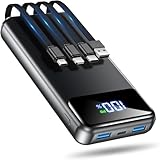
- Huge Capacity 50000mAh Power Bank:OHOVIV Portable charger ultra-high massive capacity provides 10 charges for iPhone 15, which make of new high-density polymer battery.Depending on battery size, most smartphones will get over 10 full charges. Portable power bank works and does not take on any extra room, suitable for camping, hiking, vacation, travel and other outdoors.
- Charge 6 Devices at Once: OHOVIV 50000mah Portable phone charger with 4 Built-in Cables(for iPhone, Type-C, Micro, USB-A) and 3 Charging ports (2 USB-A , 1 Type-C), you can charge up to 6 devices at once without sacrificing power for Ultimate Convenience.These portable charger power bank cables made of high quality materials,withstanding over 10,000 bends.
- 22.5W Super Fast Charging:The Cell phone portable charger boasts PD 22.5W output and QC4.0 quick charging technology, allowing it to charge your iPhone to 55% in just 30 minutes—3 times faster than a standard battery bank. USB-C two-way charging (IN&OUT) and LED digital display eliminate power anxiety, ensuring the best experience during your vacation
- Compact Design with Widely Compatibility:Easily slip it into your backpack, pocket, or bag and carry it anywhere! This lightweight external battery pack size is 5.82*2.83*1.18 inches and weighs just 1.07 lb.Compatible with nearly all electronics, power bank for iPhone 16/15/14/13/12 series, iPad series, for Samsung s24/s23/s22/s21/s20, Google Pixel and other Android, tablets,etc
- Safe and Secure Powerbank:Portable battery charger built in quality batteries and 10 multiple system protection to prevent overcharge, short circuit and and a series of potential dangers.Latest upgraded AI smart chip and NTC temperature control technology minimize real-time power loss, can reduce overheating risks by 97%, which are family picnic essentials.
Factorial lists electric vehicles, aviation and drones, power tools, marine vehicles, consumer electronics, and energy-storage systems as intended application areas. These are target markets, not evidence that Factorial-powered products are commercially sold in each category.
What still has to happen before a consumer EV
The distance between a successful demonstration and a mass-produced EV battery is substantial. The main remaining hurdles include:
- Repeatable manufacturing. Factorial must demonstrate that factories can make large numbers of cells with consistent capacity, resistance, energy density, and defect rates. A few impressive cells do not establish production yield.
- Module and pack integration. Cells must work together electrically and mechanically, fit within the vehicle’s packaging, communicate with the battery-management system, and meet crash and service requirements.
- Durability. Automotive batteries need to retain useful capacity through many charge and discharge cycles, temperature changes, vibration, fast charging, storage, and varying states of charge.
- Safety validation. Cell abuse testing is only one layer. The complete module and pack must be evaluated for thermal events, impact, electrical faults, propagation risk, charging failures, and emergency response.
- Cold- and hot-weather performance. A cell that performs well in a controlled laboratory environment must also deliver predictable power and charging behavior across the temperatures encountered by real vehicles.
- Cost and supply chain. Lithium-metal materials, solid or quasi-solid electrolytes, cathodes, separators, coatings, factory equipment, quality control, and recycling logistics all have to work at an automotive price.
- OEM production approval. Automakers must approve the cell, pack, software, manufacturing process, suppliers, and service procedures before putting the technology into a production vehicle.
The A-to-B transition addresses some of these questions, especially design validation at cell and module level. It does not answer all of the C- and D-sample production questions.
Independent reader supportYour contribution helps us test, update, and keep practical guides available for everyone.Is this the world’s first solid-state battery shipment?
The safest wording is that it was Factorial’s first announced shipment of a 106-Ah automotive B-sample to Mercedes-Benz, or one of the first publicly announced milestones of its type. “First announced” leaves open the possibility that another company made an undisclosed shipment or used a different definition of solid-state, A-sample, or B-sample.
Do these 3 things before closing this tab:
1Scan for outdated or missing drivers - takes under a minute2Clear out junk files and repair common Windows errors3Fix the driver behind crashes, sound loss and screen glitchesIt is also important not to turn a company’s broad solid-state branding into a claim that every cell in the announcement was all-solid-state. The 2024 milestone concerned FEST, which Factorial describes as quasi-solid-state. Solstice is the company’s separately identified all-solid-state platform.
Can you buy a Factorial solid-state EV battery?
No. As of August 12, 2026, the evidence supports describing Factorial as moving from laboratory and customer-sample validation toward demonstration vehicles, flight testing, industrial partnerships, and manufacturing scale-up. It does not support saying that Factorial has mass-produced a consumer EV battery or that an EV equipped with its cells is available for ordinary purchase.
Factorial completed a business combination and began trading on Nasdaq under FAC and FACWW on June 8, 2026. The company said the transaction implied an equity value of approximately $1.3 billion and provided more than $100 million in gross proceeds for commercialization. That financing and public-market listing may support development, but they are not technical proof of production readiness.
For car shoppers, the practical signal to watch is not another laboratory energy-density headline. It is an automaker announcing a named production vehicle, a validated battery pack, a manufacturing location and volume, a warranty, official range and charging figures, and a customer delivery schedule. Factorial had not reached that point in the evidence available by August 12, 2026.
What’s actually slowing this PC down?
Pick the symptom - the matching free tool is one click away.
Best Value

- 56,800mAh Portable Charger – Multi-Day Power: Built for extended use, this high-capacity power bank keeps your devices charged for days. Compatible with iPhone 18/17/16/15/14/13 series, Samsung Galaxy S25/S24/S23, Google Pixel 9/8/7, Android phones, iPad, tablets, earbuds, and other USB devices. A practical Travel Essential for camping, road trips, outdoor work, power outages, and emergency backup. Not allowed on airplanes due to battery capacity.
- Triple Device Charging with USB-A & USB-C: This portable charger battery pack features 2 USB-A outputs and one two-way USB-C port, so you can charge up to 3 devices at once without waiting. The smart power bank automatically adjusts current output for stable, efficient charging and helps protect connected devices. Ideal for iPhone, Samsung, Android phones, iPad, tablets, and other USB-powered electronics during road trips, long commutes, business meetings, family outings, or power outages.
- 22.5W PD Fast Charging & 10+ Device Charges: This portable charger delivers fast, stable USB-C charging for iPhone 18/17/16/15, Samsung Galaxy S25/S24, Android phones, tablets, and more. The fast charging power bank charges iPhone 17 to about 60% in around 40 minutes, while the 56,800mAh battery pack powers iPhone 17 or Galaxy S25 10+ times, helping reduce battery anxiety during travel, camping, work, and emergencies.
- LED Display & Multi-Layer Safety Protection: The built-in LED digital display shows the remaining battery percentage clearly, so you can check your portable charger power level at a glance. This high-capacity power bank battery pack is designed with safeguards against overvoltage, overheating, short circuits, and overcurrent, helping deliver safe, stable charging for phones, tablets, earbuds, and other USB-powered devices during daily use, travel, and backup power needs.
- Heavy-Duty Backup Power for Outdoor Use: Built as a reliable external battery, this 56,800mAh portable charger power bank provides long-lasting backup power when outlets are not available. The high-capacity battery pack fits in backpacks, gear bags, or emergency kits, making it useful for road trips, hiking, camping, outdoor work, storms, and power outages. Works with your own USB charging cables for flexible everyday use.
What this milestone really means
Factorial’s 106-Ah B-sample shipment mattered because it showed that the company had moved a relatively large automotive cell into a more rigorous OEM validation phase. The later Dodge Charger Daytona development vehicle, Mercedes-Benz EQS test, and drone deployments show continued progress toward real-world integration.
They do not yet establish a finished product. FEST remains a quasi-solid-state platform in development, Solstice is a separate all-solid-state platform, and the hardest commercial questions—repeatable high-volume production, pack safety, long-term durability, cost, supply-chain readiness, and OEM production approval—remain decisive.
Frequently Asked Questions
Was Factorial’s 106-Ah cell a production battery?
No. The June 2024 announcement concerned 106-Ah automotive B-sample cells shipped to Mercedes-Benz. B-samples are used for design validation and testing; they are not proof of mass production or consumer availability.
Was the 2024 Factorial cell fully all-solid-state?
The milestone involved Factorial’s FEST platform, which the company describes as quasi-solid-state. Factorial separately describes Solstice as its all-solid-state platform. The two names should not be treated as interchangeable.
Does 106 Ah tell us how far an EV could drive?
No. Ampere-hours describe electrical capacity, but vehicle energy and range also depend on voltage, usable state-of-charge, pack design, thermal management, driving conditions, and vehicle efficiency. A 106-Ah rating alone cannot establish an EV’s range.
Can I buy a Mercedes-Benz with Factorial’s battery?
No. Factorial and Mercedes-Benz reported a 1,205-km Stuttgart-to-Malmö demonstration in a lightly modified EQS test vehicle. It was a company-reported test result, not an official production-car range rating or proof that a Factorial-powered Mercedes-Benz is available to buyers.
What must Factorial prove before its batteries reach production EVs?
The next major steps are repeatable high-volume manufacturing, cell and pack safety testing, durability validation, cold- and hot-weather performance, cost reduction, supply-chain readiness, and automaker production approval. Vehicle demonstrations alone do not complete those steps.
The Bottom Line
Bottom line: Factorial’s June 2024 shipment of 106-Ah FEST B-sample cells to Mercedes-Benz was a genuine step beyond laboratory development, but it was not a production battery or a consumer EV launch. By August 2026, vehicle and drone demonstrations had strengthened the case for continued development, while manufacturing scale, cost, durability, safety, and production approval remained unresolved.
Windows Errors? Fix Them Before They Spread
Repair common Windows errors and clear accumulated junk for a smoother, more stable PC - no reinstall needed.Free scan · no reinstallCrashes, No Sound, or Screen Glitches?
Random freezes, missing sound and display glitches usually trace back to one bad driver. Find and replace yours safely.Free scan · under a minuteQuick Recap
Product prices and availability are accurate as of the date/time indicated and are subject to change. Any price and availability information displayed on Amazon at the time of purchase will apply.




