No authoritative ranking shows that “everyone” regrets buying any particular pickup, and the evidence available does not support labeling whole nameplates as bad trucks. However, complaint-derived year signals, reliability-survey findings, and dated safety investigations can help used-truck shoppers identify vehicles that deserve extra scrutiny.
Use the years below as screening leads, not verdicts: check the specific truck’s VIN, engine, maintenance history, recalls, and condition before deciding. The evidence types differ, so the list is not a ranked comparison.

How to read these warning signals
LemonBench classifies certain pickup model years as “Avoid” using a corpus it says contains more than 1.563 million NHTSA complaints. That is LemonBench’s classification, not an official NHTSA endorsement or a failure rate. Complaint volume can be affected by how many vehicles were sold, how long they have been on the road, and whether owners report problems.
Consumer Reports survey-based reliability findings and NHTSA safety investigations provide different kinds of evidence. A survey rating is not the same as a safety investigation, and neither establishes that every truck in a model year has a defect. The available research does not establish a regret rate or a definitive top ten.
PC Slower Than It Used to Be?
A free scan shows the junk files, broken settings and background clutter dragging Windows down - then fixes them in one click.Free scan · Windows 10 & 11Outdated Drivers Are Slowing You Down
One free scan finds every outdated or missing driver and matches the right update for your exact hardware.Free scan · exact hardware match#1 Best Overall

- Step-by-step procedures written from a complete teardown and rebuild, giving you the confidence to tackle repairs at any skill level.
- Over 700+ clear photos and diagrams that simplify complex systems, helping you complete jobs faster and with fewer mistakes.
- Comprehensive troubleshooting and fault-finding guides to quickly diagnose problems and reduce costly downtime.
Pickup model years to investigate before buying
The following are selected candidates from LemonBench’s complaint-derived year classifications. They are presented as leads for further checking, not as a ranking or a claim that every example is unreliable.
| Pickup and model year(s) | Evidence signal | What a buyer should do |
|---|---|---|
| Chevrolet Silverado 1500, 1999–2004 | LemonBench lists these years as “Avoid” based on its complaint corpus. | Review the truck’s service and ownership records and have its current mechanical condition inspected. |
| Chevrolet Silverado 1500, 2014–2015 | LemonBench lists these years as “Avoid.” | Check the VIN for applicable recalls or campaigns and investigate any unresolved warning lights or repair history. |
| Ford F-150, 1997 | LemonBench lists this year as “Avoid.” | Because age and individual condition matter greatly, inspect the specific vehicle rather than relying on the year signal alone. |
| Ford F-150, 2000–2001 | LemonBench lists these years as “Avoid.” | Review maintenance records and obtain an independent inspection before purchase. |
| Ford F-150, 2004 | LemonBench lists this year as “Avoid.” | Check the VIN and inspect the truck’s condition and repair history. |
| Ford F-150, 2011 | LemonBench lists this year as “Avoid.” | Verify the configuration and service history; a model-year classification does not identify a particular fault in every vehicle. |
| Ford F-150, 2013 | LemonBench lists this year as “Avoid.” | Check recalls by VIN and have the truck evaluated by a qualified mechanic. |
| Ford F-150, 2016 | LemonBench lists this year as “Avoid.” | Use the classification as a reason to research the individual vehicle, not as proof of a defect. |
| Ram 1500, 2013–2016 | LemonBench lists these years as “Avoid.” | Review maintenance and repair records, check the VIN, and get an independent inspection. |
| Toyota Tacoma, 2004–2009 | LemonBench lists these years as “Avoid.” | Check the particular truck’s condition, records, and VIN-based recall status before buying. |
LemonBench also lists Ford F-150 model years 2000–2001, 2018, and others; Ram 1500 model years 2001, 2003–2005, and 2019; Toyota Tacoma model years 2001; Toyota Tundra model year 2000; and Nissan Titan model years 2004–2005. These remain complaint-derived screening signals, not regulator conclusions.
Rank #2
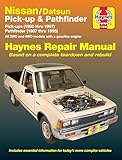
- Step-by-step procedures linked to over 700 easy-to-follow photos and illustrations
- Complete troubleshooting section helps identify specific problems
- Written from hand-on experience based on a vehicle teardown and rebuild using commonly available tools
- Tips give valuable short cuts to make the job easier and eliminate the need for special tools
- 700 b/w photos
Additional reliability and safety evidence
Consumer Reports reliability context
Consumer Reports’ 2026 Buying Guide lists reliability as a downside for the GMC Sierra 1500 5.3L and 3.0D, Toyota Tundra 3.4T, Ford F-150 Hybrid 3.5T, and Ford F-150 Lightning. These guide entries apply to the listed configurations; they do not establish that every year or engine in those model lines is unreliable. Consumer Reports describes its reliability history as drawing on a subscriber survey covering about 380,000 vehicles and 20 potential trouble spots across model years 2000–2025. That is methodology context, not a model-specific failure rate.
Reported investigation of certain GM L87 V8 engines
In a report published January 17, 2025, the Associated Press reported that NHTSA had opened a preliminary investigation following reports of certain GM L87 V8 engine failures. The reported scope included 2019–2024 Chevrolet Silverado 1500 and GMC Sierra 1500 models, as well as certain SUVs. At that time, the AP reported an estimated 877,710 vehicles and 39 complaints. Those are dated investigation figures, not current totals or a defect rate. The AP said complainants reported “no detectability prior to the engine failure.” Check current regulator information and the specific vehicle’s engine and VIN.
The Tool Desk
Outbyte PC Repair FREERepair Windows errors before they cause bigger problemsFix Now →Outbyte Driver Updater FREEScan for outdated or missing drivers - takes under a minuteDriver Scan →Rank #3
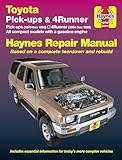
- Step-by-step procedures written from a complete teardown and rebuild, giving you the confidence to tackle repairs at any skill level.
- Over 700+ clear photos and diagrams that simplify complex systems, helping you complete jobs faster and with fewer mistakes.
- Comprehensive troubleshooting and fault-finding guides to quickly diagnose problems and reduce costly downtime.
Reported inquiry involving 2014 Ford F-150 downshifts
In a March 29, 2024 report, the Associated Press described an NHTSA investigation into complaints that 2014 Ford F-150 trucks could abruptly downshift. The report said NHTSA had received 86 consumer complaints and was examining whether 2014 vehicles should have been included in earlier recalls. This dated account does not show that every 2014 truck has the issue or establish the inquiry’s current status.
How to check a used pickup before buying
- Identify the exact vehicle. Confirm its model year, engine, configuration, and VIN. A nameplate or year range alone may not describe the relevant risk.
- Check current recall information by VIN. Use NHTSA’s official recall tools and confirm whether any applicable recall work has been completed. Also verify the current status of any investigation relevant to that vehicle.
- Review records. Ask for service, repair, and ownership history. Look for recurring repairs, unresolved warning lights, or gaps that need explaining.
- Arrange an independent inspection. Have a qualified mechanic familiar with the vehicle assess it before purchase. An OBD-II scan may reveal stored diagnostic codes on a compatible truck, but a clear scan does not rule out mechanical problems and is not a substitute for inspection.
- Judge the actual truck, not just the year label. Condition, maintenance, use, and completed repairs can differ substantially between examples of the same model year.
FAQ
Which pickup trucks have the most problems?
The research here does not support a definitive ranking of the most problematic pickups. LemonBench flags particular model years using complaint data, while Consumer Reports reliability entries and NHTSA investigations measure different things. Treat each signal as a prompt to check the exact vehicle.
What pickup truck years should I avoid?
No model year should be treated as an automatic rejection based only on this evidence. The years in the table are candidates for closer research because LemonBench labels them “Avoid”; that label is not an official NHTSA finding or proof that every truck from that year is defective.
Do NHTSA complaints prove a truck has a defect?
No. Complaints are reports, not a confirmed failure rate or a finding that every vehicle is defective. Complaint totals also should not be compared as a ranking without accounting for fleet size, time on the road, and reporting differences.
Best Value

- Hundreds of photographs
- Step-by-step instructions
- Written from actual experience
How can I check whether a used truck has an open recall?
Check the VIN using NHTSA’s official recall tools, then confirm with the manufacturer or a dealer whether applicable work has been completed. A model-year signal cannot tell you the recall status of an individual truck.
Should I reject a truck because it appears on a warning list?
Not automatically. Verify the specific configuration, recall status, records, and condition, and get an independent inspection. A broad complaint-derived label is a screening aid, not a diagnosis of the vehicle you are considering.
Quick Recap
Product prices and availability are accurate as of the date/time indicated and are subject to change. Any price and availability information displayed on Amazon at the time of purchase will apply.




