Windows Errors? Fix Them Before They Spread
Repair common Windows errors and clear accumulated junk for a smoother, more stable PC - no reinstall needed.Free scan · no reinstallCrashes, No Sound, or Screen Glitches?
Random freezes, missing sound and display glitches usually trace back to one bad driver. Find and replace yours safely.Free scan · under a minuteEV battery prices fell again in 2025 as electric-car sales and battery deployment rose, but cheaper packs were one contributor to growth—not its sole cause. The International Energy Agency (IEA) puts the average battery-price decline at 8%; BloombergNEF (BNEF) separately estimates a $108/kWh average across surveyed lithium-ion battery applications and a $99/kWh average for battery-electric vehicle (BEV) packs. Those figures describe different scopes, not competing estimates of the same EV-only price.
What the 2025 figures say about battery prices
The IEA reports that average battery prices declined 8% in 2025. Its measure covers electric vehicles and battery storage across chemistries. BNEF’s 2025 survey also found an 8% year-on-year decline, putting the average lithium-ion pack price across surveyed applications at $108 per kilowatt-hour (kWh). BNEF’s BEV-specific pack average was $99/kWh; its stationary-storage pack average was $70/kWh. These are pack-price estimates, not the price of a replacement battery for a particular car or the retail price of a vehicle.
The distinction matters because battery cost varies with application, chemistry, region, and measurement method. The IEA says its pack-price analysis is based on BNEF data, but the figures should still be reported with their stated scopes rather than treated as interchangeable. See the IEA’s battery analysis and BNEF’s 2025 price survey.
Why are EV battery prices falling?
Several forces pushed prices down in 2025 rather than one breakthrough alone:
Free tools Windows power users keep installed
One-click scans. No signup required.
#1 Best Overall

- WORKS WITH EVERY NON-TESLA EV: Standard J1772 connector plugs straight into Ford, Chevrolet, Hyundai, Kia, Nissan, BMW, Volkswagen, Audi, Rivian, Lucid and every other EV or plug-in hybrid sold with a J1772 port - no adapter needed. Tesla drivers can charge too, using the J1772 adapter that comes with the car.
- PLUG IN, NO HARDWIRING: Level 2 charger delivers up to 40A to fully charge most EVs overnight. Plugs into a 240V, 4-prong NEMA 14-50 outlet (the RV/range type - NOT a dryer outlet) on a dedicated 50A circuit. The extra-long 25 ft cable easily reaches across a garage or driveway. Before ordering, check your car's port type and that you have the right outlet.
- CONTROL & SAVE FROM YOUR PHONE: A stronger built-in antenna keeps the charger online even in a garage or basement. Use the free app to start/stop charging, set speed (6-40A), get reminders, and track energy use and cost. Schedule off-peak overnight charging to cut your electric bill. Requires 2.4 GHz WiFi.
- SAFETY-CERTIFIED & WEATHERPROOF: Independently tested and certified (UL, ETL, FCC, Energy Star). A fully sealed IP66 / NEMA 4 housing stands up to rain, snow, heat and dust indoors or out, and internal steel shielding protects the electronics for years of reliable use.
- GLOW-IN-THE-DARK HOLSTER: The included high-visibility holster glows in the dark so you can find and dock the plug easily at night. Holds the connector securely when not in use.
- More efficient manufacturing: improved production processes can reduce the cost of making cells and packs.
- Intensifying competition and excess capacity: BNEF identifies manufacturing overcapacity as a factor that sharpened competition among suppliers.
- A changing chemistry mix: lithium iron phosphate (LFP) batteries generally cost less than nickel manganese cobalt (NMC) packs, and LFP’s share of EV batteries grew.
- Relatively low mineral costs: lower critical-mineral prices supported costs, although lithium and cobalt prices rose during 2025.
The IEA says LFP packs averaged more than 40% less per kWh than NMC packs in 2025. That comparison needs context: some of the difference reflects stationary-storage batteries, which predominantly use LFP and have different energy-density requirements. LFP also contains no cobalt, reducing direct exposure to cobalt prices. The IEA’s discussion of battery chemistries and regional costs is in its battery chapter.
Where batteries are cheapest—and where deployment grew
Prices and deployment are geographically uneven. The IEA says 2025 battery-pack prices in China were 30% below North American prices and 35% below European prices. BNEF presents a separate regional comparison: it estimates China’s average at $84/kWh, with North American and European averages respectively 44% and 56% higher. The two sources use different comparison frames, so those percentages should not be combined into one regional estimate.
China also accounted for 60% of global EV battery deployment in 2025, according to the IEA. The European Union represented almost 15%, and the United States 10%; deployment stagnated in the United States. The IEA reports global deployment at 1.2 terawatt-hours (TWh), nearly 30% above 2024, and says EVs accounted for more than 70% of global battery deployment. Electric-truck battery deployment grew fastest, more than doubling, largely because sales grew quickly in China.
Rank #2

- This is an AJC Brand Replacement for a EV Rider Transport 12V 12Ah Mobility Scooter Battery
- Voltage: 12V (12 Volts)
- Capacity: 12Ah
- Terminals: F2
- Number of Batteries Required for a Full Replacement: 2
The IEA attributes the regional price differences to a changing mix of production and markets, among other factors; a regional average is not a quote for every battery made or sold there. Its figures and deployment breakdowns appear in the IEA battery analysis.
How battery prices relate to the EV market surge
Global electric-car sales exceeded 20 million in 2025, up 20% year on year and equal to 25% of all car sales, the IEA reports. The rise in sales happened alongside the increase in battery deployment and the drop in pack prices, but these trends alone do not prove that lower battery prices caused the sales increase. Competition, manufacturing efficiency, policies, model availability, automaker pricing, and regional market conditions also shape demand.
Battery deployment and vehicle sales are related but distinct measures. Deployment counts battery capacity used across vehicles, so it is affected by the number and types of vehicles sold as well as their battery sizes. BNEF also reports that the global public-charging network reached 6.7 million connectors in 2025; that is a measure of charging infrastructure, not battery deployment. The IEA’s sales figures and discussion of regional trends are in Trends in electric cars.
Rank #3
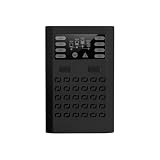
- Up to 60W charging power, suitable for 2-6S batteries for RC car,FPV,drone,aircraft models
- Compact,small,and easy to carry,5A charging current,better for outdoor using.
- Compatible with common PD with fast charging protocols: BC1.2, Divider 3,QC2.0, PD3.0, SDP, CDP.
- Multi protection: overvoltage, undervoltage,overcurrent,short circuit.
- Compare to the same type, it supports 6S while others can supports 4S only.
Will cheaper EV batteries make electric cars cheaper?
Lower pack costs can make it less expensive to build an electric car, but a battery-price decline does not translate directly or immediately into a matching drop in a vehicle’s sticker price. The IEA’s analysis of vehicle prices notes that observed changes also reflect battery size, vehicle segment mix, new models, non-battery component costs, and automaker pricing strategies.
For example, in China, a rising share of SUVs and larger average battery sizes would have lifted prices by roughly 3%, but other factors more than offset that pressure. This illustrates why a market’s average vehicle price can move differently from its average battery-pack price. It does not establish the change in price for any specific model. The IEA explains these factors in its electric-car trends analysis.
The Tool Desk
Outbyte PC Repair FREERepair Windows errors before they cause bigger problemsFix Now →Outbyte Driver Updater FREEFix the driver behind crashes, sound loss and screen glitchesFind Drivers →Could battery prices rise again?
Yes. Lithium and cobalt prices rose during 2025, creating a risk of higher battery costs if those increases persist. The IEA says long-term contracts and vertical integration can moderate suppliers’ exposure, while LFP chemistry avoids cobalt altogether. BNEF says manufacturers absorbed metal-price increases in 2025 through measures including LFP adoption, long-term contracts, and hedging.
Those cushions do not guarantee that pack prices will keep falling. The IEA warns that sustained mineral-price increases could put upward pressure on costs as lower-priced stockpiles are depleted. Future prices will depend on how mineral costs, production capacity, competition, and chemistry choices evolve.
Quick Recap
Product prices and availability are accurate as of the date/time indicated and are subject to change. Any price and availability information displayed on Amazon at the time of purchase will apply.




