The Tool Desk
Outbyte PC Repair FREERepair Windows errors before they cause bigger problemsFix Now →Outbyte Driver Updater FREEScan for outdated or missing drivers - takes under a minuteDriver Scan →Duke Engines describes its design as a five-cylinder, four-stroke axial engine: the cylinders sit parallel to and around the output shaft, rather than in a conventional row or V. The company says this arrangement can make the engine compact and light, but its published size and performance figures are prototype claims—not current production specifications or independent validation. “Valveless” means it uses ports instead of a conventional valve train; it does not mean the engine has no moving parts or sealing challenges.
What is the Duke engine?
The Duke engine is a reciprocating internal-combustion engine developed by New Zealand-based Duke Engines. In its five-cylinder, four-stroke layout, the cylinders form a barrel-like group around the central shaft, with their axes parallel to it. Combustion pushes pistons and connecting rods; Duke’s “Reciprocator” mechanism converts that motion into output torque. The design also uses a counter-rotating arrangement of the cylinder group and crankshaft.
This is different from a conventional automotive engine, where cylinders are usually arranged in a straight row or a V and the crankshaft runs beneath them. The axial layout is intended to change the package shape and how the engine’s moving parts balance. That does not by itself establish an advantage in fuel economy, durability, emissions, or manufacturing cost.
How does the valveless layout work?
Rather than opening and closing intake and exhaust valves with a camshaft and valve train, the Duke design uses ports and their timing to manage gas flow through the cylinders. Duke describes its main platform as a five-cylinder, three-injector, three-bank arrangement; its technical material says three sets of injectors and ports serve the five cylinders. This is a different approach to arranging and timing intake and exhaust, not an engine without mechanical complexity.
#1 Best Overall

- Realistic Dual-Rotor Turbofan Model:This 1/8 scale DIY assembly kit meticulously replicates a full-sized axial turbofan engine, featuring authentic components like a first-stage fan, multi-stage compressors, high/low-pressure turbines, and a motor-driven rotor system
- Premium Metal Construction:Crafted from high-quality metal with CNC machining, sandblasting, and anodized finishes, each of the 1000+ pieces ensures durability and accuracy. The model mirrors real-engine craftsmanship, from rivet details to movable parts
- Interactive DIY Assembly :Perfect for aviation enthusiasts and educators, this kit includes tools and English instructions. Assemble step-by-step to explore aerospace engineering principles, sparking creativity and hands-on mechanical insight
- Dynamic Features for Enhanced Realism:Powered by an electric motor, the engine spins with visible turbine action. Includes a throttle lever, sound module, and display stand to simulate lifelike operation—ideal for demonstrations or immersive play
- Stunning Display Piece for Collectors:Whether as a centerpiece for aviation decor, a workshop showpiece, or a unique gift, this model celebrates industrial ingenuity. Appeals to hobbyists, engineers, and anyone fascinated by jet propulsion technology
The company says its prototype uses sliding metallic seals that operate on an oil film. Those seals, their lubrication, combustion, port timing and shape, manifold geometry, and the mechanism that converts reciprocating motion to rotary output are all part of the engineering work. Duke also acknowledges that oil from the seals can affect emissions. The company’s FAQ notes that axial engines are challenging to make practicable at typical engine operating speeds.
How compact and light is it?
Duke reports that it compared a current three-litre prototype with two then-current production three-litre automobile engines, one European and one Japanese. In that company comparison, the prototype was up to 19% lighter and up to 36% smaller by “shrink wrap” volume—the space occupied by the engine envelope. Duke separately says the prototype’s shipping-crate volume was as little as one-third of the comparison engines’ shipping-box volume. Crate volume is a packaging measure, not the same thing as engine size.
These are Duke-reported comparisons, not a general result for every engine configuration or a claim that has been independently established by the material available. The figures also do not show how the engines compare at matched output, with accessories and gearboxes included on the same basis, or in a particular vehicle installation.
Rank #2

- EXPOSED DOHC V8 ARCHITECTURE: This model presents a V8 layout with two angled cylinder banks, four exposed overhead camshafts, dual timing-chain drives, a central intake section, and outward-facing exhaust headers. The open arrangement makes the major mechanical structures easy to identify before and during operation.
- PRECISION METAL CONSTRUCTION: Built from precision-cast and machined components in anodized aluminum and stainless steel. Defined surfaces, exposed fasteners, timing assemblies, and front pulleys reflect key structures found in modern V8 engine architecture while giving the completed model a detailed industrial finish.
- 500+ COMPONENT ASSEMBLY: Build the model from more than 500 labeled components, including precision metal parts, screws, and assembly hardware. Custom foam trays help organize and protect the parts, while the included tool set and full-color manual guide the approximately five-hour assembly process.
- MOTORIZED FOUR-STROKE MOTION: An electric motor concealed inside the starter housing drives the crankshaft, connecting rods, pistons, and valvetrain through a four-stroke mechanical sequence. Viewing openings reveal the internal movement, while the exposed camshafts, timing chains, and belt-driven pulleys show how motion is transferred across the assembled engine.
- MECHANICAL DISPLAY FOR HOME OR OFFICE: Measuring approximately 7.80 × 6.69 × 7.09 inches when assembled, the DM118 combines visible mechanical motion with detailed metal construction. Intended for ages 14 and above, it is suited to model builders, automotive enthusiasts, engineering fans, and hobbyists for display in a home, office, study, studio, or workshop. A metal gift box is included.
What fuels has Duke said it can use?
Duke’s FAQ says development engines have run on petrol in octane ratings from 91 through 98 and on kerosene-based jet fuel. Its technical material describes V3i testing with gasoline and Jet A1, while a newer-facing technical page describes Jet A1 operation as in development. Because those descriptions differ, the precise present testing status is unclear; they should not be read as evidence of current fuel readiness or certification.
What’s actually slowing this PC down?
Pick the symptom - the matching free tool is one click away.
| Fuel category | What Duke’s published material says |
|---|---|
| Petrol / gasoline | Duke says development engines ran on petrol from 91 to 98 octane; its technical page also reports gasoline prototype figures. |
| Jet fuel | Duke reports V3i testing on Jet A1, but another technical page describes Jet A1 operation as in development. |
| Potential future fuels | Duke lists ethanol, methanol, biofuels, LPG, CNG, hydrogen, kerosene, and diesel as fuels it hopes or expects to support through further development or adaptation. |
The future-fuel list is not evidence that each fuel has been tested to the same extent, or that any configuration is ready for production use. Fuel compatibility depends on development and adaptation rather than simply swapping fuels in an existing engine.
What performance figures has Duke published?
Duke’s technical page reports V3i prototype performance figures. The company does not give a clear publication date for the exact torque and power figures, so they are best treated as reported prototype results rather than current specifications. Duke says the test engine was not optimized and characterizes the results as comparable with conventional spark-ignition engines; that comparison is the company’s interpretation.
Rank #3

- GET HANDS ON with Playz V8 engine model kit that works for adults and kids alike. Engage young minds into STEM with a working replica of a classic 8-cylinder internal combustion car engine, while adults enjoy the rewarding experience of building their own mini V8 engine kit that runs like a dream.
- REALISTIC MODEL THAT WORKS: Deliver the action of a classic car engine with powerful pistons and interactive cables! Watch the motor fans turn on with real engine sounds from your visible V8 engine model kit, making it a perfect STEM toy for curious minds seeking a fun blend of education and entertainment.
- FUEL THE FUN: Our complete toy V8 engine assembly kit provides hours of fun as you tinker with cranks, pulleys, belts, and exhaust valves, bringing this miniature engine kit to life before your very eyes! Conquer long boring days with a small V8 engine kit that runs. (Requires 3x AA Batteries not included)
- CHALLENGE ACCEPTED: Supercharge your critical thinking skills with our mini engine build kit! Expand your creativity, think logically, and refine your motor skills as you build a model V8 engine kit all while having fun. Get ready for a brain-boosting build challenge that works wonders!
- POPULAR GIFT THAT INSPIRES: Make the world of STEM amazing with our DIY engine kits for adults, teens, young boys and girls! Whether it's for birthdays, holidays, or any special occasion, Playz V8 model engine kit will keep them captivated as they build and operate their own engine from start to finish.
| Prototype / test | Reported result | Qualification |
|---|---|---|
| Gasoline V3i | 339 Nm at 4,500 rpm; 160 kW (215 hp) at 4,500 rpm | Duke-reported technical-page figures; no clear publication date stated for these exact numbers. |
| Jet A1 V3i | 292 Nm at 3,500 rpm; 126 kW (169 hp) at 4,500 rpm | Duke-reported technical-page figures; no clear publication date stated for these exact numbers. |
| Mahle Powertrain test | 255 g/kWh brake-specific fuel consumption near maximum output | Duke reports this result from a 2007 test at Mahle Powertrain in the UK. |
These figures do not establish production reliability, long-term durability, emissions certification, or performance in an independently controlled modern benchmark. A prototype test result is not the same as an engine offered with a published rating and service life.
What applications and aviation configurations has Duke proposed?
Duke identifies light aircraft, marine inboard and outboard engines, generator and utility systems, and military-related applications. These are proposed application areas, not evidence that Duke has deployed products in each one. The company says the axial layout could suit a vertical outboard shaft or a horizontal inboard shaft; its generator discussion focuses on fixed-speed or portable power.
Do these 3 things before closing this tab:
1Repair Windows errors before they cause bigger problems2Fix the driver behind crashes, sound loss and screen glitches3Clear out junk files and repair common Windows errorsFor aviation, Duke publishes two example 2.0-litre configurations. Both are listed with the same envelope, but the gearbox conditions attached to their weights differ.
Rank #4
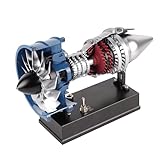
- Realistic & Authentic: The lifelike & visually stunning model provides a realistic depiction of a full-sized engine with main components including a first-stage fan, high-pressure rotor assembly, combustion chamber, high-pressure turbine assembly, low-pressure turbine assembly, and exhaust nozzle.
- High-Quality Construction: Made of high-quality metal, the meticulous model, full of detail and features, undergoes precision casting and CNC machining, along with sandblasting and anodized coloring treatment on the surface, ensuring durability and accuracy the same as the real model.
- Dynamic Display: Featuring a semi-transparent magnetic casing, this model offers a clear view of the engine's internal mechanics in motion when powered by the electric motor. The quick-release magnetic cover allows for effortless assembly and disassembly, making it ideal for demonstrations while protecting delicate components. Equipped with a sturdy mounting bracket and throttle control lever, this kit delivers an immersive hands-on experience with aviation engineering.
- DIY Assembly: Consists of 170+PCS (including screws & nuts) and comes with tools and paper-based English instructions. You will personally experience the entire assembly process, from small parts to the final completed model, constructing an awe-inspiring turbofan engine model.
- STEM Education: As an educational tool, this model unravels the internal workings of a turbofan engine, imparts knowledge about aerospace engineering, and stimulates interest, creativity, and awe for industrial technological achievements
| Published configuration | Power and speed | Listed weight | Envelope |
|---|---|---|---|
| 2.0-litre example | 103 hp at 3,300 rpm | 101 lb; no gearbox required | 17.3 in long by 11.6 in diameter |
| 2.0-litre example | 180 hp at 6,250 rpm | 101 lb; gearbox required | 17.3 in long by 11.6 in diameter |
These are company-published example configurations, not independently verified aircraft engine specifications. The gearbox distinction matters when comparing installed mass or evaluating an aircraft installation.
Independent reader supportYour contribution helps us test, update, and keep practical guides available for everyone.Is the Duke engine commercially available?
Duke’s pages describe an operational prototype and testing, but they are inconsistent about the platform’s generation: one calls it third generation, while its aviation page calls it fifth generation. The company’s home page invites live demonstrations and says it seeks international co-development and licensing partners. The reviewed information does not establish production sales, delivery availability, or independently verified test status for 2026.
For a car owner or builder, that means the Duke engine is not documented here as a purchasable replacement engine with a confirmed fitment, price, service network, or production warranty. The stated partner path is business-to-business development or licensing, rather than a consumer parts or retail offering.
Best Value
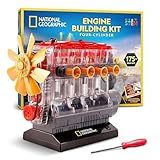
- BUILD YOUR OWN ENGINE – Assemble a clear 4-cylinder engine model kit with 175+ durable pieces. A fun DIY engineering toy engine that shows how pistons, valves, and gears really move.
- WORKING MODEL ENGINE – Install 3 AA batteries (not included), press start, and see this visible engine model kit come to life as pistons, valves, and gears move just like a real car engine.
- COMPLETE STEM ACTIVITY KIT – This kids engine build kit includes everything needed: 175+ parts, tools, illustrated instructions, and a Learning Guide for an engaging STEM toy experience.
- FUN & EDUCATIONAL – Encourages problem-solving skills and curiosity while teaching kids about mechanics and engineering. Perfect model engine kit for young builders and hobby kits for boys and girls.
- GREAT STEM GIFT – An exciting engine building kit for kids who love cars, building toys, and model kits. Inspires creativity and discovery through hands-on STEM play!
What would matter in a fair comparison with a conventional engine?
Compactness is only one part of whether an engine is useful in a car, aircraft, boat, or generator. A meaningful comparison would need the same operating point and a clearly defined system boundary, including the gearbox and required accessories where relevant.
- Installation package: Compare the full envelope and the space needed for intake, exhaust, cooling, mounts, and service access.
- Mass at matched output: Check whether the stated weight includes a gearbox and accessories, and compare engines at a similar continuous or peak power rating.
- Fuel consumption and emissions: Look for comparable test conditions, fuel, load, and certification—not just a single prototype result.
- Balance and vibration: Assess measured behavior across the intended speed range and in the target installation.
- Durability and serviceability: Establish operating hours, maintenance intervals, seal and lubrication life, and repair procedures.
- Manufacturing maturity: Confirm whether the configuration is a test engine, a supported development program, or a product available for delivery.
The published material establishes Duke’s design description, some company-reported prototype results, and its proposed applications. It does not supply independent current data for several of these comparison points.
Quick Recap
Product prices and availability are accurate as of the date/time indicated and are subject to change. Any price and availability information displayed on Amazon at the time of purchase will apply.




