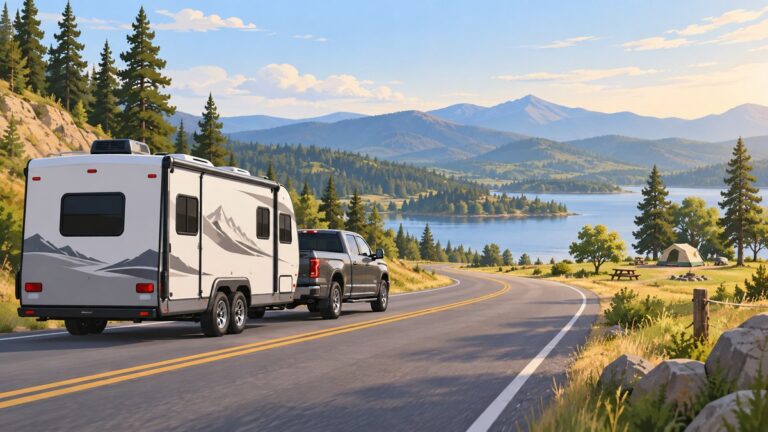
Short answer: Driving is one of the best ways to explore the Republic of Ireland’s countryside, coast, small towns, and remote accommodation—but it requires more preparation than a typical city rental. Vehicles drive on the left in both the Republic of Ireland and Northern Ireland, yet the two jurisdictions use different road laws, speed units, signs, currencies, toll arrangements, parking rules, and rental conditions.
Carry your physical full driving licence and passport, confirm whether your issuing country or rental branch requires an International Driving Permit (IDP), check written permission and insurance for any Republic–Northern Ireland border crossing, and select the smallest practical car. In the Republic, speed-limit changes are still being implemented, so posted signs override any general table. In Northern Ireland, speeds are shown in miles per hour.


Last checked: 9 August 2026.
At a glance
- Drive on the left in both jurisdictions.
- The Republic of Ireland uses kilometres per hour; Northern Ireland uses miles per hour.
- Carry the original physical licence; an IDP, when required, is a supplement and never replaces it.
- Confirm that your rental car is authorized and insured for Northern Ireland before crossing the border.
- The M50 toll around Dublin is barrier-free. If it is not handled automatically by your rental company, pay by 8 p.m. the following day.
- Rural roads can be narrow, unmarked, wet, and obstructed by walls, hedges, farm vehicles, cyclists, walkers, or animals.
- Do not drive after drinking. Use a taxi, tour, public transport, or a designated sober driver instead.
First, decide which Ireland you are driving in
“Ireland” can mean the sovereign Republic of Ireland or the whole island, which also includes Northern Ireland, a constituent part of the United Kingdom. The land border is easy to cross by road, but the rules do not merge when you cross it.
| Republic of Ireland | Northern Ireland | |
|---|---|---|
| Legal jurisdiction | Republic of Ireland | United Kingdom |
| Speed units | Kilometres per hour (km/h) | Miles per hour (mph) |
| Main guidance | Road Safety Authority (RSA) guidance and Irish Rules of the Road | Northern Ireland visitor guidance and the UK Highway Code for Northern Ireland |
| Tolling | Several tolled roads, including the barrier-free M50 toll around Dublin | No general road tolls |
| Driving-cost currency | Euro (€) | Pound sterling (£) |
| Warning signs | Distinctive yellow-diamond warnings | UK-style red-triangle warnings |
This distinction matters when you check licence requirements, child restraints, speed limits, parking restrictions, insurance, roadside assistance, and rental-company permissions. Use “Republic of Ireland” whenever a rule in this article concerns Irish law.
Crashes, No Sound, or Screen Glitches?
Random freezes, missing sound and display glitches usually trace back to one bad driver. Find and replace yours safely.Free scan · under a minutePC Slower Than It Used to Be?
A free scan shows the junk files, broken settings and background clutter dragging Windows down - then fixes them in one click.Free scan · Windows 10 & 11#1 Best Overall
Should you rent a car?
A car is usually most valuable outside the major cities. It gives you flexibility for coastal routes, rural counties, trailheads, islands reached by ferry, scattered accommodation, and small towns that are not well connected by rail or coach. It is less useful—and can be a genuine nuisance—in central Dublin, Belfast, Galway, Cork, and other compact urban areas with traffic, one-way systems, restricted lanes, and expensive or limited parking.
Driving is a strong choice when:
- Your itinerary includes the west coast, Donegal, Kerry, Connemara, the Midlands, the Wild Atlantic Way, or several small towns.
- Your accommodation is outside a reliable public-transport corridor.
- Your group values flexibility and can share the driving.
- You are comfortable adapting to left-side traffic, narrow roads, and slower rural travel.
- You want to stop at viewpoints, beaches, ruins, walks, or villages that are difficult to reach on a fixed tour schedule.
Consider not renting when:
- The trip is mainly Dublin, Belfast, or another city.
- Your route follows straightforward intercity rail or coach connections.
- The main driver is very anxious about driving on the left or has no experience with a manual transmission.
- The itinerary involves substantial drinking.
- Hotel parking, city parking, rental fees, and tolls would cost more than the convenience is worth.
A useful compromise is to use rail, coaches, taxis, or a private transfer in the cities, then rent a car only for the rural part of the trip. Major corridors such as Dublin–Cork, Dublin–Galway, Dublin–Limerick, and Dublin–Belfast can often be handled without a car, while the final rural destination may be much easier with one.
A quick planning decision
| Your situation | Practical choice |
|---|---|
| Dublin-only trip | Avoid renting unless your accommodation or excursions require it. |
| Rural west-coast itinerary | Rent a small car and allow generous time between stops. |
| First-time left-side driver | Avoid a large vehicle and a city-centre pickup during rush hour. |
| Driver under 25 | Compare age rules before booking; branches differ materially. |
| Alcohol-focused itinerary | Use tours, taxis, and public transport, or designate a completely sober driver. |
| Republic plus Northern Ireland | Obtain written cross-border permission and insurance confirmation before pickup. |
| Remote accommodation | Get the property’s Eircode and confirm that the final road is suitable for a normal car. |
Licence, IDP, passport, and vehicle documents
If you are renting a car
Take these documents to the counter:
- Your physical, full, current driving licence.
- Your passport or other photo identification accepted by the rental company.
- The rental confirmation and booking details.
- A credit card in the main driver’s name for the deposit and any required authorization.
- An IDP if the law, your licence format, or the exact rental branch requires one.
- Proof of return travel or accommodation if the branch’s terms request it.
Do not rely on a digital licence alone. Ask the pickup branch in writing whether it accepts your licence, especially if it is not in English, does not use the Roman alphabet, is a temporary document, or is stored only in a mobile app.
Can a US or Canadian visitor use a home licence?
Irish licensing rules generally allow a visitor to drive in the Republic of Ireland on a current valid foreign licence for the period of a temporary visit, up to 12 months. EU/EEA licences can generally be used while valid. Taking up normal residence creates different Irish licensing requirements; consult the RSA foreign-licence guidance or NDLS guidance.
That is not the same as a guarantee that every rental counter will accept every licence without extra documentation. The correct rule for a US or Canadian visitor is:
Irish licensing rules may allow your valid national licence, but the rental company may impose additional document requirements. Check the exact rental terms for the pickup country and branch.
For a US visitor, the sensible preparation is to carry the physical US licence, passport, and any IDP recommended or required by the exact branch. Some rental terms accept US licences without an IDP, while some Northern Ireland conditions require an international driving licence for licences issued outside the European Community. Do not rely on a generic answer found on a booking website.
An International Driving Permit is a translation supplement. It cannot be used by itself and must accompany your original licence.
Quick wins for a faster PC:
Scan for outdated or missing drivers - takes under a minuteDriver Scan →Clear out junk files and repair common Windows errorsFree Scan →Fix the driver behind crashes, sound loss and screen glitchesFind Drivers →If you are driving a private or imported vehicle
The RSA’s tourist guidance says a driver may need to carry a valid licence, registration or title document, insurance documentation, the rental agreement where relevant, and a valid roadworthiness certificate. Keep the documents accessible, and confirm with your insurer that the policy covers the jurisdictions and vehicle use in your itinerary.
Choose the right rental car—and read the restrictions
The best rental car for a rural Irish trip is usually the smallest vehicle that comfortably fits your passengers and luggage. A compact car is easier to place on a narrow lane, easier to reverse beside a hedge or wall, and easier to park in older towns. A large SUV may feel reassuring on a booking screen but can be awkward on roads with little room for opposing traffic.
Check these items before paying
- Transmission: Confirm automatic versus manual. Do not assume an “automatic” booking is guaranteed unless the confirmation says so.
- Vehicle dimensions: Compare luggage capacity and width, not just the vehicle category.
- Visibility aids: Parking sensors and a reversing camera are useful in tight towns and car parks.
- Insurance: Check the excess and exclusions for tyres, wheels, glass, roof, underbody, and roadside recovery. Collision-damage waiver is not automatically comprehensive coverage.
- Additional drivers: Ask about daily fees and whether every driver must present documents at pickup.
- Age: Young-driver surcharges and minimum ages vary by company, location, and vehicle.
- Fuel: Confirm the fuel type and whether the contract is full-to-full or uses another policy.
- Deposit: Check the required credit limit and whether debit cards are accepted.
- Mileage: Look for mileage limits, especially if planning a long coastal route.
- One-way and after-hours fees: These can change the economics of a split itinerary.
- Child seats: Reserve the correct seat early and verify the installation and applicable jurisdiction.
- Territory: Ask whether the car may cross into Northern Ireland, travel on a ferry, or leave the island.
- Digital documents: Confirm whether the branch accepts a digital licence or requires the physical document.
Rental policies are not interchangeable. For example, Hertz Ireland says its minimum rental age is generally 21, subject to location and vehicle restrictions. An Enterprise Ireland branch example lists a minimum age of 25. Published Avis Northern Ireland terms impose their own licence and document requirements. These are examples, not a universal Ireland-wide rule.
Cross-border rental: get approval before pickup
A car collected in the Republic may be allowed into Northern Ireland, but you normally need to notify the rental company and obtain the required cross-border authorization or cover. The fee, insurance territory, recovery arrangement, and permission can differ by company, branch, vehicle type, and direction of travel.
Published examples demonstrate why you must check the actual contract: Avis’s Republic-of-Ireland van terms list a cross-border fee; Enterprise’s Letterkenny terms say travel into Northern Ireland is permitted without a charge at that location; and Hertz publishes its own conditions in its Ireland FAQs. Never assume that a fee quoted by one company applies to another.
Ask for written confirmation covering:
- Permission to drive in both the Republic and Northern Ireland.
- Insurance and damage-cover territory.
- Breakdown and vehicle-recovery coverage on the other side of the border.
- Any cross-border fee or administration charge.
- Whether a one-way return across the border is permitted.
- Whether ferry travel or particular islands is allowed.
The first five minutes after collecting the car
The rental exit is a poor place to discover that the indicators are on the opposite side of the steering column or that the navigation system is set to miles. Complete this routine before joining busy traffic:
- Set the seat, mirrors, steering wheel, and driving position.
- Identify the indicator, wiper, headlight, fog-light, parking-brake, gear selector, and fuel-door controls.
- Confirm whether the vehicle is automatic or manual.
- Check the fuel type and which side the fuel cap is on.
- Set the navigation destination while parked. Save the accommodation’s full address, Eircode, phone number, or map pin.
- Photograph the bodywork, wheels, windscreen, dashboard, fuel gauge, and odometer. Make sure existing damage is recorded on the rental agreement.
- Drive slowly around the car park or rental exit to learn the clutch, brakes, steering, and vehicle width.
- At the first junction, deliberately repeat: left lane, left side, left-side turns.
- If possible, make the first leg an easy motorway or quiet-road route rather than a demanding city-centre drive.
Driving on the left: the habits that prevent mistakes
Visitors from the United States, Canada, and much of continental Europe often manage the main roads quickly but revert to right-side habits after a turn, stop, distraction, or scenic stop. Use these reminders:
- At every junction, keep left unless signs or lane markings direct you elsewhere.
- On a normal two-lane road, your driving lane is the left lane.
- When turning left, stay close to the left side.
- When turning right, cross the opposing traffic lane only after checking carefully.
- After a stop, turn, or overtaking manoeuvre, consciously return to the left lane.
- On motorways and dual carriageways, keep left except when overtaking or following lane directions.
- Do not use the hard shoulder as a normal passing lane.
- Let the road markings and signs determine who has priority; do not rely on an assumed rule at an unfamiliar junction.
Roundabouts: travel clockwise and give way to the right
Roundabouts are the most common place for a visitor to choose the wrong lane. Traffic travels clockwise, and traffic approaching from the right generally has priority, subject to the signs, yield markings, traffic lights, and lane arrows at that particular roundabout.
Free tools Windows power users keep installed
One-click scans. No signup required.
                         2nd exit / straight
                                  ↑
                  1st exit  ←  ( clockwise )  →  3rd exit / right
                                  ↑
                         your approach from below
- First exit: the left lane is generally used, unless arrows or signs say otherwise. Signal left and leave promptly.
- Straight ahead: follow the marked lane. It is often the left lane, but markings control. Signal left when you have passed the exit before yours and are leaving.
- Right or later exit: the right lane is generally used where there are two lanes, unless the markings direct otherwise. Signal according to the approach and indicate left before leaving.
The practical rule is to approach slowly enough to read the lane signs before committing. Do not change lanes abruptly inside the roundabout. Take extra care on mini-roundabouts, spiral roundabouts, multi-lane roundabouts, and roundabouts controlled by traffic lights. The RSA Rules of the Road and Northern Ireland’s official visitor guidance provide the jurisdiction-specific details.
Speed limits: kilometres in the Republic, miles in Northern Ireland
Republic of Ireland
Do not paste an old generic speed-limit table into your trip plan. The Republic’s system is in transition. On 7 February 2025, the default limit for many rural local roads changed from 80 km/h to 60 km/h. Urban 30 km/h limits and reductions affecting national-secondary-road defaults are being introduced through a phased process, with the government directing local authorities to aim for urban 30 km/h implementation by 31 March 2027.
Use the table below as a framework, not as permission to ignore a sign. The posted limit, including a temporary or special limit, always controls.
| Road context | Common or default figure to understand | Important qualification |
|---|---|---|
| Motorway | 120 km/h | A lower limit may be posted. |
| National primary road | 100 km/h | Follow posted, temporary, and local limits. |
| Regional road | Commonly 80 km/h | Road classification and posted signs control. |
| Affected rural local road | 60 km/h since 7 February 2025 | The former assumption of 80 km/h is outdated on affected roads. |
| Urban or built-up road | Often 30 or 50 km/h | Implementation of urban 30 km/h limits is phased. |
| Car towing a caravan or trailer | Maximum 80 km/h | A lower posted limit still applies. |
See the rural local-road change, the government’s urban speed-limit review, and the RSA’s tourist guidance for current context.
What’s actually slowing this PC down?
Pick the symptom - the matching free tool is one click away.
Northern Ireland
Northern Ireland uses mph. For cars and motorcycles, the common maximums are:
| Road type | Maximum |
|---|---|
| Built-up area | 30 mph unless signed otherwise |
| Single carriageway | 60 mph |
| Dual carriageway | 70 mph |
| Motorway | 70 mph |
Cars towing caravans or trailers have lower limits—generally 50 mph on single carriageways and 60 mph on dual carriageways and motorways. Check the Northern Ireland speed-limit guidance for the vehicle and road involved.
Useful approximate conversions are:
- 50 mph ≈ 80 km/h
- 60 mph ≈ 97 km/h
- 70 mph ≈ 113 km/h
Before setting off, check whether the car’s dashboard and navigation display are showing mph or km/h. A familiar-looking number can be dangerously misleading after crossing the border.
Signs and road markings visitors commonly misunderstand
Republic warning signs are yellow diamonds
The Republic of Ireland uses distinctive yellow-diamond warning signs, unlike the red-triangle warning signs used in Northern Ireland and much of Europe. They can warn of sharp bends, junctions, roundabouts, animals, roadworks, narrow roads, steep gradients, flooding, and other hazards.
Rank #3
| Visual cue in the Republic | What it may warn about |
|---|---|
| ◆ yellow diamond | General hazard ahead; read the symbol and any supplementary plate. |
| ↪ bend symbol | Sharp bend or series of bends; reduce speed before the bend, not in it. |
| ♞ animal symbol | Animals or livestock may enter the road. |
| ⇥ narrowing symbol | Reduced road width, often significant on rural roads. |
| ⚠ roadworks symbol | Temporary works, changed lanes, workers, or loose surfaces. |
The symbols above are a memory aid, not a substitute for the actual sign. The official Traffic Signs Manual and RSA road-safety guide show the official signs. After crossing into Northern Ireland, expect UK-style red-triangle warnings and UK road markings.
Yellow edge lines and hard shoulders
A single broken yellow line along the edge of a Republic road generally marks a hard shoulder, normally intended for pedestrians and cyclists. On an ordinary road, a driver may briefly pull into a suitable shoulder or edge area to allow following traffic to pass only where it is safe. Hard-shoulder rules on motorways are different: it is not a normal passing or driving lane.
Never stop on the edge of a blind bend, beside a crest, or anywhere that forces another road user into danger. The Rules of the Road explain the relevant road markings.
Parking lines, bus lanes, and cycle lanes
- A single yellow line generally prohibits parking during the times shown on the nearby sign.
- Double yellow lines mean no parking at any time.
- The absence of a sign does not automatically make roadside parking legal or safe.
- Read the time plate beside a bus lane. A restriction may apply only during particular hours.
- In Northern Ireland, cycle lanes may be marked green; official visitor guidance contrasts this with red cycle lanes in the Republic.
Read the Republic’s road-marking guidance and Northern Ireland’s visitor road-safety guidance rather than relying on the markings used at home.
The Tool Desk
Outbyte PC Repair FREEClear out junk files and repair common Windows errorsFree Scan →Outbyte Driver Updater FREEFix the driver behind crashes, sound loss and screen glitchesFind Drivers →What rural roads are really like
The main motorways and many national roads are straightforward. The local roads that lead to scenic viewpoints, beaches, trailheads, and rural guesthouses can be a different experience: narrow lanes between hedges or stone walls, no centre line, no hard shoulder, blind bends, blind crests, standing water, wet leaves, mud, and little room for two vehicles to pass.
You may also meet tractors, farm machinery, cyclists, walkers, horses, sheep, cattle, and drivers who know every bend. A posted limit is a legal ceiling, not a target. On a wet, blind, narrow lane, a safe speed can be far below the number on the sign.
When another vehicle approaches on a narrow lane
- Slow well before the meeting point, especially if you cannot see beyond a bend or crest.
- Look for a genuine passing place or a wide, firm section of road.
- If the safe passing place is behind you, reverse slowly and predictably to it rather than forcing the other vehicle into a hedge or wall.
- Do not mount a soft verge, stop on a blind corner, or squeeze past at speed.
- Watch for pedestrians, cyclists, animals, drainage edges, and loose gravel as you pass.
Plan for the road, not just the distance. A short map distance can take much longer than expected. A small car is usually easier to place and turn than a large SUV, and a normal car may be more suitable for a remote property than a wide luxury vehicle. The RSA specifically warns tourists about very narrow local roads, absent hard shoulders, farm traffic, and animals.
City driving and parking
Do not make a busy city centre your first driving lesson
If the rental location allows it, avoid collecting a car and immediately driving through central Dublin or Belfast during rush hour. Learn the car on a quieter road or motorway first, and use a car park or park-and-ride facility rather than improvising at the kerb.
Recommended Free Tools
Before booking accommodation, ask whether parking exists, whether it is reserved, whether it costs extra, and whether the vehicle can physically enter the car park. In older city centres, a one-way street, bus lane, cycle lane, loading area, or restricted turn can make a route that looks short on a map surprisingly difficult.
Never block a bus lane, cycle lane, loading area, disabled bay, yellow line, clearway, driveway, junction, or emergency access. In Northern Ireland, controlled parking zones, pay-and-display areas, yellow-line restrictions, bus-lane enforcement, and parking penalties are actively enforced. Consult the official guidance on waiting and parking and parking enforcement.
Tolls: especially the barrier-free M50
Republic of Ireland toll roads
The Republic has several tolled roads. Some use conventional toll plazas, where you pay at a booth or machine. The M50 around Dublin is different: the tolled section between Junction 6 and Junction 7 uses barrier-free tolling. There is no booth to remind you to pay; the vehicle registration is recorded.
M50 payment procedure
- Note the rental vehicle’s registration number.
- Ask whether the rental company will pay and bill you automatically, or whether you must pay yourself. Do not assume either arrangement.
- If you are paying directly, use eFlow, the listed phone payment service, or a Payzone outlet.
- Pay by 8 p.m. on the following day.
- Keep the receipt or online confirmation.
For 2026, the listed passenger-car rates are €2.60 with a tag, €3.20 with a registered video account, and €3.80 for an unregistered passenger car. The rate depends on the vehicle category and account type. Check the TII payment instructions and current M50 charges before travel.
A rental company may automatically pay the toll and charge the card on file, sometimes with an administration fee. Obtain the procedure and fee in writing. Missing the deadline can result in additional charges, and the rental company may pass on toll enforcement or processing costs.
Northern Ireland
Northern Ireland has no general road tolls. That does not mean a Republic–Northern Ireland journey is cost-free: a rental company may charge for cross-border authorization, insurance, or administration even when the road itself has no toll.
Independent reader supportYour contribution helps us test, update, and keep practical guides available for everyone.Fuel, navigation, Eircodes, and electric vehicles
Fuel and route planning
- Fuel stations can be less frequent on long rural or coastal routes than visitors expect.
- Refuel before the tank is nearly empty, particularly before a remote or late-day drive.
- Confirm whether the rental takes petrol or diesel before opening the pump.
- Save the next fuel stop in advance when leaving a city or large town.
- Allow extra time for narrow roads; a ten-mile route is not necessarily a short drive.
Navigation
Download offline maps or save your route before leaving reliable coverage. Program the destination while parked, never while moving. Use the full address, Eircode, coordinates, or a recognized landmark rather than relying only on a property name.
An Eircode uniquely identifies an individual address in the Republic and can help navigation and emergency services locate a property. Ask a remote hotel or holiday rental for its Eircode and the safest final approach. A sat-nav may choose a narrow local road simply because it is technically the shortest route; if the road looks unsuitable for the car, choose the wider alternative. Confirm the final route before dark if you are arriving at an isolated property.
Do these 3 things before closing this tab:
1Clear out junk files and repair common Windows errors2Fix the driver behind crashes, sound loss and screen glitches3Repair Windows errors before they cause bigger problemsElectric rental cars
For an EV, confirm the charging connector, charging-card or app requirements, payment method, and the rental company’s roadside procedure. Check charging locations along each rural leg instead of assuming that every hotel, attraction, or village has a compatible charger.
Keep a reserve for hills, cold or wet weather, traffic, detours, and a charger that is occupied or unavailable. Ireland is expanding its public charging network, but the rollout remains a developing programme through 2026–2028. Check the national EV charging strategy and current charging-hub announcements rather than treating future infrastructure as guaranteed on your route.
Alcohol, phones, seat belts, and child restraints
Alcohol and drugs
In the Republic of Ireland, the blood-alcohol limit is 50 mg per 100 ml of blood for most fully licensed drivers and 20 mg per 100 ml for learner, novice, professional, and commercial drivers. These limits are not a safe-drinking allowance. The practical rule for a road trip is simple: do not drive after drinking, and do not assume that sleeping overnight guarantees sobriety for an early rural departure. The Garda road-safety information and RSA’s J1 campaign provide further guidance.
Northern Ireland has its own UK rules. Do not combine the Republic’s limits with Northern Ireland’s law; when in doubt, use zero alcohol before driving.
Free tools Windows power users keep installed
One-click scans. No signup required.
Mobile phones
Holding a mobile phone while driving is illegal in the Republic, and hand-held mobile-phone use is illegal in Northern Ireland. Mount the phone and set navigation, music, and calls before moving. Pull over somewhere legal and safe if you need to change the route.
Seat belts and child restraints
In the Republic, seat belts must be worn where fitted. Children under 150 cm and/or 36 kg must use an appropriate child restraint in a car or goods vehicle, other than the specified taxi or bus exceptions. See the RSA’s seat-belt and child-restraint guidance.
Northern Ireland has different child-restraint thresholds and exceptions. Do not carry a Republic rule across the border as though it were universal; check the Northern Ireland visitor guidance and reserve the correct seat with the rental company.
Penalty points and foreign drivers
A foreign licence does not make Irish road offences unenforceable. Foreign-licence holders driving in the Republic are subject to the Irish penalty-points system, which applies to driving licences and learner permits. Generally, 12 points within three years trigger a six-month disqualification; a seven-point threshold applies to certain learner and novice drivers. See the RSA’s explanation of how penalty points work.
A rental company may also charge an administration fee for processing a toll, parking penalty, speeding notice, or other traffic offence. Follow the signs and keep every toll and parking receipt.
Crossing the Republic–Northern Ireland border
For a road trip that includes both jurisdictions, separate the issue into three checks:
- Licence: Your valid national licence may be accepted for a temporary visit, but acceptance depends on visitor status, licence validity, vehicle category, issuing country, and the relevant rental or licensing rules.
- Insurance: The vehicle must be insured for both jurisdictions, and you must be able to demonstrate valid insurance when required.
- Rental authorization: The rental company must permit the crossing. Fees, territorial restrictions, recovery cover, and one-way rules vary by company and branch.
Current Irish government guidance says Green Cards are not required for Irish drivers travelling in Northern Ireland or Great Britain, and UK drivers may drive in Ireland without a Green Card as proof of insurance. Valid insurance is still required. The Irish Department of Transport guidance and UK vehicle-insurance guidance explain the position for those vehicle categories. Do not generalize this to every foreign-registered vehicle or every insurance policy.
Crossing a land border does not remove the need to carry the travel documents required for your nationality and wider itinerary. Carry your passport or other required identity and travel documents even if the road crossing itself appears routine.
Do these 3 things before closing this tab:
1Clear out junk files and repair common Windows errors2Fix the driver behind crashes, sound loss and screen glitches3Repair Windows errors before they cause bigger problemsWhat to do after a breakdown
On a motorway
- Turn on the hazard lights.
- Move onto the hard shoulder only if you can do so safely.
- If safe, leave the vehicle on the side away from traffic.
- Get behind the safety barrier. Do not stand beside the vehicle.
- Do not walk along the motorway to find help.
- Call the rental company’s breakdown service or the motorway operator.
- Give the motorway number, direction of travel, nearest junction, and any location-reference sign.
The RSA’s motorway-safety guidance emphasizes staying behind the barrier and never walking on a motorway. TII lists 0818 715 100 as a motorway traffic-control contact number in its road-maintenance information.
On a rural road
- Stop at the safest possible place without blocking a bend, crest, junction, or passing place.
- Use hazard lights.
- Contact the rental company’s breakdown service.
- Do not leave the vehicle in a dangerous position to seek help on foot.
- Give the Eircode, road number, nearest townland or village, landmark, coordinates, or map pin.
What to do after a collision or emergency
- Stop and make the scene as safe as possible.
- Call 112 or 999 for injury, immediate danger, fire, or a serious collision. Both numbers are free in Ireland.
- Exchange names, contact details, registration numbers, insurer details, and rental information.
- If it is safe, photograph the vehicles, damage, road markings, signs, weather, and vehicle positions.
- Notify the rental company immediately and follow its collision procedure.
- Do not admit liability, and do not leave the scene without following the required procedure.
See the Irish government’s instructions on contacting emergency services. If anyone is injured or the road remains dangerous, prioritize emergency services over paperwork and photographs.
Final pre-drive checklist
Before leaving the rental depot or hotel, confirm:
- Physical driving licence
- Passport or accepted photo ID
- IDP if required or recommended by the issuing country, licence format, or rental branch
- Rental agreement and credit card in the main driver’s name
- Written cross-border permission and insurance confirmation, if visiting Northern Ireland
- Correct fuel type and transmission
- Existing damage, fuel level, odometer, wheels, and windscreen photographed
- Phone mounted and navigation programmed while parked
- Offline map, full address, and Eircode for the destination
- Child restraint reserved and correctly fitted
- M50 toll payment arrangement noted
- Rental breakdown number saved
- Emergency numbers 112 and 999 saved
- Enough fuel or a confirmed EV charging plan for the next rural leg
Frequently Asked Questions
Can a US visitor drive in the Republic of Ireland with a US licence?
A current valid foreign licence can generally be used by a temporary visitor to the Republic for up to 12 months, but rental-company document rules can be stricter. Carry the physical US licence and passport, and ask the exact pickup branch whether it requires or recommends an IDP. An IDP must accompany the original licence.
Do I need an International Driving Permit to drive in Ireland?
There is no single answer for every visitor. The requirement can depend on the issuing country, licence format, language, and rental company. Check both the relevant Irish licensing guidance and the exact rental terms. Never use an IDP without the original driving licence.
The Tool Desk
Outbyte Driver Updater FREEScan for outdated or missing drivers - takes under a minuteDriver Scan →Outbyte PC Repair FREEClear out junk files and repair common Windows errorsFree Scan →Can I take a Republic of Ireland rental car into Northern Ireland?
Often, but not automatically. Notify the rental company before pickup and obtain written permission, cross-border insurance or authorization, and details of any fee, recovery restriction, or one-way limitation. Policies vary by company, branch, and vehicle.
How do I pay the M50 toll in a rental car?
First check whether the rental company pays and bills you automatically. If not, note the registration number and pay through eFlow, by phone, or at a Payzone outlet by 8 p.m. on the following day. The 2026 unregistered passenger-car rate is listed as €3.80, subject to the applicable vehicle category.
The Bottom Line
Rent a car for the countryside, not automatically for the cities. Carry the original licence and passport, resolve the IDP question with the exact rental branch, choose a compact vehicle, and get cross-border permission before driving into Northern Ireland. Keep left, approach roundabouts slowly, treat rural speed limits as ceilings rather than targets, watch the km/h–mph change, and plan fuel, charging, parking, and the M50 toll before setting off.
Quick Recap
Product prices and availability are accurate as of the date/time indicated and are subject to change. Any price and availability information displayed on Amazon at the time of purchase will apply.