Cummins’s first gasoline engine is going first to medium-duty commercial trucks and school buses, not Ram pickups. Confirmed truck applications include the Freightliner M2 106 and Peterbilt Models 536 and 537. Kenworth has announced the B6.7 Octane for its Class 5–7 conventional line—corresponding to the T180, T280, and T380 range—but has not published a complete model-by-model order list.
Confirmed trucks and buses
The Cummins B6.7 Octane is going first into North American medium-duty commercial vehicles—not Ram 2500 or Ram 3500 pickups. The specifically named truck applications are the Freightliner M2 106, Peterbilt Model 536, and Peterbilt Model 537. Kenworth has also announced the engine for its Class 5–7 conventional truck line, a range that corresponds to the T180, T280, and T380, although Kenworth has not published a complete model-by-model ordering matrix.
The same 6.7-liter gasoline engine is also being used in the Thomas Built Buses Saf-T-Liner C2 Gasoline and IC Bus CE Series gasoline school bus. The information below reflects public OEM announcements and product information available through August 12, 2026.
| Vehicle | Market and class | B6.7 Octane status |
|---|---|---|
| Freightliner M2 106 | Medium-duty commercial truck | Named application; ordering opened in March 2026, with production scheduled for the third quarter of 2026 |
| Peterbilt Model 536 | Class 6 truck, up to 26,000 pounds GVWR | Peterbilt lists the gasoline engine as an available option |
| Peterbilt Model 537 | Class 7 truck or tractor, up to 33,000 pounds GVWR | Peterbilt lists the gasoline engine as an available option |
| Kenworth T180/T280/T380 range | Kenworth Class 5–7 conventional trucks | Announced for the Class 5–7 line; exact model and body configurations require dealer confirmation |
Freightliner M2 106: the clearest truck launch
The Freightliner M2 106 is the most explicit truck launch vehicle for the B6.7 Octane. Daimler Truck North America named the model, said ordering opened during the week of March 9, 2026, and scheduled production to begin in the third quarter of 2026. DTNA lists output of up to 300 horsepower and 660 lb-ft of torque on regular 87-octane gasoline.
#1 Best Overall

- Country Of Origin : Czech Republic
- The Package Height Of The Product Is 3.9 Inches
- The Package Length Of The Product Is 4.8 Inches
- The Package Width Of The Product Is 3.9 Inches
Freightliner positions the M2 106 Plus for pickup and delivery, construction, government and municipal work, utility service, towing and recovery, refuse, food and beverage, and general service applications. Those are the kinds of commercial routes where a fleet may value gasoline fueling and a simpler emissions system over a diesel powertrain.
For fleet buyers, the relevant acquisition path is the Freightliner M2 106 with B6.7 Octane. A dealer should confirm the current model year, available ratings, transmission, body-builder requirements, GVWR configuration, and actual production slot. A scheduled third-quarter production start should not be treated as proof that every dealer has inventory.
Peterbilt Model 536
Peterbilt’s current Model 536 information lists the 7-liter Cummins B6.7O gasoline engine as an available powertrain option. The Model 536 is a Class 6 truck with a GVWR of up to 26,000 pounds and is primarily aimed at pickup and delivery and other medium-duty work.
Peterbilt lists the gasoline engine across a 200–300-hp range with up to 660 lb-ft of torque. The page uses the designation B6.7O, while Cummins and several other manufacturers generally call the engine B6.7 Octane. The matching 6.7-liter displacement, gasoline application, output range, and Cummins branding indicate that B6.7O and B6.7 Octane are two labels for the same gasoline engine, not separate engine families.
Peterbilt Model 537
The larger Model 537 also lists the Cummins B6.7 Octane as a factory engine option. It is a Class 7 truck or tractor with a GVWR of up to 33,000 pounds, covering applications such as service and maintenance, towing, dump work, and pickup and delivery.
Peterbilt lists Peterbilt 536 gasoline and Peterbilt 537 B6.7 Octane alongside PACCAR PX-7 and PX-9 diesel engines as well as Cummins L9N and B6.7N natural-gas alternatives. That powertrain lineup matters: it establishes the B6.7 Octane as a factory-installed commercial option rather than an aftermarket gasoline conversion.
Rank #2

- Our inline fuel filter features a plastic housing with an orange interior filter, topped and bottomed with durable brass end caps, ensuring superior filtration effectiveness
- Superior Filtration Performance: Equipped with high-quality filter paper and dense pleats, our fuel filter effectively removes impurities and deposits from gasoline, protecting your engine from wear and tear and ensuring smooth operation
- Versatile Applications: This universal fuel filter comes with 4 pieces of filters and 8 pieces of clamps, making it suitable for use in motorcycles, scooters, small tractors, lawnmowers, snowmobiles, garden cultivators, go-karts, generators, and more
- Easy Installation: The included clamps provide secure attachment for fuel lines, making installation quick and hassle-free, while the compact size allows for flexible placement options in various vehicles and equipment
- Reliable Protection: By preventing dust, water, and other contaminants from mixing with the fuel, our inline fuel filter helps maintain engine stability and prolong its lifespan, ensuring optimal performance in all conditions
Kenworth: T180, T280, and T380 are the likely range, with an important qualification
On March 5, 2025, Kenworth announced that the new Cummins gasoline engine would be available to order later that year in its Class 5–7 conventional truck line. Kenworth said the engine would be paired with the PACCAR TX-8 automated transmission and targeted pickup and delivery, towing, rental, leasing, and landscaping work.
Kenworth’s model classifications map that announced range to the Kenworth medium-duty B6.7 Octane applications associated with the T180, T280, and T380: the T180 is Class 5, the T280 is Class 6, and the T380 is Class 7. However, Kenworth’s announcement did not name each model individually, and the public product pages reviewed do not provide a complete B6.7 Octane order guide for every trim, wheelbase, body configuration, or model year.
Do these 3 things before closing this tab:
1Clear out junk files and repair common Windows errors2Fix the driver behind crashes, sound loss and screen glitches3Repair Windows errors before they cause bigger problemsThe precise conclusion is therefore that Kenworth has confirmed the engine for its Class 5–7 conventional line, corresponding to the T180/T280/T380 range. It is too broad to say that every T180, T280, or T380 configuration is automatically orderable with the engine. Buyers should request the current dealer order guide before treating a particular chassis as confirmed.
The T480 should not be automatically included simply because Kenworth product pages group it with the T380 in some family information. The announced gasoline-engine scope is Class 5–7 conventional trucks; the dealer’s current configuration sheet is the proper authority for a specific order.
What the B6.7 Octane engine is
Cummins describes the B6.7 Octane as its first gasoline-powered engine. It is a purpose-built medium-duty engine based on the Cummins B platform, rather than a pickup gasoline engine adapted for commercial service.
- Displacement: 6.7 liters
- Configuration: turbocharged, spark-ignited inline six-cylinder
- Published power range: 200, 220, 260, and 300 hp ratings
- Published torque range: 600–660 lb-ft, depending on rating and application
- Peak-torque speed: 1,800 rpm
- Governed engine speed: 3,200 rpm
- Fuel: regular 87-octane gasoline
- Bore and stroke: 107 mm by 124 mm
- Approximate dry engine weight: 1,301 pounds, with aftertreatment listed separately at approximately 49 pounds
The published rating table is application-dependent. Cummins shows 200-, 220-, 260-, and 300-hp ratings for truck, school-bus, and refuse applications. The 220- and 300-hp ratings are also shown for emergency-vehicle applications. The exact rating available in a truck depends on the OEM’s configuration and the vehicle’s intended use.
Crashes, No Sound, or Screen Glitches?
Random freezes, missing sound and display glitches usually trace back to one bad driver. Find and replace yours safely.Free scan · under a minutePC Slower Than It Used to Be?
A free scan shows the junk files, broken settings and background clutter dragging Windows down - then fixes them in one click.Free scan · Windows 10 & 11Rank #3
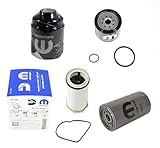
- Durable and engineered for optimal performance.
Why a fleet might choose gasoline
The major difference from a modern diesel B6.7 is not just the fuel. The B6.7 Octane uses spark ignition and a three-way catalyst. It does not use diesel exhaust fluid and does not require active diesel particulate-filter regeneration.
That can simplify the operating routine for fleets that prefer to avoid DEF handling and diesel aftertreatment regeneration events. It also means the engine is designed around ordinary 87-octane gasoline rather than premium fuel. Regular gasoline availability can be useful for municipal, rental, service, and school-bus fleets that already have gasoline fueling infrastructure.
It is not a maintenance-free engine, however. Operators still need to follow the prescribed oil, filter, ignition-system, cooling-system, and emissions-system service schedules. Removing DEF and active regeneration does not eliminate routine inspections or make every gasoline truck cheaper to operate.
Cummins claims up to 10% better fuel economy than other gasoline engines, depending on duty cycle. That is a manufacturer claim, not an independently verified result that applies to every route or truck. A fleet should compare fuel consumption using its own payload, idle time, stop frequency, terrain, annual mileage, and fuel prices.
The Tool Desk
Outbyte Driver Updater FREEFix the driver behind crashes, sound loss and screen glitchesFind Drivers →Outbyte PC Repair FREEClear out junk files and repair common Windows errorsFree Scan →School buses are a major part of the launch
Thomas Built Buses Saf-T-Liner C2 Gasoline
Thomas Built Buses announced the Saf-T-Liner C2 Gasoline on April 2, 2026. The factory-built school bus uses the Cummins B6.7 Octane and is offered as a gasoline alternative to Thomas Built’s diesel and electric powertrains.
The announced ratings are 220 and 260 hp, with torque of up to 600 lb-ft. Thomas Built highlights regular gasoline fueling, longer service intervals, no diesel particulate filter, no DEF, and no active regeneration. An integrated compression brake is available as an option.
Rank #4

- Highly durable and reliable
- Built-in gaskets
- Reduces mis-installation of gaskets
- Made of high strength materials
Because it is built at the factory around the gasoline engine, the C2 Gasoline is not a diesel bus converted by a third party. School districts should still verify the current production schedule, seating configuration, state procurement requirements, chassis specifications, and service support before issuing a purchase order.
IC Bus CE Series gasoline
IC Bus announced on July 14, 2026 that it would display the IC Bus CE Series gasoline school bus with the Cummins B6.7 Octane at STN Expo West. The gasoline CE Series was available to order through IC Bus dealers, with initial customer deliveries expected to begin in fall 2026.
Free tools Windows power users keep installed
One-click scans. No signup required.
IC Bus describes the application around school transportation’s frequent stops, changing route conditions, and high-mileage operation. Its published materials cite regular 87-octane gasoline, longer service intervals, no DEF, and no active regeneration. Depending on the rating, output is listed at up to 300 hp and 660 lb-ft.
The Thomas Built and IC Bus announcements broaden the engine’s initial market beyond over-the-road trucks. They also show why the B6.7 Octane is being marketed as a commercial medium-duty powertrain rather than as a potential consumer pickup engine.
Availability timeline
| Date | Development |
|---|---|
| March 5, 2025 | Kenworth announced planned availability in its Class 5–7 conventional truck line. |
| Week of March 9, 2026 | DTNA said ordering opened for the Freightliner M2 106 application. |
| April 2, 2026 | Thomas Built Buses announced the Saf-T-Liner C2 Gasoline. |
| Third quarter of 2026 | DTNA scheduled the start of Freightliner M2 106 production. |
| July 14, 2026 | IC Bus announced dealer ordering for the gasoline CE Series, with deliveries expected in fall 2026. |
These milestones do not all mean the same thing. Kenworth announced a product-line scope, Peterbilt lists the engine as an available option, DTNA opened ordering and scheduled production, and IC Bus announced ordering with an expected delivery window. None of those statements guarantees that a particular dealer has a completed truck or bus in stock.
Independent reader supportYour contribution helps us test, update, and keep practical guides available for everyone.Is the B6.7 Octane coming to Ram 2500 or Ram 3500?
There is no confirmed Ram application in the public information reviewed. No official Cummins, Ram, Stellantis, Kenworth, Peterbilt, Freightliner, or Daimler announcement confirms the B6.7 Octane for Ram 2500 or Ram 3500 pickups.
Quick wins for a faster PC:
Scan for outdated or missing drivers - takes under a minuteDriver Scan →Clear out junk files and repair common Windows errorsFree Scan →Best Value
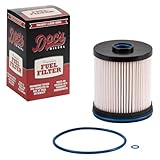
- Third-Party Tested Efficiency: Independent testing rates it at 98.13 percent efficiency down to 3 microns, so the number is verified rather than claimed.
- Confirms Your Fit: Built for 2017-2026 Chevrolet/GMC 6.6L Duramax 2500HD, 3500HD, 2020-2026 Chevrolet/GMC 3.0L Duramax 1500. Use the fitment card on this page to confirm your exact year and configuration before ordering.
- How It Works: Doc's Fuel Filters remove contaminants like separate water from dirt, rust, and debris, protecting fuel system components and ensuring peak engine performance.
- Interchange: AC/Delco TP1015, Wix WF10451, Premium Guard DF99173, Purolator F21393. Confirm your part number before ordering.
- Service Interval: Change according to your vehicle’s manufacturer warranty. Fuel Filters should be changed every 5,000 to 10,000 miles, or 15,000 maximum.
The shared B6.7 name can create confusion. The B6.7 Octane is a gasoline, spark-ignited commercial engine, while the pickup-market Cummins B6.7 is publicly documented as a diesel application. A name overlap does not establish that the gasoline engine will fit a Ram HD pickup, use the same transmission package, meet the same packaging requirements, or be offered in the same ratings.
Speculation about a future Ram HD gasoline Cummins should therefore remain labeled speculation. The supported conclusion is narrower: the first confirmed launch targets Class 5–7 commercial trucks, vocational vehicles, and school buses, not consumer pickups.
What buyers should verify before ordering
- Exact chassis and model year: Confirm that the B6.7 Octane is available for the specific M2 106, Model 536, Model 537, T180, T280, or T380 configuration.
- Power rating: Do not assume every vehicle receives 300 hp and 660 lb-ft. Ratings vary by application.
- Transmission pairing: Ask which transmission is approved for the selected vehicle. Kenworth’s announcement specifically identifies the PACCAR TX-8 automated transmission.
- GVWR and body requirements: Verify payload, axle ratings, wheelbase, PTO needs, and body-builder compatibility rather than comparing engines by torque alone.
- Fuel and service support: Confirm gasoline storage or fueling arrangements and identify the authorized service network for the engine and vehicle.
- Delivery status: Separate an announced product, an orderable option, a scheduled production date, and an available dealer-stock unit.
- Total operating cost: Compare fuel price and consumption, scheduled maintenance, downtime, annual mileage, idle time, and resale expectations for the fleet’s actual duty cycle.
Bottom line
Cummins’s first gasoline engine is headed first to medium-duty work vehicles. The confirmed named trucks are the Freightliner M2 106 and Peterbilt Models 536 and 537; Kenworth has announced its Class 5–7 conventional range, corresponding to the T180, T280, and T380 but still requiring model-level confirmation. Thomas Built’s Saf-T-Liner C2 and IC Bus’s CE Series add school buses to the launch. The engine makes up to 300 hp and 660 lb-ft on regular 87-octane gasoline, with a three-way catalyst and no DEF or active regeneration. There is still no confirmed Ram pickup application.
Frequently Asked Questions
Is the Cummins B6.7 Octane going into Ram 2500 or Ram 3500 pickups?
No. The public information reviewed does not confirm the B6.7 Octane for the Ram 2500 or Ram 3500. Its initial confirmed applications are medium-duty commercial trucks and school buses.
Which trucks get the Cummins B6.7 Octane?
The named truck applications are the Freightliner M2 106, Peterbilt Model 536, and Peterbilt Model 537. Kenworth has announced the engine for its Class 5–7 conventional line, corresponding to the T180, T280, and T380 range, but exact configurations require dealer confirmation.
Does the B6.7 Octane require premium gasoline?
Yes. Cummins specifies regular 87-octane gasoline for the B6.7 Octane. The engine is not being marketed as a premium-fuel-only powertrain.
Does the B6.7 Octane use DEF or require active regeneration?
No. It uses a three-way catalyst and does not require diesel exhaust fluid or active diesel particulate-filter regeneration. It still has normal gasoline-engine service requirements, including oil, filters, ignition components, cooling-system service, and emissions-system checks.
The Bottom Line
Bottom line: The B6.7 Octane is currently a medium-duty commercial and school-bus engine, not a confirmed Ram HD pickup engine. Check the exact chassis order guide because availability, rating, body configuration, and delivery timing vary by OEM.
Quick Recap
Product prices and availability are accurate as of the date/time indicated and are subject to change. Any price and availability information displayed on Amazon at the time of purchase will apply.




