Consumer Reports did report that new EVs had 79% more reported problems than gas-powered vehicles in its 2023 reliability survey—but that statistic needs a date, a definition, and a warning against overinterpretation. It was not a 79% breakdown rate, battery-failure rate, or repair-cost premium.
Yes—but only as a dated Consumer Reports survey finding, not as a permanent rule about electric vehicles. In its November 29, 2023 Annual Auto Reliability Survey, Consumer Reports found that new battery-electric vehicles had 79% more reported problems, on average, than internal-combustion vehicles. Plug-in hybrids had 146% more reported problems, while conventional hybrids had 26% fewer.
As an Amazon Associate I earn from qualifying purchases.
That headline needs important qualification. Consumer Reports did not find that 79% of EVs break down, that EV batteries fail 79% more often, or that EVs cost 79% more to repair. The figure was a weighted rate of owner-reported problems across many parts and systems. The result also changed in later surveys: CR reported a 42% EV-versus-gas problem gap in December 2024, then about 80% more problems for EVs and plug-in hybrids than gas-only cars in its December 2025 survey of 2023–2025 model years.
What the 79% figure actually means
Consumer Reports asks vehicle owners what went wrong with their cars during the previous 12 months. Respondents can report problems covered by warranty and are asked to include issues involving cost, safety, downtime, or failure. They are also asked to exclude accident damage and problems caused solely by recalls.
#1 Best Overall

- High density negative paste, improves performance and increases battery life
- Enhanced life alloy or Silver Calcium stamped alloy increases cycle life and improves performance
- Calcium lead positive grid, maximizes conductivity and allows for low resistance
- Robust envelope separator with puncture resistant back, allows for increased acid circulation and prevents shorts. Improved acid circulation, helps the battery to remain cool, and extend battery life
- Vent cap design that resists acid leakage
The survey can cover up to 20 trouble areas. These include:
- Engine, transmission, and cooling systems
- Electric motors and drive systems
- EV batteries and charging equipment
- Climate-control systems
- Electrical systems and accessories
- Infotainment and other in-car electronics
- Interior trim and body hardware
Some problems are minor nuisances, such as a malfunctioning infotainment feature or loose interior trim. Others can be expensive, create a safety concern, or leave the vehicle undrivable. CR gives additional weight to several especially costly or inconvenient categories, including major engine, cooling, transmission, drive-system, EV-motor, and EV-battery problems.
So the most accurate translation of the headline is: owners of the EVs included in that particular survey reported a higher weighted rate of problems across a broad range of vehicle systems than owners of the included gas-powered vehicles.
Do these 3 things before closing this tab:
1Clear out junk files and repair common Windows errors2Scan for outdated or missing drivers - takes under a minute3Repair Windows errors before they cause bigger problemsWhat the survey does not prove
The 2023 result does not establish any of the following:
- That 79% of EV owners experienced a problem
- That EVs have 79% more mechanical failures
- That EV batteries fail 79% more often
- That EV repairs cost 79% more
- That every EV is less reliable than every gas-powered car
- That an electric powertrain is inherently less durable than a gasoline powertrain
A survey problem rate is also different from a breakdown rate. A vehicle can record a problem without leaving its owner stranded, while a single serious failure can immobilize a vehicle. The percentage is useful for comparing groups in the survey, but it is not a prediction that a particular EV will fail at a specific frequency.
Rank #2

- ✅Batter dimensions: 10.75" L x 6.81" W x 8.98" H, Terminal: Tapered terminal (Left negative (-), Right positive (+)). ✅Please ensure to verify the dimensions and terminal position before making a purchase to guarantee compatibility with your vehicle to avoid any fitment issues.
- With a 70AH capacity and 710 cold cranking amps (CCA). Provides reliable performance and long service life, Up to 2 times the cycle life of conventional batteries. If your car's original battery is an AGM type, you must continue using an AGM battery, as your car will not accept a "downgrade" to a flooded battery. Nominal Voltage:12V. Charging Voltage:14.4~15.0V. Acceptable Charging Current:0~21A. Operating Temperature Range: -22°F~158°F.
- Heat / Cold Resistance: The materials used in the construction of AGM batteries (such as glass fiber mats and specialized separators) have better heat resistance. This allows AGM batteries to maintain their performance and capacity even in the hottest climates, They are also more resistant to extreme temperatures, making them ideal for hot or cold regions.
- Low Self-Discharge: AGM batteries have lower self-discharge rates compared to flooded batteries. Self-discharge refers to the loss of capacity that batteries experience over time when not in use. In hot climates, when the battery may need to be stored for extended periods or not frequently used, AGM batteries can better maintain charge, providing higher voltage output and easier engine start-up in any climate.
- Enhanced Safety: AGM batteries have a lower risk of acid leaks and spills compared to flooded batteries. This is because the acid is absorbed and held within the glass fiber mats, reducing the risk of corrosion or damage to surrounding components,this makes AGM batteries more durable and long-lasting, is also two to three times longer than flooded batteries. AGM batteries also have a lower risk of explosion and are safer to handle, making them ideal for high-performance vehicles.
Why EVs reported more problems in that survey
Consumer Reports attributed much of the difference to the relative newness of many EV designs. Automakers were introducing new platforms, battery systems, software, electronic controls, charging hardware, and body designs at the same time. Early production runs often reveal problems that manufacturers correct in later model years.
This is why the distinction between an EV powertrain and an EV as a complete vehicle matters. An electric motor has fewer moving parts than an internal-combustion engine, but the vehicle around it may contain complex power electronics, high-voltage controls, software, sensors, cameras, touchscreens, heat-pump systems, charging equipment, and newly designed body hardware.
Recommended Free Tools
Consumer Reports has repeatedly cautioned reliability-focused buyers about first-model-year vehicles. A first-year model, major redesign, or new battery platform has less field history and fewer opportunities for production and software problems to be identified before customers take delivery.
EVs can need less maintenance but still have more reported problems
There is no contradiction between the CR reliability result and the U.S. Department of Energy’s guidance that all-electric vehicles generally require less scheduled maintenance. EVs do not need regular oil changes, have fewer fluids, use regenerative braking to reduce friction-brake wear, and generally have fewer moving parts in their propulsion systems.
Routine maintenance is only one part of ownership reliability. The CR survey includes failures, defects, electronic glitches, charging complaints, climate-system issues, body problems, and other trouble spots that are not scheduled maintenance. An EV may therefore save its owner routine service while still having a higher chance of generating a warranty complaint or an unexpected repair visit.
Rank #3

- Fast Starting Power: This 12V 70Ah 760 CCA delivers strong, steady starts is ready for any weather in any season.
- Made to Last: With its 120-minute Reserve Capacity supports longer run times and a longer overall battery lifespan.
- All Power, No Mess AGM Design: Sealed and spill-proof, the MM-H6 is built with high discharge output and deep discharge recovery to keep power steady when it counts.
- Strength That Starts on the Inside: The rugged construction resists shock, vibration, and harsh conditions, delivering reliable performance across a wide range of temperatures and tough environments.
- Tested Tough & Certified Safe: Mighty Max batteries are built in an ISO-certified facility and meet CE standards for quality, safety, and reliability
| Question | What the evidence can and cannot tell you |
|---|---|
| Does an EV need oil changes? | No. That is one reason scheduled maintenance can be lower. |
| Does an EV have fewer propulsion components? | Generally, yes; its electric drive system has fewer moving parts than an engine and conventional transmission. |
| Can an EV still develop serious problems? | Yes. Charging, high-voltage electronics, software, climate systems, low-voltage electrical systems, and other components can fail. |
| Does the 79% figure predict repair costs? | No. CR’s problem-rate comparison is not a repair-cost estimate. |
Charging and battery complaints were part of the picture
Charging and battery-related issues were among the problem areas highlighted in the 2023 CR release. Tesla performed comparatively well in those categories in that survey; CR described the Model 3 as having average recent reliability and the Model Y as improving to average. Those were historical survey observations, however, and should not be generalized to every Tesla or every model year.
Quick wins for a faster PC:
Repair Windows errors before they cause bigger problemsFix Now →Fix the driver behind crashes, sound loss and screen glitchesFind Drivers →Clear out junk files and repair common Windows errorsFree Scan →A later CR investigation illustrates why model-specific research matters. CR reported recurring problems with integrated charging control units, or ICCUs, in several Hyundai and Kia EVs. Its survey data showed ICCU-related issues affecting roughly 2% to 10% of Hyundai and Kia EV owners, depending on the model and model year, compared with a charging-problem rate of 1% or less for other 2023–2025 EVs in its survey.
Reported ICCU symptoms included charging failure, loss of power while driving, and other electrical problems that could make a vehicle undrivable. That is a useful example of an EV reliability risk, but it is not evidence that all EV charging systems have the same defect rate. Buyers need to check the exact vehicle, model year, service history, recalls, and technical service information.
The number changed in later Consumer Reports surveys
The 79% headline is easy to misread because the percentage depends on the vehicles and model years included. Here is the relevant timeline:
| Consumer Reports survey | Reported comparison | How to interpret it |
|---|---|---|
| November 2023 survey | EVs had 79% more problems than ICE vehicles on average; PHEVs had 146% more; conventional hybrids had 26% fewer. | The finding behind the headline. It covered a particular survey population and should be dated. |
| December 2024 survey | EVs had 42% more problems than ICE vehicles on average. | CR said the gap had fallen as the technology matured. |
| December 2025 survey | EVs and PHEVs had about 80% more problems than gas-only vehicles for 2023–2025 model years; hybrids had 15% fewer. | A later result using a different model-year window, vehicle mix, and grouping. |
| 2026 CR report card | Seven of the ten least reliable vehicles were PHEVs or EVs. | A model-ranking observation, not the same statistic as the 2023 category-wide comparison. |
The move from 79% to 42%, followed by a later result of about 80%, does not by itself show that EV reliability suddenly deteriorated and recovered. Changes in model years, sample composition, vehicle mix, and powertrain categories can materially change a category average. The date and comparison group belong next to any percentage quoted from CR.
Rank #4
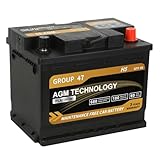
- ✅ Perfect Fit & Compatibility: BCI Group Size 47 (H5), 12V 60Ah, 680CCA, 100RC. Dimensions: 9.52" L x 6.89" W x 7.48" H. Terminal: Tapered terminal (Left negative (-), Right positive (+)). Ensure proper fit by comparing the size, terminal position, and CCA with your original battery. This ensures compatibility and avoids any fitment issues for your vehicle.
- ✅ Reliable Starting Power in All Conditions: Delivers 680 Cold Cranking Amps (CCA) for reliable engine starts, even in freezing weather. This automotive battery is built to perform consistently within a wide temperature range from -22°F to 158°F, withstanding short-term extremes from -40°F to 75°F, ensuring maximum performance no matter the weather.
- ✅ Advanced AGM Technology for High Performance: Specially designed for vehicles with start-stop technology and those requiring greater power, this AGM battery delivers up to 2X the cycle life of conventional batteries. With its high-density negative paste, it ensures improved conductivity, longer battery life, and faster recharge times. Maintenance-free design—no need to add liquid or water.
- ✅ Durable & Safe Design: This group 47 battery is 18X more vibration-resistant than standard batteries, ensuring a longer service life and reliable performance. Its leak-proof, non-spillable design offers enhanced safety, and the absence of free acid guarantees stable performance, preventing acid leakage and internal corrosion. Ideal for tough conditions.
- ✅ Not for Deep Cycle Applications: Please note that this is a starting battery and is not designed for deep-cycle applications such as solar or marine use. It is ideal for vehicles with higher electrical accessory loads or those that need a high CCA starting battery with enhanced cyclic performance. Verify that the battery type and specifications match your vehicle's requirements.
What this means if you are shopping for an EV
Do not make the decision using “EV versus gas” alone. Screen the specific model and model year instead.
- Check the model’s reliability history. Category averages conceal large differences between vehicles. Look for model-specific Consumer Reports data where available, along with owner complaints and long-term tests from reputable sources.
- Be cautious with first-year vehicles and major redesigns. If reliability is your top priority, a later production year with a documented history is usually a safer bet than a brand-new platform.
- Search for recalls and service campaigns. Check the vehicle identification number with the manufacturer and the relevant government recall database for your country. A recall is not the same as a general reliability statistic, but an unresolved safety recall is a reason to pause.
- Investigate charging-system complaints. Confirm whether the model has known onboard-charger, charging-control-unit, software, or charging-port issues. Ask whether applicable repairs have been completed.
- Review battery and high-voltage warranty terms. Check the time, mileage, coverage conditions, capacity provisions, and exclusions. Do not assume that every battery-related component has identical coverage.
- Inspect the low-voltage system too. EVs have a separate low-voltage electrical system in addition to the high-voltage traction battery. A 12-volt issue can cause warning messages or prevent the vehicle from operating even when the main battery is charged.
- For a used EV, obtain an independent inspection. Ask for diagnostic checks appropriate to that model, charging performance, service records, warning-light history, and evidence of accident or water damage. A generic scan tool may not reveal manufacturer-specific high-voltage faults.
- Consider your charging situation. Home charging, public-charger availability, connector compatibility, electrical-panel capacity, and backup options affect practical ownership more than a national average reliability percentage.
Can a portable charger reduce EV reliability risk?
A portable EV charger can be useful as a convenience or backup charging option when the vehicle and electrical supply are compatible. It may help if a home charger is unavailable, if you travel to a location with a suitable outlet, or if you want a second charging setup.
It cannot repair a failed ICCU, battery, charging port, software system, high-voltage component, or onboard charger. If an EV refuses to charge, loses power, displays a high-voltage warning, or behaves abnormally, stop treating the issue as an accessory problem and follow the owner’s manual and manufacturer or qualified EV-service guidance.
Before buying any portable EVSE, verify all of the following:
What’s actually slowing this PC down?
Pick the symptom - the matching free tool is one click away.
- The vehicle’s connector, such as CCS, NACS, or SAE J1772 where applicable
- Whether the unit is Level 1, Level 2, or compatible with both
- The outlet type and circuit rating at the location where it will be used
- The charger’s voltage and amperage limits
- Whether the vehicle can accept the advertised charging rate
- Weather, grounding, thermal, and installation requirements
A J1772 cable is a narrower accessory option for vehicles and plug-in hybrids that use that connector, but it is still not a substitute for diagnosing a vehicle fault. Do not use an adapter or cable simply because its plug appears to fit; confirm the vehicle, cable, adapter, outlet, and charging equipment are designed to work together.
Best Value
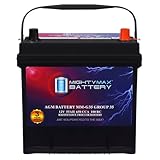
- Fast Starting Power: This 12V 55Ah 650 CCA delivers strong, steady starts is ready for any weather in any season.
- Made to Last: With its 100-minute Reserve Capacity supports longer run times and a longer overall battery lifespan.
- All Power, No Mess AGM Design: Sealed and spill-proof, the MM-G35 is built with high discharge output and deep discharge recovery to keep power steady when it counts.
- Strength That Starts on the Inside: The rugged construction resists shock, vibration, and harsh conditions, delivering reliable performance across a wide range of temperatures and tough environments.
- Tested Tough & Certified Safe: Mighty Max batteries are built in an ISO-certified facility and meet CE standards for quality, safety, and reliability
What about an EV diagnostic scanner?
An EV-compatible OBD-II diagnostic adapter may help a technically inclined owner read selected vehicle data or manufacturer-supported fault information. Its usefulness varies substantially by vehicle, app, software, and access level.
Generic OBD-II scanners should not be assumed to diagnose the high-voltage battery, battery-management system, inverter, onboard charger, or other manufacturer-specific systems. A code can also be misunderstood, cleared without fixing the cause, or interpreted unsafely. Use professional diagnosis for high-voltage, charging, insulation, power-loss, smoke, heat, or other safety-critical symptoms.
So, are gas cars more reliable than EVs?
Some recent Consumer Reports survey groups showed more reported problems for EVs than for gas-only vehicles, but the answer is not universal and the percentage is not fixed. The 2023 survey produced the 79% figure; the 2024 comparison was 42%; the 2025 survey reported about 80% for EVs and PHEVs using a different model-year population.
Crashes, No Sound, or Screen Glitches?
Random freezes, missing sound and display glitches usually trace back to one bad driver. Find and replace yours safely.Free scan · under a minuteWindows Errors? Fix Them Before They Spread
Repair common Windows errors and clear accumulated junk for a smoother, more stable PC - no reinstall needed.Free scan · no reinstallThe practical conclusion is narrower and more useful: EVs can reduce routine maintenance while presenting reliability risks in newer platforms, software, electronics, charging systems, and other components. If dependable ownership matters more to you than having the newest technology, prioritize an established model and model year with strong field history, completed recalls, clear warranty coverage, and accessible service support.
Frequently Asked Questions
No. In its November 2023 survey, Consumer Reports reported that new EVs had a 79% higher weighted rate of owner-reported problems than internal-combustion vehicles on average. The figure does not mean 79% of EVs failed or that 79% of owners had a problem.
Did Consumer Reports say 79% of EVs have reliability problems?
Not necessarily. The U.S. Department of Energy says EVs generally need less scheduled maintenance because they have fewer moving parts and fluids and use regenerative braking. However, an EV can still have unexpected problems involving software, electronics, charging equipment, climate systems, or other components.
Do EVs cost more to maintain than gas cars?
No. The 79% figure covered a broad set of up to 20 trouble areas and was weighted toward some serious problems. It was not a battery-failure rate or a repair-cost comparison.
Are EV batteries failing 79% more often?
Research the exact model and model year, check recalls and service campaigns, review battery and high-voltage warranty terms, inspect charging performance, obtain service records, and arrange a model-appropriate diagnostic inspection. Generic OBD-II tools may not expose all high-voltage or manufacturer-specific faults.
What should I check before buying a used EV?
The Bottom Line
Bottom line: Consumer Reports really did report 79% more problems for EVs than gas-powered vehicles in its 2023 survey, but that was a dated, weighted owner-reported problem comparison—not a 79% breakdown rate or a battery-failure statistic. Later results changed, so shop by exact model and model year, not by the EV label alone. EVs may need less routine maintenance while still having more early-platform, software, electronics, or charging-related problems.
Quick Recap
Product prices and availability are accurate as of the date/time indicated and are subject to change. Any price and availability information displayed on Amazon at the time of purchase will apply.