Free tools Windows power users keep installed
One-click scans. No signup required.
China’s C949 is not a flying supersonic jet yet. It is a proposed COMAC passenger-aircraft concept whose published design targets are approximately Mach 1.6, about 11,000 km of range, and a modeled sonic-boom level of 83.9 perceived-level decibels (PLdB). Compared with the roughly 7,200-km range and approximately 105-PLdB boom commonly cited for Concorde, those figures support the shorthand “50% more range, 95% less sound”—but only if the claims are described as design-study results, not demonstrated operating specifications.
China’s C949 is not a flying supersonic jet yet. It is a proposed COMAC passenger-aircraft concept whose published design targets are approximately Mach 1.6, about 11,000 km of range, and a modeled sonic-boom level of 83.9 perceived-level decibels (PLdB). Compared with the roughly 7,200-km range and approximately 105-PLdB boom commonly cited for Concorde, those figures support the shorthand “50% more range, 95% less sound”—but only if the claims are described as design-study results, not demonstrated operating specifications.
China’s C949 claim, in plain English
| Headline claim | What the available evidence supports |
|---|---|
| “50% more range” | An approximately 11,000-km target versus roughly 7,200 km for Concorde—about 52.8% more by simple arithmetic. |
| “95% less sound” | A reported comparison between a modeled 83.9 PLdB C949 sonic boom and an approximately 105-PLdB Concorde boom. PLdB is logarithmic and is not an ordinary household sound reading. |
| “China’s supersonic jet” | COMAC’s proposed C949 supersonic-airliner concept, not a verified aircraft in airline service. |
| Mach 1.6 | A reported design cruise target, slower than Concorde’s approximately Mach 2.0–2.2 operating range but potentially easier to balance against drag, fuel use, heat, and noise. |
| 2049 entry into service | A long-term roadmap aspiration reported in secondary coverage, not a firm delivery or certification date. |
What is the C949?
The C949 is a proposed supersonic passenger aircraft associated with the Commercial Aircraft Corporation of China, or COMAC. COMAC-affiliated researchers described the concept in work associated with the March 2025 issue of Acta Aeronautica et Astronautica Sinica. Reporting published in March and April 2025 connected that work with the C949’s Mach 1.6 speed target, 11,000-km range target, and low-boom calculations.
The important status distinction is that the C949 remains a concept or preliminary design in the evidence reviewed here. There is no reliable evidence that a C949 prototype has completed a first flight, passed a public flight test, received type certification, secured airline orders, or become commercially available. The figures describe aerodynamic design and numerical assessment—not the measured performance of a finished aircraft.
#1 Best Overall
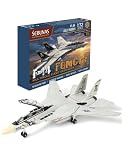
- Experience the legendary F-14 Tomcat through a highly detailed model designed for aviation collectors and hobby enthusiasts. The finished model becomes a striking desktop or showcase centerpiece.
- This 3D puzzle is designed for beginner-level assembly enthusiasts, offering an immersive hands-on building experience that helps cultivate patience, concentration, and mechanical problem-solving skills.
- This product is manufactured using high-quality, environmentally friendly plastic and employs an ultra-fine etching process to ensure durability, structural precision, and realistic aircraft details.
- Encourages understanding of aircraft engineering concepts while improving hand-eye coordination and spatial thinking through engaging mechanical assembly.
- Ideal gift for childs, engineers, collectors, model builders, and puzzle lovers for birthdays, Children’s Day, Christmas, or special hobby occasions.
That distinction matters because supersonic-airliner specifications can change substantially between an early configuration and a certifiable production aircraft. Engines, structure, landing gear, cabin systems, thermal protection, control laws, payload, fuel reserves, and regulatory requirements can all force changes to the shape and performance targets.
How the C949 gets to “50% more range”
The reported C949 range target is approximately 11,000 km. The comparison figure for Concorde is approximately 7,200 km. The difference is about 3,800 km:
(11,000 − 7,200) ÷ 7,200 × 100 ≈ 52.8%
So “50% more range” is a reasonable rounded description of the two published comparison figures. It does not mean that COMAC has demonstrated a 50% improvement in airline service, or that every C949 configuration would fly 11,000 km with a full commercial payload.
Range is especially difficult to compare between a design study and a retired aircraft. Concorde was an operational, certified aircraft with known route restrictions, payload limits, fuel reserves, airport requirements, and airline procedures. The C949 number is a future design target. A valid operational comparison would need to specify at least the payload, passenger and baggage assumptions, fuel reserves, cruise altitude, route profile, diversion rules, and atmospheric conditions.
Why 11,000 km would be significant
If a production aircraft could achieve the target with a commercially useful payload and certified reserves, it would extend the potential market well beyond Concorde’s best-known transatlantic niche. Longer Asia–North America and Asia–Europe routes could become candidates in principle. That is an inference from the stated range, not a published COMAC route plan.
Supersonic range is hard because several penalties arrive at once. At supersonic speed, the aircraft must manage:
- Wave drag: shock waves consume energy and make efficient cruise more difficult.
- Propulsion efficiency: engines must operate effectively across takeoff, climb, cruise, and high-speed conditions.
- Fuel and structural mass: more fuel increases takeoff weight, while the structure must withstand aerodynamic and thermal loads.
- Heat: prolonged supersonic flight heats the airframe and affects materials, joints, windows, and systems.
- Payload: range is not meaningful if it can be reached only by sacrificing passengers, baggage, reserves, or useful cabin equipment.
Reducing drag can improve range, but a low-boom shape may create aerodynamic compromises of its own. The aircraft therefore has to be optimized as a complete system rather than judged by one impressive number.
What does “95% less sound” actually mean?
The reported C949 sonic-boom result is 83.9 PLdB, compared with approximately 105 PLdB for Concorde. The numerical gap is about 21.1 PLdB. Some coverage turns that much lower modeled pressure-wave level into the phrase “95% less sound” or “95% quieter.”
That wording needs qualification. PLdB is a logarithmic perceived-level metric, not a percentage scale. A drop of 21.1 PLdB does not mean that 105 minus 83.9 produces a sound that is simply 95% quieter in the way a fuel tank that is 95% empty is a straightforward physical quantity. Nor does 83.9 PLdB mean that an ordinary phone or household sound meter would show 83.9 dB.
Rank #2

- Iconic B-2 Spirit Stealth Bomber Replica: A highly detailed 1:280 scale model of the legendary B-2 Spirit, the U.S. Air Force’s advanced long-range stealth bomber, developed to replace the aging B-52 fleet.
- Die-Cast Metal Construction: Made from high-quality die-cast metal with select plastic parts, this model captures the B-2’s unique boomerang shape and stealth-focused design, perfect for aviation enthusiasts.
- Stealth & Power in One Model: Accurately replicates the bomber’s specialized radar-evading shape and capability to deliver both nuclear and conventional payloads, including bombs and rotary launchers.
- Display-Friendly Size: Measures approximately 3 inches long with a wide 7 3/8 inch wingspan, ideal for desktops, shelves, or as part of a military aircraft collection.
- Includes Custom Display Stand: Comes with a sturdy plastic stand for dynamic display in flight mode, recommended for adult collectors and military aviation fans aged 14 and up.
The more accurate description is: the C949 study modeled a substantially lower perceived sonic-boom level than the comparison value reported for Concorde. The “95%” figure is a shorthand interpretation of the difference, not a directly demonstrated percentage reduction measured from a flying C949.
It is also misleading to compare the boom directly with the noise of a hairdryer. That analogy is journalistic. A sonic boom is a short pressure-wave event whose perceived character depends on its waveform, duration, frequency content, altitude, weather, observer location, and the metric used. A hairdryer is a continuously operating household appliance measured in a different acoustic context. A similar headline number would not make the two sounds equivalent.
How the proposed design is intended to reduce the sonic boom
Conventional supersonic aircraft can generate a sharp “N-wave” pressure signature. Shock waves from different parts of the aircraft can combine as they travel toward the ground, producing the abrupt double impulse commonly associated with a sonic boom.
Recommended Free Tools
The C949 concept is reported to use an elongated, carefully shaped airframe intended to distribute those shock waves and reduce their peak pressure rather than allowing them to reinforce one another. Reports have described a curved or reverse-camber section through the fuselage, swept wings, canards, a V-tail, and rear-mounted engines. The exact configuration should be treated with some caution because detailed descriptions come mainly through secondary reporting, but the underlying design objective is clear: reshape the pressure signature before it reaches the ground.
This is a broader low-boom engineering approach, not a uniquely Chinese principle. NASA’s X-59 experimental aircraft is pursuing a similar goal: replacing the conventional boom with a quieter, less disruptive “thump.” NASA intends to use the aircraft and community-response data to help inform future decisions about overland supersonic flight.
Aircraft shape is only one part of the problem. Chinese academic research on supersonic transport also identifies trajectory, altitude, atmospheric propagation, uncertainty in boom prediction, wind-tunnel measurements, multidisciplinary optimization, propulsion integration, and flight-test validation as continuing challenges. A shape that produces a promising result in one computer model or atmospheric condition does not automatically produce the same ground-level signature everywhere along a route.
The C949’s boom target is not yet a regulatory solution
The sonic boom is a regulatory and community-acceptance problem as much as an engineering problem. In the United States, civil supersonic flight over land has long been restricted because of sonic-boom disturbance. Concorde consequently operated largely on overwater supersonic routes rather than freely crossing populated land areas at cruise speed.
Crashes, No Sound, or Screen Glitches?
Random freezes, missing sound and display glitches usually trace back to one bad driver. Find and replace yours safely.Free scan · under a minutePC Slower Than It Used to Be?
A free scan shows the junk files, broken settings and background clutter dragging Windows down - then fixes them in one click.Free scan · Windows 10 & 11A credible low-boom aircraft could give regulators a reason to reconsider those rules, but a simulated 83.9-PLdB result would not authorize commercial overland flight. Authorities would still need validated flight measurements, a defined operating envelope, environmental analysis, community-response data, airport-noise assessments, and an aircraft certification basis.
There are several different noise questions to answer:
Rank #3

- Precision Tactical Aviation Design – The C-130 Hercules accurately captures the iconic high-wing turboprop configuration, multi-panel rear cargo ramp, and distinctive "Hercules hump" cockpit contour. Features include detailed wing-mounted Allison T56 engines, authentic U.S. Air Force tactical gray camouflage, and modular cargo bay with optional troop seating or vehicle loading configurations, representing the world’s premier tactical airlifter that has delivered critical logistics support from Vietnam to Afghanistan across six decades of service
- Superior Detail & Craftsmanship – Expertly crafted with die-cast alloy and precision plastic components, this 1:200 C-130 model authentically captures the airlifter's rugged profile with its high-wing design and four-engine configuration. The hybrid construction ensures crisp contours, including the cargo ramp and six-blade props, while the flawless finish replicates the operational gray scheme—delivering museum-quality realism
- Ready for Immediate Display - Comes fully assembled with a included display stand. Simply unbox it to showcase this engineering marvel on your desk, shelf, or in a cabinet—no tools or glue required
- Collector-Quality Presentation - Features detailed landing gear, weapon bay outlines, and a presentation base. It’s the perfect gift for aviation enthusiasts, history buffs, or anyone who appreciates advanced military technology
- Thoughtful & Hassle-Free Presentation - The model is securely packaged in a protective box, ensuring it arrives in perfect condition. It’s the complete, thoughtful gift solution—no need for separate wrapping or last-minute shopping stress
- How loud is the cruise sonic boom at ground level?
- How consistent is it across different weather and atmospheric conditions?
- How does it affect people indoors, outdoors, and in dense urban areas?
- What happens during climb, descent, approach, and other subsonic phases?
- How loud are the engines during takeoff and landing?
- Can the aircraft maintain the low-boom signature across its full payload and maneuvering envelope?
The C949’s reported result should therefore be viewed as an attempt to address one of the biggest historical obstacles to passenger supersonic travel—not proof that the obstacle has already been removed.
Why Mach 1.6 instead of Concorde’s higher speed?
Concorde is often remembered for its approximately Mach 2 cruise, with maximum speeds generally cited in the Mach 2.0–2.2 range. The C949’s reported Mach 1.6 target is slower, but maximum speed is not the only measure of a useful airliner.
Quick wins for a faster PC:
Scan for outdated or missing drivers - takes under a minuteDriver Scan →Repair Windows errors before they cause bigger problemsFix Now →Fix the driver behind crashes, sound loss and screen glitchesFind Drivers →A lower supersonic cruise speed could help designers balance:
- fuel consumption and range;
- wave drag and aerodynamic efficiency;
- skin temperature and structural demands;
- engine design and reliability;
- sonic-boom strength; and
- the cost of operating long commercial routes.
Mach 1.6 would still substantially reduce travel time compared with a conventional subsonic airliner. Whether it would offer a viable airline business depends on more than speed: fuel burn, maintenance, airport compatibility, ticket demand, route permissions, passenger capacity, and the cost of meeting noise and emissions rules would all matter.
What would have to happen before the C949 became a real airliner?
The current claims come from design work and numerical assessment. To become a passenger aircraft, the concept would need to progress through a long chain of engineering and regulatory milestones:
- Configuration refinement: settle the airframe, engines, inlets, control surfaces, cabin, fuel system, and landing gear.
- High-fidelity aerodynamic analysis: verify lift, drag, stability, control authority, shock-wave behavior, and performance across the flight envelope.
- Wind-tunnel and ground testing: compare calculations with measured aerodynamic and acoustic data.
- Propulsion integration: demonstrate that the engines and inlets work reliably from takeoff through supersonic cruise without unacceptable distortion, noise, or fuel penalties.
- Structural and thermal validation: prove that the airframe can withstand repeated aerodynamic loads, vibration, pressurization cycles, and heating.
- Prototype flight testing: establish real speed, range, handling, boom, climb, descent, and engine performance.
- Payload and reserve verification: show that the range target remains meaningful under commercial passenger, baggage, fuel-reserve, and diversion assumptions.
- Certification and operations: meet applicable safety, noise, emissions, airport, and overland-flight requirements.
Until those steps produce public evidence, 11,000 km and 83.9 PLdB should remain labeled as targets or modeled results.
What does 2049 mean?
Some April 2025 reports associated a possible C949 market introduction with 2049. That date should not be presented as a confirmed service-entry schedule. It is better understood as a long-term planning or roadmap aspiration.
As of the evidence reviewed through August 12, 2026, no reliable source establishes a completed C949 prototype, a public C949 first flight, a certified production version, or a fixed airline delivery date. A future program can change direction, slip, be redesigned, or remain a research project for many years. The 2049 reference is therefore much weaker evidence than a formal launch customer, a prototype under construction, or a published flight-test program.
Independent reader supportYour contribution helps us test, update, and keep practical guides available for everyone.Where the C949 fits in the supersonic-airliner revival
The C949 is part of a wider attempt to make passenger supersonic travel practical again after Concorde. NASA and Lockheed Martin’s X-59 is an experimental low-boom aircraft intended to gather technical and public-response data. Commercial companies such as Boom Supersonic are pursuing different aircraft configurations and business models. Chinese researchers are contributing published work on supersonic aerodynamics, sonic-boom prediction, flight procedures, and optimization.
Rank #4

- Legendary F-14 Tomcat Replica: A 1:160 scale die-cast model of the iconic F-14 Tomcat, the supersonic, long-range interceptor fighter aircraft used by the U.S. Navy for air superiority and defending carrier battle groups against anti-ship missiles.
- Jolly Rogers VFA-103 Edition: Features the striking Jolly Rogers livery with the sinister white skull-and-crossbones insignia, adopted by the US Navy Strike Fighter Squadron 103 (VFA-103) in 1995, marking their legacy.
- Die-Cast Metal Construction: Built from durable die-cast metal with select plastic components, offering exceptional detail and realistic craftsmanship for collectors and aviation enthusiasts.
- Variable Geometry Wings: The model captures the F-14’s signature swing-wing design, with wings that automatically adjust between 20 and 68 degrees for high-speed and low-speed flight, though the wings on this model are stationary for display purposes.
- Perfect Display Size: Measures approximately 4 3/4 inches long with a 2 7/8 inch wingspan, ideal for display on shelves, desks, or in a military aviation collection. Recommended for adult collectors and fans aged 14 and up.
These projects do not represent one standardized path back to supersonic service. They differ in speed, range, passenger capacity, engine strategy, noise objective, regulatory approach, and commercial timetable. The C949’s reported combination of Mach 1.6 speed, long range, and low boom is ambitious precisely because it tries to address several historical weaknesses at once.
What’s actually slowing this PC down?
Pick the symptom - the matching free tool is one click away.
It is also why the aircraft should not be treated as a finished competitor to Concorde. Concorde flew paying passengers for years; the C949 has so far been described through design-study reporting. The comparison is useful for showing the scale of the ambition, but it is not an apples-to-apples operational benchmark.
Further reading on the Concorde benchmark
For historical context rather than evidence about the C949, see Mike Bannister’s Concorde history, a book focused on the aircraft, its operation, and the people who flew it. This is an affiliate further-reading recommendation.
The accurate takeaway
COMAC’s C949 is best described as a Mach 1.6 supersonic-airliner concept with a reported range target of approximately 11,000 km and a modeled sonic-boom level of 83.9 PLdB. Those figures are roughly 50% beyond the commonly cited Concorde range and substantially below its reported boom level, which explains the “95% less sound” headline.
But the aircraft has not been shown to have flown. The range, noise, route potential, certification prospects, and 2049 timing remain matters for further design work, testing, and regulation. The C949 is an ambitious proposal aimed at solving the two problems that helped end Concorde—limited practical range and disruptive sonic booms—not a proven replacement already ready for passengers.
The Tool Desk
Outbyte PC Repair FREEClear out junk files and repair common Windows errorsFree Scan →Outbyte Driver Updater FREEScan for outdated or missing drivers - takes under a minuteDriver Scan →Sources and reporting context
The central figures originate in COMAC-affiliated research associated with the March 2025 issue of Acta Aeronautica et Astronautica Sinica and reporting published in March and April 2025. The wider low-boom and regulatory context comes from NASA’s X-59 material and Chinese academic work discussing sonic-boom prediction, uncertainty, atmospheric propagation, multidisciplinary optimization, and flight-test validation.
Frequently Asked Questions
Has China’s C949 supersonic jet flown?
No. The available evidence describes the C949 as a concept or preliminary design. It does not establish a completed prototype, first flight, certification, or commercial availability.
How much range is the C949 supposed to have?
The reported target is approximately 11,000 km, compared with roughly 7,200 km commonly cited for Concorde. That is about 52.8% more by simple arithmetic, which is why reports round it to 50%.
Is the C949 really 95% quieter than Concorde?
The C949’s reported value is 83.9 perceived-level decibels, or PLdB, versus approximately 105 PLdB for Concorde. “95% less sound” is a shorthand interpretation of that much lower modeled boom level, not a simple 95% subtraction from a normal decibel reading.
Do these 3 things before closing this tab:
1Fix the driver behind crashes, sound loss and screen glitches2Clear out junk files and repair common Windows errors3Scan for outdated or missing drivers - takes under a minuteWill the C949 enter service in 2049?
Some reporting has associated a possible market introduction with 2049, but that is a long-term roadmap aspiration rather than a confirmed delivery or certification date.
The Bottom Line
Bottom line: The C949’s “50% more range, 95% less sound” figures are ambitious modeled design targets, not tested specifications. The concept reportedly aims for about 11,000 km at Mach 1.6 and an 83.9-PLdB sonic boom, but there is no reliable evidence as of August 12, 2026 that a C949 prototype has flown or that 2049 is a firm service date.
Quick Recap
Product prices and availability are accurate as of the date/time indicated and are subject to change. Any price and availability information displayed on Amazon at the time of purchase will apply.




