Free tools Windows power users keep installed
One-click scans. No signup required.
The Chevy Camaro IROC-Z was Chevrolet’s answer to the question of how to make an American performance coupe exciting again after the malaise era. Introduced for 1985 as the B4Z Sport Equipment package on the Z/28, it added a lowered and retuned suspension, wider wheels and tires, chassis bracing, stiffer steering, fog lamps, aggressive aero, and unmistakable IROC graphics.
It was not the actual IROC race car. It was a production third-generation Camaro that borrowed the racing series’ credibility and visual identity—and that combination of genuine hardware, V8 power, attainable positioning, and 1980s drama is why the IROC-Z became an icon.
As an Amazon Associate I earn from qualifying purchases.
What the IROC-Z actually was
The production IROC-Z was a third-generation Chevrolet Camaro performance package and nameplate, not a street version of the purpose-built IROC race car. Chevrolet introduced it for the 1985 model year as Regular Production Option B4Z, a Sport Equipment package applied to the Z/28. Its recipe combined a lowered and retuned suspension, wider wheels and tires, steering and chassis upgrades, fog lamps, aerodynamic bodywork, and distinctive graphics with the Camaro’s available V8 power.
That distinction matters. The street car used production steel unibody construction and road-going equipment. The competition cars used tube-frame chassis, fiberglass bodywork, and a roughly 470-horsepower 355-cubic-inch V8, according to IROC Motorsports’ historical account. The IROC-Z borrowed the series’ identity and visual language; it did not share the race car’s construction or engine.
#1 Best Overall
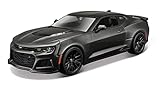
- Officially Licensed Replica – Authentic styling and branding from the original manufacturer
- Die-Cast Metal Construction – Durable metal body with detailed plastic components
- Highly Detailed Design – Realistic exterior styling and interior details
- Free-Rolling Wheels – Smooth movement for display or play
- Perfect for Collectors & Kids – Great gift for automotive fans
At a glance
| Question | Answer |
|---|---|
| Factory era | 1985 through 1990 model-year-era IROC-Z branding |
| Original identity | B4Z Sport Equipment package added to the 1985 Z/28 |
| Core performance formula | Rear-wheel drive, V8 power, available five-speed manual, wider tires, lower suspension, and chassis tuning |
| Headline early engine | 5.0-liter, 305-cubic-inch LB9 Tuned Port Injection V8; the 1985 version was rated at 215 horsepower in the documented automatic configuration |
| Later engine choices | 5.0-liter TPI V8 remained central; a 5.7-liter, 350-cubic-inch V8 was also offered later depending on year and configuration |
| Why it mattered | It made fuel injection, serious tire and suspension hardware, and motorsport branding feel attainable in an American performance coupe |
Why the third-generation Camaro was ready for a comeback
The IROC-Z arrived during a crucial recovery for the Camaro. The third-generation Camaro debuted for 1982 as a major technical and styling reset after the low-output malaise era. Compared with the preceding generation, it shed substantial weight, adopted a more aerodynamic shape, and made features such as fuel injection and a five-speed manual transmission part of the Camaro’s performance conversation.
Chevrolet therefore had more than a new decal package to sell. The underlying platform was lighter, more modern, and better suited to handling than the image of a traditional big-engine coupe suggested. The IROC-Z gave that platform a compelling public identity at exactly the moment Chevrolet was trying to restore the Camaro’s performance credibility.
Its timing also helped it stand out. A V8 Camaro with more than 200 horsepower, rear-wheel drive, wide performance tires, and a manual-transmission option felt dramatically different from the softly powered cars that had defined the worst years of the 1970s and early 1980s. The IROC-Z did not need supercar acceleration to seem important; it represented a broader return of competence and ambition.
The International Race of Champions connection
IROC stood for the International Race of Champions, an all-star racing series designed to compare drivers from different disciplines in identical machinery. Because every competitor drove essentially equal equipment, the series was intended to determine a champion of champions rather than reward one driver’s access to a superior car.
Chevrolet Camaros were used in the series during the period associated with the street IROC-Z. The official IROC history records Cale Yarborough as the 1984 champion, Harry Gant in 1985, Al Unser Jr. in 1986, and Geoffrey Bodine in 1987. That association gave the Camaro name a direct connection to recognizable professional drivers and a racing format built around equal machinery.
But the branding should not be overstated. A production IROC-Z was a road car with a unibody shell, emissions equipment, street tires, interior trim, and equipment intended for everyday use. The race car was a specialized competition machine. Calling the Camaro race-inspired or motorsport-branded is accurate; calling it a street-legal IROC race car is not.
What B4Z added to the Camaro
The defining feature of the IROC-Z was that its visual drama had mechanical support. Hagerty’s historical report describes the 1985 package as including a lowered ride height, sport suspension, stiffer steering, fog lights, unique graphics, and a claimed 0.92-g skidpad result. Period-oriented descriptions also identify specially valved dampers, larger sway bars, chassis or frame bracing, wider wheels, and thicker tires as central to the car’s character.
What’s actually slowing this PC down?
Pick the symptom - the matching free tool is one click away.
Handling hardware
- Lower ride height: The body sat closer to the road, giving the Camaro a more purposeful stance and contributing to its handling focus.
- Retuned suspension: Springs, dampers, and sway bars were selected for more controlled body motion than a standard road-oriented setup. Descriptions of the package identify Bilstein or Delco-Bilstein shock calibration among the street car’s track-inspired hardware.
- Chassis bracing: Additional bracing helped support the third-generation Camaro’s unibody platform under cornering loads.
- Wider wheels and tires: The larger contact patch was central to the IROC-Z’s performance message. Street-car histories identify 16-inch alloy wheels as part of the package’s recognizable specification, although exact equipment should always be checked by model year and build.
- Steering and traction: Stiffer steering and, depending on configuration, limited-slip traction helped make the car more than a straight-line V8 coupe.
The often-repeated 0.92-g figure should be treated as a period claim associated with the 1985 car, not as a universal result for every IROC-Z or a directly comparable modern instrumented test. Tires, alignment, engine and transmission configuration, test method, and vehicle condition all affect the number.
Rank #2

- Authentic Fast X Design – Features the sleek and powerful 2024 Chevrolet Camaro ZL1 1LE from the Fast & Furious franchise.
- Highly Detailed Interior and Engine – Showcases intricate interior details and a realistic engine for maximum authenticity.
- Interactive Features – Includes opening doors, hood, and trunk for dynamic display and play possibilities.
- Premium Diecast Construction – Built with high-quality diecast metal and free-rolling rubber tires for durability and a premium feel.
- Jada Toys – Known for delivering screen-accurate, Hollywood-inspired diecast collectibles of unmatched quality.
The styling was part of the engineering story
The IROC-Z communicated its intentions from across a parking lot. A deeper front air dam, lower ground effects, fog lamps, rear spoiler treatment, wide tires, and IROC-Z door graphics transformed the third-generation Camaro’s already angular shape into one of the most recognizable performance designs of the 1980s.
Those parts were not merely cosmetic in the cultural sense, even when an individual piece contributed more to appearance than measurable speed. The aero treatment, wheel-and-tire package, lower stance, and graphics worked together as a visual explanation of what the car was supposed to do. In an era of geometric body add-ons, contrasting colors, and bold lettering, the IROC-Z looked like a competition-derived machine while still being usable as a street coupe.
Engines and transmissions: why the year matters
There is no single horsepower figure that describes every IROC-Z. Output varied with model year, engine, transmission, calibration, and rating convention. The 1985 car is the clearest example of why a badge alone is not enough to identify a powertrain.
PC Slower Than It Used to Be?
A free scan shows the junk files, broken settings and background clutter dragging Windows down - then fixes them in one click.Free scan · Windows 10 & 11Crashes, No Sound, or Screen Glitches?
Random freezes, missing sound and display glitches usually trace back to one bad driver. Find and replace yours safely.Free scan · under a minute| Period | What the documented evidence shows | Important qualification |
|---|---|---|
| 1985 | The 5.0-liter, 305-cubic-inch LB9 Tuned Port Injection V8 was rated at 215 horsepower and documented with a four-speed automatic. A 190-horsepower carbureted 305 with a five-speed manual was also available for part of the model year. | Not every 1985 IROC-Z had the 215-horsepower TPI engine, and the IROC-Z badge does not by itself establish the transmission. |
| 1986-1987 | The TPI-equipped third-generation Camaro performance formula continued as Chevrolet developed the range, while the IROC identity became increasingly familiar. | Exact output and equipment should be verified against the specific year and build. |
| 1988 | Chevrolet’s official dealer order guide listed the Camaro IROC-Z and IROC-Z convertible, including the 5.0-liter LB9 TPI engine. A representative 305 TPI specification cited in period-oriented coverage is 220 horsepower and 290 pound-feet of torque. | A 350-cubic-inch V8 was also offered, but the manual-transmission configuration described in that 1988 coverage was not the 350 combination. |
| 1989-1990 | The IROC-Z name remained associated with late third-generation Camaros during the transition away from the Chevrolet-IROC relationship. | Some 1990 cars were sold because model-year production began in late 1989; later cars reverted to Z/28 badging after the IROC branding ended. |
The LB9’s importance was not just its output number. Tuned Port Injection placed electronic fuel injection at the center of the Camaro’s performance identity and helped move the American V8 away from the carbureted, low-output image that had dominated the previous era. At the same time, the availability of a five-speed manual kept the Camaro connected to drivers who wanted more involvement than an automatic could provide, even though the precise engine-and-transmission pairings changed by year.
How the IROC-Z developed from 1985 to 1990
1985: the debut
Chevrolet introduced the IROC-Z as B4Z, a Sport Equipment package applied to the Z/28. The combination of the 305 V8, aggressive bodywork, fog lamps, graphics, lower suspension, and improved tire and chassis hardware gave the Camaro a new level of visual and mechanical credibility.
1986 and 1987: building recognition
The package continued as Chevrolet refined the third-generation Camaro lineup. During this period, a convertible version became part of the model’s broader appeal, and the IROC name benefited from the Camaro’s visibility in the racing series. The street car was no longer just a specification exercise; it had become a familiar performance identity.
1988: the nameplate at its most recognizable
Chevrolet’s 1988 dealer-order documentation listed both the IROC-Z and IROC-Z convertible in the factory lineup. Retrospective coverage commonly treats 1988 as a particularly recognizable year because the IROC-Z occupied the prominent performance position in the Camaro range rather than appearing only as a secondary package attached to the Z/28. The 305 TPI combination also represented the period’s move toward stronger, more consistent V8 performance.
1989 and 1990: the branding changes
The IROC-Z association continued into the late third-generation years, but Chevrolet ended its relationship with the IROC series. The result is a confusing boundary for buyers and historians: some cars identified as 1990 model-year vehicles were sold after production began in late 1989, while later third-generation cars returned to Z/28 badging. For a factory-correct description, 1985-1990 is the safest IROC-Z model-year-era range, with the licensing transition clearly noted.
Rank #3

- Accurate Scale Model Kit
- Paints and Glue Required
- Easy to Build
- Detailed Instructions Included
- This is the 1: 25 Scale 68 Camaro Z/28 Plastic Model Building Kit by AMT, Item No 868, This is not a toy
Why it redefined American sports-car performance
The IROC-Z did not redefine performance by matching an exotic car’s acceleration or refinement. It redefined the expectation of what an attainable American coupe could combine in one package.
- Electronic fuel injection: The LB9 TPI V8 made modern engine management a visible part of the Camaro’s identity.
- Real handling intent: Lower ride height, calibrated dampers, larger sway bars, bracing, steering changes, and wider tires made cornering a central part of the package.
- Driver involvement: The Camaro continued to offer rear-wheel drive, V8 torque, and a five-speed manual in the range, even though not every year paired every engine with every transmission.
- Attainable positioning: It offered a dramatic, motorsport-linked performance coupe at a far more accessible market position than a contemporary Corvette.
- Instant recognition: The graphics and aero made the car legible to people who might not know its engine code or suspension specification.
This combination helped make performance hardware feel mainstream rather than specialized. Fuel injection, low-profile performance tires, tuned shocks, chassis bracing, and limited-slip traction were no longer ideas reserved for a track car or an expensive European sports coupe. The IROC-Z packaged them in a recognizable American V8 coupe that could serve as transportation, a weekend toy, or a first serious performance car.
What the IROC-Z was like in its own time
The car’s reputation is stronger than its objective modern performance, and both facts can be true. For its introduction period, the IROC-Z was widely regarded as the highest-performance and best-handling Camaro in the range. Its suspension and tire upgrades gave the badge mechanical credibility, while the TPI V8 restored a sense of urgency to the Camaro after the malaise years.
Do these 3 things before closing this tab:
1Repair Windows errors before they cause bigger problems2Fix the driver behind crashes, sound loss and screen glitches3Clear out junk files and repair common Windows errorsBy current standards, however, a third-generation IROC-Z is not fast, quiet, refined, or safe in the way a modern sports coupe is. Its steering feel, braking performance, ride quality, emissions equipment, cabin materials, and crash protection belong to the 1980s. Its appeal comes from the combination of period-appropriate speed, visible hardware, rear-drive character, and a shape that makes its intentions obvious.
That is also why nostalgia alone does not fully explain its staying power. The graphics are memorable, but they were attached to a genuinely meaningful performance recovery. The IROC-Z looked like the 1980s, yet it also represented Chevrolet learning how to make the Camaro matter again.
Buying and restoring a Camaro IROC-Z
Condition and specification matter more than the badge on a replacement fender. A modified third-generation Camaro can be an excellent driver, but it should not automatically be represented as a factory-correct IROC-Z.
What to verify before buying
- Model year and factory identity: Confirm the year, VIN and cowl-tag information, and any surviving B4Z, IROC, build, or sales documentation. The 1985 package origin and the later nameplate transition make year-specific verification especially important.
- Engine and transmission: Do not assume that an IROC-Z has a 305 TPI, a five-speed, or a 350. Confirm the actual engine and transmission combination and compare it with equipment documented for that model year.
- Body and aero originality: Inspect the front air dam, ground effects, spoiler treatment, fog lamps, wheels, and graphics. An IROC-style body kit can be fitted to another third-generation Camaro, so appearance alone is not proof of factory identity.
- Chassis condition: Check for rust, accident repair, poor structural work, and evidence of modifications that changed the suspension or steering from the documented package.
- T-tops and water intrusion: Inspect the T-top panels, seals, surrounding trim, headliner, and interior for signs of leakage or deterioration. T-tops can add collector appeal, but they also make condition especially important.
- Wheels and tires: Confirm that the wheel and tire configuration is appropriate for the year and package. Incorrect replacements may affect both handling and originality.
- Documentation versus presentation: Fresh paint, new decals, and aggressive wheels can make a car look convincing. They cannot replace factory records or a coherent history.
For owners diagnosing an original car or planning a restoration, a third-generation Camaro repair manual can be useful, but fitment must be checked against the exact year, engine, transmission, body configuration, and market. A manual covering 1982-1992 Camaros may span several mechanical and electrical revisions; it is not automatically a complete guide to every IROC-Z.
Restoration parts require unusually careful fitment checks
The IROC-Z’s most visible pieces are also among the easiest to misrepresent. If the original graphics are missing, Camaro IROC-Z replacement decals may help complete a restoration, but verify the year, body style, color, dimensions, supplier accuracy, and whether the product is reproduction or documented original material before buying.
Rank #4
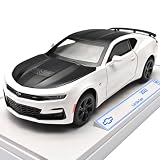
- Premium 1:24 Scale Diecast:High-quality zinc alloy body + ABS interior, true-to-original proportions, perfect for desktop display, collection, or gifting
- Perfect Size for Display & Play:Measured at 7.87 x 3.15 x 2.17 inches (20 x 8 x 5.5 cm), the 1:24 scale Camaro model is neither too big nor too small. It fits perfectly on desktops, shelves, or display cases, and is easy for adults to hold and play with, balancing display value and portability
- High-Quality & Durable Materials: Crafted with a heavy-weight alloy body and ABS plastic interior, the model is sturdy and wear-resistant. The alloy material ensures a solid weight and realistic texture, while the ABS interior adds delicate details, making it suitable for long-term collection and repeated play without easy damage
- Interactive Play Features:Doors, hood, and trunk openable; built-in light & sound effects; pull-back power for smooth rolling—blending collection value with fun play
- Ideal Gift for Collector: Suitable for collectors; sturdy construction, vibrant colors, perfect for birthdays & holidays
The same caution applies to third-generation Camaro restoration parts for T-top seals, weatherstripping, suspension, brakes, ground effects, and detailing. These parts can be useful, but many are shared across Camaro versions or vary by year. Check fitment, return terms, and the effect on factory originality before treating a replacement as an upgrade or a concours-correct component.
Independent reader supportYour contribution helps us test, update, and keep practical guides available for everyone.What an IROC-Z is worth
There is no universal IROC-Z value. Model year, body style, engine and transmission, originality, rust, accident history, documentation, modifications, and the quality of the restoration all matter.
As a dated reference point, Hagerty’s valuation report dated October 9, 2025 listed indicative values for a 1985 Camaro IROC-Z from $10,900 in fair condition to $44,400 in concours condition. The report also identified a positive adjustment for T-tops. Those figures are valuation-tool estimates, not guaranteed sale prices, insurance limits, or a substitute for comparing current sales of genuinely similar cars.
A buyer should therefore use the value range as a framework rather than a promise. A documented, correctly specified, rust-free original can command a very different price from a visually convincing car with a swapped engine, replacement body kit, incomplete interior, or uncertain identity. Conversely, a modified car may be the better choice for someone who wants to drive rather than preserve a factory specification.
Why the IROC-Z still works as an icon
The IROC-Z remains powerful because its appearance, technology, and historical moment all point in the same direction. The angular aero, bold graphics, fog lamps, and wide tires announce performance. The lower suspension, bracing, sway bars, and tuned dampers give that announcement substance. The TPI V8 and available manual-transmission formula connect it to the broader American performance revival.
It also occupies a rare cultural position. The car is immediately recognizable to enthusiasts who remember the 1980s, yet its importance is not limited to nostalgia. It helped normalize the idea that an American pony car could be electronically fuel-injected, genuinely capable in corners, and visibly connected to motorsport without becoming an unaffordable exotic.
For readers who appreciate the design more than the maintenance commitment, a Camaro IROC-Z die-cast model captures the period graphics and silhouette without requiring a project-car budget. For owners, the real value is in preserving the distinction between an authentic factory IROC-Z, a carefully restored example, and a later Camaro customized to look the part.
Recommended Free Tools
Bottom line
The Chevy Camaro IROC-Z mattered because it turned Chevrolet’s post-malaise recovery into a car people could see, understand, and want. Introduced as the B4Z package on the 1985 Z/28 and carried through the 1985-1990 model-year era, it paired real handling hardware and fuel-injected V8 performance with one of the most memorable designs of the decade. It was not an IROC race car, and it was never a modern supercar. It was something more influential for its market: an attainable American performance coupe that made the Camaro exciting again.
Best Value

- OFFICIALLY LICENSED: Fast & Furious 2024 Chevrolet Camaro ZL1 1LE die-cast model car featuring authentic styling and details from the iconic movie franchise
- DIE-CAST CONSTRUCTION: High-quality die-cast metal body with premium black finish and bronze-colored wheels for durability and realistic weight
- 1:24 SCALE MODEL: Detailed replica measures approximately 7-8 inches in length, perfect for display or play with opening doors and hood
- AUTHENTIC DETAILS: Features accurate ZL1 1LE styling including aggressive front grille, rear spoiler, and performance-inspired design elements
- COLLECTIBLE TOY: Ideal for Fast & Furious fans, car enthusiasts, comes in displayable window box packaging
Sources and scope
The historical account is based on Hagerty’s 1985 Camaro IROC-Z report, the official International Race of Champions history, IROC Motorsports’ IROC-Z history, Motor1’s retrospective on the 1988 Camaro IROC-Z, Chevrolet’s official 1988 Camaro dealer order guide, and Hagerty’s October 9, 2025 valuation report. Specifications are qualified by model year and powertrain because the IROC-Z badge did not represent one fixed engine-and-transmission combination across its entire production era.
Frequently Asked Questions
Was the Camaro IROC-Z the same car used in IROC racing?
No. Chevrolet’s production IROC-Z was a road-going third-generation Camaro with a steel unibody and street equipment. The purpose-built IROC competition cars used tube-frame chassis, fiberglass bodies, and a roughly 470-horsepower 355-cubic-inch V8. The street car was race-inspired and motorsport-branded, not a converted race car.
What engine came in the IROC-Z?
The 5.0-liter, 305-cubic-inch V8 was central to the IROC-Z story, especially the LB9 Tuned Port Injection engine. However, the 1985 car could also have a 190-horsepower carbureted 305 with a five-speed manual for part of the year. A 5.7-liter, 350-cubic-inch V8 was offered later depending on year and configuration. Always verify the specific car rather than relying on the badge.
The Tool Desk
Outbyte PC Repair FREERepair Windows errors before they cause bigger problemsFix Now →Outbyte Driver Updater FREEFix the driver behind crashes, sound loss and screen glitchesFind Drivers →What years was the Camaro IROC-Z made?
The safest factory-era description is 1985 through 1990 model-year-era IROC-Z branding. Chevrolet introduced it as the B4Z package on the 1985 Z/28. After Chevrolet ended its relationship with the IROC series, later third-generation cars reverted to Z/28 badging, although some 1990 cars were sold during the transition.
How much is a Camaro IROC-Z worth?
Hagerty’s October 9, 2025 valuation report listed indicative values for a 1985 IROC-Z from $10,900 in fair condition to $44,400 in concours condition, with a separate positive adjustment for T-tops. Actual prices depend heavily on originality, documentation, rust, modifications, body style, and local market conditions.
Does every IROC-Z have a TPI engine or a 350 V8?
Not necessarily. The IROC-Z name does not prove that a car has the 215-horsepower 1985 TPI engine, a manual transmission, or a 350 V8. Check the model year, VIN and cowl-tag information, factory documentation, engine, transmission, body equipment, and restoration history.
The Bottom Line
The IROC-Z was not a street-legal IROC race car; it was Chevrolet’s road-going, handling-focused Camaro response to the malaise era. Its B4Z hardware, TPI V8s, available manual transmission, and unmistakable 1980s styling made performance feel attainable again.
Quick wins for a faster PC:
Repair Windows errors before they cause bigger problemsFix Now →Fix the driver behind crashes, sound loss and screen glitchesFind Drivers →Clear out junk files and repair common Windows errorsFree Scan →Quick Recap
Product prices and availability are accurate as of the date/time indicated and are subject to change. Any price and availability information displayed on Amazon at the time of purchase will apply.




