Cars with Google built-in run Google services natively on the vehicle’s infotainment system. That means Google Maps, Google Play, Google Assistant, compatible media apps, and selected vehicle controls can be available without starting with an Android phone. On eligible vehicles, Gemini and EV-aware route planning may also be available.
The important qualification is that Google built-in is not a universal package. Features vary by automaker, model year, trim, country, language, software, safety rules, account, and data plan. This guide explains what the label means, how it differs from Android Auto, which vehicles currently advertise it, and how to verify a specific car before purchase.
As an Amazon Associate I earn from qualifying purchases.
What “Google built-in” means
Cars with Google built-in have a Google-powered infotainment system installed directly in the vehicle. Google Maps, Google Play, Google Assistant, and—on eligible vehicles and in supported markets—Gemini and other compatible apps run on the car’s display rather than being projected from your phone.
The underlying platform is generally Android Automotive OS (AAOS), an operating system that the automaker adapts for its vehicles. Google’s consumer-facing services are a separate layer called Google Automotive Services (GAS). That distinction matters: a vehicle can use AAOS without having Google Maps, Google Play, Google Assistant, or the “Cars with Google built-in” experience.
#1 Best Overall

- Bright, high-resolution 5” glass capacitive touchscreen display lets you easily view your route
- Get more situational awareness with alerts for school zones, speed changes, sharp curves and more
- View food, fuel and rest areas along your active route, and see upcoming cities and milestones
- View Tripadvisor traveler ratings for top-rated restaurants, hotels and attractions to help you make the most of road trips
- Directory of U.S. national parks simplifies navigation to entrances, visitor centers and landmarks within the parks
In other words, “Android-powered” is not enough. The exact vehicle’s official equipment list should identify Google built-in or specifically list native Google Maps, Google Play, and Google Assistant or Gemini.
Google built-in versus Android Auto
| Feature | Cars with Google built-in | Android Auto |
|---|---|---|
| Where the software runs | On the vehicle’s infotainment system | On a compatible Android phone and projected to the car display |
| Requires an Android phone? | Not necessarily | Yes |
| Native Google Play apps | Supported apps can be installed in the vehicle | Apps come from the connected phone and are projected in a driving-optimized interface |
| Vehicle controls | May support voice control of selected settings, depending on the automaker | Primarily provides phone apps and services; vehicle-control integration depends on the car and projection system |
| Mobile data | May use the vehicle’s data plan, Wi-Fi, or a phone hotspot, depending on the car | Normally uses the phone’s connection |
Android Auto remains useful when a vehicle supports phone projection but does not have Google built-in. It is not a way to add Android Automotive OS, native Google Play, or factory-integrated vehicle controls to an otherwise incompatible car.
Some vehicles offer both systems, and some also support Apple CarPlay. They are still separate experiences. Honda says equipped vehicles can support Google built-in, Android Auto, and Apple CarPlay, while only one navigation system can provide directions at a time. Nissan describes its systems as an either-or choice between Android Auto and Google built-in rather than simultaneous use.
Recommended Free Tools
What you can do with Google built-in
Use Google Maps without starting phone projection
Google Maps can provide turn-by-turn directions, live traffic information, automatic rerouting, alternative routes, and destination search directly from the vehicle. The native system can also make the map and guidance experience feel more integrated with the car than a phone-projection session.
On supported electric vehicles, Maps may receive vehicle-specific information and use it for route planning. Depending on the automaker’s integration, that can include the vehicle’s battery state, charging requirements, charging stops, charging speed, and charging-network filters. This is not guaranteed for every EV with Google built-in, so confirm the exact model’s capabilities before treating it as a buying requirement.
Install compatible apps from Google Play
Vehicles with Google Play can download compatible media, podcast, charging, parking, and other applications from the in-car app store. Google’s examples include Spotify, YouTube Music, NPR One, Amazon Music, Tidal, iHeart, Pocket Casts, ChargePoint, PlugShare, and SpotHero.
The list is not universal. An app must support the car environment, and availability can depend on the vehicle, country, language, software version, safety rules, and the app developer. A phone app that works on Android does not automatically qualify for installation on a vehicle’s Google Play store.
Some apps are designed for use while driving, while video and other distracting features are generally restricted. Google describes shows, movies, and videos as parked-use features, and Ford states that its in-car gaming feature works only when the vehicle is in Park.
Use voice commands
Google Assistant remains documented on supported systems for hands-free navigation, calls, messages, media, and selected vehicle functions. Depending on the model, supported commands can include changing the temperature, adjusting seat heating, controlling audio, managing calls or messages, and accessing other settings.
Do not assume that voice control covers every function. The command set is determined by the automaker, model, software, language, and sometimes the vehicle trim.
Rank #2

- 6” high-resolution navigator includes map updates of North America
- Hands-free calling when paired with your compatible smartphone with BLUETOOTH technology and convenient Garmin voice assist lets you ask for directions to places you want to go
- Road trip–ready features include the HISTORY database of notable sites, a U.S. national parks directory, Tripadvisor traveler ratings and millions of Foursquare POIs
- Driver alerts for things such as school zones, sharp curves and speed changes help encourage safer driving and increase situational awareness
- Access live traffic, fuel prices, parking, weather and smart notifications when you pair this navigator with your compatible smartphone running the Garmin Drive app
Google also says Gemini is available in cars with Google built-in, but its availability varies by manufacturer, language, region, and data plan. Some newer systems may add or transition to Gemini experiences, while others continue to use Google Assistant. Check the specific vehicle rather than assuming that every Google built-in car has Gemini.
Crashes, No Sound, or Screen Glitches?
Random freezes, missing sound and display glitches usually trace back to one bad driver. Find and replace yours safely.Free scan · under a minutePC Slower Than It Used to Be?
A free scan shows the junk files, broken settings and background clutter dragging Windows down - then fixes them in one click.Free scan · Windows 10 & 11Receive software and app updates
Google says Cars with Google built-in receive automatic updates directly from Google, including new apps and features. That does not mean every vehicle receives every feature at the same time. Automaker integration, vehicle hardware, regional approval, software support, and the manufacturer’s update policy can affect both timing and feature parity.
Does Google built-in require a phone?
No, not for basic operation on supported implementations. Honda states that its built-in apps do not require an Android phone or any other smartphone. Nissan says both iPhone and Android users can use vehicles with Google built-in.
A phone can still be useful. You may pair one over Bluetooth for calls and messages, use Apple CarPlay or Android Auto where available, or connect it as a hotspot if the vehicle lacks an active data connection. A Google Account can also personalize the vehicle experience, but phone ownership and Google Account sign-in are separate issues.
Connectivity, data plans, and Google Accounts
What works without a vehicle data plan?
Many of the headline features need an internet connection to work fully. Google identifies navigation, calls, texts, and media streaming among the functions that may require connectivity. Depending on the vehicle, the connection may come from an included cellular plan, a paid vehicle plan, Wi-Fi, or a phone hotspot.
The Tool Desk
Outbyte Driver Updater FREEFix the driver behind crashes, sound loss and screen glitchesFind Drivers →Outbyte PC Repair FREERepair Windows errors before they cause bigger problemsFix Now →Without a vehicle data plan, some features may continue to work through Wi-Fi or tethering. Hotspot support and offline functionality vary, however. Do not assume that an advertised native app will stream music, search destinations, download updates, or provide live traffic without a connection.
Connectivity economics are part of the purchase decision. Some automakers include a trial period, bundle data with another connected-services package, or sell a separate subscription. General Motors’ current OnStar information lists subscription pricing for eligible 2025-and-newer vehicles, while Ford describes a Connectivity Package that includes vehicle Wi-Fi, media streaming, and Google Maps access. The price, trial duration, included services, and renewal terms can change by model year and market.
What does signing in do?
Basic operation may be available without signing in, but a Google Account can add saved destinations, search history, contacts, personalized recommendations, and access to Google Play. Nissan states that Google Play requires a Google login and a data connection to download apps. Honda describes account linking as a way to personalize Maps and contacts.
Signing in also creates a privacy decision. A profile may connect saved places, contacts, searches, media preferences, and other Google services to the vehicle. Google provides privacy and data-sharing controls for cars with Google built-in, and some navigation, driver-assistance, or EV features may use vehicle and location data.
Before selling, returning, or trading in the car, remove personal accounts and review the vehicle’s profile, guest-mode, and data-deletion controls. Also ask whether multiple driver profiles are supported and which settings are shared between drivers.
Rank #3
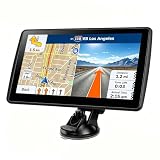
- 【Map Updates】 This car GPS comes pre-installed with the complete 2026 North America maps and supports free lifetime updates. If you need maps for Europe or other regions, please contact us to download.
- 【Smart Voice Alerts】 This GPS navigation system provides clear turn-by-turn voice guidance, and also alerts you to speed limits and school zones, helping you drive more safely.
- 【Custom Truck Routing】 Supports multiple modes including Car, Truck, Bus, RV, Bicycle, and Pedestrian. In Truck/RV mode, the system automatically avoids low bridges, weight-restricted roads, and narrow lanes.
Which cars have Google built-in?
Google’s current support material points shoppers toward compatible vehicles from Ford, General Motors, Honda, Lincoln, Mitsubishi Motors, Nissan, Polestar, Renault, and Volvo. This is a manufacturer-level guide, not a promise that every model, year, trim, or country has the feature.
Availability can change during a model year. The safest evidence is the official equipment list, window sticker, build sheet, VIN-specific listing, or manufacturer compatibility page for the exact configuration.
General Motors vehicles in the United States
General Motors’ U.S. OnStar compatibility information lists Google built-in on select trims across Chevrolet, GMC, Buick, and Cadillac. Its examples include:
What’s actually slowing this PC down?
Pick the symptom - the matching free tool is one click away.
- 2022 and newer select vehicles: Chevrolet Silverado, Suburban, Tahoe, and HUMMER EV Pickup; GMC Yukon, Yukon XL, and Sierra.
- 2023 and newer select vehicles: Chevrolet Colorado; GMC Canyon; Cadillac LYRIQ.
- 2024 and newer select vehicles: Chevrolet Corvette, Silverado EV, Traverse, and Blazer EV; GMC Equinox EV, Acadia, HUMMER EV SUV, and Sierra EV; Buick Envision.
- 2025 and newer select vehicles: Chevrolet Equinox; Buick Enclave; GMC Terrain; Cadillac CELESTIQ, Escalade, Escalade ESV, CT5, Escalade IQ EV, and OPTIQ.
- 2026: GMC VISTIQ.
Every item in that list is subject to the “select trims” qualification. A base trim and an upper trim of the same model year may not have identical infotainment equipment.
Honda vehicles in the United States
Honda’s current U.S. lineup information lists Google built-in on the following 2026 vehicles and configurations:
- Prologue
- CR-V Sport Touring
- Passport
- Civic Sedan Sport Touring Hybrid
- Civic Si
- Accord Touring Hybrid
- Civic Hatchback Sport Touring Hybrid
- Prelude Hybrid
Honda says equipped vehicles include Google Maps, Google Assistant, and the Google Play store. It also describes Android Auto and Apple CarPlay compatibility on vehicles with Google built-in. Confirm that the specific trim and market match the listing before relying on the feature.
Nissan, Ford, and other brands
Nissan describes Google built-in as available on select U.S. models, with Google Assistant, Google Maps, and Google Play integrated into the vehicle. Its public information is not a complete model-year matrix, so use the exact vehicle listing rather than treating “select Nissan models” as a blanket claim.
Do these 3 things before closing this tab:
1Fix the driver behind crashes, sound loss and screen glitches2Clear out junk files and repair common Windows errors3Scan for outdated or missing drivers - takes under a minuteFord’s Digital Experience information confirms capabilities such as direct Google Play downloads, Google Maps, Google Account personalization, and a Ford Connectivity Package. That page does not establish a complete model-by-model eligibility list. Check the exact Ford model, model year, market, and trim separately.
For Lincoln, Mitsubishi, Polestar, Renault, and Volvo, Google’s manufacturer guide confirms that compatible vehicles exist, but the brand name alone does not identify an eligible configuration. Region and model-year differences are especially important for vehicles sold internationally.
Google built-in in an EV
Google built-in can be particularly valuable in an EV when the automaker shares the right vehicle data with Maps. A well-integrated system can plan charging stops based on the car’s battery state and route, identify compatible charging options, and apply charging-network filters. The exact experience depends on whether the automaker exposes battery, charging-speed, and related information to the infotainment system.
Rank #4

- 8” navigator with high-resolution, dual-orientation display and map updates of North America .Special Feature:Large Display; Voice Assist; Hands-Free Calling; Live Traffic and Weather; Traffic Cams and Parking; Smart Notifications,Driver Alerts; Tripadvisor; National Parks Directory; Find Places by Name; Garmin Real Directions Feature.
- Hands-free calling when paired with your compatible smartphone with BLUETOOTH technology and convenient Garmin voice assist lets you ask for directions to places you want to go
- Road trip–ready features include the HISTORY database of notable sites, a U.S. national parks directory, Tripadvisor traveler ratings and millions of Foursquare POIs
- Driver alerts for things such as school zones, sharp curves and speed changes help encourage safer driving and increase situational awareness
- Access live traffic, fuel prices, weather, parking and smart notifications when you pair this navigator with your compatible smartphone running the Garmin Drive app
Native Google Play may also provide EV-related apps such as ChargePoint or PlugShare where those apps are supported in the vehicle’s country and software environment. Their presence does not mean that a particular charging provider is required, included, or preferred by every Google built-in car.
Quick wins for a faster PC:
Clear out junk files and repair common Windows errorsFree Scan →Scan for outdated or missing drivers - takes under a minuteDriver Scan →Repair Windows errors before they cause bigger problemsFix Now →If charging is central to your buying decision, ask the dealer or manufacturer:
- Does Maps receive the vehicle’s live battery state?
- Can it automatically add charging stops to a long route?
- Does it know the vehicle’s charging speed and compatible connector?
- Can you filter stations by charging network, speed, or availability?
- Are charging apps available natively, and do they require a separate account or data plan?
EV buyers may also want to compare an EV charging network and home-charging options separately from the infotainment system. Google built-in can improve route planning, but it does not replace the need to evaluate charging access, pricing, reliability, and installation requirements.
How to confirm a vehicle really has Google built-in
Use this process before buying or accepting a vehicle:
- Identify the exact configuration. Record the model year, trim, body style, powertrain, country, and VIN if available.
- Read the official equipment list. Look specifically for “Google built-in,” “Google Maps,” “Google Play,” and “Google Assistant” or “Gemini” as factory infotainment features.
- Do not rely on vague wording. “Android-powered,” “Android Automotive,” “Google navigation,” and “wireless Android Auto” do not independently prove that Google built-in is included.
- Inspect the infotainment system. An equipped vehicle should expose the relevant native Google apps, though labels and menus vary by automaker. Look for Google Maps and a vehicle version of Google Play rather than only a phone-projection icon.
- Check the connectivity terms. Ask what works without cellular service, whether a trial is included, when it expires, and which functions require a paid plan.
- Check phone-projection support. Confirm whether Android Auto and Apple CarPlay are also available and how they interact with native navigation.
- For an EV, verify the integration. Ask whether the native Maps system uses battery state and automatically plans charging stops for that exact model.
- Review software support. Ask who delivers updates, how long the automaker supports the system, and whether features depend on future subscriptions or regional approvals.
If you are comparing inventory, use a manufacturer build tool or vehicle marketplace to see current cars with Google built-in, then verify each result against the official trim equipment list. A generic brand search is not precise enough.
Advantages and trade-offs
| Potential advantage | What to check before relying on it |
|---|---|
| Native Google Maps | Whether live traffic, rerouting, saved places, and EV routing work in your region and without a paid data plan |
| No Android phone required | Whether the car still needs cellular data, Wi-Fi, or a hotspot for the functions you use |
| Google Play apps | Which apps are approved for that car, country, language, and software version |
| Voice vehicle controls | Which climate, seat, audio, call, and other commands the automaker actually supports |
| Automatic updates | The manufacturer’s hardware and software support policy, update timing, and feature limitations |
| Personalized profiles | Account privacy, guest access, multiple-driver support, and data removal at resale |
The central benefit is integration: navigation, media, voice services, supported vehicle controls, and—on some EVs—vehicle-aware routing can work as one factory-installed system. The cost is greater dependence on the automaker’s implementation, cellular coverage, subscription terms, regional app restrictions, account choices, and long-term software support.
If your car does not have Google built-in
There are two legitimate alternatives, but neither is the same product:
- Android Auto: If the vehicle supports Android Auto, you can connect a compatible Android phone and use supported phone apps on the car display. A wireless Android Auto adapter may simplify connection in some compatible vehicles, but it still requires the phone, the car’s Android Auto support, and an adapter that works with that specific setup. It does not add Google Play to the vehicle, create native vehicle controls, or turn the system into Android Automotive OS.
- Aftermarket infotainment: A replacement head unit may add features, but compatibility with the vehicle’s cameras, steering-wheel controls, climate interface, safety systems, warranty, and factory data must be evaluated separately. It should not be advertised as factory Google built-in unless it genuinely meets that definition.
If native Maps, in-car apps, EV routing, and vehicle controls are your reasons for shopping, buying a car equipped from the factory is usually a more direct path than trying to recreate the experience with accessories.
Frequently overlooked questions
Can I use an iPhone with Google built-in?
Yes, the vehicle itself does not require an Android phone. An iPhone can be paired for supported Bluetooth functions, and some vehicles also provide Apple CarPlay. The exact phone features and whether CarPlay is available depend on the vehicle.
Free tools Windows power users keep installed
One-click scans. No signup required.
Can I use Android Auto and Google built-in at the same time?
They are separate systems, and simultaneous use is not guaranteed. Nissan says they cannot be used at the same time. Honda says only one navigation system can provide directions at a time even when both native Google built-in and phone projection are available.
Best Value

- 7” high-resolution navigator includes map updates of North America .Special Feature:Easy-To-Read Display; Voice Assist; Hands-Free Calling; Live Traffic and Weather; Traffic Cams and Parking; Smart Notifications,Driver Alerts; Tripadvisor; National Parks Directory; Find Places by Name; Garmin Real Directions Feature.
- Hands-free calling when paired with your compatible smartphone with BLUETOOTH technology and convenient Garmin voice assist lets you ask for directions to places you want to go
- Road trip–ready features include the HISTORY database of notable sites, a U.S. national parks directory, Tripadvisor traveler ratings and millions of Foursquare POIs
- Driver alerts for things such as school zones, sharp curves and speed changes help encourage safer driving and increase situational awareness
- Access live traffic, fuel prices, parking, weather and smart notifications when you pair this navigator with your compatible smartphone running the Garmin Drive app
Does every Google built-in car include Gemini?
No. Gemini availability varies by manufacturer, language, region, and data plan. Some vehicles use Google Assistant or may receive a Gemini experience later.
Are Google built-in apps free?
The vehicle may include the software, but internet access, connected-services subscriptions, media-app accounts, and third-party app subscriptions can still cost money. Google Play also requires a Google login and data connection to download apps in implementations identified by Nissan.
Does Google built-in work when the vehicle is offline?
Some basic or previously available functions may continue to work, but live traffic, online search, streaming media, messages, downloads, and other connected features may not. Offline behavior differs by vehicle and app.
Recommended Free Tools
Will Google built-in remain supported for the life of the car?
Google describes automatic updates, but that is not a guarantee of identical features or support throughout ownership. Confirm the automaker’s update policy, connectivity terms, and support period before buying.
Frequently Asked Questions
What is the difference between Google built-in and Android Auto?
No. Google built-in runs in the car, while Android Auto runs on a compatible Android phone and projects a driving-optimized interface to the vehicle display.
Do cars with Google built-in require an Android phone?
No. Supported cars can operate their built-in Google apps without an Android phone, although a phone may still be useful for Bluetooth, Android Auto, Apple CarPlay, or hotspot connectivity.
Does Android Automotive OS automatically mean a car has Google built-in?
Not necessarily. AAOS is the underlying operating system, while Google Automotive Services are separately licensed Google apps and services. A vehicle can use AAOS without Google built-in.
Is Google built-in useful for electric vehicles?
Availability varies by model, trim, country, software, and data plan. Google Maps can provide EV-aware charging routes on supported vehicles, but buyers should verify battery and charging integration for the exact EV.
Does Google built-in require a paid data plan?
Some features may work through Wi-Fi or a phone hotspot, but live traffic, online search, streaming, messages, downloads, and other connected functions may require an internet connection. Vehicle plans and trial terms vary.
The Bottom Line
Bottom line: Google built-in is native, car-installed Google software—not Android Auto and not merely an Android-powered infotainment system. It can provide Maps, Play Store apps, voice services, and useful EV routing without requiring an Android phone, but the experience depends heavily on the exact model, trim, country, connectivity plan, account settings, and automaker support. Verify the window sticker or official equipment list before treating a vehicle as a Cars with Google built-in model.
Quick Recap
Product prices and availability are accurate as of the date/time indicated and are subject to change. Any price and availability information displayed on Amazon at the time of purchase will apply.




