Crashes, No Sound, or Screen Glitches?
Random freezes, missing sound and display glitches usually trace back to one bad driver. Find and replace yours safely.Free scan · under a minutePC Slower Than It Used to Be?
A free scan shows the junk files, broken settings and background clutter dragging Windows down - then fixes them in one click.Free scan · Windows 10 & 11The 1990s did not produce one shared idea of the ideal car. Instead, automakers pursued strikingly different goals: the McLaren F1 pushed lightweight performance, the Audi TT brought concept-car design into production, the Mazda MX-5 made open-top sports-car driving accessible, and the Toyota Prius introduced hybrid power to mass production. Together, these four cars show how design, engineering, and changing priorities collided during the decade—not a definitive ranking of its best cars.
What made 1990s cars distinctive?
The decade is easier to understand through contrasts than through a single defining formula. Some manufacturers pursued exceptional speed and low weight; others brought a cohesive design study to the road, revived a classic sports-car format, or developed a new approach to everyday efficiency. The McLaren F1, Audi TT, Mazda MX-5, and Toyota Prius represent those separate ambitions.
They are useful examples, not a comprehensive ranking. The manufacturer histories cited here do not establish a consistent independent comparison across sales, reliability, safety, or performance.
McLaren F1: lightweight construction at the performance extreme
McLaren traces the F1’s conception to 1988 and says the car was realized in 1992. It was the company’s first road car and, in McLaren’s account, the first road car built around a lightweight carbon-fibre monocoque. The structure made construction itself part of the car’s performance statement, rather than treating the body as a styling shell alone.
#1 Best Overall
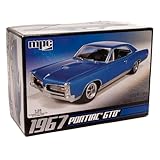
- V8 POWER: The model features a 400 cubic inch V8 engine, reflecting the muscle and power that defined the GTO's reputation.
- DETAILED SUSPENSION & EXHAUST: The kit incorporates separate rear suspension and exhaust detailing, adding to the realism of the model.
- BUCKET SEATS & CONSOLE: The model's interior features bucket seats and a floor shifter with a console, capturing the iconic look and feel of the GTO.
- OPTIONAL SUPERCHARGER: For those seeking more power, the kit offers an optional supercharger, allowing you to customize your model.
- CLEAR & COMPREHENSIVE INSTRUCTIONS: The included instructions are clear and user-friendly, making the kit accessible to modelers of different skill levels, from beginners to experienced hobbyists.
McLaren reports that 106 F1s were made. A modified example went on to win the 1995 24 Hours of Le Mans, linking the road-car project to endurance-racing success. McLaren describes the F1 as “the greatest supercar ever built”; that is the manufacturer’s promotional characterization, not an independently established ranking. McLaren’s F1 history provides the company’s account of the car and its racing record.
Audi TT: a concept-car look that reached production
Audi presented the TT Coupé concept at the Frankfurt IAA in 1995 and began series production of the coupé in 1998. The production car retained a strong connection to the study’s form: circular motifs and reduced shapes gave it a distinctive visual identity, while the Bauhaus-inspired design kept the focus on simple geometry.
Rank #2

- AUTHENTIC REPLICA: Highly detailed 1:40 scale model of the iconic 1957 Chevrolet Bel Air Coupe, measuring 5 inches in length with classic finish
- WORKING FEATURES: Functioning doors that open and close, plus pull-back motor action for interactive play value
- QUALITY CONSTRUCTION: Die-cast metal body construction provides durability and authentic feel, enhanced with detailed plastic components
- REALISTIC DETAILS: Features rubber tires for enhanced realism and smooth rolling action on various surfaces
- DISPLAY WORTHY: Perfect size for collectors and enthusiasts, combining playability with showcase appeal
Audi exterior designer Torsten Wenzel recalled that the trade press praised how little had changed from concept to production, while noting that technical requirements—including proportions—required adjustments. The TT Roadster followed a year after the coupé. Audi’s 2024 retrospective says 662,762 TTs were built across three generations over 25 years; that total describes the full model history, not 1990s production alone. Audi’s TT history recounts the concept’s transition to the production car.
Mazda MX-5: open-air sports-car driving made accessible
The MX-5 represented a different kind of sports-car ambition: lightweight, open-top enjoyment rather than supercar exclusivity. Mazda credits the model with helping revive the lightweight roadster during the 1990s and says it prompted other automakers to produce open-top sports cars. That influence is Mazda’s assessment, rather than an independently measured market finding.
Rank #3

- Revell Model Kit #14531, Skill Level 5, Contains 77-Parts, Recommended for ages 13 and up
- Detailed 440+6 V-8 engine, hood scoop that can be positioned open or closed
- Detailed interior with separate side panels and a front bench seat
- Molded in white and clear with chrome plated parts and black vinyl tires
- Illustrated assembly instructions. Requires paint and glue. (not included)
Mazda records 531,890 MX-5s produced from April 1989 through the end of October 1999, a period that begins before the decade and ends within it. The company associates that total with Guinness World Records recognition in May 2000. It offers context for the roadster’s reach, but should not be mistaken for a count of cars built during the 1990s alone. Mazda’s MX-5 history covers the model’s production and its role in the roadster revival.
Toyota Prius: hybrid power enters mass production
In October 1997, Toyota launched the first-generation Prius as what the company calls the world’s first mass-produced hybrid passenger vehicle. That milestone put a new powertrain approach into a production car aimed at ordinary passenger-car use, rather than limiting the decade’s technological story to speed or exotic materials.
Rank #4

- 1:25 scale, skill level 2, paint & glue required
- 82 parts
- Molded in white, clear, transparent red, and some chrome-plated parts
- Black vinyl tires
- Metal axle
Toyota gave the launch model a fuel-efficiency rating of 28.0 km/L under Japan’s 10-15 test cycle. That is a result tied to a specific Japanese test method; it should not be read as a real-world figure or converted directly into a modern EPA rating. Toyota’s launch tagline was “Just in time for the 21st century.” Its history of Prius development describes the launch and its stated test-cycle rating.
Independent reader supportYour contribution helps us test, update, and keep practical guides available for everyone.How these four cars capture different 1990s priorities
| Car | What it illustrates | Decade milestone |
|---|---|---|
| McLaren F1 | Lightweight construction and performance | Realized in 1992; a modified F1 won the 1995 24 Hours of Le Mans, according to McLaren. |
| Audi TT | Concept-to-production design and visual identity | Concept presented in 1995; coupé series production began in 1998, according to Audi. |
| Mazda MX-5 | Lightweight, open-top sports-car driving | Mazda says the car helped revive the lightweight roadster during the 1990s. |
| Toyota Prius | Hybrid powertrain innovation | Launched in October 1997 as a mass-produced hybrid passenger vehicle, according to Toyota. |
The contrast is the point: the decade’s automotive identity was not one style or engineering target. It included an exclusive carbon-fibre supercar, a design-led coupé, an approachable roadster, and an early mass-produced hybrid. Each defined a different possibility for what a car could be.
Free tools Windows power users keep installed
One-click scans. No signup required.
Quick Recap
Best Value
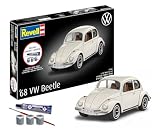
- ALL-INCLUDED MODEL KIT – Get straight into model building without the hassle of looking for paint, glue, or accessories; this model gift set kit includes basic Revell paints, a brush, and glue.
- SKILL LEVEL 3 – FUN & APPROACHABLE - Designed for beginner to intermediate builders, offering a balanced and rewarding model building experience for ages 10+
- DETAILED 1:32 SCALE VW BEETLE MODEL – Build a faithful replica of the iconic Volkswagen Beetle in 1:32 scale, recreating one of the most recognizable automobiles in automotive history.
- 24-PART MODEL WITH MOVABLE WHEELS – Features 24 parts and movable wheels that add realism and enhance the appearance of the finished model.
- INTERNATIONAL DECAL OPTIONS INCLUDED – Comes with a decal sheet featuring license plates from 8 countries, allowing builders to customize their finished VW Beetle.
Product prices and availability are accurate as of the date/time indicated and are subject to change. Any price and availability information displayed on Amazon at the time of purchase will apply.




