Quick wins for a faster PC:
Scan for outdated or missing drivers - takes under a minuteDriver Scan →Clear out junk files and repair common Windows errorsFree Scan →Fix the driver behind crashes, sound loss and screen glitchesFind Drivers →A salvage-title car may be worth considering only after you verify its title history, understand the damage and repairs, get an independent inspection, confirm insurance and registration options, and price in the added risk. Salvage and rebuilt-title rules differ by state, so check with the motor-vehicle agencies in both the title-issuing state and the state where you plan to register it.
What a salvage title means—and how rebuilt status differs
A salvage brand signals that a vehicle met the applicable jurisdiction’s rules for a serious loss or damage. The exact threshold and legal effect vary by state. A rebuilt brand generally indicates that a vehicle previously branded salvage was repaired and completed the procedures required for that status. It does not erase the vehicle’s title history or establish that every repair is sound.


Before comparing prices, find out whether the vehicle is currently branded salvage, rebuilt, or something else under the issuing state’s rules. Do not assume a vehicle can be driven or registered simply because it has been repaired; requirements depend on the relevant state.
How salvage, rebuilt, and clean-title cars compare
| Option | Damage and repair evidence | Driving and registration | Insurance and resale |
|---|---|---|---|
| Clean-title vehicle | A clean title does not by itself establish that a vehicle has never been damaged. Review its history and condition. | Check applicable transfer and registration requirements. | Confirm coverage and compare market value for the specific vehicle. |
| Salvage-title vehicle, not yet repaired | Damage remains to be addressed or evaluated; establish its extent before considering a purchase. | Whether it can be driven or registered depends on state rules and status. | Ask an insurer about availability and terms before purchase; resale can be affected by the brand and repair status. |
| Rebuilt-title vehicle | Previously salvage-branded and repaired; inspect repair quality and seek supporting records. | Applicable state procedures may include inspections or other standards. Passing a procedure does not guarantee reliability. | Insurance may be harder to obtain, and value may be substantially lower. No nationwide discount percentage is established. |
Texas provides one state-specific example: TxDMV describes rebuilt vehicles as formerly salvage-branded vehicles rebuilt to roadworthiness and outlines Texas inspection and other requirements. It warns that rebuilt cars can have costly problems, insurance is often denied, and values are substantially lower. Those statements are Texas guidance, not a nationwide insurance rate, price estimate, or rule. Read TxDMV’s rebuilt-vehicle guidance.
What’s actually slowing this PC down?
Pick the symptom - the matching free tool is one click away.
#1 Best Overall
Check the title and history before inspecting the car
- Get the VIN before you visit or pay. Obtain a VIN-based report through an approved National Motor Vehicle Title Information System (NMVTIS) provider. Look for title brands, salvage or junk-yard records, and insurer total-loss records. The U.S. Department of Justice explains that NMVTIS is a repository for salvage and total-loss information and that insurers must report qualifying acquired or designated vehicles at least monthly. Learn about NMVTIS and vehicle history reports.
- Use reports as evidence, not a diagnosis. A history report can reveal records linked to a VIN, but reporting coverage varies and it cannot establish the car’s current mechanical condition. The Federal Trade Commission recommends checking a vehicle-history report and cautions that “A vehicle history report is not a substitute for an independent vehicle inspection.” Read the FTC’s used-car guidance.
- Compare the VIN and documents. Match the VIN on the vehicle to the title and report. Ask the seller for the original damage description, repair invoices, parts details, and photographs if available. Missing records add uncertainty; they do not prove the damage was minor. TxDMV also recommends reviewing sale documents carefully. See TxDMV’s vehicle-history guidance.
Have an independent mechanic assess the repairs
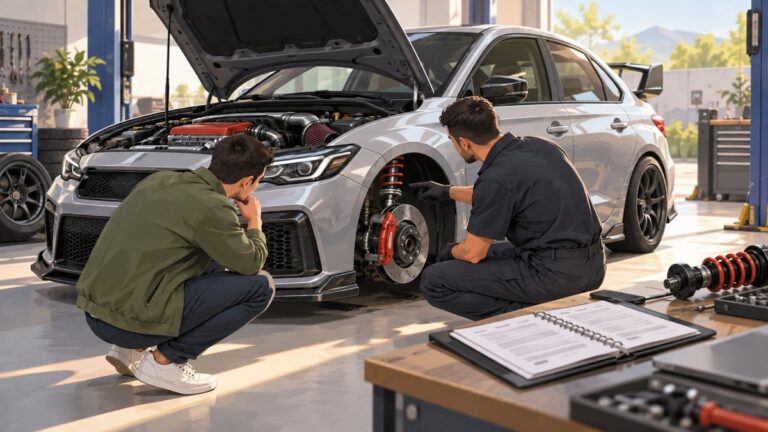
Arrange a pre-purchase inspection by a qualified mechanic who is independent of the seller. Share the title history and any known damage so the inspection can focus on relevant areas. Ask about the extent of damage, frame alignment, structural repair quality, and systems that may have been affected by the original event. A rebuilt brand or completed state procedure is not a substitute for this assessment.
Flood damage deserves special attention because a vehicle can be cleaned and moved out of state. The FTC recommends looking for water stains, mildew, sand or silt, fogging in lights, replaced upholstery in an older car, and strong cleaner odors, and having a mechanic check for water contamination. Its guidance also notes that an uninsured vehicle will not appear in the NICB flood database it discusses. A clean database result therefore cannot rule out flood damage. Read the FTC’s flood-damaged-car warning.
Confirm insurance and registration before committing
Call an insurer with the VIN
Ask whether the insurer will cover this specific vehicle in its current title status and what coverage and terms are available. Do this before paying: insurance availability cannot be assumed from the fact that a vehicle was repaired or inspected. TxDMV says, in the context of Texas, “Often rebuilt vehicles are denied insurance.” That is a state agency’s warning, not a nationwide denial rate or universal rule.
Ask the relevant state agencies about the title path
Contact the motor-vehicle agency in the state where the vehicle is titled and the agency where you intend to register it. Confirm title-transfer, inspection, registration, disclosure, and documentation requirements, including whether the current brand can be transferred across state lines. The DOJ notes that states differ in salvage definitions and that a future state is not required to use an insurer’s total-loss information in NMVTIS when titling a vehicle. A report’s contents therefore do not settle how another state will title the car. Review the DOJ’s NMVTIS consumer information.
Decide whether the price compensates for the risk
Compare the asking price with comparable clean-title vehicles, then account for inspection findings, repair documentation, remaining mechanical uncertainty, insurance terms, and likely resale difficulty. TxDMV describes rebuilt vehicles as worth substantially less but does not give a universal percentage. Get a valuation specific to the vehicle and its location rather than applying an unsupported blanket discount.
Quick Recap
Best Value

- These driver's vehicle inspection report (DVIR) books comply with DOT regulations 49 CFR 396.11 and 396.13.
- Our DVIR inspection book contains a vehicle inspection checklist that comprehensively lists specific tractor/truck and trailer parts to help simplify the inspection process. This allows drivers to quickly mark any needed repairs.
- DVIR books include essential DOT regulations which are printed on the inside cover to remind drivers of the DOT-required procedures they must follow. And there are instructions for filling out a DVIR form to simplify the completion.
- This package comes with 10 books. Each book contains 35 sets of DVIR forms, in duplicate. In total, you will receive 350 forms. Compact 8.5" x 5.5" size facilitates easy handling and record-keeping.
- Our inspection report books are made of carbonless, premium paper that withstands daily use. Whether you manage a single vehicle or a large commercial fleet, our DVIR book is an essential tool for ensuring the safety and compliance of your operations.
- Walk away if the seller will not provide the VIN or permit an independent inspection, the title and vehicle records do not match, or the insurer or state agency cannot confirm a workable path.
- Proceed cautiously only if you understand the brand and damage history, the mechanic’s findings are acceptable to you, coverage and registration are feasible, and the price reflects the vehicle’s specific condition and resale limitations.
Product prices and availability are accurate as of the date/time indicated and are subject to change. Any price and availability information displayed on Amazon at the time of purchase will apply.