Crashes, No Sound, or Screen Glitches?
Random freezes, missing sound and display glitches usually trace back to one bad driver. Find and replace yours safely.Free scan · under a minuteWindows Errors? Fix Them Before They Spread
Repair common Windows errors and clear accumulated junk for a smoother, more stable PC - no reinstall needed.Free scan · no reinstallBefore buying fluid, identify the required family—glycol-based, silicone-based, or mineral-oil-based—then check for special requirements such as DOT 4 LV, ISO Class 6, an OEM approval, or an ABS/ESC compatibility specification. Use a fresh, sealed container. If the reservoir is low, the pedal is soft, or the wrong fluid has been added, treat the situation as a brake-system problem rather than a simple top-up.
The short answer: which brake fluid should you buy?
- Read the vehicle specification first. Check the reservoir cap, owner’s manual, maintenance schedule, and manufacturer service information.
- Match the fluid family. DOT 3, DOT 4, and DOT 5.1 are generally non-silicone, glycol-family fluids. DOT 5 is silicone-based. Mineral oil is a separate hydraulic-fluid category.
- Match special requirements. Look for DOT 4 LV, ISO 4925 Class 6, low viscosity, a manufacturer engineering specification, or an OEM approval.
- Use fresh fluid. Choose a sealed container that can be used promptly and keep it tightly closed.
- Investigate brake problems. A low reservoir, warning light, soft pedal, or wrong-fluid incident may require inspection, bleeding, flushing, or component replacement.
A higher DOT number is not automatically a safe upgrade. DOT 5 is not the next step above DOT 5.1; the two use different chemistry. Even within the same DOT category, products can differ substantially in wet boiling point, low-temperature viscosity, approvals, and intended use.
What brake fluid does
Brake fluid transfers force from the brake pedal through the master cylinder, hydraulic lines, calipers, and wheel cylinders. It must remain effectively incompressible so pedal movement produces predictable clamping force at the brakes.
It also has to perform several less visible jobs. The fluid lubricates hydraulic components, resists corrosion, tolerates high temperatures, and remains compatible with seals, hoses, the master cylinder, and ABS and stability-control valves. A fluid that has the wrong chemistry can damage rubber components or interfere with the operation of the hydraulic system.
Do these 3 things before closing this tab:
1Fix the driver behind crashes, sound loss and screen glitches2Clear out junk files and repair common Windows errors3Scan for outdated or missing drivers - takes under a minute#1 Best Overall

- Specifications: The Brake Bleeder bottles can simply drain old brake fluid, rubber joints fit most bleeding screws, 60 cm (24 in) hose and chain with hooks to hold in place while collecting old brake fluid
- One-Way Valve: Features a precision-designed check valve to ensure a perfect seal and precise brake fluid control, preventing old brake fluid backflow and air from entering the system
- Material: This brake fluid bleeding kit is made of high-rigidity plastic, with a corrosion-resistant check valve and high-temperature-resistant hose for extended service life
- Compatibility: Brake Bleeding Fluid Bottle fit all brake systems, including cars, motorcycles, ATVs, dirt bikes and scooters. It works better with our 4 L manual brake fluid bleeder
- Excellent Customer Service: We provide comprehensive customer service to ensure that you can get timely and professional solutions to any problems you may encounter during use
When fluid contains too much moisture or becomes overheated, it can produce vapor in the hydraulic circuit. Unlike liquid, vapor compresses. The result can be a soft or sinking pedal and a potentially severe reduction in braking effectiveness.
DOT 3, DOT 4, DOT 5, and DOT 5.1 compared
In the United States, DOT classifications are minimum performance classifications under FMVSS No. 116. They are not a simple ranking of every product’s real-world quality. A premium DOT 4 can exceed the minimum boiling points commonly associated with DOT 5.1, while another product may only meet the minimum for its category.
| Type | General chemistry | Dry boiling point minimum or typical data | Wet boiling point minimum or typical data | Maximum viscosity at −40°C | What to know |
|---|---|---|---|---|---|
| DOT 3 | Glycol-based | 401°F / 205°C minimum | 284°F / 140°C minimum | 1,500 mm²/s | Common in older and mainstream vehicles. Use when specified; do not assume a higher-numbered fluid is approved. |
| DOT 4 | Glycol/borate-based | 446°F / 230°C minimum | 311°F / 155°C minimum | 1,800 mm²/s | Has higher minimum boiling points than DOT 3 and is common in newer and European applications. The vehicle specification still controls. |
| DOT 5 | Silicone-based; at least 70% diorgano polysiloxane under the U.S. definition | 500°F / 260°C minimum | 356°F / 180°C minimum | 900 mm²/s | A separate silicone-fluid system. Never treat it as a drop-in replacement for DOT 3, DOT 4, or DOT 5.1. |
| DOT 5.1 | Non-silicone, glycol-family fluid | Approximately 500°F / 260°C in common commercial and ISO-class data | Approximately 356°F / 180°C in common commercial and ISO-class data | Often approximately 900 mm²/s | The name is misleading: DOT 5.1 is not silicone DOT 5. Use only where the vehicle or component manufacturer allows it. |
| DOT 4 LV / ISO Class 6 | Low-viscosity glycol-based fluid | Product-specific; examples are approximately 509–518°F / 265–270°C | Product-specific; examples are approximately 347–356°F / 175–180°C | Product-specific; examples are 700 mm²/s or less | Designed to flow quickly through modern ABS and ESC valves, particularly in cold conditions. It is not simply ordinary DOT 4 with a marketing label. |
| Mineral-oil hydraulic fluid | Mineral oil | Not a DOT classification | Not a DOT classification | System-specific | Used in special hydraulic systems. It is not interchangeable with DOT fluid and can be incompatible with DOT-system rubber components. |
Important qualification: the current U.S. regulation distinguishes DOT 5 silicone-base fluid from DOT 5.1 non-silicone-base fluid on labeling. Its explicit performance table is written for DOT 3, DOT 4, and DOT 5; the commonly quoted DOT 5.1 figures come from commercial technical and ISO-class data. The eCFR standard, not a simplified internet chart, should be treated as the regulatory reference.
Dry versus wet boiling point
Dry boiling point is the laboratory boiling point of relatively new, uncontaminated fluid. It is the number most often emphasized on performance-fluid packaging.
Wet boiling point represents performance after controlled moisture exposure. In the FMVSS test, the fluid is conditioned until the reference fluid reaches approximately 3.70% water by weight. That is a standardized comparison—not a promise that fluid in every car reaches exactly that water content after a particular number of months. The NHTSA laboratory procedure describes the test method.
The wet figure often matters more when evaluating fluid that has been in service. Moisture reduces boiling margin and increases corrosion risk. As NHTSA explains, moisture can contribute to a lower boiling point, vapor lock, and corrosion. For a street car, a strong wet boiling point and timely maintenance can be more useful than an impressive dry number on a newly opened bottle.
DOT 5 versus DOT 5.1: the naming trap
- DOT 5: silicone-based fluid for systems designed and approved for silicone fluid.
- DOT 5.1: non-silicone, glycol-family fluid that is chemically closer to DOT 3 and DOT 4.
Never use DOT 5 as a supposed upgrade from DOT 3, DOT 4, or DOT 5.1. Ford specifically warns against adding DOT 5 to vehicles that specify DOT 3 or DOT 4, and Mazda warns that DOT 5 or another non-approved fluid can permanently damage the brakes. See the Ford guidance and Mazda owner’s manual example.
It is too broad to say that DOT 5 can never work with ABS. The accurate rule is that DOT 5 is not an automatic substitute for an ABS-equipped vehicle. It may be used only when the entire vehicle’s hydraulic system, seals, control unit, and service procedure are designed and approved for silicone fluid.
Recommended Free Tools
DOT 3 versus DOT 4
DOT 4 has higher minimum dry and wet boiling-point requirements than DOT 3. That gives it greater minimum thermal margin, but it does not make every DOT 4 product correct for every DOT 3 vehicle. The vehicle manufacturer’s seal materials, system design, cold-temperature requirements, and approval language remain decisive.
Some manufacturers explicitly allow both. For example, the current 2025 Toyota Crown Signia information and Subaru service information list FMVSS No. 116 DOT 3 or DOT 4. An older Mazda manual recommends DOT 3 but allows DOT 4 if DOT 3 is unavailable. These are examples of manufacturer permission, not a universal rule.
If the manual says DOT 4, do not downgrade to DOT 3 simply because both are glycol-based. If it says DOT 3 or DOT 4, either approved specification is generally acceptable for that particular vehicle. If it says only DOT 3, follow that instruction unless the manufacturer explicitly permits a substitute.
Rank #2

- Specifications: The Brake Bleeder bottles can simply drain old brake fluid, rubber joints fit most bleeding screws, 60 cm (24 in) hose and chain with hooks to hold in place while collecting old brake fluid
- Simple operation: Attach the rubber connector to your brake system bleed screw, secure with a chain or place it in a smooth place, press the brake pedal a few times to make the hose full and free of bubbles, and repeat steps to complete the rest of the wheel
- Materials: This brake fluid bleeder kits are made of high rigidity plastic for strong corrosion resistance and durability for longer life
- Compatibility: Brake Bleeding Fluid Bottle fit all brake systems, including cars, motorcycles, ATVs, dirt bikes and scooters. It works better with our 4 L manual brake fluid bleeder
- Excellent Customer Service: We provide comprehensive customer service to ensure that you can get timely and professional solutions to any problems you may encounter during use
What low-viscosity brake fluid means
Viscosity describes how readily a fluid flows. A low-viscosity brake fluid can move through small passages and electronically controlled hydraulic valves more quickly, especially at low temperatures. That matters in vehicles with ABS, ESC/ESP, traction control, and other systems that modulate brake pressure many times per second.
Quick wins for a faster PC:
Fix the driver behind crashes, sound loss and screen glitchesFind Drivers →Clear out junk files and repair common Windows errorsFree Scan →Scan for outdated or missing drivers - takes under a minuteDriver Scan →Some vehicles specify DOT 4 LV, ISO 4925 Class 6, or a manufacturer-specific low-viscosity specification. The ATE DOT 4 SL.6 technical sheet illustrates the category, while Ford Motorcraft DOT 4 LV information provides an OEM example.
Do not assume every DOT 5.1 bottle is the correct low-viscosity fluid, and do not replace required DOT 4 LV with ordinary high-boiling DOT 4 without approval. Conversely, a low-viscosity fluid is not automatically the best choice if the vehicle does not call for it. Match the system’s specification rather than optimizing one number in isolation.
How to pick the right fluid for your car
Step 1: Find the vehicle’s specification
Check these sources in order:
- The marking on the brake-fluid reservoir cap.
- The owner’s manual.
- The factory maintenance schedule.
- Manufacturer service information.
- VIN-specific information from the manufacturer or a dealer.
A parts-store lookup or generic online chart can be helpful, but it should not override the manual for your exact year, engine, brake package, or market.
Step 2: Identify the fluid family
- DOT 3, DOT 4, and DOT 5.1: generally non-silicone, glycol-family classifications.
- DOT 5: silicone-based fluid.
- Mineral oil, LHM, or another named hydraulic fluid: a separate system requiring its own fluid.
Color can provide a supporting clue. Under FMVSS labeling requirements, DOT 3, DOT 4, and DOT 5.1 non-silicone fluid is colorless to amber; DOT 5 silicone fluid is purple; and mineral-oil hydraulic fluid is green. But color changes with formulation and age, so never identify fluid by color alone. Check the label and vehicle specification in the federal standard.
Step 3: Check for special requirements
Look for terms such as:
- DOT 4 LV
- ISO 4925 Class 6
- Low viscosity
- ABS/ESC compatible
- An OEM engineering or service specification
- A manufacturer-approved fluid number
- Track, competition, or racing use
Step 4: Decide whether you are topping up or flushing
For a small top-up, use a fluid that matches the vehicle’s approved specification and comes from a clean, sealed container. For a planned flush, replace the old fluid with the exact approved specification and follow the vehicle-specific bleeding procedure.
If the wrong fluid has entered the reservoir, do not keep adding the correct fluid and assume the problem is solved. Avoid driving until the system has been evaluated.
Step 5: Compare products within the approved class
Once the vehicle specification is known, compare:
- Vehicle or OEM approval
- Wet boiling point
- Dry boiling point
- Viscosity at −40°C when relevant
- Road, severe-duty, or competition intended use
- Freshness and packaging
Do not choose solely because a product has the highest dry boiling point, says racing, says synthetic, carries the highest DOT number, comes in a particular color, or has the most familiar brand name.
| If the manual says… | Practical choice | Do not assume… |
|---|---|---|
| DOT 3 | Use approved DOT 3 unless the manufacturer lists an allowable substitute. | DOT 4 or DOT 5.1 is automatically approved because its boiling points are higher. |
| DOT 3 or DOT 4 | Use either approved specification from a reputable, sealed product. | Every DOT 4 product, including low-viscosity or racing fluid, is equally suitable. |
| DOT 4 | Use DOT 4 meeting the required specification. | DOT 3 is an acceptable downgrade. |
| DOT 4 LV or Class 6 | Use the specified low-viscosity fluid or approved equivalent. | Ordinary DOT 4 or any DOT 5.1 has the same low-temperature behavior. |
| DOT 5 | Use silicone fluid only as part of a system designed and approved for it. | DOT 5.1 is the same product or that silicone fluid is a universal ABS upgrade. |
| Mineral oil, LHM, or another proprietary fluid | Use only the named fluid for that hydraulic system. | Any DOT fluid can be substituted. |
| No reliable information is available | Obtain VIN-specific manufacturer information or have a qualified shop identify the system before opening it. | A generic chart or fluid color is enough to make a safety-critical decision. |
Can brake fluids be mixed?
Glycol-family fluids
Some DOT 3, DOT 4, and DOT 5.1 products are designed to be miscible, and manufacturers such as ATE and Castrol describe particular products as mixable with specified glycol-family fluids. That does not mean every product combination or every vehicle manufacturer approves every substitution.
For an emergency top-up, follow the vehicle manual and the product data sheet. For planned maintenance, use the exact specified fluid and flush rather than treating mixing as a performance upgrade. Mixing brands is not inherently the issue; matching the approved specification and chemistry is.
Wrong-family contamination
- DOT 5 silicone fluid with DOT 3, DOT 4, or DOT 5.1 glycol-family fluid.
- Mineral oil with DOT fluid.
- DOT fluid with an LHM or other manufacturer-specific mineral-oil system.
The federal labeling standard warns that mineral oil is incompatible with rubber components in systems designed for DOT fluid. A wrong-family contamination event requires manufacturer-specific evaluation rather than a universal top-up or flush assumption.
Rank #3

- Magnet retainer and a one way check valve built-in for one person brake bleeding.Fit Type: Universal
- 16 ounce fluid capacity
- 12" long flexible hose fits over most bleeder valves
- Helps prevent unwanted air from entering system during bleeding process
Is synthetic brake fluid better?
No. Synthetic is not a DOT grade and is not enough information to choose a product. A fluid can be marketed as synthetic while still being DOT 4, DOT 5.1, or silicone-base DOT 5.
For example, Motul identifies RBF 600 as a 100% synthetic DOT 4 product, while Liqui Moly identifies a glycol-based DOT 5.1 product as synthetic. Look instead for the DOT designation, ISO or SAE classification, OEM approval, wet and dry boiling points, and cold viscosity.
Free tools Windows power users keep installed
One-click scans. No signup required.
Street, towing, mountain, and track use
For ordinary street driving, the best choice is normally a fresh fluid that meets the vehicle’s specification and is replaced according to the manufacturer’s schedule. Towing, mountain driving, heavy loads, high ambient temperatures, and repeated hard braking increase the value of a healthy wet boiling point and adequate thermal margin—but they do not override the required fluid family or low-viscosity specification.
Racing fluid requires more careful evaluation. A high dry boiling point can be valuable on a track, but also check the wet boiling point, cold viscosity, ABS/ESC compatibility, road-use classification, and replacement requirements.
For example, Motul RBF 600 is a DOT 4 racing fluid with a published dry boiling point of 312°C / 594°F and wet boiling point of approximately 204°C / 399°F. Its published viscosity at −40°C is 1,750 mm²/s—near the DOT 4 limit and not especially low. That can make it a poor choice for a vehicle that specifically requires low-viscosity fluid, despite its impressive dry boiling number.
Fluid is only one part of track brake-temperature management. Brake pads, rotors, cooling ducts, tire grip, cooling laps, and driving technique can matter just as much or more. Subaru’s high-performance guidance recommends ethylene-glycol-based fluid, prohibits silicone fluid, and instructs owners to return to genuine DOT 3 or DOT 4 after high-performance driving. Follow the instructions for the specific car.
How to top off brake fluid safely
This is a general procedure. The owner’s manual takes priority, particularly on vehicles with unusual reservoirs or electronic brake systems.
- Park level and switch the vehicle off. Allow hot brake components and the engine compartment to cool.
- Locate the correct reservoir. Confirm its identity in the owner’s manual rather than relying only on appearance.
- Confirm the specification. Read the reservoir cap and manual before opening the bottle.
- Clean around the cap. Dirt must not fall into the reservoir when the cap is removed.
- Use fresh fluid from a clean, sealed container. Keep the bottle closed as much as possible.
- Add only to the indicated level. Usually the level belongs between MIN and MAX. Do not overfill.
- Close the reservoir securely. Wipe away any spill immediately and dispose of contaminated materials appropriately.
- Arrange an inspection when necessary. This includes a level below MIN, a continuing drop, a brake warning light, a soft pedal, or dark or contaminated fluid.
Brake fluid can damage painted surfaces. Ford’s official top-up guidance emphasizes cleaning the reservoir area, using the correct fluid, avoiding overfilling, and seeking inspection if the level continues to fall or the fluid is dark.
When low brake fluid indicates a brake problem
A low reservoir is not automatically a routine top-up issue. Possible causes include:
- Normal brake-lining or pad wear
- A leaking brake line, hose, caliper, wheel cylinder, or master cylinder
- Incorrect previous service
- A damaged hydraulic component
As GM owner documentation explains, adding fluid does not correct a leak, and fluid level can fall as linings wear. Mazda likewise advises inspection when the level is low. If the level repeatedly drops, find the cause rather than repeatedly filling the reservoir.
A soft or sinking pedal can result from air, vaporized fluid, a hydraulic leak, master-cylinder failure, hose expansion, or another brake-system fault. Do not attribute every soft pedal to old fluid. A soft pedal, brake warning light, visible leak, or major change in braking performance is a safety issue; do not continue driving merely because fluid was added.
Brake-fluid maintenance
There is no universal replacement interval. Follow the vehicle’s maintenance schedule. Some manufacturers specify a time interval, while others use inspection-based guidance or publish different intervals by model and market.
Rank #4

- 【Air-Free Bleeding. All Control】Ever had your master cylinder run dry while bleeding brakes? This bottle keeps fluid topped off so you don’t suck air into the lines—and restart the entire job. No more do-overs.
- 【One-Person Bleeding Made Easy】Working solo? This refiller bottle eliminates the need for a second set of hands, automatically feeding fluid while you work. Great for DIYers or pros in a time crunch.
- 【Fits Right. Fills Right. No Guesswork】The adjustable clamp fits snugly onto most master cylinders, while the clear volume markings let you keep track at a glance—no eyeballing or messy overflow.
- 【Compatible with Most Brake Systems】Use it with standard and ABS systems on cars, trucks, and motorcycles. Pairs perfectly with EWK brake bleeder kits or your existing setup.
- 【No Overfill. No Spills. No Hassle】The built-in flow valve helps prevent overfilling or messy spills—especially handy when you're juggling tools mid-job.
Track use, high humidity, frequent heavy braking, and hydraulic repairs can justify more frequent service. Some aftermarket guidance uses roughly one to two years as a general road-use recommendation, but that is not a substitute for the interval in the vehicle manual. A Brembo maintenance guide is an example of this type of general recommendation.
Do not rely on color alone to determine whether fluid needs changing. Appearance can vary with formulation and age, and it cannot reliably establish water content or boiling performance. A proper inspection or service evaluation is more meaningful.
What’s actually slowing this PC down?
Pick the symptom - the matching free tool is one click away.
Opened brake-fluid bottles are a practical risk because the fluid can absorb moisture from the air. The federal label instructs users to keep brake fluid clean and dry, store it in the original tightly closed container, and prevent moisture absorption. Buy an amount that can be used promptly instead of storing a partially used bottle indefinitely.
Independent reader supportYour contribution helps us test, update, and keep practical guides available for everyone.Special cases
Hybrid and electric vehicles
Regenerative braking does not eliminate the hydraulic friction-brake circuit. Hybrids and EVs still require the fluid specified for the particular vehicle. Their electronically controlled brake systems can make low-temperature viscosity and vehicle-specific service procedures especially important. Do not infer the fluid type from the powertrain.
Motorcycles, trailers, and hydraulic clutches
FMVSS No. 116 covers hydraulic brake fluid used in passenger cars, trucks, buses, trailers, and motorcycles, but individual systems can still have different specifications. Some manual-transmission clutch hydraulic systems share the brake-fluid reservoir; others use a different fluid. Follow the instructions for that individual system.
What to do if the wrong fluid was added
DOT 5 added to a DOT 3, DOT 4, or DOT 5.1 system
Do not assume that adding more glycol fluid will correct the problem. Avoid driving the vehicle and have it evaluated according to the manufacturer’s procedure. The repair may require draining and flushing the system and inspecting seals, the master cylinder, ABS hydraulic unit, calipers, hoses, and other components. There is no single universal flush procedure that guarantees the same result for every vehicle.
The Tool Desk
Outbyte Driver Updater FREEFix the driver behind crashes, sound loss and screen glitchesFind Drivers →Outbyte PC Repair FREERepair Windows errors before they cause bigger problemsFix Now →Mineral oil added to a DOT system
Treat this as a wrong-fluid contamination event. Mineral oil is specifically identified as incompatible with rubber components in systems designed for DOT fluid. Stop and obtain professional guidance before operating the vehicle.
Brake fluid spilled on paint
Wipe it off immediately and follow the vehicle manufacturer’s cleaning guidance. Brake fluid can damage painted surfaces, especially if left in contact with the finish.
Bottom line
Choose brake fluid by vehicle specification first, chemistry second, and performance data third. DOT 4 is not universally interchangeable with DOT 3, DOT 5.1 is not silicone DOT 5, and a racing fluid is not automatically a street-car upgrade. Match the required DOT or mineral-oil family, check for low-viscosity or OEM requirements, use fresh sealed fluid, and investigate any low level or pedal problem before driving.
Frequently Asked Questions
Can I use DOT 4 instead of DOT 3?
Only when the vehicle manufacturer permits it. Some vehicles explicitly specify DOT 3 or DOT 4, while others list only DOT 3. DOT 4 has higher minimum boiling points, but that does not establish universal compatibility.
Outdated Drivers Are Slowing You Down
One free scan finds every outdated or missing driver and matches the right update for your exact hardware.Free scan · exact hardware matchWindows Errors? Fix Them Before They Spread
Repair common Windows errors and clear accumulated junk for a smoother, more stable PC - no reinstall needed.Free scan · no reinstallCan I use DOT 5.1 instead of DOT 4?
Not automatically. DOT 5.1 is a non-silicone glycol-family fluid and may be chemically compatible with some DOT 4 systems, but the vehicle and product manufacturers must allow the substitution. Check low-temperature viscosity and OEM requirements as well.
Best Value
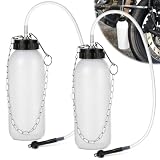
- [Product Specifications] 1L Brake Bleeder Bottle with Rubber Fitting for most bleeder screws including m6/m8/m10 screw fittings, 20 inch long hose and hooked chain to hang and hold in place while collecting old brake fluid, allows for easy draining of old brake fluid
- [Easy to Operate with One Person] Our one man brake bleeder kit is designed for your convenience. Attach the rubber connector to the brake system bleeder screw, secure it with a chain or place it on a smooth surface, press the brake pedal a few times to keep the hose full and free of air bubbles, and then repeat the procedure for the rest of the wheel; You don't need a second person to bleed the brake system, resulting in increased efficiency and less hassle
- [Durable Material]The brake bleeder kit is made of high hardness plastic brake fluid bottle, with strong corrosion resistance and durability, which can prolong the service life; Equipped with a transparent brake bleeder hose, easy to monitor the bleeding process, to ensure that there is no air bubbles left in the braking system
- [Anti Reflux Valve Design] This brake fluid bleeder kit incorporates an anti reflux valve between the hose and the cap, which ensures that no air bubbles remain in the braking system during the bleeding process, preventing reflux and isolating the air at the same time, which allows all the old brake fluid in the car to be drained into the brake bleeder bottle without leakage
- [Universal Brake Bleeder]Our brake bleeder kit pressure bleeders are compatible with most brake systems including cars, motorbikes, ATVs, dirt bikes and scooters, making it easy to solve your brake bleeding problems on all types of vehicles, suitable for any home garage and professional workshops
Is DOT 5 better than DOT 4 or DOT 5.1?
No. DOT 5 is a different silicone-based system, not a higher-quality step in a DOT-number ladder. Use it only when the entire vehicle system is designed and approved for silicone fluid.
Is DOT 5.1 silicone brake fluid?
No. DOT 5.1 is non-silicone and belongs to the glycol-family group. DOT 5 is the silicone-based classification.
Can I mix brake-fluid brands?
Brand is less important than chemistry and approval. Some products can be mixed within the glycol family, but follow the vehicle manual and product data sheet. Never mix DOT 5 silicone or mineral oil with a DOT glycol system.
Does synthetic brake fluid mean a particular DOT grade?
No. Synthetic describes how a product is marketed or formulated, not its required vehicle application. Check the DOT designation, ISO or SAE classification, OEM approval, boiling points, and viscosity.
How often should brake fluid be changed?
Follow the vehicle’s maintenance schedule. Intervals vary by model, market, climate, and use. Humidity, track driving, heavy braking, and hydraulic repairs may justify more frequent service. A general one-to-two-year recommendation is not universal.
Can low brake fluid cause a soft pedal?
It can be associated with air, vapor, or a hydraulic problem, but a soft pedal has several possible causes, including leaks and master-cylinder faults. A low reservoir may also reflect pad wear. Do not simply refill it and ignore the cause.
What should I do if I accidentally added the wrong brake fluid?
Do not continue driving or try to correct it by adding more fluid. Have the system evaluated using the vehicle manufacturer’s procedure. Wrong-family contamination may require draining, flushing, and inspection of seals and hydraulic components.
Do ABS brakes require DOT 5.1 or low-viscosity fluid?
Not universally. ABS and ESC vehicles may require a particular low-viscosity specification, but the correct fluid remains vehicle-specific. Read the manual for DOT 4 LV, ISO Class 6, or an OEM specification rather than guessing from the presence of ABS.
Is racing brake fluid suitable for daily driving?
Sometimes, if it meets the vehicle’s required specification and has suitable wet boiling point, cold viscosity, and road-system compatibility. A racing fluid may have excellent hot performance but can be unsuitable for low-viscosity systems or require more frequent service.
The Bottom Line
Buy the fluid your car specifies—not the bottle with the biggest DOT number. Confirm the chemistry, low-viscosity or OEM requirements, and wet boiling point. DOT 5 is silicone-based and must not be used as a substitute for DOT 3, DOT 4, or DOT 5.1. If the reservoir is low or the wrong fluid was added, diagnose the brake system before driving.
Quick Recap
Product prices and availability are accurate as of the date/time indicated and are subject to change. Any price and availability information displayed on Amazon at the time of purchase will apply.
Free tools Windows power users keep installed
One-click scans. No signup required.