Start with tires and alignment. For most Toyota GR86 owners, those two changes deliver more useful performance than an intake, throttle controller, or exhaust. Add brake fluid and use-appropriate pads next; then choose springs, dampers, sway bars, cooling, or oil-control hardware according to whether the car is a daily driver, autocross car, or HPDE track car.
The best Toyota GR86 performance mods are not the loudest or most expensive parts. Start with a quality tire matched to your climate, a performance alignment, and consistent brakes. Then choose suspension, sway bars, cooling, and track hardware according to how you drive. Power upgrades belong near the end of the build, not the beginning.

As an Amazon Associate I earn from qualifying purchases.
The GR86 already has the fundamentals most modified cars are trying to create: low mass, rear-wheel drive, a low-mounted 2.4-liter boxer engine, and balanced chassis tuning. Toyota lists 228 horsepower and 184 lb.-ft. of torque for the 2026 GR86, and the 2027 model retains those outputs. Because the car is naturally aspirated, improving its contact patch, braking consistency, alignment, and thermal reliability usually produces a bigger real-world result than inexpensive intake or exhaust parts.
Recommended Free Tools
The best GR86 modification order
| Priority | Modification | Best for | Why it comes here |
|---|---|---|---|
| 1 | Performance tires | Every owner | The largest immediate improvement in grip, braking, and steering response |
| 2 | Performance alignment | Every owner who drives enthusiastically | Makes the tire contact patch more predictable and protects handling consistency |
| 3 | Brake fluid and appropriate pads | Street, autocross, and HPDE | Improves pedal consistency without the cost of a big-brake kit |
| 4 | Wheels and tire-pressure equipment | Autocross and track drivers | Allows a dedicated tire setup and easier event preparation |
| 5 | Springs, dampers, or coilovers | Drivers who need more control or adjustability | Useful when selected as a complete suspension strategy |
| 6 | Adjustable sway bars | Autocross and advanced chassis tuning | Changes balance and roll stiffness, but is not a substitute for tires |
| 7 | Brake cooling and oil monitoring | Repeated HPDE and track use | Addresses heat before it becomes a reliability problem |
| 8 | Oil-control and drivetrain cooling hardware | Sustained, high-grip track use | Conditional upgrades that should follow temperature and pressure evidence |
| 9 | Aerodynamics | High-speed track builds | Can improve performance, but only as a balanced, properly installed system |
| 10 | Engine power modifications | 完成 builds that already have the basics solved | More expensive, less predictable, and more consequential on a naturally aspirated car |
There is no requirement to complete every step. A daily-driven GR86 may never need a coilover, oil baffle, differential cooler, or aero package.
#1 Best Overall

- Used Book in Good Condition
1. Buy the right tires first
Tires are the highest-return modification for the GR86. They affect acceleration, braking, cornering, steering feel, ride quality, road noise, wet-weather behavior, and how forgiving the car is at the limit.
Toyota originally fitted the GR86 with Michelin Primacy HP tires on the 17-inch base wheel and Michelin Pilot Sport 4 tires on the 18-inch Premium wheel. Those factory choices illustrate an important point: the ideal replacement tire depends on the wheel, climate, and intended use. A tire that is excellent for a dry weekend car may be a poor choice for a driver who commutes through cold rain or snow.
Choose the tire category before choosing the model
- Max-performance summer tires: The best choice for warm-weather street driving, back roads, and occasional track use when dry grip and steering precision matter most. Michelin describes the Pilot Sport 4 S as a summer tire for high-performance road driving and occasional track use, with dry grip, wet braking, and precise handling among its intended characteristics. It is not suitable for snow or ice.
- Ultra-high-performance all-season tires: A better compromise for regions with changing temperatures or occasional light winter conditions. They give up some dry grip and response compared with a summer tire, but are more practical for a car driven year-round.
- 200-treadwear and track-focused tires: Appropriate for autocross and competition-oriented driving. They can provide substantially more ultimate grip, but may be louder, less durable, less comfortable, and less forgiving in cold or wet conditions. Confirm street legality where you live.
- A dedicated track set: Often the smartest option for HPDE drivers. A second set of wheels lets you preserve a street-friendly tire for commuting and mount a track-focused tire only when conditions and the event justify it.
Do not select a tire solely because it is the stickiest model available. Tire temperature, alignment, wheel width, sidewall size, vehicle ride height, and driving surface all affect the result. Before ordering, verify the exact tire size, load rating, and speed rating against the GR86’s door-placard information and owner’s manual. Also confirm wheel clearance, especially if the car has larger brakes, coilovers, spacers, or aftermarket brake ducts.
For most owners, a reputable GR86 performance tires retailer or wheel-and-tire package provider is more useful than a generic cheapest-price search. The important purchase is the correct tire for the complete setup, not a particular brand name chosen in isolation.
2. Get a performance alignment
A performance alignment is one of the most valuable and most overlooked GR86 modifications. It determines whether the tire stays evenly loaded and predictable during braking and cornering. It also helps reveal whether a new spring, wheel, or tire has created clearance or geometry problems.
Ask a shop experienced with enthusiast or track cars for a setup using modest negative camber and a small amount of toe appropriate to your use. A street GR86 should not automatically receive an aggressive track alignment. Excessive camber can accelerate inner-edge wear, while an unsuitable toe setting can make the car nervous or consume tires quickly.
There is no universal alignment number that is correct for every GR86. The proper setting depends on:
The Tool Desk
Outbyte Driver Updater FREEScan for outdated or missing drivers - takes under a minuteDriver Scan →Outbyte PC Repair FREEClear out junk files and repair common Windows errorsFree Scan →- Street, autocross, or track use
- Wheel width and tire construction
- Ride height and suspension travel
- Road surface and ambient temperature
- How much tire wear you are willing to accept
Autocross and track drivers can generally justify more negative camber when tire temperatures and wear show that the outside shoulder is overheating or wearing prematurely. The alignment should be based on tire evidence rather than an internet number copied from another car.
Keep the before-and-after alignment sheet. If you install springs or coilovers, have the car aligned after the suspension settles and recheck it after any major ride-height adjustment. Eibach’s GR86 spring instructions specifically call for checking alignment, wheel and tire clearance, brake-line clearance, and ABS-sensor attachments after installation. That is a useful standard for any suspension work.
3. Improve brake consistency before buying a big-brake kit
For street use, the GR86’s standard braking system is usually better served by fresh fluid and a suitable pad compound than by an immediate big-brake conversion. A large brake kit can offer more thermal capacity, but it also brings cost, wheel-clearance requirements, replacement-part expense, and additional fitment questions.
Brake fluid
For repeated HPDE braking, a high-temperature DOT 4 fluid such as Motul RBF 600 is a relevant example. Motul describes it as a non-silicone synthetic fluid for hydraulic brake and clutch systems and publishes a dry boiling point of 312°C/594°F and a wet boiling point of 205°C/401°F.
Those figures are laboratory specifications, not a guarantee that the fluid will remain below its limit in your car. Brake fluid absorbs moisture over time, and its performance depends on age, bleeding procedure, system condition, pad heat, ambient temperature, and event intensity. Follow the fluid manufacturer’s service guidance, use fresh fluid from a sealed container, and bleed or replace it according to both time and track use.
Brake pads
Fluid does not compensate for the wrong pad. Street pads are designed to work quietly and predictably from cold. Track pads are designed for higher operating temperatures and may have poor cold bite, substantial noise and dust, accelerated rotor wear, or unpleasant street manners.
For a street car, choose a quality pad with predictable cold performance, acceptable noise, and compatibility with the factory ABS system. For HPDE, select a compound rated for the temperatures and session length you actually run. Some owners use a separate track pad and swap back to a street pad afterward; others use a dual-purpose compound and accept the compromise. Inspect pad thickness and rotor condition before every event.
Brake cooling
Brake cooling becomes more useful as speed, tire grip, ambient temperature, and session length increase. CUSCO offers a bolt-on GR86/BRZ brake-cooling guide plate designed to direct air toward the front brakes and reduce temperature rise. It is a sensible track-oriented thermal upgrade, not a mandatory part for every commuter.
Do these 3 things before closing this tab:
1Clear out junk files and repair common Windows errors2Fix the driver behind crashes, sound loss and screen glitches3Repair Windows errors before they cause bigger problemsBrake ducts should be installed with attention to wheel, rotor, suspension, and steering clearance. A duct that rubs a tire or interferes with a brake line is a safety problem, regardless of how effective it is at lowering temperature.
4. Pick one coherent suspension strategy
Suspension parts should be selected around the tire and alignment. Buying isolated lowering springs, very stiff dampers, and oversized sway bars without considering how they interact can make the GR86 slower and less comfortable.
Mild street option: springs with suitable dampers
Eibach’s PRO-KIT for 2022–2026 GR86/BRZ models is a four-spring progressive kit designed for use with OE shocks. Eibach lists approximately 1.2 inches of front lowering and 1.0 inch at the rear, while describing the kit as a way to lower the center of gravity and improve steering response and vehicle dynamics.
This type of spring is a reasonable choice for a street owner who wants a lower stance and sharper response without immediately moving to adjustable coilovers. The trade-offs are reduced ground clearance, possible changes in ride quality, altered suspension travel, and the possibility that aging original dampers will not be an ideal match. Check alignment, tire clearance, brake-line routing, and ABS-sensor attachments after installation.
Autocross and track option: quality dampers or coilovers
Adjustable dampers or coilovers can provide control over damping, ride height, and—depending on the system and setup—corner balance. They make more sense when the driver understands what problem the stock suspension is creating and is prepared to record settings, monitor tire wear, and maintain the hardware.
Do not choose a coilover solely by its advertised lowering amount or spring-rate number. A poorly matched or poorly adjusted kit can reduce mechanical grip, limit usable suspension travel, increase harshness, and make the car unpredictable over bumps. For a dual-purpose GR86, retaining enough travel and compliance is often more valuable than making the car extremely stiff.
A specialist GR86 suspension upgrades retailer can be useful when the purchase includes application-specific spring rates, damper settings, replacement parts, and installation guidance. Springs, dampers, top mounts, alignment hardware, and end links are not interchangeable simply because they fit the same chassis.
Rank #3
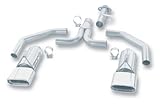
- T-304 Stainless Steel
- Bolt On Installation
- All Welded Construction
- Made In USA
- Classic BORLA Sound
5. Add adjustable sway bars only when you need balance tuning
Adjustable anti-roll bars are tuning tools, not automatic grip upgrades. They can reduce body roll and alter the balance between understeer and oversteer, which makes them especially useful for autocross drivers who are trying to address a specific handling behavior.
What’s actually slowing this PC down?
Pick the symptom - the matching free tool is one click away.
Whiteline lists GR86-specific front and rear bars, including a package with a 22-mm adjustable front bar and a 16-mm adjustable rear bar. Eibach also offers a GR86/BRZ front-and-rear anti-roll-bar kit. These applications demonstrate that purpose-built options exist, but the correct setting still depends on tire grip, alignment, spring rates, damping, and surface conditions.
Increasing rear roll stiffness can make the car rotate more readily, but it can also make the rear less forgiving on a wet or low-grip road. Increasing front roll stiffness changes the balance in the opposite direction, although the actual result depends on the complete suspension system. Make one change at a time and test it in a controlled environment.
Adjustable end links may be needed to restore proper bar geometry after lowering a car, particularly if the factory links are binding or the bar is preloaded at rest. They are not automatically a performance gain on an otherwise stock-height GR86.
Three sensible GR86 build paths
Daily driver and back-road build
Keep this build light, compliant, quiet, and reliable:
Free tools Windows power users keep installed
One-click scans. No signup required.
- Choose a summer performance tire for warm climates, or a quality all-season performance tire where year-round use requires it.
- Have the car aligned with a moderate street-oriented setting.
- Install fresh brake fluid and a quality street pad when the original parts are worn or inadequate.
- Consider mild springs only if the loss of ground clearance and ride-quality change are acceptable.
- Add sway bars only if you have a clearly identified roll or balance issue.
For this use, the stock dampers, factory brake cooling, standard oil pan, and factory differential cooling are usually better left alone unless inspection or driving conditions show a specific need.
Autocross build
Autocross rewards response, transient grip, and a setup that works on a short, often uneven course:
- Use a competition-oriented tire or a second wheel set so the street tires are not sacrificed.
- Develop a repeatable tire-pressure routine with an accurate tire-pressure gauge and a portable tire inflator for track days or events.
- Use an alignment with enough negative camber to control shoulder wear, based on tire-temperature and wear evidence.
- Tune adjustable sway bars carefully to address understeer or oversteer.
- Move to adjustable dampers or coilovers when the driver has reached the limits of the stock suspension and can use the added adjustability.
- Confirm class rules before buying wheels, tires, sway bars, dampers, or aero parts.
Autocross tires can be exceptionally sensitive to temperature and pressure. Record cold pressure, ambient conditions, course behavior, and hot pressure after a run. A tire that feels fast in one temperature range may be difficult to manage in another.
HPDE and track build
For track use, reliability and repeatability matter more than a peak dyno number:
Quick wins for a faster PC:
Clear out junk files and repair common Windows errorsFree Scan →Scan for outdated or missing drivers - takes under a minuteDriver Scan →Repair Windows errors before they cause bigger problemsFix Now →- Use a second wheel set with a suitable track tire if the car is also driven on the street.
- Install track-capable brake pads and fresh high-temperature fluid.
- Inspect pads, rotors, wheel studs or lug hardware, brake lines, tires, and fluid levels before every event.
- Add brake cooling when temperatures, pace, or session length justify it.
- Use Track mode’s factory oil-temperature display and take notes during sessions.
- Monitor oil pressure where possible, maintain the correct oil level, and inspect the engine and pan after events.
- Investigate oil-control and differential-temperature solutions before adding sustained aero load or more power.
- Add aero only after the chassis and thermal basics work as a matched package.
Instruction is also a modification to the driver. A reputable performance driving school or HPDE provider can improve braking points, lines, car control, and mechanical sympathy more safely than immediately installing another hardware part. Check the event’s technical and safety requirements before attending.
Oil temperature, oil pressure, and oil control
This is the most conditional—and potentially most important—part of a serious GR86 track build. Toyota provides an oil-temperature display in Track mode, so use the factory monitoring capability rather than treating temperature as an afterthought.
Rank #4
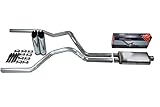
- Flow II muffler is a high performance straight through stainless muffler option
- High Quiality 2.5" Mandrel Bent Aluminized Tail Pipes
- Installation Hardware Included
- Welding not Required
- Disclaimer* This product does not interfere with any portion of the vehicle’s emissions control systems. The intent of the product is to retain all emissions control devices and their intended purpose on the vehicle. This product is in compliance with the Clean Air Act in full.
Repeated high-G braking and cornering can move oil away from the pickup. Sticky tires, long sessions, high ambient temperatures, and additional aerodynamic load increase the reason to investigate oil control. That does not mean every street GR86 needs an oil pan, baffle, cooler, or pressure sensor.
CUSCO markets a GR86/BRZ oil-pan baffle plate intended to reduce oil movement during acceleration, braking, and lateral-G loading. Verus Engineering markets a high-capacity FA24 oil pan with integrated baffling for the GR86/BRZ platform. Verus also reports its own on-track pressure data, including a pressure drop with the OEM pan and improved pressure stability with its product. Those figures are manufacturer-reported test claims, not independent validation, and should not be treated as universal results.
Windows Errors? Fix Them Before They Spread
Repair common Windows errors and clear accumulated junk for a smoother, more stable PC - no reinstall needed.Free scan · no reinstallCrashes, No Sound, or Screen Glitches?
Random freezes, missing sound and display glitches usually trace back to one bad driver. Find and replace yours safely.Free scan · under a minuteA GR86 oil-pan baffle can be a reasonable track-preparation consideration when the part is an exact fit and the car regularly experiences sustained high-G use. Before buying, confirm the engine generation, chassis application, clearance, installation method, drain-plug arrangement, and oil-capacity implications. A reputable performance shop should review the whole system rather than promising that one part guarantees engine protection.
The sensible procedure is to:
- Keep the oil at the manufacturer’s specified level and verify it before every event.
- Record oil temperature during representative sessions.
- Monitor oil pressure with suitable instrumentation where possible.
- Inspect for leaks, pan contact, debris, and unusual oil consumption.
- Choose a baffle, higher-capacity pan, cooler, or other solution based on measured conditions and qualified advice.
Differential and drivetrain cooling: track-only for most owners
A normal street-driven GR86 generally does not need a differential cooler. Repeated track sessions, high ambient temperatures, very sticky tires, and long continuous use can make differential temperature more relevant.
CUSCO lists a GR86/BRZ differential cover with additional oil capacity and cooling fins, as well as a separate differential oil-cooler system intended for competition-oriented use. These products belong in a track-preparation plan, not an every-owner shopping list.
Before adding a cooler, collect evidence that temperature is a problem and confirm the correct fluid, capacity, pump or plumbing requirements, mounting location, and maintenance procedure. Added hardware also adds leak points, installation time, cost, and inspection requirements.
Consider Toyota’s factory Performance Package
If you have not purchased the car yet, Toyota’s factory Performance Package may be a better starting point than recreating the same goals with unrelated aftermarket parts.
Toyota’s 2026 GR86 materials describe a package with Brembo brakes and SACHS dampers. The listed brake hardware includes red-painted four-piston front and two-piston rear Brembo calipers, 12.8-by-1.3-inch front rotors, and 12.4-by-0.79-inch rear rotors. Toyota’s 2027 announcement says the package continues with Brembo brakes and SACHS dampers.
That package offers integrated hardware, known factory fitment, and a coherent configuration. Availability and exact equipment can vary by model year, trim, market, and dealer inventory, so verify the window sticker and current regional specifications before treating it as standard equipment.
The Performance Package does not eliminate the need for suitable tires, alignment, fluid maintenance, pad selection, and track inspection. It is a strong factory alternative for a buyer who expects regular spirited or track driving, not a reason to skip basic setup work.
The Tool Desk
Outbyte PC Repair FREERepair Windows errors before they cause bigger problemsFix Now →Outbyte Driver Updater FREEFix the driver behind crashes, sound loss and screen glitchesFind Drivers →Aero belongs at the end of a track build
A wing, splitter, diffuser, or underbody panel is not automatically a performance modification. At the speeds where aero works, it can add drag, alter front-to-rear balance, reduce ground clearance, increase mounting loads, and create inspection or event-compliance issues.
Verus Engineering lists GR86/BRZ aero products and says its development process includes computational fluid dynamics, finite-element analysis, thermodynamics, heat transfer, and real-world course testing. Those engineering methods are useful indicators of a serious development process, but individual product claims still need to be evaluated in the context of the complete car.
Install aero as a matched system. A large rear wing without enough front balance can change the car’s handling in undesirable ways; a low splitter can be damaged on ordinary roads; and a cosmetic spoiler should not be presented as proven lap-time hardware. Confirm mounting strength, tire clearance, ride height, track rules, and the effect on cooling airflow.
Best Value

- CLEANS FUEL SYSTEM: One 15 fl oz bottle of STP Exhaust & Emissions System Cleaner targets injector and intake deposits to improve combustion efficiency, throttle response and overall drivability
- REDUCES EXHAUST SMOKE: Helps cut visible exhaust smoke by addressing deposits that contribute to incomplete combustion for a cleaner running engine on daily trips
- SUPPORTS EMISSIONS READINESS: Use before an emissions test to support cleaner exhaust and more consistent readings as part of routine car care and emissions system maintenance
- RESTORES POWER AND RESPONSE: Frees sticky deposits that can cause hesitation rough idle and loss of power helping restore acceleration and confident passing performance
- EASY POUR-IN GAS TREATMENT: No tools required; just add to fuel tank before or after fueling and drive normally
Why power modifications should come last
The naturally aspirated FA24 does not respond as dramatically to inexpensive bolt-ons as a turbocharged engine. Intake kits, throttle controllers, cat-back exhausts, and ECU tunes may change sound or throttle feel, but horsepower claims deserve skepticism unless they include controlled dyno testing, repeatability, clear conditions, emissions information, and application-specific fitment.
Quick wins for a faster PC:
Repair Windows errors before they cause bigger problemsFix Now →Fix the driver behind crashes, sound loss and screen glitchesFind Drivers →A throttle controller changes accelerator-pedal mapping; it does not create engine power. A louder intake or exhaust can make the car feel faster without materially changing acceleration. An intake that draws hot air or disrupts sensor behavior can even undermine consistency.
Forced induction can deliver a much larger power increase, but it also changes fuel requirements, calibration, thermal load, drivetrain stress, traction demands, and warranty risk. It should not be part of a basic list of modifications every GR86 owner should get. If you eventually choose forced induction, select a complete engineered system with professional calibration and a clear plan for cooling, fueling, clutch or transmission load, and legal compliance.
Modifications that should not be universal recommendations
- Cheap universal cold-air intakes: Avoid unless the GR86-specific design, sensor compatibility, heat management, and testing are documented.
- Extremely stiff springs or bargain coilovers: Lowering alone is not the same as improving grip or control.
- Oversized wheels: Extra unsprung mass can reduce ride quality, acceleration, braking response, and compliance.
- Track pads used as daily pads: Discuss cold bite, noise, dust, rotor wear, and street legality first.
- A very large rear sway bar: More rotation can mean less forgiveness in rain or on low-grip surfaces.
- Cosmetic aero: Do not describe a spoiler as a measurable lap-time upgrade without evidence.
- Forced induction as a first modification: Solve grip, brakes, suspension, and thermal management first.
- Harness bars or racing harnesses: Never install restraint hardware without considering seat compatibility, mounting geometry, rollover protection, and the vehicle’s complete safety system.
Warranty, legality, and installation cautions
Toyota’s owner’s manual warns that non-genuine accessories or modifications may affect performance, safety, durability, or regulatory compliance, and that resulting damage may not be covered by warranty. Toyota’s general new-vehicle warranty information lists 36 months or 36,000 miles of basic coverage and 60 months or 60,000 miles of powertrain coverage, subject to the actual warranty terms and exclusions.
A modification does not automatically void the entire vehicle warranty. The more accurate concern is that a dealer or manufacturer may challenge a warranty claim when it attributes a particular failure to an aftermarket part, installation error, calibration, or changed operating condition. Keep the original parts, receipts, installation records, alignment sheets, fluid records, and track notes.
Before installing anything, verify:
- Exact chassis and model-year fitment
- Wheel, tire, brake, suspension, and fender clearance
- Load and speed ratings
- ABS and brake-line clearance
- Emissions and noise legality in your location
- Autocross or HPDE class and safety rules
- Whether the installation changes ride height, alignment, fluid capacity, or maintenance intervals
For suspension, brake, oil-control, and fuel-system work, professional installation is often cheaper than repairing a clearance, leak, or safety mistake. After installation, perform a slow-speed inspection, verify torque and fluid levels, and test the car progressively before driving at the limit.
A practical GR86 shopping list by owner type
| Owner | Buy first | Consider later | Usually skip initially |
|---|---|---|---|
| Daily and back-road driver | Climate-appropriate tires, alignment, fresh brake fluid | Street pads, mild springs, modest sway-bar tuning | Track pads, oil baffle, differential cooler, aggressive aero |
| Autocross driver | Second wheel set, competition tire, alignment, tire-pressure tools | Adjustable sway bars, dampers or coilovers | Power bolt-ons chosen without testing, unnecessary heavy wheels |
| HPDE driver | Track tires, pads, high-temperature fluid, inspection routine | Brake cooling, oil monitoring, oil-control hardware, differential cooling | Forced induction or aero before reliability and chassis data exist |
| New-car buyer | Performance Package if available and appropriate | Better tires, alignment, event-specific pads and fluid | Duplicating factory brake and damper upgrades without comparing total cost |
Bottom line: the best GR86 build is use-case specific
For nearly every Toyota GR86, the first performance investment should be tires, followed by alignment and brake consistency. A street car may stop there or add mild springs. An autocross car benefits from a second wheel set, a data-led alignment, adjustable sway bars, and eventually adjustable dampers. An HPDE car should prioritize pads, high-temperature fluid, brake cooling, oil-temperature and pressure awareness, and oil-control investigation before adding power.
The 2026 and 2027 factory Performance Package is a credible integrated option for buyers who want Brembo brakes and SACHS dampers from the start. Aftermarket parts remain useful when they solve a clearly identified problem and are installed with the correct supporting hardware. The fastest GR86 is not necessarily the one with the most parts; it is the one whose tires, alignment, brakes, suspension, and thermal systems work together.
Frequently Asked Questions
Does the GR86 need a big-brake kit?
Not usually. A street-driven GR86 normally benefits more from tires, alignment, and brake maintenance than from a big-brake kit. A big-brake system becomes more compelling when repeated track use overwhelms the factory setup, but wheel clearance, replacement costs, pad selection, and fitment must be considered.
Free tools Windows power users keep installed
One-click scans. No signup required.
Are summer tires worth it on a GR86?
A summer performance tire is usually the best choice for warm-weather grip and steering response. If the car is driven through cold temperatures, rain, or winter conditions, an ultra-high-performance all-season tire may be the safer compromise. Summer tires are not suitable for snow or ice.
Will performance modifications void my GR86 warranty?
Not automatically. An aftermarket modification may complicate a warranty claim if Toyota or a dealer attributes a failure to that modification, its installation, or changed operating conditions. Keep records and do not assume that one modification voids the entire vehicle warranty.
Does every GR86 need an oil-pan baffle?
Most daily drivers do not need one. Repeated high-G track use, sticky tires, long sessions, high ambient temperatures, and sustained lateral loads make oil-control investigation more important. Monitor oil temperature, maintain the correct oil level, and consult a qualified shop before selecting a baffle, higher-capacity pan, or cooler.
Is the GR86 Performance Package better than aftermarket upgrades?
The package is a strong option for buyers who want integrated hardware. Toyota’s 2026 materials describe Brembo brakes and SACHS dampers, and Toyota says the package continues for 2027. Verify the exact equipment and availability for your trim and market.
The Bottom Line
Best first mods: climate-appropriate performance tires, a professional alignment, and fresh brake fluid with pads suited to your use. Add suspension and sway-bar tuning for autocross, and add brake cooling, monitoring, and oil-control work for repeated track driving. Treat power, aggressive aero, and forced induction as later-stage choices.
Quick Recap
Product prices and availability are accurate as of the date/time indicated and are subject to change. Any price and availability information displayed on Amazon at the time of purchase will apply.




