The Tool Desk
Outbyte PC Repair FREERepair Windows errors before they cause bigger problemsFix Now →Outbyte Driver Updater FREEScan for outdated or missing drivers - takes under a minuteDriver Scan →K-Seal Multi-Purpose One-Step Permanent Coolant Leak Repair (ST5501) is the clearest first option for a small coolant-side leak associated with a suspected cracked engine block. Bar’s Leaks Block Seal Head Gasket Fix 1111 is the strongest alternative. Both are conditional treatments—not guaranteed replacements for diagnosing and mechanically repairing a seriously damaged block.
K-Seal Multi-Purpose One-Step Permanent Coolant Leak Repair (ST5501) is the clearest first option when a suspected engine-block crack is small, coolant-side, and the engine can still run without overheating. Bar’s Leaks Block Seal Head Gasket Fix 1111 is the strongest alternative, especially if you are prepared to drain and flush the cooling system as its instructions require.
As an Amazon Associate I earn from qualifying purchases.
Neither product is a guaranteed repair for a seriously damaged engine block. A sealer may help with a small coolant leak, but it cannot restore structural strength, replace missing metal, repair a badly damaged cylinder wall, or correct a crack in a critical load-bearing area. Diagnose the leak before adding anything, and stop driving if the engine overheats or begins losing coolant rapidly.
What’s actually slowing this PC down?
Pick the symptom - the matching free tool is one click away.
What an engine block sealer actually does
Engine block sealer is a chemical additive introduced into the cooling system. As it circulates with the coolant, sealing particles are intended to collect and harden at a small leak. K-Seal describes its formula as a combination of ceramic microfibers and copper particles that travel through the cooling system and coagulate at the leak.
#1 Best Overall
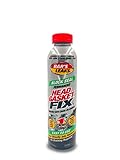
- SAFELY SEALS GASKET AND OTHER SEVERE LEAKS: One step formulation contains a combination of antifreeze compatible sodium silicate sealing liquid and various size gasket sealing particles which penetrate gaps and cracks then harden to permanently stop leaks. Heavy duty formula works on aluminum and cast iron heads & blocks, along with sealing all other engine cooling system leaks better than a traditional stop leak. This includes repairing head gaskets, cylinder heads, intake gaskets, cracked blocks and freeze plugs.
- QUICKLY AND PERMANENTLY STOPS COOLANT LEAKS: This works because of the extreme heat inside the combustion chamber (5000°F) that acts as a catalyst to permanently harden the material to make it stronger than the actual head gasket itself.
- ONE STEP - NO DRAINING REQUIRED - EASY TO USE: Your vehicle is a good candidate for this product if it can idle for 20 minutes without overheating or having to add coolant.
- USE WITH ALL TYPES OF TRADITIONAL OR EXTENDED LIFE COOLANT: Use with ALL types of traditional or extended life coolant including yellow, orange, pink, red, blue, purple and green silicate based & non-silicate based (OAT/HOAT) 50-50 mix antifreeze, and/or water.
- Made in the USA
That makes stop-leak products most appropriate for a small coolant-side leak that is not causing immediate overheating. They are not equivalent to welding, machining, metal stitching, replacing a block, or installing a long block.
The distinction matters because “cracked block” can describe very different failures. A tiny external seep may be a candidate for a conditional chemical repair. A visible fracture through a cylinder wall, deck surface, main-bearing region, or engine-mounting area generally requires mechanical repair or replacement.
Even the applicable stop-leak testing standard is concerned with small leaks and requires consideration of heat transfer and fluid flow. It does not establish that a product will repair every crack in every engine. Product test dimensions are laboratory results, not a diagnosis of your vehicle.
Recommended Free Tools
Best overall: K-Seal ST5501
K-Seal coolant leak repair is the best-matched first product for a small suspected coolant leak involving an engine block. K-Seal’s product documentation specifically lists leaks in the block, cylinder head, head gasket, radiator, heater matrix, and water pump. It also has a dedicated cracked-head-or-block use case, giving it unusually direct relevance to this problem.
K-Seal reports that its product has been tested to ASTM D3147 and claims sealing capability for holes up to 0.635 mm in diameter and cracks up to 0.254 mm wide by 12.7 mm long. Those figures should be treated as the manufacturer’s reported test capability—not as a promise that a crack of those dimensions in your engine will seal.
Rank #2

- FIX IT FAST: Our multi-purpose solution works in minutes to quickly seal leaks in the radiator, head gasket, freeze plugs, block, heater matrix & water pump. Fixes most leaks in water-cooled engines
- STOP HOLES & CRACKS: With just 1 step our unique formula will seek out each hole & crack, sealing them, without any adverse impact on the efficiency of your engine cooling
- VERSATILE COMPATIBILITY: Compatible with all types of antifreeze coolant. Suitable for use in both cars & light trucks with up to 12 cylinders.
- Attention: If you notice bubbles coming from the radiator or coolant reservoir, or if K-Seal engine coolant stop leak is not sealing, the system might be over-pressurized. Refer to the Product guides and documents section of this page for additional instructions to ensure a successful repair. Over 8 million bottles sold worldwide!
How K-Seal is applied
- Make sure the cooling system is cool and not pressurized. Never remove a radiator cap or expansion-tank cap from a hot engine.
- Vigorously shake the bottle.
- Add the full contents to the radiator or expansion tank, following the current product label and vehicle instructions.
- Run the engine until it reaches normal operating temperature so coolant circulates through the system.
- Monitor the temperature gauge closely and stop immediately if the engine overheats.
This relatively simple procedure is one reason K-Seal is the primary recommendation. It is most sensible when the engine can run normally, the coolant loss is modest, and preliminary checks do not indicate severe internal damage.
Best alternative: Bar’s Leaks Block Seal Head Gasket Fix 1111
Bar’s Leaks Block Seal Head Gasket Fix 1111 is the strongest direct alternative. The manufacturer lists cracked blocks, cracked cylinder heads, freeze plugs, head-gasket coolant leaks, and other cooling-system leaks among its applications. It is described for use with both aluminum and cast-iron heads and blocks.
Bar’s Leaks gives a useful candidacy test: the vehicle should be able to idle for 20 minutes without overheating or requiring additional coolant. If it cannot meet that condition, it is a poor candidate for a pour-in treatment and should be diagnosed or repaired instead.
How Bar’s Leaks differs from K-Seal
Bar’s Leaks uses a more involved preparation process in its technical instructions. The procedure calls for allowing the engine to cool, removing the antifreeze, completely flushing the cooling system and overflow tank, and then following the specified dosage and idle procedure. Do not substitute an improvised process; the current product label and technical bulletin should control.
Bar’s Leaks reports ASTM D3147 testing in which the product sealed a 0.030-inch round hole and a 0.015-inch-wide slot. These are manufacturer-reported test results. They do not prove that a particular block crack is repairable, nor do they indicate how long a repair will last in a specific vehicle.
Rank #3

- Permanent molecular seal that’s as strong as steel
- Seals cracks & holes in cast iron and aluminum engine blocks, head gaskets, freeze plugs, and copper, aluminum and bi-material radiators & heater cores
- For use in all water-cooled diesel and gasoline vehicles
- Withstands extreme pressure and temperatures of a cooling system and will not wash away
- Professional grade formula exceeds ASTM D6107 for effectively sealing leaks in cooling systems
Engine block sealer comparison
| Product | Best fit | Preparation | Important limitation |
|---|---|---|---|
| K-Seal ST5501 | Small coolant-side leak involving a suspected block, head, or gasket | Shake, add to the radiator or expansion tank, and circulate according to the instructions | Reported crack-size capability does not guarantee success in a vehicle |
| Bar’s Leaks 1111 | Heavy-duty coolant leak, cracked block, cracked head, or head-gasket application | Drain and completely flush the cooling system, then follow the product procedure | Poor candidate if the engine cannot idle without overheating or needing more coolant |
| Mishimoto Liquid Chill Stop Leak, MMRA-LC-SL | General cooling-system stop-leak application, including claimed cracked-head or block leaks | Manufacturer instructions call for shaking, adding, and running the engine | The available performance evidence is primarily manufacturer-provided |
| Steel Seal Head Gasket Repair | Head-gasket or claimed cracked-head/block applications | Follow the current product-specific procedure, which may depend on the vehicle | Verify current suitability, instructions, and guarantee terms before relying on it |
Diagnose the leak before using sealer
A falling coolant level does not prove that the engine block is cracked. Hoses, the radiator, water pump, thermostat housing, freeze plugs, heater core, head gasket, cylinder head, and other components can produce similar symptoms. Adding sealer before identifying the failed component can waste money and potentially complicate later repairs.
Do these 3 things before closing this tab:
1Fix the driver behind crashes, sound loss and screen glitches2Repair Windows errors before they cause bigger problems3Scan for outdated or missing drivers - takes under a minuteA practical minimum diagnostic process is:
- Confirm coolant loss. Check the level only when the engine is cold and look for wet areas, dried coolant residue, or a sweet coolant odor.
- Inspect external components. Examine hoses, hose connections, the radiator, water pump area, thermostat housing, freeze plugs, heater hoses, and the heater core.
- Pressure-test the cooling system. With the engine cold, use the vehicle’s specified pressure limit. A pressure drop or visible leak helps identify an external failure, but follow the service information for the vehicle.
- Test for combustion gases. Bubbles in the expansion tank, exhaust odor in the coolant, repeated pressure buildup, misfires, or unexplained coolant loss can point to a head-gasket, head, or block problem.
- Check the oil. Inspect the oil level and condition for coolant contamination or moisture. Coolant in the oil is a major warning sign because it can damage bearings and other lubricated components.
- Confirm the engine can operate normally. It should be able to idle and reach operating temperature without rapid overheating or substantial coolant loss.
- Use deeper tests when necessary. Cylinder-leakage testing and a borescope can help identify coolant entering a cylinder or a combustion leak that a basic inspection cannot locate.
A service diagnostic bulletin available through NHTSA recommends this general type of sequence: checking coolant and oil, testing for combustion gases, pressure-testing the cooling system, performing cylinder-leakage testing, and using a borescope where appropriate. The exact test limits and procedures remain vehicle-specific.
When a cracked-block sealer is a bad idea
Do not treat chemical sealer as the correct solution when any of the following applies:
- The block has a large visible fracture, a missing section, or obvious structural separation.
- The engine overheats quickly or cannot idle through the product’s required procedure.
- Coolant is disappearing rapidly or being expelled under pressure.
- Coolant is heavily contaminating the engine oil.
- Coolant is entering a cylinder and causing severe misfire or a risk of hydrolock.
- Combustion gases are strongly pressurizing the cooling system.
- The crack affects a main-bearing area, deck surface, cylinder wall, mounting surface, or another structurally important location.
- The vehicle is covered by a warranty, recall, or engine program that could be affected by an additive.
- The vehicle manufacturer’s service information prohibits stop-leak products.
Also be cautious with a vehicle that has a restricted radiator, marginal water pump, poorly functioning thermostat, or an already contaminated cooling system. A sealer cannot correct those problems, and adding material to a compromised system may make future diagnosis or flushing more difficult.
Safety precautions
- Never open a hot radiator or pressurized expansion tank. Hot coolant can cause severe burns.
- Wear eye and hand protection when handling coolant or additives.
- Keep coolant away from children and animals; it is toxic if ingested.
- Use the correct coolant and disposal method specified for the vehicle.
- Stop driving if the temperature gauge rises, the warning light appears, the heater suddenly blows cold air, or coolant loss becomes rapid.
- After treatment, continue checking the coolant level and temperature. A temporary improvement is not proof that the block is structurally repaired.
When mechanical repair is the better answer
The location and nature of the damage determine the proper repair. Some small, accessible external perforations may be candidates for a localized mechanical repair. An International service procedure distributed through NHTSA, for example, describes cleaning and preparing a block perforation before applying an external epoxy repair. That is very different from pouring an additive into the cooling system and illustrates why the repair method must match the failure.
Quick wins for a faster PC:
Clear out junk files and repair common Windows errorsFree Scan →Scan for outdated or missing drivers - takes under a minuteDriver Scan →Rank #4
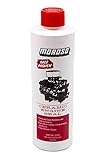
- Fit type: Vehicle Specific
- The best Chemical Sealer you can buy to stop cooling system leaks Works equally well in aluminum or cast-iron blocks Cooling system must be thoroughly clean before use Does not work with antifreeze If this doesn't stop the leaks, find yourself a welder!
- Part number: 35500
- Package Weight: 1.6 pounds
More serious damage may require a machine-shop repair, metal stitching, welding where appropriate, a replacement block, a remanufactured long block, or a complete replacement engine. Do not assume that every overheating event requires an entire engine, either: proper testing may identify a hose, radiator, water pump, head gasket, or cylinder head as the actual failed component.
Independent reader supportYour contribution helps us test, update, and keep practical guides available for everyone.Which product should you choose?
Choose K-Seal ST5501 when the suspected problem is a small coolant-side leak, the engine still reaches operating temperature without overheating, and you want the simplest manufacturer-directed application. Its documentation is the most directly aligned with a suspected cracked block.
Choose Bar’s Leaks 1111 when you want the heavy-duty alternative and are willing to drain and thoroughly flush the cooling system before following the more involved instructions. It is not appropriate if the engine cannot idle for 20 minutes without overheating or needing additional coolant.
Consider Mishimoto or Steel Seal only after checking the current label, vehicle compatibility, procedure, and—where relevant—the current terms of any manufacturer guarantee. None should be presented as a universal fix.
Bottom line: K-Seal is the clearest first choice for a small suspected coolant leak associated with a cracked block; Bar’s Leaks is the strongest direct alternative. Both are conditional stop-leak treatments, not substitutes for diagnosing and mechanically repairing a seriously damaged engine block.
Best Value

- FIX IT FAST: Our advanced formula with 33% more sealing power than regular K-Seal, ensures a long-lasting, seal for challenging leaks. Fixes blown head gaskets, cracked heads & porous engine blocks in cars
- STOP HOLES & CRACKS: With just 1 step our unique formula with ceramic micro-fibres, will seal leaks up to 0.64mm in size, without any adverse impact on the engine
- VERSATILE COMPATIBILITY: Works with all types of coolant & compatible with a wide range of vehicle engine materials & heavy duty machinery.
- Attention: If you notice bubbles coming from the radiator or coolant reservoir, or if K-Seal engine coolant stop leak is not sealing, the system might be over-pressurized. Refer to the Technical Specification section of this page for additional instructions to ensure a successful repair. Over 8 million bottles sold worldwide!
Frequently Asked Questions
Will K-Seal fix a cracked engine block?
K-Seal may seal a small coolant-side leak associated with a cracked block, but it is not guaranteed. It cannot restore structural strength or repair a large fracture, missing metal, damaged cylinder wall, or critical load-bearing area.
Is Bar’s Leaks better than K-Seal for a cracked block?
Bar’s Leaks Block Seal Head Gasket Fix 1111 is the strongest direct alternative in this comparison. Its instructions require draining and completely flushing the cooling system, and the engine should be able to idle for 20 minutes without overheating or requiring additional coolant.
Should I diagnose the leak before adding engine block sealer?
No. Check for external leaks, pressure-test the cooling system, test for combustion gases when indicated, inspect the oil, and confirm the engine can reach operating temperature without overheating. A coolant leak may come from a hose, radiator, water pump, freeze plug, head gasket, or cylinder head instead.
When should I not use cracked-block sealer?
Avoid it when the block has a large visible fracture, coolant is contaminating the oil, the engine overheats quickly, coolant is entering a cylinder, combustion gases strongly pressurize the cooling system, or the crack affects a structurally important area.
The Bottom Line
Best first option: K-Seal ST5501 for a small coolant-side leak when the engine can still run without overheating. Best alternative: Bar’s Leaks Block Seal Head Gasket Fix 1111 for readers willing to follow its drain-and-flush procedure. Neither product is a guaranteed repair for a large, structural, or rapidly worsening block crack.
Quick Recap
Product prices and availability are accurate as of the date/time indicated and are subject to change. Any price and availability information displayed on Amazon at the time of purchase will apply.




