There is no single best commuter motorcycle helmet for every rider. In the United States, start by verifying the helmet’s DOT certification label and getting a secure, comfortable fit; then choose the coverage, ventilation and weather features that suit your route. A full-face helmet is a strong starting point for many commuters, but the right choice depends on fit and priorities—not style alone.
How do I choose the right motorcycle helmet?
Use this order: verify the helmet is intended and certified for the market where you will ride, confirm its fit in person if possible, then compare coverage and everyday comfort. A feature-rich helmet is not a good choice if it shifts on your head or creates painful pressure.
- Check the U.S. certification label. NHTSA says a helmet sold for use in the United States should carry the DOT symbol on the back. The required label includes the manufacturer or brand, model designation, DOT, FMVSS No. 218 and the word CERTIFIED. DOT indicates the manufacturer’s certification to the federal standard; it is not an NHTSA approval or endorsement. NHTSA uses manufacturer self-certification and tests some helmets for compliance. See NHTSA’s helmet selection and safety guidance.
- Verify the product and seller. NHTSA warns about novelty helmets and counterfeit DOT labels. Buy from a credible seller, confirm the model and its certification details, and avoid novelty products that are not protective motorcycle helmets. A sticker alone is not enough to resolve doubts about a questionable listing.
- Find the right shape and size. Measure your head and use the manufacturer’s size chart, then try the helmet on to check pressure and movement. The fit procedure below explains what to look for.
- Choose coverage and features for your commute. Compare full-face, modular and open-face designs, then consider ventilation, face-shield setup, weather, noise and visibility in light of your route and climate.
- Use independent ratings as supporting information. If the exact model appears in SHARP’s database, consider its rating alongside fit and U.S. certification. SHARP is a UK Department for Transport consumer information program, not a U.S. certification scheme.
How should a motorcycle helmet fit?
Fit depends on head shape as well as circumference. NHTSA describes three common shapes: round oval, intermediate oval and long oval. Measure around your head just above the eyebrows and around the thickest point at the back, then compare the measurement with the specific maker’s size chart. A measurement narrows the choice; it does not replace trying the helmet on.
- Put the helmet on and check that it sits level, with the front edge positioned as the manufacturer directs.
- Look for snug, even contact around your head. NHTSA describes a correctly sized helmet as “a little tight,” with even pressure and no uncomfortable pressure points.
- Shake your head gently. The helmet should not shift independently or slide around.
- Keep it on for 30–45 minutes if possible. This gives you time to notice hot spots or discomfort that may not be obvious during a quick try-on.
Do not accept painful pressure points or movement just to get a particular style or rating. SHARP also cautions that correct fit matters regardless of a helmet’s safety rating.
Quick wins for a faster PC:
Clear out junk files and repair common Windows errorsFree Scan →Scan for outdated or missing drivers - takes under a minuteDriver Scan →Repair Windows errors before they cause bigger problemsFix Now →#1 Best Overall
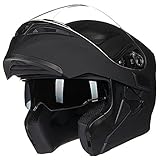
- High Resistance ABS Shell With Micrometrically Adjustable Strap
- Meets or Exceeds FMVSS-218 and DOT Safety Standards
- Helmet Liner / Cheek Pads are Lightweight, Soft and Easily Removable and Washable
- Sleek and Lightweight Design Reduces Wind Noise
- Modular Flip-Up Function Anti-Scratch, Anti-Fog and Wide View Clear Visor
Which helmet style suits commuting?
Coverage, convenience and airflow vary by design. These are category-level trade-offs; they do not guarantee how a particular model will perform.
| Style | What to weigh for commuting |
|---|---|
| Full-face | Provides a chin guard and full-face coverage. NHTSA describes full-face helmets as aerodynamic, comfortable and well ventilated. Check the actual model’s shield, ventilation and fit rather than assuming every helmet shares those qualities. |
| Modular | Can be configured as full-face or open-face, offering a change in face coverage and convenience. Check the specific model’s construction and operating instructions. SHARP publishes information about its testing, including modular helmet latch scores. |
| Open-face or half | Lacks a chin guard and has significant wind noise, according to NHTSA. Consider that trade-off carefully if your commute involves sustained road speeds or you prioritize face coverage. |
For a model-specific comparison, SHARP describes its impact testing and modular helmet latch scoring at SHARP Testing. A rating or test result supplements—not replaces—checking fit and the applicable U.S. certification.
Rank #2

- FMVSS-218 & DOT Certified – Ensuring Top-Tier Safety with Rigorous Quality Control on Every Helmet Batch.
- Available in S, M, L, XL – Fits Head Circumference 21.3" - 24" (54-61 cm), Ensuring Comfort and a Secure Fit.
- Durable Construction & Comfort – Reinforced ABS Shell, Adjustable Chin Strap, Removable Liner for Easy Cleaning.
- Aerodynamic Shape – Reduces Wind Drag and Noise, Adjustable Sun Visor for Superior Sun Protection and Visibility in Any Condition.
- Versatile Use – Ideal for Adults & Teens in Motorcycle, Biking, ATV, Karting, Skiing & More. Perfect Gift for Family & Friends.
What should commuters compare beyond certification and fit?
- Face-shield setup: Consider how the shield suits your visibility needs and the weather you encounter. Check the model’s details rather than assuming a feature is standard.
- Ventilation: Think about your climate, traffic and how much airflow you want. NHTSA’s broad descriptions do not establish which individual helmet ventilates best.
- Weather protection: Compare how the helmet’s coverage and shield arrangement match rain, cold and changing conditions on your route.
- Noise: Wind noise is a stated drawback of half and open-face categories. Other models can differ, so compare the specific candidates if noise is important.
- Visibility and route: Consider your typical riding conditions and the helmet’s shield arrangement when comparing models; no model-by-model commute performance is established here.
When choosing between two candidates, compare the exact model identity and U.S. label, available fit shape and try-on result, coverage, and the features that matter for your daily route. Do not treat a general style description or a third-party rating as proof that a helmet will fit or feel right for you.
Independent reader supportYour contribution helps us test, update, and keep practical guides available for everyone.What does a SHARP rating tell U.S. riders?
SHARP—the UK Department for Transport’s Safety Helmet Assessment and Rating Programme—publishes one-to-five-star ratings and specifications for helmets it has tested. Its searchable helmet ratings by brand can provide an additional model-comparison point if the exact helmet is listed. SHARP says a helmet must fit correctly regardless of its rating, and its stars are not a substitute for checking the U.S. DOT label and model identity.
What’s actually slowing this PC down?
Pick the symptom - the matching free tool is one click away.
Rank #3
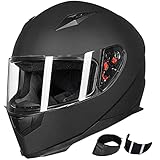
- 2 Visors Included: Clear + Smoked and 1 Neck Scarf for Winter Use
- Streamlined Aerodynamic Design Reduces Wind Noise and Drag
- Advanced and Lightweight Durable ABS Shell
- Quick Release Clasp and Strap and Removable Inner Lining Pads
- Meets or Exceeds FMVSS-218 and DOT Safety Standards
SHARP’s publications page notes a printed listing notice dated February 2026; online ratings and specifications should be checked against the current listing. See SHARP publications and rating information.
Why certification and fit matter
NHTSA reported that 74% of motorcyclists wore DOT-compliant helmets in 2023. Separately, NHTSA reported 6,228 motorcyclist deaths in 2024, 16% of all traffic fatalities, and said that was the highest number of motorcyclists killed since at least 1975. These are U.S. national figures for those years, not current-year estimates. The figures underscore why a protective, correctly fitting helmet matters, but they do not rank individual helmets.
Helmet-use laws vary by state; check the rules that apply where you ride. NHTSA’s guidance is U.S.-specific, while SHARP is a UK program.
Quick Recap
Product prices and availability are accurate as of the date/time indicated and are subject to change. Any price and availability information displayed on Amazon at the time of purchase will apply.




