Free tools Windows power users keep installed
One-click scans. No signup required.
Battery-electric tugboats are moving from one-off demonstrations toward repeat construction, with India a particularly active market. The shift depends on more than fitting a vessel with batteries: towing duty, propulsion controls, charging arrangements and the port’s electricity supply all shape whether an electric tug can do its work.
How a battery-electric tug works
A battery-electric tug stores energy onboard and uses electric motors to drive its propulsion system. The motors, thrusters, switchboards, automation and energy-management controls must work together to deliver the manoeuvring and towing power required for a specific harbour or terminal duty.
Battery capacity describes stored energy, not a guaranteed operating range or number of jobs. Kongsberg Maritime says each of four Svitzer TRAnsverse 2600e tugs under construction at Cochin Shipyard will have a 4.8 MWh primary battery. That is a supplier-stated specification, not an endurance figure; actual time between charges depends on the tug’s workload and operating pattern. Kongsberg Maritime’s 5 May 2026 announcement says its package includes electrical and automation architecture, switchboards, propulsion motors, controls, thrusters and shore-charging equipment.
Where new electric tugs are being built
India: policy-backed orders and construction
India’s Green Tug Transition Programme is supporting several projects at different stages. On 31 January 2026, the Press Information Bureau said Polestar Maritime had ordered two battery-electric tugs for Jawaharlal Nehru Port Authority. The government announcement specifies 60 tonnes of bollard pull for each tug and says Cochin Shipyard and subsidiary Udupi-CSL will build them using domestically sourced batteries. It describes the vessels as having zero direct emissions during harbour operations. These are announced project plans, not evidence that the tugs are already in service. Press Information Bureau announcement.
Do these 3 things before closing this tab:
1Repair Windows errors before they cause bigger problems2Scan for outdated or missing drivers - takes under a minute3Clear out junk files and repair common Windows errors#1 Best Overall

- 2.4GHz High Frequency Control: With advanced anti-interference signal technology, the tugboat operates on a high-frequency band, allowing multiple boats to play simultaneously without any interference.
- Realistic Illumination: Equipped with a rotating searchlight and simulated glowing cabin, this design enhances the overall visual experience and adds a touch of authenticity to adventures on water.
- Dual Propeller Design: Featuring a dual propeller design, the remote control boat ensures smoother navigation and more powerful performance.
- Completely Waterproof: The entire boat is designed to be fully waterproof, eliminating any worries about electrical leaks and ensuring a safer and more durable usage.
- Safety without Switches: Equipped with a bottom water-sensing device, the toy boat only powers on when it touches the water and immediately shuts off when lifted, effectively preventing any potential harm to player.
Cochin Shipyard said construction of four Svitzer battery-electric TRAnsverse 2600e tugs began on 2 September 2026, following a shipbuilding agreement signed in December 2025. Kongsberg Maritime described the contract as covering four vessels, with options for four more. Those are distinct milestones: the construction start is confirmed by the yard, while additional vessels remain options. Cochin Shipyard’s construction announcement.
Other Indian projects broaden the supplier and yard mix. Echandia announced battery-system selections for a tug intended for Deendayal Port Authority at Kandla and for two Knowledge Marine & Engineering Works tugs under the transition programme. Echandia said the latter pair were scheduled to enter operation in Q2 2027; that is a supplier forecast, not a reported completion. Kandla project announcement and Knowledge Marine project announcement.
Rank #2

- User-Friendly Features: Adjustable steering rudder, speed modes, LED lights, and low battery alarm for an enhanced sailing experience.
- Durable and Powerful: Featuring a 2.4GHz system with a 30-meter range ensures interference-free operation even with multiple boats.
- Designed with an all-sealed waterproof cover and multiple strong locks to protect against water damage. The anti-collision design includes a protective bumper at the front.
- Convenient Charging: Includes a 3.7V 100mAh battery and USB charger, offering 13 mins of sailing time after just 25 minutes of charging.
- Ideal for pools, rivers, lakes, and coastal waters, this tugboat is perfect for outdoor adventures. It makes an excellent gift for special occasions like Christmas.
ABB has separately said it will supply power and propulsion systems for two electric tugs under construction at Cochin Shipyard. The company describes its onboard DC grid as a way to integrate energy storage and improve drivetrain efficiency. ABB announcement.
Serial construction beyond India
India is not the only place building electric tugs in series. Sanmar Shipyards reported that its 14th all-electric ElectRA tug had reached sea trials in 2026, with another under construction. Sea trials mark a later development stage than an order or construction start, but do not by themselves establish entry into service. The series count and milestone are company-reported. Sanmar Shipyards announcement.
Rank #3

- Flexible to Control: The remote control tugboat can move forward, backward, and turn left or right, offering excellent control and flexibility in navigation.
- Long-Lasting Battery Life: Equipped with a 3.7V 600mAh lithium battery, the tugboat can be used continuously for up to 15 minutes on a single charge.
- Wide Control Range: With a 2.4Ghz frequency, the remote control offers a broad control range of up to 50 meters, allowing for a greater sailing experience.
- Waterproof Design: The boat features a sealed waterproof design, ensuring it can withstand splashes and brief immersion in water without any damage.
- Ideal for Outdoor Use: Given its robust construction and long-range control, this remote control tugboat is perfect for outdoor use, providing endless fun at lakes, ponds, or pools.
A 7 October 2026 report characterized India, China and the United States as becoming major builders, with Türkiye remaining important and Spain notable for hybrid propulsion. That is a broad market framing, not a comparable count of current national orders or a quantified global market estimate. The cited projects show expansion, but do not establish a reliable global market size. Riviera Maritime Media’s 7 October 2026 report.
How long can an electric tug operate between charges?
There is no single answer for all electric tugs. A 4.8 MWh battery, for example, does not by itself establish how many hours a vessel can work, how many towing jobs it can complete, or how much reserve it retains. Those outcomes depend on the vessel’s power demand over its duty cycle, including the intensity and duration of towing and manoeuvring, and on the charging time available between jobs.
Rank #4
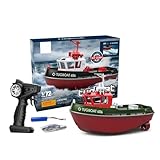
- Manufacturer: Henglong Item Condition: New, Semi-assembled and Painted Material: Plastic Charging Time: 2 hours Driving Time: About 10-15 minutes Maximum Driving Speed: 5 kilometers per hour Boat Size: About 23x10x15cm Boat Battery: rechargeable battery (included) Remote Control Battery: 2 x AA batteries (not included) ID: HL-3800-TugBoat-RTR-DGN
- If you have any question please click on the store name to ask us.
For a meaningful project comparison, look for the operating duty, usable energy, charging power and turnaround schedule together. The government-announced 60-tonne bollard-pull rating for the Polestar tugs indicates a towing capability target, while Kongsberg’s stated battery capacity for the Svitzer series describes stored energy. Neither figure alone answers the endurance question.
Independent reader supportYour contribution helps us test, update, and keep practical guides available for everyone.What charging infrastructure does a port need?
A port needs a charging arrangement that fits the tug’s schedule and can deliver the required power between assignments. The project scope matters: Kongsberg says shore-charging equipment is included in its package for the Svitzer series. Port of Antwerp-Bruges, announcing the launch of Volta 1 on 19 May 2025, described a dedicated charging arrangement for that vessel. These examples make clear that shore equipment and vessel batteries are parts of one operating system, rather than independent specifications. Port of Antwerp-Bruges announcement.
The Tool Desk
Outbyte PC Repair FREEClear out junk files and repair common Windows errorsFree Scan →Outbyte Driver Updater FREEScan for outdated or missing drivers - takes under a minuteDriver Scan →Best Value

- Model Construction Wooden Kit
- Accurate and Detailed
- Many hours of building fun
- Charging rate and connection: determine how quickly the tug can take on energy and whether the berth’s connection supports the vessel’s needs.
- Turnaround: compare charging windows with the tug’s actual shift and job pattern.
- Powertrain integration: account for motors, thrusters, switchboards, automation and energy management alongside the battery.
- Port electricity: consider the capacity and source of the electricity supplied ashore; onboard electrification does not, on its own, establish lifecycle emissions.
Are battery-electric tugboats zero-emission?
“Zero-emission” needs a boundary. The Government of India’s announcement says the Polestar tugs will have zero direct emissions during harbour operations. That describes emissions at the vessel during use; it does not establish zero emissions over the full lifecycle, including electricity generation, battery manufacture or construction. The electricity source and port infrastructure affect the broader emissions picture.
How to judge a project’s maturity
Orders, construction starts, launches, sea trials and operational service are not interchangeable. For instance, the Polestar order is a government-announced procurement; the Svitzer series has a reported construction start; Volta 1 was announced at launch; and Sanmar reported a tug at sea trials. A project’s milestone tells readers how far it has progressed, but does not automatically prove that a vessel is operating commercially.
Svitzer’s experience claim should also be read with attribution. Cochin Shipyard’s announcement quotes the company: “This is proven technology, with over 3,000 commercial towage jobs been completed with the class, and Svitzer has 18 TRAnsverse vessels under construction worldwide.” The statement is Svitzer’s, as relayed by the shipyard, rather than an independently audited count.
Quick Recap
Product prices and availability are accurate as of the date/time indicated and are subject to change. Any price and availability information displayed on Amazon at the time of purchase will apply.




