Crashes, No Sound, or Screen Glitches?
Random freezes, missing sound and display glitches usually trace back to one bad driver. Find and replace yours safely.Free scan · under a minuteWindows Errors? Fix Them Before They Spread
Repair common Windows errors and clear accumulated junk for a smoother, more stable PC - no reinstall needed.Free scan · no reinstallAutonomous vehicles may need data-center-scale computing, but they cannot carry a data center’s power and cooling demands. In a 2022 interview with EE Times, Arm executive Dipti Vachani described how Arm was addressing that mismatch—from compact IoT processors and cloud-based development tools to SOAFEE, an open architecture for automotive software.
Why automotive computing is a power-and-software problem
Vachani framed the challenge as more than adding processing power. A fully autonomous vehicle must handle increasingly complex software within tight limits on energy, heat and physical space. She said, “A fully autonomous vehicle will need almost a billion lines of code.” That was her 2022 estimate, not a current measurement of every autonomous vehicle’s software.
As an Amazon Associate I earn from qualifying purchases.
One response, she said, was to treat the vehicle like a data center on wheels. But Vachani warned that an approach requiring extensive liquid cooling “is not going to work in a production environment.” The practical challenge is to support demanding workloads without letting computing hardware overwhelm a vehicle’s power and cooling envelope.
How Arm connects compact processors and edge AI
M-class for small, constrained devices
Vachani pointed to Arm’s M-class processors as a fit for small, power-constrained IoT devices. In the 2022 interview, she said Arm had 215 billion devices and that “a third of those are M class.” Those are figures she attributed to Arm at the time, not independently verified current totals.
#1 Best Overall
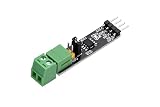
- High-Speed & Multi-Node Capacity – Delivers reliable 1Mbps CAN signaling and high input impedance that supports up to 120 nodes on a single bus, making it ideal for complex industrial and automotive networks.
- Ultra-Low Power Standby Mode – Consumes only 370µA typical standby current, enabling low-power standby operation for battery-sensitive or energy-efficient embedded systems without sacrificing wake-up responsiveness.
- Robust Protection & Signal Integrity – Built-in thermal protection and open-circuit fail-safe features, combined with differential receiver design for strong EMI immunity and transient interference resistance, ensure stable communication in harsh electrical environments.
- Flexible Termination & Visual Indication – Onboard selectable 120Ω terminal resistor (jumper-enabled) allows easy bus matching, while the built-in power LED provides instant visual confirmation of active operation for faster debugging and setup.
- Standards-Compliant & Developer-Friendly – Fully ISO11898 compliant for broad interoperability, and includes STM32 demo code for rapid prototyping, supporting seamless integration with 3.3V systems including RPi and other SBC platforms.
Ethos NPUs for edge AI
For edge AI, Vachani described pairing compact processors with Ethos neural processing units (NPUs). Her point was that dedicated AI processing can reduce the memory and surrounding hardware a device needs, helping designers work within the size and power limits typical of edge systems. The interview describes the intended design benefit; it does not establish a quantified saving or a result for a particular product.
How Total Solutions and Virtual Hardware help software teams
Arm Total Solutions aims to make hardware and software co-development more consistent across systems that combine different kinds of compute, including CPUs, NPUs, image signal processors (ISPs) and GPUs. Such systems are heterogeneous: different processors handle different workloads, so teams need a development environment that helps software work across the combined platform rather than treating each component in isolation.
Rank #2

- ESP32-S3 4.3″ LCD Development Board,Integrates RGB Interface LCD
- IPS Display Panel,Excellent Display Performance, 160°Viewing Angle
- Supports Multiple Peripherals,Supports The Expansion Of Multiple Peripherals Via Sensor, CAN, RS485, And I2C Interfaces
- A microcontroller development board with 2.4GHz WiFi and BLE 5 support,
- Equipped with Xtensa 32-bit LX7 dual-core processor, up to 240MHz main frequency.
Arm Virtual Hardware extends that idea into the cloud. It lets developers begin writing and testing software before the target silicon is available, potentially allowing software work to proceed earlier in a hardware project. Vachani described it as “a consistent solution environment in the cloud.” The interview presents this as a development approach, not a guarantee that cloud testing replaces validation on physical hardware.
Free tools Windows power users keep installed
One-click scans. No signup required.
What SOAFEE means for software-defined vehicles
SOAFEE stands for Scalable Open Architecture for Embedded Edge. Arm describes it as an open architecture and reference implementation for applying cloud-native software practices to automotive edge systems, which must operate within safety and power constraints. The goal is to create a more common environment for developing and deploying automotive software while accounting for the realities of production vehicles.
Rank #3

- [Automotive Applications]: For telematics, infotainment, and vehicle-to-vehicle (V2V) communications in vehicles.
- [Wearable Devices]: Integrated into smart watches, fitness trackers, and other wearable technologies for health monitoring and data collection.
- [Functionality]: ESP WROOM 32 dual-core 240 MHz processor, Wi-Fi and Bluetooth capabilities make ESP32-S3 N8R8 a versatile choice for developers creating complex and feature-rich IoT devices. The availability of a rich ecosystem further simplifies the development process.
- [Functionality]: ESP WROOM 32 dual-core 240 MHz processor, Wi-Fi and Bluetooth capabilities make ESP32-S3 N8R9 a versatile choice for developers creating complex and feature-rich IoT devices. The availability of a rich ecosystem further simplifies the development process.
- [Smart Function]: ESP32 S3 DevKitC 1 has panel Bluetooth and Dual Cores Microcontroller, which can be used for smart home automation systems to industrial monitoring equipment. The ESP WROOM 32 S3 N8R8 development board can be widely used in various applications and can be used for runtime operations and storing variables when the module is powered on.
That work relates to the idea of the software-defined vehicle: vehicle functions can be improved or upgraded through software rather than being fixed entirely at manufacture. In an Arm podcast transcript published in 2021, Vachani defined an upgrade this way: “It’s quite simply that the function of the vehicle is upgraded, and or improved by an automatic download of software.” An over-the-air download is one mechanism for delivering an update; the broader engineering challenge is building software that can be developed, integrated and maintained across vehicle systems.
SOAFEE’s open approach also makes ecosystem participation important. A shared architecture can help align cloud-native development with embedded automotive requirements, but it is not, by itself, proof that every supplier or vehicle program uses the same tools or can move software unchanged from cloud to car.
Quick Recap
Best Value

- 1.The module is fully compatible with the ISO11898 standard. High input impedance, allowing 120 nodes
- 2.Low current standby mode, typical current is 370μA
- 3.Signal transmission rate up to 1Mb/s, with thermal protection, open circuit failure protection function
- 4.With the anti-instantaneous interference and protecting the bus function
- 5.Slope control,and reduce radio frequency interference (RFI); differential receiver with anti - wide range of common - mode interference and electromagnetic interference ( EMI ) capacity
Rank #4

- Mini ESP32 Development Board 3.9x3.1cm for IoT Controller with Dual-Core CPU for Industrial Automation & Smart Home Projects
- Compact Size Design: Measures 3.9 cm by 3.1 cm with lightweight 12 gram construction for easy integration into space-constrained applications
- Reliable Connectivity: Precision-engineered pins ensure excellent touch performance and consistent signal transmission for dependable run
- Multi-Application Compatibility: Compatible with industrial control systems automotive electronics and smart home devices for versatile project development
- Complete Development Package: Includes 1 Set ESP32 development board ready for immediate use in your IoT and electronics prototyping needs
Sources and scope
- EE Times interview with Dipti Vachani, published 6 April 2022.
- Arm podcast transcript with Vachani, 2021.
- SOAFEE initiative.
Product prices and availability are accurate as of the date/time indicated and are subject to change. Any price and availability information displayed on Amazon at the time of purchase will apply.
Recommended Free Tools




