Crashes, No Sound, or Screen Glitches?
Random freezes, missing sound and display glitches usually trace back to one bad driver. Find and replace yours safely.Free scan · under a minutePC Slower Than It Used to Be?
A free scan shows the junk files, broken settings and background clutter dragging Windows down - then fixes them in one click.Free scan · Windows 10 & 11The Ford Model T, often described as America’s first mass-produced automobile, became a mass-market success because practical engineering, standardized parts, low prices, and Ford’s Highland Park moving assembly line reinforced one another. Public sales began October 1, 1908; Ford built more than 15 million before ending production in May 1927 for the Model A.
The Model T was not the first automobile or the first use of assembly-line methods. Its importance came from combining a durable, relatively simple car with a manufacturing system capable of producing it at unprecedented volume and progressively lower prices.
| # | Preview | Product | Price | |
|---|---|---|---|---|
| 1 |

|
The Complete Ford Model T Guide: Enlarged Illustrated Special Edition | $29.95 | Buy on Amazon |
| 2 |

|
Henry Ford and the Model T (Inventions and Discovery series) | $8.99 | Buy on Amazon |
| 3 |
|
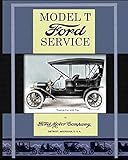
Model T Ford Service | $21.87 | Buy on Amazon |
| 4 |

|
Model T Ford: The Car That Changed the World | $53.91 | Buy on Amazon |
| 5 |

|
The Ford Model A | $39.95 | Buy on Amazon |
Ford’s first Model T production card records a car assembled at Piquette Avenue on September 27, 1908. That production-record date is different from the October 1 public-release date, a distinction that explains why both dates appear in reliable histories.
Key takeaways
- Ford publicly introduced the Model T on October 1, 1908, and production ended in May 1927 when Ford retooled for the Model A.
- According to Ford Motor Company (2026), more than 15 million Model Ts were produced between 1908 and 1927, making the car the dominant mass-market automobile of its era.
- According to the Library of Congress (2026), the relevant Model T assembly process fell from 12.5 hours to 93 minutes after Ford introduced the moving line at Highland Park in October 1913.
- A documented 1909 Model T touring car had a 177-cubic-inch inline-four, 22 horsepower, a two-speed transmission, a 100-inch wheelbase, and a 1,200-pound weight; those specifications did not apply identically to every year or body style.
- The Model T was black-only during a period generally described as 1914 or 1915 through 1925, because black paint dried faster and supported Ford’s production schedule.
- Ford’s $5 day policy began in 1914 alongside a reduction from a nine-hour to an eight-hour workday, helping Ford recruit and retain workers even though assembly-line labor was repetitive and demanding.
What made the Ford Model T so special?
The Ford Model T was special because its practical car design and its manufacturing system were developed to reinforce each other. Ford did not rely on one revolutionary invention. The company combined a durable, relatively simple automobile; standardized, interchangeable components; a production line organized around repeated tasks; and falling prices that opened car ownership to a much broader public.
The Model T was engineered for the conditions many early motorists actually faced. Flexible construction, a relatively straightforward drivetrain, accessible maintenance, and the ability to cope with poor roads mattered more to early buyers than modern-style acceleration, quietness, climate control, or a wide range of trim choices. The Henry Ford’s historical account of the Model T places the car’s durability, simplicity, and affordability at the center of its appeal.
Henry Ford’s stated ambition, as reproduced in Ford Motor Company’s official history, was: “I will build a car for the great multitude. It will be large enough for the family, but small enough for the individual to run and care for. It will be constructed of the best materials, by the best men to be hired, after the simplest designs that modern engineering can devise. But it will be so low in price that no man making a good salary will be unable to own one.” — Henry Ford, quoted by Ford Motor Company.
That statement was not merely advertising language. The Model T’s importance came from the interaction between the product and the process: standardization made large-scale production and repair more manageable, while higher output helped Ford reduce the selling price. The result was America’s first mass-market automobile and one of the earliest truly mass-produced cars, rather than simply the first automobile ever made.
Was the Model T really the first mass-produced car?
The Model T was not the first automobile and Ford did not invent the entire concept of mass production from nothing. The more accurate claim is that the Model T became one of the first automobiles produced at transformative industrial scale and America’s first mass-market automobile.
| Claim | Accurate explanation |
|---|---|
| First automobile ever made | Incorrect. Automobiles existed before the Model T. |
| First car made with every assembly-line idea | Too broad. Ford drew on earlier industrial practices and improved them rather than creating every part of the idea from nothing. |
| America’s first mass-produced automobile | A defensible shorthand when referring to the Model T’s combination of standardized design, high-volume production, and broad consumer reach. |
| Car that made mass automobile ownership practical | The strongest description of the Model T’s historical role: Ford connected production efficiency, durability, and falling prices in a way competitors and earlier cars had not matched at the same scale. |
The distinction matters because the Model T’s achievement was a system-level breakthrough. The car itself was important, but the Highland Park production methods turned a useful automobile into a repeatable mass-market product.
When was the Model T introduced, and when did production end?
The Model T’s first recorded production date and its public-release date were different: Ford’s first production card records a car assembled on September 27, 1908, while Ford made the Model T available to the public on October 1, 1908.
| Date | Event | Why the date matters |
|---|---|---|
| September 27, 1908 | Ford’s first Model T production card records a car assembled at the Piquette Avenue plant. | This is production-record evidence, not the public-release date. The Henry Ford’s production-card record documents the date. |
| October 1, 1908 | Ford made the Model T available to the public. | This is the appropriate date for the car’s public introduction. Ford’s company timeline identifies the public launch. |
| 1910 | Ford moved Model T manufacturing operations to Highland Park. | The larger, purpose-built operation made more advanced production organization possible. |
| October 1913 | Ford’s moving automobile assembly line began operating at Highland Park. | The moving line sharply reduced the labor time required for the relevant assembly process. |
| 1914 | Ford introduced the $5 day and reduced the workday from nine hours to eight hours. | The policy changed Ford’s labor strategy as production expanded. |
| May 26, 1927 | The 15-millionth Model T left the Highland Park line. | The milestone came just before Ford ended Model T production and retooled for the Model A. |
| May 1927 | Model T production ended. | The aging design could no longer compete as effectively with newer cars offering greater comfort, power, style, and convenience. |
How was the Model T engineered?
The Model T was engineered around simplicity, durability, manageable production, and serviceability rather than maximum performance or luxury. Its construction included several choices that helped the car tolerate difficult roads or made manufacturing and routine maintenance more practical for its period.
| Feature | What the Model T used | Why it mattered |
|---|---|---|
| Engine | Four-cylinder engine | A relatively simple power unit suited to a practical, standardized automobile. |
| Cylinder construction | One-piece cylinder block with a removable cylinder head | The arrangement supported a straightforward production and service approach. |
| Materials | Vanadium-alloy steel in critical components | The stronger alloy helped Ford build a durable car without treating every component as a heavy, conventional steel part. |
| Frame and suspension | Flexible frame and suspension | The design was well suited to the rough and poorly surfaced roads common during the Model T’s era. |
| Transmission | Two-speed planetary transmission | The gear arrangement kept gears in mesh and used bands to control the gearset, avoiding the more demanding sliding-gear approach common at the time. |
The Henry Ford’s Model T research article documents the car’s four-cylinder engine, construction, materials, frame, and suspension. The museum’s Model T transmission record explains the planetary arrangement and its bands.
What were the specifications of a 1909 Model T?
A documented 1909 Model T touring car in The Henry Ford’s collection had the following specifications. These figures describe that particular touring car, not every Model T body style or production year.
| Specification | Documented 1909 touring-car figure |
|---|---|
| Engine | 177-cubic-inch inline-four |
| Power | 22 horsepower at 1,600 rpm |
| Transmission | Two-speed manual |
| Wheelbase | 100 inches |
| Weight | 1,200 pounds |
| Price | $850 |
These specifications come from The Henry Ford’s artifact record for a 1909 Ford Model T touring car. A different body style, equipment level, or production year could have a different weight, price, or configuration, so the 1909 touring-car figures should not be presented as universal Model T specifications.
How did the Model T’s transmission and controls work?
The Model T used a two-speed planetary transmission controlled partly through foot pedals, while the throttle was operated by a hand lever on the right side of the steering wheel. The arrangement was simpler in some respects than a conventional sliding-gear transmission, but it is unfamiliar to anyone accustomed to a modern automatic or manual car.
The car had three foot pedals:
- One pedal controlled the transmission.
- One pedal selected reverse.
- One pedal operated the brake.
The planetary transmission kept its gears in mesh and used bands to control the gearset. Because the driver did not have to synchronize and slide individual gears into mesh in the same way as with a typical period sliding-gear transmission, the system was easier to use than many contemporary alternatives. The Henry Ford’s 1912 Model T controls record documents the three pedals and steering-column throttle, while the museum’s transmission artifact record explains the planetary mechanism.
What’s actually slowing this PC down?
Pick the symptom - the matching free tool is one click away.
For a period driver, the controls represented a practical compromise. The layout reduced some of the complexity associated with contemporary gearboxes, but driving still required learning a coordinated sequence that has little resemblance to pressing a brake, accelerator, and clutch in a modern car. A Model T’s exact driving feel also varied with body style, condition, and production year.
How did Ford’s moving assembly line work?
Ford’s moving assembly line worked by standardizing the car, dividing construction into repeated tasks, bringing parts to specialized workstations, and moving the automobile or chassis through the factory instead of requiring workers to assemble the entire vehicle in one place.
- Standardize the product. Ford limited variation in the basic Model T design and used standardized components so parts and operations could be repeated at high volume.
- Divide the work. Workers performed narrower, specialized tasks rather than building a complete automobile from start to finish.
- Move the work to the worker. A powered moving line carried the chassis through a sequence of stations, reducing the time spent fetching parts and repositioning the vehicle.
- Increase output. A predictable sequence allowed Ford to coordinate materials, labor, and timing on a much larger scale than workshop-style assembly.
- Pass the savings to the market. Lower labor time and higher output gave Ford room to reduce prices, which expanded demand and made the high-volume system more valuable.
Ford did not invent the assembly line as a concept. The company’s major contribution was applying a powered moving line to automobile manufacturing at an unusually transformative scale. The Library of Congress account of Ford’s moving assembly line dates the Highland Park introduction to October 1913 and reports that the relevant assembly time fell from 12.5 hours to 93 minutes.
Ford’s official Highland Park history gives a related measurement: Model T chassis assembly fell from 12.5 hours to 1.5 hours. The 93-minute and 1.5-hour figures should not be treated as a contradiction. The sources describe related but differently defined or rounded process measures; both show the same industrial change—a dramatic reduction in the labor time needed to assemble the car.
Quick wins for a faster PC:
Clear out junk files and repair common Windows errorsFree Scan →Scan for outdated or missing drivers - takes under a minuteDriver Scan →Repair Windows errors before they cause bigger problemsFix Now →Rank #3
The moving line also changed the nature of factory work. A worker no longer needed broad mechanical responsibility for the whole vehicle, but the repeated task could be physically demanding and monotonous. Production efficiency increased by making the overall system more controlled, not by making each individual task more varied.
How much did a Model T cost?
The Model T’s price fell from about $850 in 1908 to $260 in the mid-1920s, but the price was never one timeless number. Body style, equipment, year, and the source’s chosen model affected the figure.
| Year | Reported price | Source context |
|---|---|---|
| 1908 | About $850 | Ford Motor Company’s historical price progression for the Model T. |
| 1909 | $850 | Price documented for The Henry Ford’s specific 1909 Model T touring car. |
| 1914 | $490 | Library of Congress figure; body style and equipment context should be kept in mind. |
| 1924 | $260 | Library of Congress figure for the Model T price progression. |
| 1925 | $260 | Ford Motor Company’s official historical timeline. |
The Library of Congress reports $490 in 1914 and $260 in 1924, while Ford’s Highland Park history gives the broader decline from $850 in 1908 to $260 in 1925. The different end years are why each price should retain its date and source context. None of these figures is an inflation-adjusted modern equivalent.
Low price did not mean the Model T offered every feature buyers might want. The car traded power, comfort, styling variety, and convenience for durability, simplicity, and affordability. That trade-off was highly attractive when roads were poor and car ownership was still a new possibility, but it became less persuasive as competitors improved.
Why was the Model T only available in black?
The Model T was not always black. Ford offered the car in black only during a defined period, generally identified as 1914 or 1915 through 1925, because black paint dried faster and helped Ford maintain an efficient production schedule.
| Version of the claim | Accurate qualification |
|---|---|
| Every Model T was always black | False. The black-only policy applied during a particular period, not the entire 1908–1927 production run. |
| Black-only period according to the Smithsonian | 1915 through 1925. |
| Black-only period according to The Henry Ford | 1914 through 1925. |
| Why black was favored | Black paint dried faster, which supported Ford’s high-volume manufacturing process. |
The Smithsonian’s early-cars fact sheet gives the 1915–1925 period, while The Henry Ford identifies 1914–1925 in its Model T research. The safest summary is that Ford used black-only production for roughly the middle 1910s through 1925; the one-year difference reflects the source descriptions, not evidence that every Model T was black.
Ford did offer a range of body styles, including touring cars, runabouts, coupes, Tudor and Fordor sedans, and commercial configurations. The Model T platform also supported the Model TT truck chassis and specialized rural equipment. The black-only policy therefore applied within a broader family of body and commercial uses, not to one single-looking car.
What was it like to drive a Model T?
Driving a Model T required learning controls that were straightforward in purpose but unlike those in a modern car: three foot pedals managed transmission, reverse, and braking, and a hand lever on the steering wheel controlled the throttle.
Do these 3 things before closing this tab:
1Clear out junk files and repair common Windows errors2Fix the driver behind crashes, sound loss and screen glitches3Repair Windows errors before they cause bigger problemsThe planetary transmission was an advantage compared with the unsynchronized sliding-gear transmissions common in the period because its gears stayed in mesh and bands controlled the gearset. That design reduced one kind of shifting difficulty, but the Model T still demanded deliberate pedal and hand coordination. The car was not an automatic, and its two-speed transmission offered far less flexibility than later multi-speed designs.
The driving experience also reflected the car’s original mission. A flexible frame and suspension helped it cope with poor roads, while the relatively simple construction made basic maintenance more approachable. In exchange, drivers accepted less power, comfort, speed, quietness, and convenience than later automobiles provided. The documented 1909 touring car’s 22 horsepower is a specification for that example, not a universal rating for all Model Ts.
Modern drivers should therefore think of the Model T as a historically intelligent compromise rather than a scaled-down modern car. Its controls, road behavior, and maintenance demands make it interesting as a period machine, but they also explain why the design eventually lost buyers who wanted easier and more comfortable transportation.
What does “Tin Lizzie” mean?
“Tin Lizzie” is a familiar nickname for the Ford Model T. The supplied Ford, museum, Smithsonian, and Library of Congress records establish the car’s design and production history but do not establish one single verified origin for the nickname, so a definitive one-story explanation should be treated cautiously.
The Tool Desk
Outbyte PC Repair FREERepair Windows errors before they cause bigger problemsFix Now →Outbyte Driver Updater FREEFix the driver behind crashes, sound loss and screen glitchesFind Drivers →How did the Model T affect workers and society?
The Model T changed both factory labor and everyday mobility. Its low price helped bring personal transportation to a much larger audience, including rural buyers, while its production methods influenced industries beyond automobile manufacturing.
| Area | Model T effect |
|---|---|
| Rural mobility | The car expanded personal mobility in areas where distance and limited public transportation had constrained movement. |
| Roads | Growing automobile use stimulated demand for better roads and made road quality a more important public concern. |
| Petroleum | Greater automobile use increased demand for petroleum products. |
| Industrial production | Standardized, moving-line manufacturing became an influential model for other industries. |
| Factory labor | Ford’s system created large numbers of repetitive, specialized jobs while increasing pressure to maintain a fast production rhythm. |
In 1914, Ford introduced the $5 day while cutting the workday from nine hours to eight. Ford’s official history presents the policy as a way to make the workforce more stable and attractive to employees, although the work itself remained demanding and repetitive.
Ford also quoted Henry Ford explaining the policy this way: “We believe in making 25,000 men prosperous and contented rather than follow the plan of making a few slave drivers in our establishment multi-millionaires.” — Henry Ford, quoted in Ford Motor Company’s official Highland Park history. The quotation should be understood as Ford’s stated justification for the policy, not as a complete description of every labor condition at the factory.
The broader social effect was cumulative. Affordable cars encouraged road construction; better roads made more destinations reachable; increased vehicle use supported fuel demand; and the production system taught other manufacturers that consumers could be reached through standardized products and lower prices.
Recommended Free Tools
Best Value
- 11" x 8.5", Hardbound, 128 Pages, Acid Free Paper,
How far did the Model T spread internationally?
By the end of Model T production, Ford was making Model Ts in 19 other countries, giving the car an early global or “world car” character without making every international version identical.
The countries listed in The Henry Ford’s Model T history include Canada, England, France, Germany, India, Japan, Mexico, South Africa, Spain, and Uruguay. International production extended Ford’s manufacturing reach and helped make the Model T more than an exclusively American phenomenon. The available research does not provide a complete body-style-by-country production table, so country-level output and configuration should not be assumed.
Why did Ford stop making the Model T?
Ford stopped making the Model T in May 1927 because the car’s original advantages no longer outweighed its limitations as roads, competitors, and customer expectations changed. Ford retooled for the Model A after the 15-millionth Model T left the Highland Park line on May 26, 1927.
| Model T strength | What changed | Why the advantage weakened |
|---|---|---|
| Low price | Competitors offered increasingly capable cars. | Price remained important, but buyers could demand more equipment and comfort for the money. |
| Durability on poor roads | Roads improved. | Ruggedness remained useful, but it was no longer the only priority for many motorists. |
| Simple two-speed drivetrain | Drivers wanted greater speed and flexibility. | The limited transmission and modest power were less competitive as automobile performance advanced. |
| Standardized production | Customers expected more variety. | Color, body-style, heating, comfort, and convenience choices became stronger selling points. |
| Long-lived basic design | Ford held the basic design in production for too long. | The Model T’s famous consistency became a disadvantage against newer designs. |
The Library of Congress describes the transition as a consequence of changing competition and demand, including requests for more power, comfort, speed, colors, heaters, and convenience features. The Library of Congress’s history of Ford’s assembly-line era explains why a production system optimized around one design eventually needed to be stopped and rebuilt around another.
Free tools Windows power users keep installed
One-click scans. No signup required.
The Model T was therefore not a failure at the end of its life. More than 15 million examples had already demonstrated that Ford’s formula worked. The problem was that the market had moved beyond the conditions that made the original formula decisive.
Is a Model T still practical today?
A Model T is better understood today as a historic vehicle than as a modern all-purpose commuter. Its simple construction, period controls, and connection to early motoring make it compelling for historical driving and collecting, while its two-speed transmission, limited convenience, and period compromises make it unsuitable for people seeking contemporary ease and versatility.
| If you value… | The Model T offers… | The trade-off is… |
|---|---|---|
| Historical significance | A direct connection to the automobile that reshaped mass production and mobility. | Period operation rather than modern convenience. |
| Mechanical simplicity | A relatively straightforward drivetrain and accessible design philosophy. | Less performance and refinement than later cars. |
| Rural-era practicality | Construction developed with poor roads and basic maintenance in mind. | Less comfort and capability as roads and traffic evolved. |
| Production originality | A car that embodies standardized, high-volume manufacturing. | Limited variation compared with later vehicles. |
For readers who want to see the design rather than only read about it, The Henry Ford’s official visitor information covers museum admission, Greenfield Village, and optional ride-pass access to real Model Ts. The museum’s membership information provides another way to plan a visit; check the official pages for current prices, schedules, and availability.
Further reading for Model T enthusiasts
A Ford Model T history book is a sensible next step for readers who want more detail about the car’s industrial, social, and mechanical story. Choose a current edition based on the depth you want—general history, assembly-line development, controls, restoration, or period ownership—rather than assuming that every book covers the same subject.
The Library of Congress historical guide and The Henry Ford’s collection records are especially useful starting points because they separate production history, factory methods, controls, transmission design, and surviving vehicle specifications. A museum artifact record can also prevent a common mistake: treating the details of one preserved touring car as if they described every Model T ever built.
The Bottom Line
The Ford Model T mattered because Ford solved several problems together: the car was durable and simple enough for its era, the Highland Park system made it efficient to build, and the resulting price made ownership accessible to a mass market. Its more than 15 million-unit run changed manufacturing and mobility, but the same standardization eventually left it behind newer cars.
Quick Recap
Product prices and availability are accurate as of the date/time indicated and are subject to change. Any price and availability information displayed on Amazon at the time of purchase will apply.




