Recommended Free Tools
China is gaining a defensible edge in autonomous-driving commercialization—not because it has conclusively solved self-driving, but because it is putting driverless vehicles and advanced driver assistance into more structured, high-volume operating environments. City-level regulations, large electric-vehicle production capacity, domestic suppliers, and expanding robotaxi fleets are helping Chinese companies move from demonstrations to repeated public service.
That distinction matters. Tesla’s Full Self-Driving (Supervised) is still a Level 2 driver-assistance system that requires an attentive driver. A fully driverless robotaxi operating within a defined service area is a different category of technology. China’s strongest advantage is therefore the speed and density of deployment—not proof that every Chinese system is safer, more capable, or technically superior to every American one.
As an Amazon Associate I earn from qualifying purchases.
The real race is not simply to build the best autonomous-driving algorithm
Autonomous driving is often discussed as though the contest will be decided by one spectacular software demonstration or one company’s neural network. In practice, the harder race is to turn autonomy into a dependable service that can operate repeatedly, earn revenue, collect useful data, be maintained at fleet scale, and expand into additional cities and vehicle models.
On that measure, China is building momentum. Baidu’s Apollo Go reported 3.2 million fully driverless operational rides in the first quarter of 2026 and more than 22 million cumulative public rides by April 2026. Baidu had previously reported more than 20 million cumulative public rides by February 2026, and later reported more than 330 million autonomous kilometers, including over 220 million fully driverless kilometers, by May 2026. These are company-reported figures, not an independent safety certification, but they are meaningful evidence of operating scale. The company’s first-quarter 2026 results provide the clearest public reference for its recent commercial expansion.
#1 Best Overall

- for Universal Hobbies for FIAT for Centenario for Concept for New Holland Autonomous Agricultural Tractor Red 1:32 Truck Pre-built Model
- Size in INCHES: Length: 6.24, Width: 3.12
- Material: DIECAST
Pony.ai reported a robotaxi fleet of more than 1,700 vehicles in the first quarter of 2026 and set a target of more than 3,500 vehicles by the end of the year, deployed across more than 20 cities worldwide. WeRide has said its vehicles have been tested or operated in more than 40 cities across 12 countries, with autonomous-driving permits in eight markets.
Those figures do not settle the question of who has the best technology. They do show that Chinese companies are accumulating something the industry cannot obtain entirely in a laboratory: repeated experience with real passengers, real roads, real fleet maintenance, real edge cases, and the operational procedures required to keep a service running.
First, separate driver assistance from driverless autonomy
The word autopilot is one reason this debate becomes confused. It can describe a branded driver-assistance feature, a broad marketing category, or—incorrectly—a vehicle that can drive without human supervision. Those are not interchangeable.
What’s actually slowing this PC down?
Pick the symptom - the matching free tool is one click away.
| System category | What it generally means | What the human must do | Examples relevant to this comparison |
|---|---|---|---|
| Level 2 driver assistance | The vehicle can assist with steering, braking, acceleration, or lane-centering in supported conditions, but the system remains an aid to the driver. | Remain attentive, monitor the road, be prepared to intervene, and retain responsibility for driving. | Tesla Full Self-Driving (Supervised), Huawei Qiankun ADS, and XPeng XNGP/City NGP when used as supervised consumer systems. |
| Level 3 automated driving | The automated system performs the driving task within a defined operating domain, subject to conditions and a fallback process. | May be permitted to stop supervising continuously within the approved conditions, but must respond when a takeover request is issued. | Not the main basis of the Chinese robotaxi figures discussed here. |
| Level 4 driverless operation | The system drives without a human driver inside a defined operational design domain, such as specified roads, cities, speeds, or weather conditions. | No person inside the vehicle is required to perform the driving task while the service is operating within its approved domain. | Apollo Go and Pony.ai fully driverless robotaxi services in defined operating areas, where the companies describe the service that way. |
| Level 5 autonomy | Full automation in all roadway and environmental conditions that a human driver could handle. | No driving supervision or restricted service area would be required. | No company in this comparison has established unrestricted Level 5 deployment. |
The National Highway Traffic Safety Administration’s explanation of driving automation distinguishes Level 2 driver assistance from higher levels of automated driving. NHTSA also says that no fully automated vehicle is currently available for sale in the United States.
This is why a consumer vehicle with an impressive assisted-driving feature should not be compared directly with a fare-paying robotaxi that operates without a person behind the wheel. Both involve perception, prediction, planning, and control, but they face different regulatory obligations, commercial constraints, safety cases, and operating environments.
China’s strongest advantage is deployment density
China’s lead is best understood as a feedback loop:
- Companies deploy vehicles in defined cities.
- Those vehicles encounter large numbers of real-world situations.
- Operators use the resulting data and operational experience to refine the software, maps, fleet procedures, and remote-support systems.
- Regulatory approvals and local infrastructure make it easier to expand to additional areas.
- Domestic vehicle production provides more platforms on which to install and test the technology.
Robotaxis are particularly valuable in this process because the company controls more of the system than it does with a privately owned consumer vehicle. A robotaxi operator can specify the vehicle platform, sensor package, software version, maintenance schedule, mapping process, service zone, and remote-assistance procedure. That makes controlled expansion more achievable than asking an advanced driver-assistance feature to work everywhere immediately.
Apollo Go is operating at fleet scale
Baidu’s Apollo Go is the clearest example of the Chinese deployment model. The company says that, beginning in February 2025, it achieved 100% fully driverless operations in all Chinese mainland cities where it operates. By the first quarter of 2026, it reported 3.2 million fully driverless operational rides. Its cumulative public-ride total exceeded 20 million by February and 22 million by April, according to the company’s successive disclosures.
Baidu also reported more than 330 million autonomous kilometers by May 2026, including more than 220 million fully driverless kilometers. The scale is important for two reasons. First, a service that carries passengers repeatedly has to solve operational problems that a short test drive can avoid. Second, a larger fleet creates more opportunities to discover rare scenarios, software failures, weather limitations, pickup and drop-off problems, and interactions with other road users.
It is essential not to overread those numbers. They are not equivalent to a standardized safety rate, and the definitions of autonomous kilometers, interventions, remote assistance, incidents, and service boundaries may differ from those used by other companies. The figures demonstrate reported utilization and deployment, not a definitive ranking of safety.
Pony.ai is pursuing a similar expansion strategy
Pony.ai’s disclosures show another route to scale. The company has described fully driverless commercial operations across China’s four tier-one cities and reported a fleet exceeding 1,700 robotaxis in the first quarter of 2026. Its target of more than 3,500 vehicles by the end of the year, deployed in more than 20 cities worldwide, reflects an attempt to make robotaxis a repeatable operating business rather than a collection of isolated pilots.
The company has also integrated its Guangzhou service with Tencent’s WeChat mobility interface. That detail may sound less technologically important than sensors or artificial intelligence, but consumer access is part of commercialization. A service that passengers can request through an application they already use may have a shorter path to repeated usage than one confined to a specialist autonomous-driving app.
The larger point is that robotaxi competition involves dispatch, pricing, customer support, vehicle cleaning, charging, repairs, insurance, mapping, remote assistance, and regulatory reporting as well as driving software. China’s operators are competing across that entire stack.
Chinese companies are also expanding beyond China
WeRide has reported testing or operations in more than 40 cities across 12 countries and autonomous-driving permits in eight markets. That does not mean each vehicle is operating at the same autonomy level, under the same weather conditions, or with the same commercial permissions. Permit coverage and operating design domains vary substantially.
The Tool Desk
Outbyte PC Repair FREERepair Windows errors before they cause bigger problemsFix Now →Outbyte Driver Updater FREEFix the driver behind crashes, sound loss and screen glitchesFind Drivers →Nevertheless, the international activity weakens the idea that China’s autonomous-driving companies are only running domestic demonstrations. They are attempting to transfer their technology, operating experience, and partnerships into other regulatory environments. Whether that expansion becomes profitable and durable remains a separate question.
Regulation is becoming an industrial advantage
Autonomous driving cannot scale on software alone. Every deployment needs an answer to basic questions: Who may test the vehicle? Who may charge passengers? What happens after a crash? Which party is responsible for updates? How are remote operators used? What data may be collected? What infrastructure must a city provide?
China’s advantage is partly that these questions are being addressed through a combination of national standards and city-level deployment frameworks. Beijing’s autonomous-vehicle regulations took effect on April 1, 2025. The framework supports testing, demonstration, commercial services, and the use of autonomous vehicles for personal passenger travel, while also establishing governance obligations.
Beijing’s high-level autonomous-driving demonstration zone had developed intelligent infrastructure across approximately 600 square kilometers, according to the municipal government. Instrumented roads and connected infrastructure do not eliminate the need for capable onboard systems, but they can help create a more predictable environment for testing, traffic coordination, mapping, and fleet operations.
Do these 3 things before closing this tab:
1Clear out junk files and repair common Windows errors2Fix the driver behind crashes, sound loss and screen glitches3Repair Windows errors before they cause bigger problemsAt the national level, China published GB/T 45312-2025, Intelligent and connected vehicles—Operational design condition for automated driving, with a February 28, 2025 publication and implementation date. A standard for an operational design condition helps define where and under what circumstances an automated-driving system is intended to function. It should not be mistaken for a universal safety guarantee or permission to operate everywhere.
Rank #2
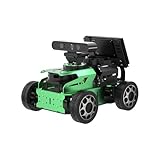
- Empowered by Large Al Model, Human-Robot Interaction Redefined. JetAcker robot car deploys multimodal models with ChatGPT at its core, integrating 3D vision and a 6-microphone array. This synergy enhances its perception, reasoning, and actuation capabilities, enabling advanced embodied AI applications and delivering natural, context-aware human-robot interaction.
- Driven by AI & ROS, powered by Jetson. JetAcker AI robot car is a high-performance educational robot developed for ROS learning scenarios. Equipped with Jetson Nano/Orin Nano controllers and compatible with both ROS1 and ROS2, it integrates deep learning frameworks with TensorRT acceleration, making it ideal for advanced AI applications such as SLAM and vision recognition.
- SLAM Development and Diverse Configuration. JetAcker smart robot car is equipped with a powerful combination of a 3D depth camera and Lidar. It utilizes a wide range of advanced algorithms, including gmapping, hector, karto, cartographer and RRT, enabling precise multi-point navigation, TEB path planning, and dynamic obstacle avoidance. Using 3D vision, it can capture point cloud images of the environment to achieve RTAB 3D mapping navigation.
- Classical Ackermann Steering Mechanism. The Ackermann chassis combines maneuverability and steering precision, facilitating the learning and validation of real-world vehicle steering principles. This design enables realistic simulation of autonomous driving scenarios for enhanced educational experiences.
- Comprehensive Learning Tutorials. Through JetAcker's structured curriculum, master cutting-edge technologies including ROS development, SLAM mapping and navigation, 3D depth vision, OpenCV, YOLOv8, MediaPipe, Large Al model integration, Movelt and Gazebo simulation, and voice interaction.
China also released a mandatory standard for combined driver-assistance systems in 2026. The State Council’s English-language portal reported that, since the beginning of 2026, roughly 70% of new passenger cars had combined driver-assistance functions and more than 30% had navigation-assisted driving, commonly called NOA. Those figures suggest that advanced assistance is moving quickly from premium demonstration vehicles into a wider portion of the new-car market.
The significance is institutional. Common terminology, operational-design requirements, admission procedures, software-update controls, and city-level approval pathways can reduce the time between a feature being validated and its being installed in large numbers of vehicles. That is an advantage in rollout and standardization. It is not, by itself, evidence that the systems are safer than their American counterparts.
The EV manufacturing base gives China more vehicles to work with
Autonomous driving is often framed as an artificial-intelligence problem. It is also a vehicle-integration and industrial-supply problem.
Free tools Windows power users keep installed
One-click scans. No signup required.
A deployable system requires some combination of cameras, radar, lidar, high-performance computing, vehicle controls, maps, connectivity, power management, data pipelines, software-update infrastructure, service technicians, charging capacity, and fleet-maintenance procedures. It must be integrated into a vehicle that can be produced, sold, repaired, and supported at an acceptable cost.
China’s unusually large electric-vehicle market and domestic automotive supply chain create favorable conditions for this kind of iteration. More electric vehicles mean more potential platforms for software deployment. More local suppliers can shorten development cycles or reduce dependence on imported components. More vehicle programs can give an autonomy provider multiple opportunities to test different hardware and software combinations.
The evidence does not establish that China has an automatic or universal hardware advantage. It supports a narrower conclusion: Chinese automakers and technology suppliers are operating within an ecosystem that can place advanced driving systems into many vehicle models while robotaxi companies collect data from commercial fleets.
Huawei and XPeng illustrate the consumer-vehicle side
Huawei markets Qiankun intelligent-driving technology, including ADS 4, through partnerships with vehicle manufacturers. XPeng has marketed XNGP and City NGP as broad urban and highway driver-assistance platforms and previously reported rollout across Beijing, Shanghai, Guangzhou, and Shenzhen.
Crashes, No Sound, or Screen Glitches?
Random freezes, missing sound and display glitches usually trace back to one bad driver. Find and replace yours safely.Free scan · under a minuteWindows Errors? Fix Them Before They Spread
Repair common Windows errors and clear accumulated junk for a smoother, more stable PC - no reinstall needed.Free scan · no reinstallThese products are important to the competitive picture because they show how autonomous-driving technology can be distributed through consumer vehicles rather than only through company-owned robotaxis. But they remain supervised driver assistance in the context relevant here. The driver must understand the system’s limits, monitor its performance, and be ready to take over.
The potential feedback loop is powerful: automakers can install more capable systems across more vehicles, while commercial operators can gather concentrated experience in defined service areas. Still, this is an inference from the deployment, manufacturing, and partnership evidence—not a directly measured finding that one country’s feedback loop has already produced better safety or better general-purpose autonomy.
The United States still has a serious countercase
China’s deployment lead should not be turned into a claim that the United States has lost the autonomous-driving race. The U.S. ecosystem retains major strengths in foundational AI research, software engineering, venture financing, cloud infrastructure, mapping, and globally influential technology companies.
Waymo is the most important counterexample to any claim that China is the only country operating driverless mobility at meaningful scale. Waymo’s official website says its autonomous ride-hailing service has provided more than 20 million rides. That is substantial commercial experience from a U.S. company, even though Waymo’s geographic footprint, fleet strategy, service areas, and expansion model differ from those of Apollo Go and Pony.ai.
Quick wins for a faster PC:
Scan for outdated or missing drivers - takes under a minuteDriver Scan →Clear out junk files and repair common Windows errorsFree Scan →The comparison is therefore not China versus a United States with no robotaxis. It is a comparison between different scaling models:
| Area | China’s current advantage | U.S. strength or counterpoint | What the evidence does not prove |
|---|---|---|---|
| Robotaxi deployment | Apollo Go and Pony.ai report rapidly growing fleets, ride counts, and operations across multiple Chinese cities. | Waymo has also accumulated more than 20 million public autonomous rides. | Ride totals alone do not establish which system is safer or more profitable. |
| Regulatory rollout | City-level frameworks and national standards are creating defined pathways for testing and commercial services. | U.S. companies operate under a more fragmented regulatory environment but have developed substantial commercial expertise. | A faster approval pathway is not the same as a higher safety standard. |
| Vehicle ecosystem | Large EV production capacity and domestic suppliers create many possible platforms for intelligent-driving features. | U.S. firms retain strong software, AI, mapping, and technology-company capabilities. | Manufacturing scale alone does not solve perception, prediction, control, or safety validation. |
| Consumer assistance | Huawei and XPeng are pushing advanced supervised systems into connected EVs. | Tesla has a large installed base and extensive real-world driving-data strategy. | Neither consumer assistance product should automatically be treated as a fully driverless robotaxi. |
Tesla is a useful competitor—but a misleading benchmark
Tesla dominates public discussion because its brand has made automated driving familiar to millions of drivers. Its Full Self-Driving product remains relevant to the competitive story: Tesla has a large vehicle fleet, a camera-centered approach, and an enormous stream of real-world driving data.
But the product’s name must not determine the technical description. Tesla’s official product language calls the feature Full Self-Driving (Supervised) and says availability depends on regulatory approval and other factors. NHTSA’s preliminary evaluation described the system as Level 2 partial automation requiring a fully attentive driver.
That distinction changes the comparison. A Tesla owner using FSD (Supervised) is still responsible for monitoring the road and controlling the vehicle. A fully driverless robotaxi operator is attempting to run a service in which the vehicle performs the driving task within a defined operating domain without a safety driver in the vehicle.
NHTSA’s evaluation included allegations involving red-light violations, lane incursions, wrong-way or improper-lane behavior, and other traffic-law violations. Those are allegations and investigation findings to be evaluated through the relevant regulatory process; they should not be presented as a blanket conclusion about every Tesla vehicle or every use of the system. The broader lesson is that a Level 2 system can be highly capable and still require a human driver.
Nor does the comparison justify a categorical claim that Tesla’s camera-centered approach is inherently inferior, or that lidar automatically makes a system safer. The available evidence supports neither conclusion. The meaningful question is whether a complete system—sensors, software, vehicle controls, driver monitoring, maps, operating rules, and human oversight—performs reliably in its intended domain.
Why China’s lead is about commercialization, not proven technical supremacy
China’s case for an edge rests on the interaction of several advantages:
- More visible fleet deployment: Chinese operators are reporting millions of public rides and large fully driverless fleets.
- Defined operating environments: City-level programs allow companies to expand through approved roads and service zones instead of solving every road in every region at once.
- Regulatory institutionalization: National standards and local rules are creating clearer pathways for testing, updates, commercial service, and governance.
- Vehicle-production scale: A large EV ecosystem gives suppliers and automakers more opportunities to integrate and iterate intelligent-driving systems.
- Consumer distribution: Partnerships among technology providers and automakers can put supervised driving features into more vehicles.
- Operational learning: Fleet operators can learn from passenger service, maintenance, routing, charging, dispatch, and remote support as well as from driving events.
That combination can shorten the commercialization cycle. A technology does not become economically important merely because it works in a controlled demonstration. It becomes important when a company can deploy it repeatedly, maintain it, charge for it, satisfy regulators, and expand without costs or safety problems overwhelming the business.
Rank #3

- For Raspberry Pi 5 & ROS2 Robot Car. MentorPi A1 smart AI robot car is powered by Raspberry Pi 5, compatible with ROS2, and programmed in Python, making it an ideal platform for AI robot development.
- High-Performance Hardware. Equipped with Ackerman chassis, closed-loop encoder motors, TOF lidar, depth camera, AI voice interaction box, and other advanced components to ensure optimal performance and efficiency.
- Advanced AI Capabilities. Supports SLAM mapping, path planning, multi-robot coordination, vision recognition, target tracking, and more, covering a wide range of AI applications.
- Autonomous Driving with Deep Learning. Utilizes YOLO model training to enable road sign and traffic light recognition, along with other autonomous driving features, helping users explore and develop autonomous driving technologies.
- Empowered by Large AI Model, Human-Robot Interaction Redefined. MentorPi AI robot car deploys multimodal models with ChatGPT at its core, integrating 3D vision and Al voice interaction box. This synergy enhances its perception, reasoning, and actuation capabilities, enabling advanced embodied AI applications and delivering natural, context-aware human-robot interaction.
However, commercial momentum has limits as a proxy for technical achievement. A fleet may be concentrated in favorable districts, operate under weather restrictions, use highly detailed maps, rely on remote assistance for unusual situations, or exclude difficult roads and conditions. Two companies can both report fully driverless kilometers while using different definitions and operational boundaries.
Independent reader supportYour contribution helps us test, update, and keep practical guides available for everyone.The safety data is not yet a clean international scoreboard
Ride counts and autonomous kilometers answer one question: how much reported operation has occurred? They do not, by themselves, answer the questions most readers ultimately care about:
- How many crashes occurred per million miles or kilometers?
- How severe were those crashes?
- How often did a human or remote operator intervene?
- Were difficult weather, road, and traffic conditions included?
- How were minor collisions, near misses, and disengagements counted?
- How much of the route was actually driverless rather than supervised or remotely supported?
- Were the results independently audited using the same definitions?
In the United States, NHTSA’s Standing General Order requires identified manufacturers and operators to report certain crashes involving automated-driving systems and Level 2 driver-assistance systems. NHTSA has warned that duplicate reports can occur and that the incident totals have important data-quality limitations. More public reporting can improve scrutiny, but it does not automatically make the data directly comparable with Chinese company disclosures.
China’s company-reported operating figures should therefore be described as exactly that: company-reported rides, fleet totals, permits, and kilometers. They demonstrate activity and scale. They are not independent proof that China’s systems have achieved superior safety.
The Tool Desk
Outbyte Driver Updater FREEScan for outdated or missing drivers - takes under a minuteDriver Scan →Outbyte PC Repair FREERepair Windows errors before they cause bigger problemsFix Now →Remote assistance also needs careful treatment. A vehicle can be driverless in the sense that no safety driver sits behind the wheel while still having a human support team available to help with unusual situations, routing questions, or operational exceptions. Remote support does not necessarily mean a person is continuously driving the vehicle from a control room, but the details matter. Public comparisons should identify what the company means by driverless and what role remote operators play.
What would confirm—or weaken—the Chinese lead?
The current evidence supports a qualified Chinese lead in deployment velocity and commercialization pathways. That lead would become more convincing if several things happened:
- Independent safety reporting became more comparable. Companies would need to disclose standardized exposure, crash severity, interventions, operating conditions, and service boundaries.
- Operations expanded beyond favorable demonstration zones. Performance across less predictable roads, weather, traffic patterns, and cities would test whether the systems generalize.
- Fleet economics improved. Large fleets must generate sustainable revenue after accounting for vehicles, sensors, maintenance, charging, insurance, remote operations, mapping, and support.
- Driverless service remained reliable as it scaled. A system that works in one carefully mapped zone may encounter a different challenge when the operating domain expands.
- Consumer systems and robotaxis converged responsibly. Advanced assistance may eventually benefit from robotaxi data, but the handoff must not encourage drivers to treat Level 2 systems as autonomous.
The lead would be weaker if ride totals depended heavily on narrow service zones, if safety disclosures remained too inconsistent to evaluate, if fleet expansion proved uneconomic, or if regulatory permission outpaced the ability to demonstrate reliable performance. A country can lead in the number of vehicles deployed without having solved autonomy in the general sense.
What this means for drivers and the car industry
For drivers, the immediate takeaway is not that a Chinese robotaxi proves a privately owned vehicle can drive anywhere without supervision. It is that autonomous-driving capability is likely to arrive in layers:
Do these 3 things before closing this tab:
1Clear out junk files and repair common Windows errors2Fix the driver behind crashes, sound loss and screen glitches3Repair Windows errors before they cause bigger problems- supervised highway and urban driver assistance in consumer vehicles;
- more capable navigation-assisted driving within mapped or approved conditions;
- commercial driverless services in defined zones;
- gradual expansion of those zones as safety evidence, regulation, and economics permit.
For automakers, the competitive advantage may go to companies that can combine software with vehicle manufacturing, sensors, compute, connectivity, fleet support, and regulatory execution. For cities, autonomous vehicles create a governance challenge as much as a technology opportunity. Roads, pickup locations, data handling, emergency response, liability, accessibility, and public reporting all influence whether a pilot becomes a useful transportation service.
For investors and industry observers, the key metric is not simply the number of autonomy press releases. Look for recurring rides, the percentage of operations that are genuinely driverless, geographic expansion, safety reporting, vehicle utilization, customer adoption, and evidence that the service can operate economically without extraordinary support.
Bottom line: China has the deployment edge, not an uncontested victory
China is gaining the edge in autonomous-driving commercialization because it is combining city-level regulation, intelligent-road infrastructure, a large EV manufacturing base, domestic technology partnerships, and rapidly expanding robotaxi operations. Apollo Go’s reported ride volume and Pony.ai’s growing fleet are stronger evidence of deployment momentum than the usual laboratory demonstrations or marketing claims.
But the United States still has major strengths, including Waymo’s substantial autonomous ride-hailing operation and deep capabilities in software, AI, mapping, research, and venture-backed technology. Tesla remains an important source of real-world driving data and consumer-scale driver assistance, but FSD (Supervised) should not be treated as equivalent to a fully driverless robotaxi.
Recommended Free Tools
The most accurate conclusion is therefore narrow but consequential: China may currently be ahead in the race to deploy and commercialize autonomous driving at scale, while the broader race for technical leadership, safety, generalization, and sustainable economics remains unsettled.
Frequently Asked Questions
Is China already ahead of the United States in autonomous driving?
China has a credible lead in deployment velocity and commercialization pathways, especially in city-based robotaxi operations and the integration of autonomous-driving technology with EV manufacturing. That does not prove an across-the-board lead in algorithms, safety, general-purpose autonomy, or business economics. Waymo’s more than 20 million reported autonomous rides show that the United States also has substantial commercial experience.
Is Tesla Full Self-Driving actually fully autonomous?
No. Tesla calls the product Full Self-Driving (Supervised), and NHTSA has described it as Level 2 partial automation. The driver must remain attentive, monitor the road, and be ready to take control. It should not be compared as though it were the same product category as a fully driverless robotaxi operating in a defined service area.
What is the difference between a robotaxi and an advanced driver-assistance system?
A robotaxi described as fully driverless performs the driving task without a safety driver in the vehicle within an approved operational design domain. An advanced driver-assistance system can steer, brake, accelerate, or navigate, but a human driver must supervise it and remain responsible for driving.
Do China’s robotaxi ride totals prove that its systems are safer?
No. Company-reported rides and autonomous kilometers demonstrate operational scale, but they are not standardized safety measurements. Comparisons require consistent data on crashes, severity, interventions, weather, road types, service boundaries, remote assistance, and exposure. Different companies may use different definitions.
Why does regulation matter so much for autonomous-driving competition?
Regulation determines where companies may test, demonstrate, charge for service, update software, collect data, and operate without a safety driver. Clear national standards and city-level pathways can shorten the distance between a validated system and commercial deployment. They do not, on their own, prove that the resulting systems are safer.
The Bottom Line
Bottom line: China’s advantage is most convincing in the race to deploy autonomous driving commercially. Its combination of robotaxi scale, city-level regulation, EV manufacturing, and supplier integration gives Chinese companies a faster path from pilot to repeated service. That is different from proving that China has already won the larger contest for safest, most capable, or fully general autonomous driving.
Quick Recap
Product prices and availability are accurate as of the date/time indicated and are subject to change. Any price and availability information displayed on Amazon at the time of purchase will apply.
Free tools Windows power users keep installed
One-click scans. No signup required.




