The Volkswagen Thing was a military-minded utility vehicle that became an unlikely American lifestyle car. Sold in the United States as The Thing, it was the rear-wheel-drive Type 181: an open, air-cooled Volkswagen with removable panels and practical off-road features, but no four-wheel drive. Its U.S. career was brief, while production and use continued elsewhere for years.
What was the Volkswagen Thing?
Type 181 was Volkswagen’s factory designation. In Germany, its civilian name was Kurierwagen, meaning “courier car”; in the United States, Volkswagen of America marketed it as The Thing. Other markets used names including Trekker, Safari, Camat and Pescaccia. Right-hand-drive versions were also associated with Type 182 nomenclature. Volkswagen dates Type 181 production from 1969 to 1980 and reports total production of 140,768 vehicles. Volkswagen’s Type 181 archive documents its names and chronology.
It was a four-door convertible with a rear-mounted, air-cooled flat-four and rear-wheel drive. A PVC soft top, removable side panels and a folding windshield let owners change the cabin quickly. Its upright body and utilitarian interior favored visibility and access over comfort or refinement.
Military brief and parts-bin engineering
West Germany sought a replacement for the aging DKW Munga, and the Type 181 answered that military requirement. Volkswagen adapted existing ideas and components rather than designing a vehicle from scratch. The project drew on the Australian-developed Country Buggy concept; the platform was related to the Karmann Ghia Type 14, while the front axle, engine, clutch, steering and instruments came from Beetle-related components. The gearbox and rear axle were related to the early Type 2 Transporter.
Recommended Free Tools
#1 Best Overall

- Used Book in Good Condition
The result was not simply a wartime Kübelwagen brought back under a new name. The Type 181 was a later vehicle with its own design and development history. Volkswagen called it the Kurierwagen in Germany.
How it worked off road without four-wheel drive
The Type 181 was rear-wheel drive, not four-wheel drive. Its approach to rough ground combined low weight, ground clearance, low gearing, independent suspension and underbody protection. An optional limited-slip differential was available in some configurations. Volkswagen’s figures in a 1973 NHTSA record included 8.1 inches of ground clearance, a 36-degree approach angle and a 31-degree departure angle. The NHTSA interpretation records the vehicle’s classification and the features Volkswagen cited.
Those features supported slow progress over rough roads and loose surfaces, but did not make the Thing a four-wheel-drive off-roader. Its rear-engine layout and low gearing suited utility work; its open body and limited refinement made it a very different proposition from an enclosed passenger car.
Engines and changes during production
Early Type 181s used a 1.5-liter air-cooled flat-four. Volkswagen’s archive says a 1.6-liter replaced it in 1970, initially producing 44 PS. The vehicle changed over its production run, so engine output and hardware should be identified by year and market rather than treated as identical across every Thing.
Free tools Windows power users keep installed
One-click scans. No signup required.
Rank #2
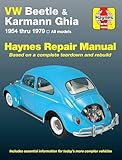
- Step-by-step procedures written from a complete teardown and rebuild, giving you the confidence to tackle repairs at any skill level.
- Over 700+ clear photos and diagrams that simplify complex systems, helping you complete jobs faster and with fewer mistakes.
- Comprehensive troubleshooting and fault-finding guides to quickly diagnose problems and reduce costly downtime.
Volkswagen lists a major 1973 update: the portal swing-axle arrangement gave way to a semi-trailing-arm rear axle, output rose to 48 PS, and fresh-air heating replaced the earlier auxiliary-heater arrangement. North American export models also changed; Volkswagen’s chronology says they received fuel injection in 1974. For model history and specifications, see Volkswagen’s archive.
Names, production and the American Thing
Type 181 production began in 1969. Volkswagen says manufacturing moved to Mexico in 1972, German production moved to Hanover in 1974 and Emden in 1975, German production ended in 1978, and Mexican production continued until 1980. The U.S. sales period was much shorter than the global production run.
| Market or milestone | What the record says |
|---|---|
| Germany | Type 181; civilian name Kurierwagen |
| United States | Marketed as The Thing; sold for the 1973 and 1974 model years |
| Other markets | Names included Trekker, Safari, Camat and Pescaccia |
| Overall production | 1969–1980; Volkswagen reports 140,768 vehicles |
The VW Thing Registry reports 28,930 U.S. sales and identifies 1973 and 1974 as the U.S. sales years. Some secondary histories and registration accounts extend the practical sales window into 1975, so it is useful to distinguish model years from later sales or registrations. The registry also reports regional production figures, but those totals and categories do not align perfectly with Volkswagen’s simplified overall figure; they are best treated as registry research, not a reconciled factory table. The registry history gives its regional account.
The registry says Volkswagen considered the name Safari for the U.S. but selected The Thing because of an existing trademark association with Pontiac Safari. That naming account comes from the registry rather than a Volkswagen corporate statement.
Quick wins for a faster PC:
Scan for outdated or missing drivers - takes under a minuteDriver Scan →Clear out junk files and repair common Windows errorsFree Scan →Rank #3

- Step-by-step procedures linked to over 700 easy-to-follow photos and illustrations
- Complete troubleshooting section helps identify specific problems
- Written from hand-on experience based on a vehicle teardown and rebuild using commonly available tools
- Tips give valuable short cuts to make the job easier and eliminate the need for special tools
- 700 b/w photos
Why the U.S. run ended
NHTSA’s 1973 interpretation accepted Volkswagen’s classification of the Model 181 as a Multipurpose Passenger Vehicle. The Type 181 Registry says a 1975 version could not meet crash-testing standards applied to passenger cars; the NHTSA interpretation confirms the MPV classification but does not itself establish that the 1975 model was prohibited. The safest summary is that regulation was part of the U.S. market’s limits, while the exact end-date wording varies with whether a source means model years, sales or registrations.
The American Thing’s short run should not be confused with the Type 181’s global history: Volkswagen records production continuing in Mexico until 1980. The U.S. model’s open, simple format helped make it distinctive, but it also left little in common with buyers’ growing expectations for enclosed, more refined vehicles.
Special editions and cultural appeal
The 1974 Acapulco Edition is among the best-known special versions, with blue-and-white treatment and resort-inspired trim. The Thing Registry estimates that approximately 400 were made; treat that as a registry figure rather than a verified factory total. The registry history and Hemmings’ historical overview describe the edition.
In the United States, the Thing’s open cabin, removable panels and unusual shape resonated with surfers, hippies and other buyers drawn to outdoor use and conspicuous design. Volkswagen’s own account describes its cult following. It was not a conventional SUV or Jeep substitute, but its visibility and changeable open-air setup gave it a character unlike a standard Beetle.
Rank #4

- Complete Repair Coverage: Step-by-step repair procedures specific to your vehicle — from routine maintenance like oil changes and air filter replacement to complex engine and transmission repairs
- 700+ Photos & Illustrations: Every procedure is visually supported with clear, close-up photography taken during an actual vehicle teardown and rebuild — no guesswork required
- Beginner to Advanced: Written in plain language so a DIY owner with basic tools can tackle most repairs confidently, while still serving as a valuable reference for experienced mechanics
- Full Troubleshooting Section: Quickly diagnose problems with dedicated troubleshooting guides for engine, electrical, brakes, and drivetrain systems
- Time-Saving Tips Throughout: Pro shortcuts and notes highlight common pitfalls, helping you avoid costly mistakes and get your vehicle back on the trail faster
Restoration and collector considerations
Shared Volkswagen mechanical parts can make some service and repair work familiar to owners and shops experienced with Beetles and Transporters. That does not make every part interchangeable: body panels, chassis pieces, rear drums, interior components and other Type 181-specific items need individual verification. A specialist technical reference notes both the shared components and unique applications. VW Thing Restoration’s parts guide is a starting point, not a guarantee of fitment.
Check soft-top condition and hardware carefully. Replacement tops and components are sold by specialists, but fit and hardware should be checked against the individual vehicle rather than assumed to suit every year or market. Things for the Thing’s top catalog shows the kinds of Type 181 components available.
For a prospective restoration or purchase, pay attention to rust, chassis integrity, originality, correct body parts and top hardware. Current prices and parts availability vary, and older valuation figures should not be treated as today’s market values without fresh research. Shared mechanical ancestry is useful, but Type 181-specific components can make a project more demanding than a Beetle repair.
FAQ
Was the Volkswagen Thing four-wheel drive?
No. The Type 181 was rear-wheel drive. Volkswagen used low gearing, ground clearance, low weight and other off-road features rather than four-wheel drive.
Do these 3 things before closing this tab:
1Fix the driver behind crashes, sound loss and screen glitches2Clear out junk files and repair common Windows errors3Scan for outdated or missing drivers - takes under a minuteBest Value

- Used Book in Good Condition
What is the difference between the Type 181 and The Thing?
Type 181 is Volkswagen’s factory designation. The Thing was the name Volkswagen of America used for the U.S. market; Kurierwagen was the German civilian name.
When was the Volkswagen Thing sold in the United States?
The registry identifies the U.S. sales years as 1973 and 1974. Some sources and registration histories extend the practical sales window into 1975, so model years and later sales records should not be conflated.
How long was the Type 181 produced?
Volkswagen’s archive dates production from 1969 to 1980, with German production ending in 1978 and Mexican production continuing until 1980.
Are Thing parts interchangeable with Beetle parts?
Some mechanical components are shared with Beetles and other Volkswagens, but many body, chassis and interior parts are Type 181-specific. Confirm fitment for the vehicle’s year and market before buying parts.
Quick Recap
Product prices and availability are accurate as of the date/time indicated and are subject to change. Any price and availability information displayed on Amazon at the time of purchase will apply.




