What’s actually slowing this PC down?
Pick the symptom - the matching free tool is one click away.
Solid-state batteries could make electric vehicles lighter, longer-ranging, faster to charge and less dependent on flammable liquid electrolyte—but no single solid-state design has proved all of that in affordable, mass-produced vehicle packs yet.
The important distinction is that “solid-state battery” describes a family of technologies, not one chemistry. Sulfide, oxide, polymer-composite and quasi-solid electrolytes are taking different approaches to the same problems. Lithium-metal and anode-free architectures may raise energy density, while interface engineering and high-volume manufacturing could determine whether any of them survive real-world cycling at an acceptable cost.
As an Amazon Associate I earn from qualifying purchases.
Here are the seven most important technology paths, what each could change for EVs, and what still has to be demonstrated.
Free tools Windows power users keep installed
One-click scans. No signup required.
Solid-state batteries are not one invention
A conventional lithium-ion cell uses a liquid electrolyte to move lithium ions between the cathode and anode. A solid-state cell replaces that liquid with a solid ion-conducting material—or, in the broad way the term is often used, greatly reduces the amount of liquid by using a gel, polymer or other quasi-solid electrolyte.
#1 Best Overall

- 40% Smaller & Lighter Portable Charger: Powered by the industry’s first TinyCell high-density battery technology, this ultra-compact 10,000mAh portable charger power bank is 40% smaller and 36% lighter than conventional chargers. Whether you are an office user slipping a mini small portable battery into a purse for commuting, or a student looking for lightweight college essentials, you get powerful daily carry convenience without the extra bulk to keep you powered on the go.
- 45W Pro Speed Portable Phone Charger: This 45W fast charger boosts an iPhone 17 Pro Max to 76%, a Galaxy S25 Ultra to 84%, or an iPad Pro to 60% in just 30 minutes (charging from 20%). Whether you are a driver needing a quick portable charger for car, a commuter relying on a desk phone charger, or a gamer wanting a seamless Switch battery pack and Steam deck charger portable, you will spend less time tethered to a wall and more time enjoying your day.
- Detachable Cable for Multiple Devices: Unlike a standard portable charger with built in cable that becomes useless if the cord breaks, INIU's 0.4ft detachable braided USB-C cable can be swapped anytime to save your investment. It effortlessly transforms into a versatile travel charger for multiple devices, ensuring your family or group travelers always have a reliable portable charger for all cell phones to keep everyone connected without carrying messy cords.
- Airline-Safe Travel Essentials: This TSA-compliant, flight safe power bank provides nearly 2 full charges for your smartphone, making it the perfect battery pack flight safe for business trips, cruise vacations, and airplane travel essentials. Beyond flights, it empowers campers, hikers, and outdoor users with ultimate camping essentials and road trip essentials—so you can explore freely without battery anxiety, making it ideal gifts for travelers women and men.
- Trusted Emergency Backup: As the SAFE Fast Charge Pro trusted by over 38 million users, we ensure the safest charging with the highest-grade materials. When unexpected storms or hurricanes strike, it acts as a lifeline—providing a dependable power outage battery backup and emergency phone charger for emergency users.
That distinction matters. The International Energy Agency separates semi-solid systems, which are already commercial in some applications, from almost-solid and all-solid-state designs that remain mainly at the prototype stage. Some products described as solid-state still contain a small amount of liquid electrolyte. They should not automatically be compared with a genuinely all-solid-state cell. [CIT-001]
The seven paths below also overlap. Lithium metal is an anode design, sulfide is an electrolyte family, and pressure management is a mechanical solution. A future EV battery could combine several of them—for example, a lithium-metal or anode-free cell with a sulfide electrolyte, protective interface layers and a manufacturing process adapted from lithium-ion production.
At a glance: the seven technology paths
| Technology path | What changes | Potential EV benefit | Main unresolved issue |
|---|---|---|---|
| Sulfide electrolytes | A soft, highly conductive solid electrolyte | High power and improved layer contact | Moisture sensitivity, gas generation and interface cracking |
| Oxide and ceramic electrolytes | A rigid inorganic ion-conducting layer | Thermal and chemical stability | Brittleness, densification and production yield |
| Polymer, composite and quasi-solid electrolytes | A polymer or gel combined with inorganic material | Easier contact and a closer manufacturing transition | Temperature, liquid content and long-term durability |
| Lithium-metal anodes | Lithium metal replaces graphite or graphite-silicon | Higher cell-level energy density | Dendrites, contact loss and cycle life |
| Anode-free cells | No separate active anode is installed before charging | Less inactive material and a thinner cell | Very little lithium is available to offset losses |
| Interface and pressure engineering | Mechanical contact between solid layers is actively managed | Better charging, power and service life | Pressure retention, pack complexity and cost |
| Scalable manufacturing | New processes for thin, defect-free solid-state cells | Higher yield and a realistic path to lower prices | Throughput, defects, capital cost and recycling |
1. Sulfide solid electrolytes
Sulfide electrolytes are among the leading candidates for automotive all-solid-state batteries. Their appeal comes from two related properties: they can conduct lithium ions quickly, and their particles are relatively soft and deformable compared with many ceramic oxides.
That softness may make it easier to press electrolyte and electrode layers into intimate contact. Good contact is essential because a solid electrolyte cannot flow into microscopic gaps in the way a liquid electrolyte can. Better contact could support high power and fast charging without requiring an extremely thick or rigid separator.
Toyota and Idemitsu Kosan are collaborating on sulfide solid electrolytes, including pilot production, supply-chain development and all-solid-state BEV cells. Toyota has announced a target of producing solid-state batteries for BEVs in 2027–2028, assuming the development and commercialization work succeeds. Toyota also identifies a major durability problem: repeated cycling can cause cracking at the electrode–electrolyte interfaces. [CIT-002]
The trade-off is that sulfides can be chemically sensitive to moisture. That can complicate material handling, factory design and quality control, and may create gas-generation or interface-reaction problems. These cells may need carefully controlled processing and mechanical support even if the electrolyte itself is relatively compliant.
DOE-supported research facilities are working on sulfide electrolyte processing, lithium-metal prototyping, interface layers and controlled-pressure testing. That combination is revealing: the challenge is not simply finding a material with high conductivity. Researchers must make the material work reliably alongside electrodes over thousands of cycles. [CIT-003]
The Tool Desk
Outbyte PC Repair FREERepair Windows errors before they cause bigger problemsFix Now →Outbyte Driver Updater FREEScan for outdated or missing drivers - takes under a minuteDriver Scan →Why it could matter: sulfides offer a promising balance of fast ion transport and mechanical compliance.
What must still be proven: stable interfaces, moisture management, pressure requirements, high manufacturing yield and competitive cost.
2. Oxide and ceramic electrolytes
Oxide solid electrolytes use dense ceramic materials to conduct lithium ions. They are attractive because many oxide families offer strong thermal and chemical stability. In principle, that could help an EV battery tolerate heat and abuse better than a cell that relies on a flammable liquid electrolyte.
Oxides also bring difficult manufacturing problems. Ceramic layers can be rigid and brittle, making it harder to maintain contact with electrodes that expand and contract during charging. They may require densification, precise sintering and careful defect control. A tiny crack or pinhole in a thin electrolyte layer can become a serious performance or safety problem.
DOE’s solid-state manufacturing programs include oxide electrolytes as well as sulfides, halides, polymers and polymer-inorganic composites. The relevant capabilities include tape casting, sintering, interface engineering and large-area cell fabrication. Those processes are central to the commercial question: an oxide that performs well in a small laboratory cell is not necessarily economical when made across millions of large automotive cells. [CIT-003]
ProLogium is pursuing an all-inorganic, lithium-ceramic solid-state platform. The company says its newer “superfluidized” inorganic electrolyte is intended to combine high ionic conductivity with improved interfacial contact and scalable manufacturing. ProLogium also says the approach is designed to avoid pressurized modules. These are company-reported technology claims, not independent pack-level validation, so they should be treated as development objectives rather than established industry results. [CIT-004]
Researchers are studying several ceramic families, including garnet, NASICON and perovskite-related materials. No single oxide family has yet demonstrated that it has solved every problem involving brittleness, electrode contact, thin-layer production, cost and vehicle-scale durability.
Why it could matter: ceramic electrolytes could provide strong thermal stability and support thin, high-energy cell designs.
What must still be proven: defect-free production, layer-to-layer contact, low-energy processing, mechanical durability and vehicle-level performance.
3. Polymer, composite and quasi-solid electrolytes
Polymer and composite systems take a more flexible approach. Instead of relying entirely on a rigid ceramic, they combine a polymer phase with ceramic or other inorganic ion-conducting material. The polymer can improve flexibility and contact, while the inorganic component can contribute conductivity, strength or thermal stability.
This category includes quasi-solid and semi-solid cells. Some retain a small amount of liquid or gel, which may make them easier to manufacture and more tolerant of imperfect interfaces. That can be a practical advantage, but it also means the design may not deliver every benefit associated with an all-solid-state battery.
Rank #2
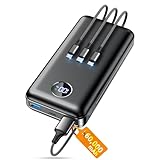
- Huge Capacity 60000mAh Power Bank: ZZI portable charger features a new high-density polymer battery that provides 10 charges for iPhone 15, freeing you from battery anxiety. Compatible with almost all types of smart devices on market including iPhone 17/16/15/14/13/12 Series, iPad, Samsung, Google Pixel series, Switch, and other Android phones and tablets.(IMPORTANT: 60000MAH PORTABLE CHARGER ARE NOT ALLOWED ON AIRPLANE)
- Charge 5 Devices Simultaneously: Portable charger power bank comes with a 3-in-1 high-strength nylon braided cable (Type-C / iOS / Micro USB) that has passed over 10,000 folding and plug-in/unplug tests, ensuring long-term durability and wear resistance. Charge up to five devices at once—suitable for home, travel, camping, hiking, vacation and outdoor trips
- 22.5W Super Fast Charging & Battery Protection: The battery charger can charge your iPhone 15 to 60% in just 30 minutes — 3 times faster than a standard portable phone charger. Built-in smart recognition chip automatically adjusts power output for different devices, delivering efficient and safe charging that protects your battery—so you can enjoy worry-free charging every time
- Ultra Compact & Smart LED Display: With its massive 60,000mAh capacity, ZZI battery bank provides long-lasting power without feeling bulky. Measuring only 5.8×2.9×1.1in, its size is similar to an iPhone 15, about twice the thickness, striking an ideal balance between capacity and portability. The LED digital display of portable battery shows the remaining battery in real time, allowing precise control over every charge
- Reliable 5-Layer Safety Protection: The battery pack portable charger features overcharge, overcurrent, overdischarge, overvoltage, and short-circuit protection, keeping your devices safe at all times, giving you complete confidence with every charge. What You Get: 1* power bank, 1* 3-in-1 USB cable, and 1* user manual
The IEA notes that some polymer systems require elevated operating temperatures. A battery that performs well only after heating may need additional vehicle hardware and energy, especially in cold climates. Operating temperature, retained liquid content, abuse performance and cycle life therefore matter as much as the label on the cell. [CIT-001]
Recommended Free Tools
Factorial Energy’s FEST platform combines a lithium-metal anode, a quasi-solid electrolyte and a high-capacity cathode. Factorial says the design aims to provide some safety and performance benefits associated with solid-state cells while retaining manufacturing processes closer to conventional lithium-ion production. The company has announced shipment of cells for drone deployment and road testing with Stellantis. Those are meaningful development milestones, but they do not establish mass-market EV readiness. [CIT-005] [CIT-006]
Basquevolt describes its technology as a proprietary composite electrolyte and reports development of lithium-metal cells for electric vehicles, heavy transport, renewable energy and electronics. Its performance figures and customer-availability statements are company claims and require independent validation before they can be used as a broad comparison with rival technologies. [CIT-007]
Why it could matter: composite and quasi-solid designs may offer better contact, lower pressure requirements and a more practical transition from liquid-electrolyte factories.
What must still be proven: how much liquid remains, how the cells behave across temperature extremes, whether they can match all-solid-state safety expectations and how long they last under automotive loads.
Quick wins for a faster PC:
Repair Windows errors before they cause bigger problemsFix Now →Fix the driver behind crashes, sound loss and screen glitchesFind Drivers →4. Lithium-metal anodes
Replacing graphite—or graphite blended with silicon—with lithium metal is one of the biggest potential energy-density gains in solid-state batteries. Lithium metal stores more charge per unit mass, and a cell can remove some of the inactive material associated with a conventional graphite anode.
Higher cell-level specific energy could mean a lighter EV pack for the same range, or more range without increasing the size of the pack. It could also create additional packaging freedom for vehicles where battery weight is especially important, such as performance cars, trucks and long-distance vehicles.
But lithium metal is difficult to cycle uniformly. Lithium must deposit and strip from the anode surface without forming damaging structures commonly called dendrites. The cell also has to maintain contact as lithium moves, and the interface must remain stable at automotive charging rates over a wide temperature range. DOE identifies interface stability, dendrite formation, contact loss and manufacturing as central challenges. [CIT-008]
Factorial’s FEST design uses a lithium-metal anode. QuantumScape describes its platform as a solid-state lithium-metal battery and says its architecture avoids the conventional carbon or carbon-silicon anode. Instead, lithium forms at the anode side during the first charge. [CIT-009] [CIT-010]
Windows Errors? Fix Them Before They Spread
Repair common Windows errors and clear accumulated junk for a smoother, more stable PC - no reinstall needed.Free scan · no reinstallOutdated Drivers Are Slowing You Down
One free scan finds every outdated or missing driver and matches the right update for your exact hardware.Free scan · exact hardware matchLithium metal is not itself a guarantee of a successful solid-state battery. It is a high-value design choice that increases the reward—but also makes uniform deposition, defect control and long-term cycling more demanding.
Why it could matter: more stored energy with less anode mass could reduce battery weight or increase range.
What must still be proven: dendrite suppression, uniform lithium deposition, cycle life at high current, cold-weather performance and manufacturing yield.
5. Anode-free cell designs
Anode-free cells take the lithium-metal idea further. Instead of manufacturing the cell with a separate active lithium-metal anode, the cell begins with a current collector on the anode side. During the first charge, lithium moves from the cathode and plates onto that collector, creating the anode in situ.
Do these 3 things before closing this tab:
1Clear out junk files and repair common Windows errors2Scan for outdated or missing drivers - takes under a minute3Repair Windows errors before they cause bigger problemsRemoving a pre-installed anode can reduce cell thickness, inactive material and some manufacturing steps. It can also increase the proportion of the cell devoted to storing energy. QuantumScape identifies its anode-free architecture as a route to higher energy density, lower material use and simpler manufacturing. [CIT-009] [CIT-010]
The design has an unforgiving weakness: there is little or no excess lithium available to compensate for irreversible losses. If a small amount of lithium becomes trapped in a side reaction or fails to return to the cathode, the cell loses usable capacity. In a conventional cell, excess anode material can provide some margin; anode-free cells have much less room for error.
QuantumScape reported QSE-5 product samples and an energy-density measurement in a 2025 SEC filing. Those figures are company-reported, cell-level results. They should not be converted directly into the energy density of a production vehicle pack, because a pack also includes current collectors, cooling, structural components, electronics, crash protection and other inactive mass. [CIT-011]
Why it could matter: a thinner, less material-intensive cell could deliver exceptional cell-level energy density.
What must still be proven: first-cycle lithium efficiency, cycle life, defect tolerance, production yield and performance in large-format automotive packs.
Rank #3

- Huge Capacity 50000mAh Portable Charger - The 50000mAh power bank ultra-high massive capacity will keep your phone and other device running for many days!Without extra worry about low phone battery. Ideal for traveling, camping and hiking.
- Latest PD 22.5W High-Speed Charging - OHOVIV 50000mAh Portable phone charger adopts the latest Super Charger Protocol and Fast Charger Protocol with 22.5W output USB-C port.Support QC4.0 QC3.0 huge capacity power bank with fast charging, it only takes 30 minutes to charge your iPhone 14 from 0% to 55%.(NOTE: The 50000mAh PORTABLE CHARGER ARE NOT ALLOWED ON AIRPLANE!!)
- Power 3 Devices at Once - Cell phone external battery pack is equipped with 2 USB-A (22.5W output) ports, 1 USB-C (18W input/22W output) port and 1, and it can charge three devices at the same time. The portable power bank is universally compatible with all products via USB charging cable, including all iOS and Android smartphones, watch, bluetooth headsets and so on.
- LED Digital Display & Compact Design - OHOVIV 50000mAh Cell phone portable charger comes with smart LED digital display, accurately keep track of remaining juice, allowing you to easily operate your power.Our battery pack charger portable is 13.4*7*3.4cm(5.27*2.75*1.33in), and weigh 613g (21.6oz), which is easy to carry.
- Safe Powerful Phone Charger - OHOVIV 50000mAh portable charger power bank with premium Li-polymer battery, this portable battery charger can charge your devices multiple times.Battery bank adopt smart chips to prevent overcharge, overvoltage, overcurrent, and short circuit to ensure customer safety.
6. Interface engineering and pressure-management systems
This is the engineering problem underneath nearly every solid-state battery design. Solid layers must remain in intimate contact even while electrodes expand, contract, heat up, cool down and chemically age. A liquid electrolyte naturally fills small voids. Solid materials do not.
As contact deteriorates, resistance rises. The effects can include slower charging, lower power, uneven current distribution, lithium plating problems and premature capacity loss. Toyota has specifically identified cracking between electrodes and solid electrolyte during repeated cycling as a longstanding durability challenge. [CIT-002]
Possible solutions include:
- Compliant interlayers that cushion movement between the electrode and electrolyte.
- Protective coatings that reduce chemical reactions at the interface.
- Graded interfaces that transition gradually from one material to another.
- Formation procedures designed to create a more uniform initial lithium layer.
- Stack-pressure control that maintains contact as the cell ages.
- Cell or module designs intended to reduce or eliminate the need for external pressure.
DOE-supported facilities use controlled stack-pressure fixtures across a wide pressure range and study interface layers, lithium deposition and mechanical behavior. The IEA also warns that all-solid-state pack integration can require stricter mechanical design and, for some concepts, higher operating pressure. That pressure may need to be maintained through vibration, thermal cycling, impacts and years of service—an entirely different challenge from applying pressure in a laboratory fixture. [CIT-001] [CIT-003]
ProLogium says its superfluidized inorganic electrolyte is intended to avoid pressurized modules. If independently validated at pack scale, that could remove a major obstacle. For now, it remains a company-reported claim rather than a general result that applies to all ceramic batteries. [CIT-004]
Why it could matter: interface design may decide whether a promising cell can charge quickly and remain healthy for the life of an EV.
What must still be proven: lifetime under vibration and temperature changes, pressure retention, crash behavior, mechanical complexity and cost.
7. Scalable manufacturing, dry processing and precision cell architecture
The winning solid-state battery may not be the one with the best laboratory performance. It may be the one that can be produced consistently, quickly and cheaply enough for an automaker to install in hundreds of thousands of vehicles.
Free tools Windows power users keep installed
One-click scans. No signup required.
Manufacturing solid-state cells can require dry rooms or inert handling, thin and defect-free electrolyte layers, ceramic sintering, precise lamination, controlled lithium deposition, high-pressure formation and close monitoring of interfaces. A cell may work perfectly in a small batch but fail economically if its defect rate is too high or its production line consumes excessive energy.
DOE’s manufacturing capabilities cover roll-to-roll processing, tape casting, dry processing, slurry casting, calendaring, sintering, lithium deposition, pouch-cell scale-up and in-line characterization. This shows why manufacturing is a technology path in its own right: the industry is developing not only new materials, but also the equipment and inspection systems needed to turn those materials into reliable large-area cells. [CIT-003]
Toyota has demonstrated a development line for high-speed, high-precision stacking and says it is developing mass-production methods for all-solid-state cells aimed at 2027–2028. ProLogium says it established an early roll-to-roll pilot line for all-ceramic separators and is pursuing a mass-production platform. Factorial emphasizes compatibility with existing battery manufacturing and dry-cathode processing on its platforms. These announcements indicate active scale-up work, but they should be distinguished from independently verified, high-volume production output. [CIT-005] [CIT-012] [CIT-013]
Manufacturers will also have to solve supply-chain scale, capital cost, energy consumption, recycling and end-of-life disassembly. A battery that is technically superior but expensive to make may initially appear only in premium EVs.
Why it could matter: yield and throughput will determine whether solid-state batteries move beyond expensive demonstration vehicles.
What must still be proven: production rate, defect tolerance, factory economics, supply-chain readiness, recycling and pack-level cost.
What is real now—and what is still a target?
The evidence snapshot for this article is dated August 12, 2026. The IEA’s assessment says solid-state batteries are progressing, but their claimed range and safety advantages still need to be demonstrated in real-world packs produced at scale. Its categories provide a useful way to separate progress from marketing language. [CIT-001]
| Stage | What it means |
|---|---|
| Commercial semi-solid products | Some liquid or gel remains, and the product may already be sold. This is not equivalent to a fully all-solid-state EV battery. |
| Laboratory cell | A small cell has demonstrated a measurement under specified test conditions. It does not prove pack cost, durability or vehicle range. |
| Prototype or product sample | A company has built a more representative cell or shipped samples. This is a step toward validation, not mass production. |
| Pilot or development line | Manufacturing equipment and processes are being tested. Pilot output can still have low yield or require substantial refinement. |
| Development vehicle | A cell or battery has been integrated into a test vehicle. This is stronger evidence than a laboratory result, but it is not a consumer production launch. |
| Mass-production target | A company has announced an intended date. The target remains conditional until the factory, supply chain, quality and economics are demonstrated. |
Toyota and Idemitsu Kosan have announced a 2027–2028 target for BEV solid-state battery production. Samsung SDI says it is targeting mass production of its SolidStack all-solid-state battery in the second half of 2027. Factorial and Stellantis announced in June 2026 that FEST technology had been integrated into a Dodge Charger Daytona development vehicle for road testing. That is a significant validation step, but it is not evidence that a consumer production Charger—or any other mass-market EV—is ready to use the technology. [CIT-002] [CIT-005] [CIT-014]
The IEA identifies Toyota, BYD, Samsung, QuantumScape and Factorial among the more advanced efforts while warning that early costs are likely to be high. Initial adoption may therefore concentrate in premium vehicles through the first half of the 2030s, if companies meet their technical and manufacturing milestones. That is a forecast and commercialization assessment, not a guarantee that every named company will launch a solid-state EV on schedule. [CIT-001]
Independent reader supportYour contribution helps us test, update, and keep practical guides available for everyone.What solid-state batteries could change in EVs
More range—or a lighter battery pack
The most widely discussed benefit is higher energy density. Lithium-metal and anode-free designs could remove some inactive anode material, while thin solid electrolyte layers could allow more of the cell volume to store energy. Automakers could use that gain for longer range, a smaller pack, improved efficiency or reduced vehicle weight.
However, a cell-level energy-density number is not a range number. Pack cooling, compression hardware, crash structures, electrical connections and safety systems all add mass. The real question is how much energy the complete, certified pack stores per kilogram and how that pack performs in actual weather and driving conditions.
Rank #4

- 56,800mAh Portable Charger – Multi-Day Power: Built for extended use, this high-capacity power bank keeps your devices charged for days. Compatible with iPhone 18/17/16/15/14/13 series, Samsung Galaxy S25/S24/S23, Google Pixel 9/8/7, Android phones, iPad, tablets, earbuds, and other USB devices. A practical Travel Essential for camping, road trips, outdoor work, power outages, and emergency backup. Not allowed on airplanes due to battery capacity.
- Triple Device Charging with USB-A & USB-C: This portable charger battery pack features 2 USB-A outputs and one two-way USB-C port, so you can charge up to 3 devices at once without waiting. The smart power bank automatically adjusts current output for stable, efficient charging and helps protect connected devices. Ideal for iPhone, Samsung, Android phones, iPad, tablets, and other USB-powered electronics during road trips, long commutes, business meetings, family outings, or power outages.
- 22.5W PD Fast Charging & 10+ Device Charges: This portable charger delivers fast, stable USB-C charging for iPhone 18/17/16/15, Samsung Galaxy S25/S24, Android phones, tablets, and more. The fast charging power bank charges iPhone 17 to about 60% in around 40 minutes, while the 56,800mAh battery pack powers iPhone 17 or Galaxy S25 10+ times, helping reduce battery anxiety during travel, camping, work, and emergencies.
- LED Display & Multi-Layer Safety Protection: The built-in LED digital display shows the remaining battery percentage clearly, so you can check your portable charger power level at a glance. This high-capacity power bank battery pack is designed with safeguards against overvoltage, overheating, short circuits, and overcurrent, helping deliver safe, stable charging for phones, tablets, earbuds, and other USB-powered devices during daily use, travel, and backup power needs.
- Heavy-Duty Backup Power for Outdoor Use: Built as a reliable external battery, this 56,800mAh portable charger power bank provides long-lasting backup power when outlets are not available. The high-capacity battery pack fits in backpacks, gear bags, or emergency kits, making it useful for road trips, hiking, camping, outdoor work, storms, and power outages. Works with your own USB charging cables for flexible everyday use.
Potentially faster charging
Fast charging depends on more than electrolyte conductivity. Lithium must deposit uniformly, heat must be controlled, interfaces must remain stable and the charging system must deliver high power safely. Sulfides may offer fast ion transport, while interface coatings and pressure control may prevent the degradation that otherwise limits rapid charging.
Do these 3 things before closing this tab:
1Clear out junk files and repair common Windows errors2Scan for outdated or missing drivers - takes under a minute3Repair Windows errors before they cause bigger problemsUntil a manufacturer publishes standardized vehicle tests, charging claims should be treated as cell or prototype results rather than promises for every road-going EV.
Less reliance on flammable liquid electrolyte
Replacing liquid electrolyte can reduce one source of fire risk and may improve thermal stability. It does not make a battery fireproof or impossible to damage. Cathode materials, current collectors, manufacturing defects, mechanical damage, short circuits and the remaining liquid or polymer components can all affect abuse performance.
A safer cell still needs thermal monitoring, crash protection, electrical isolation and a carefully engineered pack.
New packaging possibilities
Thinner cells and anode-free architectures could give designers more freedom to package batteries around vehicle structures. But pressure-management systems may add weight or complexity. The net benefit will depend on the whole pack, not just the thickness of an individual cell.
How to judge a solid-state battery claim
When an automaker or battery company announces a breakthrough, ask these questions before comparing it with an existing EV battery:
- Is it truly all-solid-state? Find out whether the cell contains liquid or gel and how much.
- Is the result from a cell or a vehicle pack? Cell measurements cannot be translated directly into driving range.
- What were the test conditions? Look for temperature, charge rate, discharge rate, pressure, cell format and number of cycles.
- How large was the sample? One successful laboratory cell is different from thousands of consistent production cells.
- Does the cell require pressure? If so, determine how pressure is created and maintained in the vehicle.
- What happens after aging? Early energy density or charging results are less meaningful without capacity retention and safety data after repeated cycling.
- Has the result been independently verified? Company-reported figures are useful development evidence, but they are not the same as standardized third-party testing.
- What is the manufacturing yield and cost? A high-performing cell with low yield may not be commercially viable.
- Is the date a target or a delivered product? A 2027 or 2028 production target is conditional until the factory and vehicle are operating at scale.
Will solid-state batteries replace conventional lithium-ion?
Probably not all at once. Conventional lithium-ion batteries have mature factories, established supply chains, known recycling routes and years of vehicle-integration experience. They will continue improving through better cathodes, silicon blends, cell-to-pack structures, thermal systems and manufacturing.
The more plausible transition is staged:
- Semi-solid and quasi-solid cells may reach or expand commercial use because they can retain some familiar manufacturing advantages.
- Limited premium EV applications may follow if all-solid-state cells deliver meaningful energy-density or charging benefits and justify their early cost.
- Broader adoption will depend on long service life, safe abuse behavior, cold-weather performance, high-volume yield, affordable packs and recycling economics.
The eventual winner may not be a single electrolyte family. Sulfide, oxide, polymer-composite and hybrid designs could occupy different vehicle segments. A high-performance premium car may tolerate a more expensive ceramic or lithium-metal cell, while a mass-market EV may favor a quasi-solid architecture that is easier to manufacture.
Quick wins for a faster PC:
Fix the driver behind crashes, sound loss and screen glitchesFind Drivers →Repair Windows errors before they cause bigger problemsFix Now →Scan for outdated or missing drivers - takes under a minuteDriver Scan →The manufacturing test will decide the future
Solid-state batteries promise an attractive combination: more energy in less mass, potentially faster charging and less reliance on flammable liquid electrolyte. But each benefit depends on several engineering problems being solved at the same time.
The winning technology will need stable interfaces, durable lithium cycling, reliable pressure management, thin defect-free layers, high production yield and a pack design that remains safe and affordable. That is why pilot lines, road-testing programs and manufacturing demonstrations matter as much as impressive cell-level numbers.
Solid-state batteries could change EVs substantially. The responsible conclusion, however, is “could,” not “will.” The next few years will show whether these technologies can move from promising materials and prototypes to dependable batteries built by the millions.
Source trail: The technical and commercialization claims in this article are based on the supplied research dossier, including the International Energy Agency assessment (CIT-001), Toyota and Idemitsu Kosan materials (CIT-002), DOE laboratory and manufacturing information (CIT-003), ProLogium materials (CIT-004 and CIT-013), Factorial and Stellantis announcements (CIT-005 and CIT-006), Basquevolt materials (CIT-007), DOE lithium-metal research (CIT-008), QuantumScape technology materials and SEC filing (CIT-009, CIT-010 and CIT-011), Toyota manufacturing information (CIT-012), Samsung SDI materials (CIT-014), and the technical book references (CIT-015 and CIT-016).
The Tool Desk
Outbyte PC Repair FREEClear out junk files and repair common Windows errorsFree Scan →Outbyte Driver Updater FREEFix the driver behind crashes, sound loss and screen glitchesFind Drivers →Frequently Asked Questions
Are solid-state batteries available in EVs now?
Semi-solid batteries are already commercial in some applications, but the IEA’s August 2026 assessment says almost-solid and all-solid-state designs remain mainly at the prototype stage. Several companies have announced pilot lines, road tests or mass-production targets, but those milestones do not yet equal widespread consumer availability.
Are solid-state batteries completely fireproof?
No. Replacing liquid electrolyte may reduce one source of fire risk, but a solid-state battery can still be damaged, short-circuited or overheated. Cathode chemistry, residual liquid or polymer content, manufacturing defects, mechanical damage and pack safety systems still matter.
What is the difference between a semi-solid and an all-solid-state battery?
A semi-solid or quasi-solid battery generally retains some liquid or gel component. An all-solid-state cell is intended to use solid materials for its electrolyte system. The labels are used inconsistently, so the electrolyte composition and test data are more important than the marketing term.
When will solid-state batteries become common in EVs?
There is no guaranteed industry-wide date. Toyota and Idemitsu Kosan have announced a 2027–2028 production target, and Samsung SDI has announced a target for the second half of 2027. The IEA expects early adoption, if milestones are met, to be concentrated in premium segments through the first half of the 2030s before broader use becomes plausible.
Do solid-state batteries automatically give an EV more range?
No. Higher cell-level energy density could enable more range or a lighter pack, but vehicle range depends on the complete battery pack, efficiency, temperature, software, aerodynamics and driving conditions. Cell-level figures should not be treated as direct predictions of production-EV range.
The Bottom Line
Bottom line: The most important solid-state battery breakthrough may not be a single new electrolyte. It will be the combination of chemistry, lithium-metal architecture, stable interfaces, pressure control and high-yield manufacturing that produces a safe, durable and affordable EV pack. Solid-state batteries have the potential to reshape electric cars, but real-world, pack-level production—not laboratory claims or launch targets—will determine whether they do.
Quick Recap
Product prices and availability are accurate as of the date/time indicated and are subject to change. Any price and availability information displayed on Amazon at the time of purchase will apply.




