The difference between 6JJ and 6J rims is the flange-contour designation, not the nominal width: both normally represent a 6-inch bead-seat width, while J and JJ identify different rim-profile geometries. A 6JJ wheel is not automatically 2 inches wider than a 6J wheel, and the markings alone do not prove that one is safe to substitute for the other.
Key takeaways
- 6J and 6JJ both normally designate a nominal 6-inch bead-seat rim width.
- J and JJ describe different rim-contour or flange profiles; the second J does not mean the wheel is 2 inches wider.
- A 6J wheel and a 6JJ wheel may be usable in the same application, but contour letters alone do not establish safe interchangeability.
- The tire’s approved rim-width and contour range, plus diameter, offset, bolt pattern, center bore, load rating, and vehicle clearances, must also match.
- Rim width is measured from bead seat to bead seat, not from the outer lip to the outer lip.
What is the difference between 6JJ vs 6J rims?
The difference between 6JJ and 6J rims is the flange-contour designation, not the nominal width: both normally represent a 6-inch bead-seat width, while J and JJ identify different rim-profile geometries. A 6JJ wheel is not automatically 2 inches wider than a 6J wheel, and the markings alone do not prove that one is safe to substitute for the other.

As an Amazon Associate I earn from qualifying purchases.
In a marking such as 15 x 6J, “15” is the nominal rim diameter in inches, “6” is the nominal bead-seat width in inches, and “J” is the rim contour. SAE’s example defines “6J” as a 6-inch rim width with J as the contour; ISO 3911:2021’s official record covers wheel and rim vocabulary, designation, and marking.
What does the second J mean on a 6JJ wheel?
The second J is part of the contour code. It identifies a JJ flange profile rather than adding another width measurement. Standards material lists J, JJ, JK, and K as rim-profile symbols; the profiles serve the related purpose of retaining the tire bead laterally but differ in geometry around the rim flange. The rim-marking and nomenclature material from the Bureau of Indian Standards provides examples of these profile symbols.
#1 Best Overall
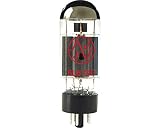
- Octal power tube (max plate Watts = 30W)
- This Slovakian tube has colorful lows, loose/ easy-going mid Body and a brightly shining chime for the highs
- In overdrive, it offers a tight and focused bite with crisp, bright and well-defined articulation
- Available in singles, Apex matched pairs or Apex matched quads - Please select from List
Therefore, “6JJ” should be read as approximately “6-inch nominal bead-seat width, JJ contour.” It should not be read as “8-inch rim,” “6 inches plus two,” or a statement about the wheel’s overall outside width.
Are 6J and 6JJ the same size?
6J and 6JJ are normally the same nominal width, but they are not identical contour markings. Both “6” values refer to the nominal distance between the tire’s bead seats. The flange shape, wheel construction, offset, diameter, and other dimensions can still differ between two wheels carrying 6J and 6JJ markings.
| Marking or feature | 6J wheel | 6JJ wheel | What it tells you |
|---|---|---|---|
| Nominal bead-seat width | 6 inches | 6 inches | The intended width between bead seats |
| Contour code | J | JJ | The rim-flange profile, not an additional width |
| Nominal diameter | Not stated by “6J” alone | Not stated by “6JJ” alone | Read the separate diameter marking, such as 15 in 15 x 6J |
| Vehicle fitment | Cannot be determined from 6J alone | Cannot be determined from 6JJ alone | Also requires tire, wheel, and vehicle specifications |
The “6-inch” designation is nominal rather than an outer-edge measurement. Discount Tire’s rim-width measuring guidance explains that overall wheel width, including the lips, is typically about 1 inch greater than the stamped rim width—approximately 0.5 inch on each side.
Quick wins for a faster PC:
Fix the driver behind crashes, sound loss and screen glitchesFind Drivers →Repair Windows errors before they cause bigger problemsFix Now →Can I use a 6JJ wheel instead of a 6J wheel?
You can use a 6JJ wheel instead of a 6J wheel only when the exact tire, wheel, and vehicle application approve that combination. The “6” alone is not enough to make the substitution safe.
Rank #2

- Power Amplifiers
- 2Pcs 5725W Vacuum Tube Electronic Tube Valve Vacuum For 6Ж1п 6AK5 6K4 EF95 6J 6J2 Pairing Tube Amplifiers
There is evidence that some J-family contours are close enough for a defined application. NHTSA’s TP-139 test procedure states, “Test rim contours are interchangeable in terms of J, JJ and JK rim flange configuration.” That statement applies to the test-procedure context; it is not a blanket road-use approval for every tire, wheel, vehicle, speed, or load condition. Treat the NHTSA TP-139 test-rim statement as limited technical evidence, not as permission to ignore manufacturer fitment data.
Before mounting a tire, check the tire manufacturer’s approved rim-width and contour range and the vehicle manufacturer’s specified wheel and tire sizes. Michelin says, “The rim width range is extremely important,” and explains that an incorrect rim width can distort the tire’s shape, affect the contact patch, and contribute to handling or wear problems. Michelin’s guidance on changing tire size or specifications also recommends using the vehicle manufacturer’s specified tire size or approved alternatives.
What else must match besides 6J or 6JJ?
A wheel can have the correct nominal width and still be unsafe or physically incompatible if another specification is wrong. Compare the complete wheel and tire requirements, not just the contour letters.
| Specification | Why it matters | What to verify |
|---|---|---|
| Wheel diameter | The tire bead must seat on the correct diameter. | The wheel diameter must exactly match the tire’s rim-diameter requirement. |
| Approved rim width | Width changes the tire’s sidewall shape, flex, and contact patch. | The exact tire size must list the wheel width as approved. |
| Rim contour | The flange profile must be suitable for the tire bead and application. | Check the tire maker’s approved contour information where provided. |
| Offset and backspacing | These determine how far the wheel sits inward or outward. | Confirm suspension, brake, hub, and fender clearance. |
| Bolt pattern | The wheel must attach to the vehicle’s hubs correctly. | Match the number of fasteners and the bolt-circle specification. |
| Center bore | An incorrect bore can prevent proper seating or require an appropriate hub-centric solution. | Match the hub and wheel requirements; do not rely on lug nuts to correct an unsuitable fit. |
| Load rating and construction | The wheel and tire must withstand the vehicle’s loads. | Meet or exceed the vehicle and tire manufacturer’s requirements. |
| Clearance | Brake calipers, suspension parts, fenders, and steering lock can interfere. | Check the complete assembled fit, including full steering movement. |
Michelin’s tire and wheel FAQs emphasize checking wheel and tire compatibility rather than selecting a wheel from width alone. A 6J and a 6JJ wheel with the same nominal width can still place the tire differently if their offset, construction, or other dimensions differ.
Rank #3

- Amplifiers
- 2Pcs 5725W Vacuum Tube Electronic Vacuum Replace For 6Ж1п 6AK5 6K4 EF95 6J 6J2 Pairing Tube Amplifiers
How does rim width change tire shape and behavior?
Rim width changes how the tire sidewall sits and flexes even when the tire size remains unchanged. A wider rim generally makes the sidewall straighter and can make steering response quicker; a rim near the narrow end of the tire’s approved range can make the sidewall curve or “balloon” outward.
According to Tire Rack’s current technical guidance accessed in 2026, tire section width changes by approximately 2/10 inch for every 1/2-inch change in rim width. That is a general relationship, not a reason to exceed the tire maker’s approved rim-width range. The exact tire model and size remain decisive.
How do I measure whether a rim is 6 inches wide?
Measure the distance from one inner bead seat to the opposite inner bead seat, not the distance across the outer lips. The bead seats are the surfaces where the tire beads rest inside the rim.
- Remove the tire if an accurate measurement is required. Measuring an assembled tire and wheel can obscure the bead-seat locations.
- Measure straight across between the two inner bead seats.
- Do not include either decorative or structural outer lip in the measurement.
- Read the complete wheel marking, including diameter, width, contour, offset, and any load or safety markings.
- Compare the measured and marked width with the exact tire manufacturer’s approved range.
A wheel rim width measuring tool or rim-width gauge can help identify the nominal bead-seat width, but a measuring tool cannot determine whether a J wheel is approved in place of a JJ wheel. The tool is useful for measurement only; vehicle-specific and tire-specific fitment data still control the decision.
Rank #4
What is the safest way to decide between 6J and 6JJ?
The safest decision is to verify the complete fitment before buying or mounting either wheel.
- Record the vehicle year, make, model, trim, drivetrain, and brake configuration.
- Record the tire’s complete size, load index, speed rating, and model.
- Confirm the required wheel diameter and the tire’s approved rim-width range.
- Check whether the tire or wheel manufacturer specifies an acceptable J, JJ, or related contour.
- Match offset, backspacing, bolt pattern, center bore, wheel load rating, and construction.
- Confirm brake, suspension, fender, and steering-clearance requirements.
- Have a qualified tire or wheel professional verify wheel fitment before buying if any specification is missing or uncertain.
Do not rely on a seller’s statement that “6J and 6JJ are the same” unless the statement is supported by the tire, wheel, and vehicle application data. If the vehicle, tire size, diameter, offset, bolt pattern, center bore, or load rating is unknown, a definitive substitution recommendation cannot be made.
Frequently Asked Questions
Are 6J and 6JJ the same size?
6J and 6JJ normally indicate the same nominal bead-seat width: 6 inches. The difference is the rim-flange contour, with J and JJ representing different profile geometries. The markings do not necessarily indicate identical diameter, offset, load rating, or vehicle fitment.
Recommended Free Tools
Can I use 6JJ instead of 6J?
A 6JJ wheel can replace a 6J wheel only when the exact tire, wheel, and vehicle application approve the combination. J and JJ may be interchangeable in some defined applications, but the contour letters alone are not universal road-use approval.
Best Value

- 【Funtion】: This vacuum tube amplifier can connect the 6J1 tube pre-amp between sound source and amplifier, it will effectively filter digital flavor, the music and human voice will be relatively good.
- 【Eight 470uf Capacitor Filter】: Eight 470UF capacitor filter is very clean, excellent power system to no hum, filaments are powered with DC 12V and need to be connected in series in order to reduce noise.
- 【High Frequency And Low Proof】: The eight 470UF capacitors included in the DIY tube amplifier kit have very clean filtering, and the power system is excellent and noise-free. The filament is powered by DC 12V and needs to be connected in series to reduce noise.
- 【Assemble Yourself】: This diy amplifier kit comes in parts so you can assemble them together by yourself, enjoy the process of building your own tube amplifier.
- 【Easy To Use】: This vacuum tube amplifier uses a DC 5.5*2.1 socket and an AC 12V transformer. You can also use an AC 12V transformer. No plug is needed, just solder the power cord to the circuit board.
What does JJ mean on a wheel?
The second J in 6JJ is part of the rim-contour code. It does not mean the wheel is 2 inches wider; both 6J and 6JJ normally represent a 6-inch nominal bead-seat width.
How do I measure whether my rim is 6 inches?
Measure from one inner bead seat to the opposite inner bead seat, excluding the outer lips. Overall wheel width is typically about 1 inch greater than the stamped rim width because the outer lips are included in that larger measurement.
The Bottom Line
Bottom line: 6J and 6JJ normally both mean a 6-inch nominal rim width; J versus JJ identifies the flange contour. They may be interchangeable in some approved applications, but the contour letter alone is not enough. Confirm the tire maker’s approved width and contour range, then match the complete wheel and vehicle specifications before mounting.
Quick Recap
Product prices and availability are accurate as of the date/time indicated and are subject to change. Any price and availability information displayed on Amazon at the time of purchase will apply.




