PC Slower Than It Used to Be?
A free scan shows the junk files, broken settings and background clutter dragging Windows down - then fixes them in one click.Free scan · Windows 10 & 11Outdated Drivers Are Slowing You Down
One free scan finds every outdated or missing driver and matches the right update for your exact hardware.Free scan · exact hardware matchAutonomous driving does not require one universal “5G connection.” A connected vehicle needs a layered architecture that combines direct vehicle-to-everything communication, cellular wide-area networking, local and edge computing, precise positioning, resilient coverage, and security. Connectivity can extend the vehicle’s awareness and support coordination, mapping, fleet operations, and remote assistance—but the vehicle must remain safe when the network is unavailable or degraded.
The six requirements at a glance
| Requirement | Why it matters | Typical failure |
|---|---|---|
| Predictable low latency | Delivers time-sensitive information before it becomes stale | A message arrives too late to use |
| Reliability and availability | Ensures important messages arrive correctly when needed | Packet loss, corruption, or service outage |
| Throughput and spectrum capacity | Supports everything from basic warnings to sensor sharing | Congestion or dropped data |
| Positioning and time synchronization | Gives every message spatial and temporal meaning | Wrong lane, location, or timestamp |
| Coverage, mobility, and graceful degradation | Keeps services usable as the vehicle moves | Dead zone, failed handover, or backhaul outage |
| Security, interoperability, and lifecycle management | Prevents unsafe data and keeps a long-lived fleet maintainable | Spoofing, incompatibility, or unmanageable credentials |
The required performance depends on the use case. An emergency warning may be a small direct message, while cooperative perception may involve high-volume sensor data. Remote or tele-operated driving has different uplink, latency, coverage, and human-control requirements from a vehicle that drives using onboard perception and planning.
Some 3GPP and 5G Automotive Association (5GAA) materials cite illustrative advanced-driving targets of roughly 3–10 ms end-to-end latency, 99.99–99.999% reliability, tens to hundreds of megabits per second, and up to about 1 Gbit/s for extended sensor sharing. These are use-case-specific engineering targets or study assumptions—not universal guarantees for every autonomous vehicle. 3GPP/5GAA illustrative requirements.
What “connectivity” means in autonomous driving
Connected autonomous driving involves several communication paths:
#1 Best Overall
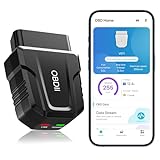
- 【Comprehensive Performance Testing】V011 OBD2 Scanner provides a complete diagnostic solution, giving you a thorough understanding of your vehicle's condition. It supports a variety of performance tests, support 9 protocols,👍automotive fault clearing,including fast reading of DTCs, access to electronic emission readiness, turning off CEL or MIL, resetting monitors, reading live data and retrieving the vehicle's VIN, freeze frame, sensor data, data streaming, diagnostic reports, onboard monitoring, live data streaming, and more. With these features, you can monitor your car's performance in real time and discover potential problems before they become major issues.
- 【Convenience and Savings for All Users】Designed with user-friendliness in mind, the V011 OBD2 Scanner is perfect for both novices and seasoned car enthusiasts. The intuitive app helps you interpret the check engine light, and suggests possible fixes. This can help you avoid unnecessary trips to the repair shop and prevent you from being overcharged for repairs. The product also includes helpful how-to guides and video tutorials, empowering you to clear the check engine light yourself and save significantly on repair bills.The fault code can only be cleared after the car is repaired. ⚠️ Notice:lf the car is not repaired,the fault code can only be cleared by the computer in the 4s shop.
- 【Intuitive Data Visualization】Understanding car diagnostics has never been easier. The V011 OBD2 Scanner displays detected data in clear, easy-to-read charts. Whether it's engine coolant temperature, engine speed, vehicle speed, or control module voltage, the visual representation helps you quickly grasp your car’s status. Even beginners can compare these readings against normal values to determine if their car needs any repairs.
- 【Broad Compatibility】The newly upgraded V011 OBD2 Scanner supports over 96% of car makes and models, making it one of the most versatile diagnostic tools on the market. It is compatible with a wide range of brands including Toyota, Honda, Chevrolet, Ford, Mercedes-Benz, Jeep, BMW, Porsche, Subaru, Nissan, Cadillac, Volkswagen, and Lexus, covering vehicles from 1996 to the present. This ensures that almost any vehicle owner can benefit from its extensive features. The device also supports multiple languages, including English, German, Spanish, Finnish, French, Italian, Dutch, Portuguese, and Chinese, ensuring accessibility for a global audience.
- 【Advanced Bluetooth 5.4 Connectivity】Say goodbye to the hassle of traditional wired connections. The V011 OBD2 Scanner features an upgraded Bluetooth 5.4 system, providing faster and more reliable connections. This seamless connectivity ensures you can start diagnosing your vehicle without any delays.Tips: 1. The car must be started (power on and ignition), 2. The mobile phone Bluetooth is turned on. Note that Apple phones only need to turn on Bluetooth, do not connect Bluetooth in the phone settings to turn on OBD Home, the APP will automatically connect (this product is only suitable for OBD home)
- V2V: vehicle to vehicle.
- V2I: vehicle to infrastructure such as traffic signals, roadside units, road sensors, tolling systems, and work zones.
- V2P or V2VRU: vehicle to pedestrians, cyclists, and other vulnerable road users.
- V2N: vehicle to the cellular network.
- V2C: vehicle to cloud or fleet platforms.
- V2E: vehicle to local or multi-access edge infrastructure.
- In-vehicle connectivity: links among sensors, the GNSS receiver, modem, electronic control units, and automated-driving computer.
Two broad paths matter most. Direct local communication is intended for nearby vehicles and infrastructure. Cellular or C-V2X communication over the PC5 sidelink can operate without depending on a cellular network. Network-mediated communication uses the cellular Uu interface to reach mobile-network infrastructure, edge services, cloud platforms, traffic-management systems, and fleet operations. 3GPP’s C-V2X overview describes both direct and network-based communication.
Not every connection is safety-critical. Infotainment, diagnostics, analytics, and software services can tolerate delay or interruption. Collision warnings, cooperative manoeuvres, signal-phase information, road-hazard alerts, and some forms of remote driving need explicit timing, integrity, availability, and fallback requirements.
1. Predictable low latency
Latency is the time between an application generating information and the receiving vehicle being able to use it. It is not the same as download speed.
The full chain may include:
- A sensor or application generates data.
- The vehicle encodes and schedules a message.
- The radio transmits it.
- The network routes it.
- An edge or cloud service processes it, if required.
- A result returns to the vehicle.
- The vehicle software validates the result and acts on it.
Radio latency, network latency, processing time, queueing delay, and application execution time must be considered together. Average latency is also insufficient. A system that is normally fast but occasionally stalls for hundreds of milliseconds may be unsuitable for a time-sensitive manoeuvre. Jitter—variation in message arrival time—matters because two systems with the same average latency can behave very differently.
The Tool Desk
Outbyte PC Repair FREERepair Windows errors before they cause bigger problemsFix Now →Outbyte Driver Updater FREEFix the driver behind crashes, sound loss and screen glitchesFind Drivers →Direct sidelink communication can avoid some core-network delay. Edge computing can also reduce the distance between a vehicle and the processing service. 3GPP says edge computing moves processing and storage closer to users and can reduce latency; its illustrative material says the reduction may be a factor of two to ten depending on assumptions. That is not a universal performance guarantee. 3GPP edge-computing explanation.
Low latency alone does not make a connection safe. A fast message that is unauthenticated, incorrectly positioned, stale, or unavailable under congestion is still unsafe to rely on.
2. Extremely high reliability and availability
Reliability describes whether a particular message arrives correctly within its required deadline. Availability describes whether the service is usable at the location and time it is needed. Continuity describes whether it stays usable while the vehicle moves between cells, roadside zones, or operators. Integrity means the vehicle can detect corrupted, stale, spoofed, or unauthorized information.
Rank #2
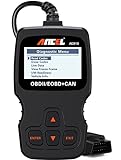
- CEL Doctor: The ANCEL AD310 is one of the best-selling OBD II scanners on the market and is recommended by Scotty Kilmer, a YouTuber and auto mechanic. It can easily determine the cause of the check engine light coming on. After repairing the vehicle's problems, it can quickly read and clear diagnostic trouble codes of emission system, read live data & hard memory data, view freeze frame, I/M monitor readiness and collect vehicle information
- Sturdy and Compact: Equipped with a 2.5 foot cable made of very thick, flexible insulation. It is important to have a sturdy scanner as it can easily fall to the ground when working in a car. The AD310 OBD2 scanner is a well-constructed mechanic tool with a sleek design. It weighs 12 ounces and measures 8.9 x 6.9 x 1.4 inches. Thanks to its compact design and light weight, transporting the device is not a problem. The buttons are clearly labelled and the screen is large and displays results clearly
- Accurate Fast and Easy to Use: The AD310 scanner can help you or your mechanic understand if your car is in good condition, provides exceptionally accurate and fast results, reads and clears engine trouble emission codes in seconds after you fixed the problem. This device will let you know immediately and fix the problem right away without any car knowledge. No need for batteries or a charger, get power directly from the OBDII Data Link Connector in your vehicle
- OBDII Protocols and Car Compatibility: Many cheap scan tools do not really support all OBD2 protocols. AD310 scanner as it can support all OBDII protocols such as KWP2000, J1850 VPW, ISO9141, J1850 PWM and CAN. This device also has extensive vehicle compatibility with 1996 US-based, 2000 EU-based and Asian cars, light trucks, SUVs, as well as newer OBD2 and CAN vehicles both domestic and foreign. Pls confirm with our customer service whether it is compatible with your vehicle before purchasing
- Home Necessity and Worthy to Own: This is an excellent code reader to travel or home with as it weighs less and it is compact in design. You can easily slide it in your backpack as you head to the garage, or put it on the dashboard, this will be a great fit for you. The AD310 is not only portable, but also accurate and fast in performance. Moreover, it covers various car brands and is suitable for people who just need a code reader to check their car
A requirement such as “99.999% reliability” is incomplete without its measurement conditions. It should specify the message, packet size, deadline, range, traffic density, radio path, and measurement window. A warning delivered correctly within 10 milliseconds is a different requirement from a map update delivered within several minutes.
Quick wins for a faster PC:
Clear out junk files and repair common Windows errorsFree Scan →Scan for outdated or missing drivers - takes under a minuteDriver Scan →Redundancy may involve multiple radios, cellular paths, roadside units, information sources, or repeated messages. Repetition and retransmission can improve delivery probability, but they consume spectrum and may worsen congestion. This trade-off becomes particularly important at busy intersections, on motorways, near stadiums, in tunnels, and around emergency scenes.
5GAA’s spectrum work identifies message size, repetition rate, data rate, latency, road geometry, vehicle density, and radio efficiency as variables in estimating V2X requirements. It also notes that greater redundancy increases spectrum demand. 5GAA study via 3GPP.
The safety rule is straightforward: the vehicle must recognize a missing, late, or invalid message and revert to a safe local behaviour. Silence must never be interpreted as proof that no hazard exists.
3. Sufficient throughput and spectrum capacity
Connectivity traffic falls into three broad classes:
What’s actually slowing this PC down?
Pick the symptom - the matching free tool is one click away.
- Small, frequent safety messages: position, speed, heading, acceleration, braking, and hazard status.
- Moderate operational data: traffic-signal information, work-zone warnings, map updates, fleet telemetry, and diagnostics.
- High-volume sensor data: camera-derived features, radar or lidar objects, cooperative perception, raw or compressed sensor streams, high-definition maps, and software updates.
More bandwidth is not automatically better. Sharing raw camera, lidar, or radar streams consumes capacity, increases privacy and data-governance obligations, and creates more opportunities for congestion and latency spikes. Sharing an object list or compact feature representation requires much less bandwidth and is easier to prioritize and validate, although it depends on the sender’s perception quality and may omit useful context. Event messages are even more efficient for hazards, braking, road works, or signal changes.
A 5GAA study estimated roughly 10–20 MHz at 5.9 GHz for basic day-one intelligent transport-system use cases, with an additional 40 MHz or more potentially needed for advanced sensor-sharing scenarios. These are industry-study estimates, not universal regulatory requirements. The result depends heavily on payload format, repetition, vehicle density, and how much information is shared. Study details.
Rank #3

- Made for BimmerCode and recommended by the BimmerCode Team (app sold separately)
- 100% Coverage of vehicles, protocols and advanced features supported by BimmerCode
- Easy in-app pairing to iOS & Android, advanced sleep mode and overvoltage protection allow OBDLink CX to be left plugged in
- Rock-solid connection avoids data corruption and dropped packets, won’t brick your ECU
- OBDLink app included — monitor live parameters, perform diagnostics, clear check-engine light
An illustrative 5GAA presentation based on 3GPP service requirements lists:
- Vehicle platooning: 10 ms, 99.99% reliability, and 65 Mbps.
- Advanced driving: 3 ms, 99.999% reliability, and 53 Mbps.
- Extended sensors: 3 ms, 99.999% reliability, and up to 1,000 Mbps.
- Remote driving: 5 ms, 99.999% reliability, approximately 25 Mbps uplink and 1 Mbps downlink.
These figures describe particular use cases and should not be presented as a blanket specification for autonomous driving. Higher-frequency spectrum can provide capacity but may propagate less effectively; lower-frequency spectrum generally improves coverage but may provide less capacity. More vehicles, retransmissions, and redundancy increase contention.
4. Accurate positioning and time synchronization
“GPS” is not a complete positioning system for cooperative driving. Vehicles need absolute and relative position, lane-level context, velocity, heading, and trustworthy timestamps.
A robust positioning stack can combine GNSS, correction services, inertial sensors, dead reckoning, map matching, visual and radar references, and network timing. It must also account for tunnels, urban canyons, foliage, multipath, GNSS obstruction, and spoofing.
Position and time are connectivity concerns because a message has little value unless the receiver knows where and when it was generated. Cooperative manoeuvres depend on relative geometry. A stale or poorly timestamped message can be more dangerous than no message if it causes the vehicle to act on an old position.
The cited 5GAA presentation gives an illustrative target of about 0.1 metre lateral and 0.5 metre longitudinal accuracy for some autonomous-driving use cases. That is a use-case target, not a universal real-world capability. Commercial hardware such as Qualcomm’s C-V2X 9150 describes integrated GNSS, GNSS time, dead reckoning, multiple satellite systems, and correction mechanisms. Vendor capability descriptions are not proof of a given accuracy in every environment.
Recommended Free Tools
Messages should include timestamps, sequence numbers, validity intervals, and freshness limits. The vehicle should cross-check external position and time against independent onboard sources.
Rank #4

- Turn your iPhone, Android device, or Windows PC into a professional grade diagnostic scan tool.
- Recommended adapter for FORScan, Torque, BimmerCode, Dashcommand, AlfaOBD, Carista, and more.
- Enhanced OEM Support for Ford, GM, Mazda, Nissan/Infiniti, Toyota/Lexus/Scion, Honda, Hyundai, Kia.
- Clear check Engine Light and get more live parameters (ABS, SRS, TPMS, etc) than other scanners.
- Over-voltage and battery drain protection, and included firmware updates.
5. Continuous coverage, mobility, and graceful degradation
A network can be present without meeting an application’s requirements. Coverage, signal strength, packet delivery, latency, jitter, backhaul performance, edge availability, and congestion all affect whether a service is usable.
Automotive connectivity must account for high-speed cell handovers, roaming, multi-operator support, rural roads, tunnels, parking structures, dense urban areas, roadside-unit failures, satellite or GNSS loss, and inconsistent regional spectrum deployments. A commercial cellular plan should not be confused with engineered mission-critical connectivity backed by an automotive service-level agreement.
A practical system should define three operating modes:
Do these 3 things before closing this tab:
1Clear out junk files and repair common Windows errors2Fix the driver behind crashes, sound loss and screen glitches3Repair Windows errors before they cause bigger problems- Connected mode: full V2X, edge, cloud, fleet, and traffic functionality.
- Degraded mode: reduced data rates, delayed updates, cached maps, local-only perception, or a lower automation scope.
- Disconnected mode: onboard sensors and vehicle software remain responsible for safe operation.
Local caching, store-and-forward operation, direct PC5 communication, redundant cellular paths, and edge failover can reduce disruption. Edge processing may also let applications continue during intermittent connectivity, but only if the deployment has local compute, current data, and an appropriate fallback. 3GPP describes this edge benefit.
Independent reader supportYour contribution helps us test, update, and keep practical guides available for everyone.6. Security, interoperability, and lifecycle manageability
Security
Connected vehicles exchange information with strangers, infrastructure operators, cloud services, and other organizations. The architecture therefore needs mutual authentication, signed messages, credential provisioning and revocation, appropriate encryption, secure boot, hardware security modules, protected over-the-air updates, intrusion detection, privacy controls, and separation between infotainment, telematics, and safety-relevant vehicle networks.
Threats include replay, spoofing, jamming, denial-of-service, stolen credentials, malicious software updates, and false hazard messages. A valid signature does not necessarily make a message true: the receiving vehicle must also check authorization, freshness, plausibility, location, and consistency with its own sensors.
Qualcomm describes hardware security modules, line-rate verification, secure message formats, and privacy mechanisms on its V2X platform page. These are vendor-stated product capabilities, not independent certification or regulatory approval.
Best Value

- 100%Brand new with good quality,Durable, high quality automotive grade materials.used specifically for connecting your OBD2 scanner and your vehicle with this 20 pin connector which is specifically for Kia.
- 20 pin Male to 16 pin OBDII Female Adapter. made from high quality ABS plastic.Works on 20PIN for Kia Old Car.
- For all Kia vehicles with a 20Pin female interface Connector.Compatible with Kia vehicles equipped with the 20 pin diagnostic port。
- This 20 Pin OBD to 16 Pin OBD2 connector cable,could connect the car to the car reader for car inspection.
- Note: this item is just an adapter, not a scanner,Before you buy, pls confirm if the connector adapter in the photos is fit for your requirement.
Interoperability
Vehicles and infrastructure must agree on message formats and the meaning of location, time, lanes, objects, hazards, and signal states. Standards such as 3GPP’s V2X work and the PC5 sidelink provide an important foundation. ETSI maintains V2X service-requirements work, including references to TS 22.185 and TS 22.186 in its work programme: TS 22.185 and TS 22.186.
Standards do not eliminate regional spectrum profiles, implementation defects, version mismatches, certification gaps, or incompatible operational policies. Multi-vendor conformance and field testing remain essential. Where LTE-V2X and NR-V2X coexist, systems also need an explicit compatibility and migration strategy.
Lifecycle management
A connected autonomous vehicle is an evolving cyber-physical system. Operators need to provision credentials, replace compromised keys, roll out software and map updates, monitor fleet-wide connectivity, manage version compatibility, retain logs, investigate incidents, demonstrate compliance, and securely decommission vehicles and accounts.
How requirements change by use case
| Use case | Latency sensitivity | Reliability | Throughput | Positioning | Likely mode |
|---|---|---|---|---|---|
| Emergency electronic brake light | High | High | Low | Moderate to high | Direct V2V |
| Intersection collision warning | High | High | Low to moderate | High | V2I, PC5, or edge |
| Platooning | Very high | Very high | Moderate | High | Direct V2V with network support |
| Cooperative perception | High | Very high | Very high | Very high | PC5/NR-V2X and edge |
| HD-map update | Low to medium | Medium | High but delay-tolerant | High | Cellular and cloud |
| Remote assistance | Medium to high | Very high | Moderate to high uplink | High | Cellular, edge, and fallback |
| Fleet diagnostics | Low | Medium | Low to moderate | Low | Cellular and cloud |
| Software update | Low during transfer; high for integrity | Very high | High | Low | Cellular and cloud |
What happens when the network fails?
| Failure | Likely consequence | Required response |
|---|---|---|
| Cellular dead zone | Cloud or V2N service unavailable | Continue with local perception; downgrade automation if required. |
| Congested intersection | Delayed or dropped V2X packets | Prioritize safety messages and use local sensing with conservative behaviour. |
| Handover interruption | Temporary loss or latency spike | Buffer non-critical data, maintain local control, and use redundancy where justified. |
| GNSS obstruction or spoofing | Incorrect position or time | Cross-check inertial, map, visual, radar, and network sources. |
| Edge-server outage | Cooperative processing unavailable | Fall back to vehicle-side processing or another edge site. |
| Stale hazard message | Vehicle reacts to an obsolete condition | Enforce timestamps, validity intervals, sequence numbers, and freshness checks. |
| Malicious message | False braking, routing, or hazard response | Authenticate, authorize, validate plausibility, and support revocation. |
| Regional incompatibility | Feature unavailable or misinterpreted | Use regional profiles, conformance testing, and fallback behaviour. |
| Poor antenna installation | Reduced range and packet reliability | Validate antenna placement, RF performance, and vehicle integration. |
| Software-version mismatch | Incorrect interpretation or failed service | Use version negotiation, compatibility controls, staged updates, and rollback. |
The key test is not whether the modem remains connected. It is whether the vehicle detects that the application-level deadline, delivery probability, or data freshness requirement has been missed and responds safely.
Buying and deployment considerations
For automotive and fleet buyers, the decision is architectural rather than a simple choice of a “5G modem.” Ask:
- Is the use case local V2X, wide-area telematics, edge coordination, remote assistance, or cloud analytics?
- Does it need direct PC5 communication?
- What are the packet deadline, range, density, and reliability requirements?
- Which spectrum, regional profile, and certification apply?
- What happens during cellular, GNSS, edge, or cloud outages?
- Who manages certificates, software, logs, incidents, and end-of-life vehicles?
- Does the vendor provide conformance evidence and production support?
Qualcomm’s C-V2X 9150 is an example of automotive hardware aimed at direct V2V, V2I, and V2P communication with GNSS-related capabilities. The Snapdragon Auto 5G Modem-RF Gen 2 represents a broader automotive cellular and positioning platform. These products are enterprise or OEM-oriented, not plug-and-play consumer upgrades, and public unit pricing is not provided in the supplied material.
For cloud connectivity, AWS IoT Core is a general-purpose building block for secure device-to-cloud communication, commonly using MQTT and mutual TLS. It requires substantial vehicle-side engineering, provisioning, observability, and operational ownership; it is not a turnkey autonomous-driving safety network.
AWS IoT FleetWise is a useful example of a vehicle-data and fleet-analytics platform, but AWS states that it is no longer open to new customers from April 30, 2026. It should therefore not be treated as an uncomplicated new-buy recommendation without confirming eligibility and migration guidance. AWS IoT FleetWise.
Free tools Windows power users keep installed
One-click scans. No signup required.
The practical hierarchy
- Local vehicle safety: onboard sensors, compute, planning, and control remain the primary safety path.
- Direct local awareness: PC5 and roadside communication can add nearby vehicle and infrastructure information without requiring public cellular coverage.
- Resilient wide-area connectivity: cellular networking supports traffic, fleet, maps, remote assistance, and other services while the vehicle moves.
- Edge coordination: local processing can support time-sensitive cooperative applications when deployed close enough to the road.
- Cloud intelligence and lifecycle services: cloud systems support analytics, updates, fleet management, and long-term improvement, but should not be the sole path for immediate vehicle control.
The right question is therefore not “Does the autonomous vehicle have 5G?” It is: Can each connected driving function receive trustworthy information within its deadline, across its operating area, with a tested response when that information is late, wrong, or absent?
Quick Recap
Product prices and availability are accurate as of the date/time indicated and are subject to change. Any price and availability information displayed on Amazon at the time of purchase will apply.




