Recommended Free Tools
To improve traction on a 4WD tractor, start with tire condition and load-matched pressure, then check ballast and whether duals suit the job. There is no single pressure, ballast amount or tire setup that works for every tractor: the right choice depends on its tires, axle loads, implement, speed and terrain.
1. Check tire condition and tread
Inspect each tire for cuts, damage, uneven wear and worn lugs. A damaged or badly worn tire may grip poorly and compromise stability; changing pressure or adding weight will not restore a sound tread.
Match tread type to the work and surface. Turf, industrial and lug tires are designed for different uses, so the best choice depends on where and how the tractor operates. Tire design, lug shape, condition and inflation all contribute to traction and stability. Penn State-hosted HOSTA tire condition guidance recommends checking tire pressure regularly.
2. Set pressure for the actual load
Use the tire maker’s load-and-inflation tables together with the tractor manual. Check pressure with a suitable gauge, and account for the load carried by each tire, operating speed and tire configuration. A generic PSI recommendation cannot account for those differences. Case IH’s tire-pressure and ballasting guidance also emphasizes managing pressure in relation to ballast and load.
What’s actually slowing this PC down?
Pick the symptom - the matching free tool is one click away.
#1 Best Overall

- Pair of 2 Link Tire Chains & Tensioners 23x10.5x12 | For Snow Blowers, Lawn & Garden Tractors, Mowers & Riders, UTV, ATV, 4-Wheelers, Utility Vehicles
- Specs - Outside Links 0.157" (4mm), Crosslinks 0.178" (4.5mm). Number of Cross Chains: 19. Refer to images for more information
- Includes - (1) Pair of Zinc-Plated, 2-Link Tire Chains, (1) Pair of Chain Tensioners; comes as shown in the first image. Tires NOT Included
- Double check your exact tire size to be sure that these tire chains will fit your unit properly. Do NOT purchase based on model alone
- For turf tires ONLY. Use for snow & mud
- Too much pressure: can reduce the tire’s contact area and tractive efficiency, encouraging wheel spin.
- Too little pressure: can reduce load capacity, weaken sidewall protection and undermine stability.
Pressure recommendations can change when you add duals or triples because the load carried by each tire changes. Recheck the applicable tables whenever tire configuration or load changes. WorkSafe Victoria explains the trade-off between contact area, load capacity and sidewall strength in its tractor safety guidance.
3. Match ballast to the job
If a powered axle is too lightly loaded, its tires may spin before they can transfer the available power. Suitable ballast can improve traction, but adding weight indiscriminately is not a fix: it increases soil pressure and may increase compaction, while excess weight can affect drivetrain demands and efficiency.
Rank #2
- Pair of 2 Link Tire Chains & Tensioners 20x10x8 | For Snow Blowers, Lawn & Garden Tractors, Mowers & Riders, UTV, ATV, 4-Wheelers, Utility Vehicles
- Specs - Outside Links 0.191" (4.85mm), Crosslinks 0.178" (4.5mm). Number of Cross Chains: 16. Refer to images for more information
- Includes - (1) Pair of Zinc-Plated, 2-Link Tire Chains, (1) Pair of Chain Tensioners; comes as shown in the first image. Tires NOT Included
- Double check your exact tire size to be sure that these tire chains will fit your unit properly. Do NOT purchase based on model alone
- For turf tires ONLY. Use for snow & mud
Weigh the tractor by axle in its working configuration and follow the model-specific ballast recommendations. The University of Kentucky Cooperative Extension Service’s AEN-93 gives approximate 4WD front/rear axle-weight splits of 55/45 for towed implements and 60/40 for mounted implements. These are reference values from that guidance, not universal targets; the implement and tractor manufacturer’s instructions take priority.
4. Add duals only when they suit the operation
Dual tires can improve flotation and load carrying in some 4WD operations by distributing load across more tire area. They are not automatically better: the benefit depends on the tractor arrangement and task, and an unnecessary or unsuitable dual setup may perform worse.
Do these 3 things before closing this tab:
1Fix the driver behind crashes, sound loss and screen glitches2Repair Windows errors before they cause bigger problems3Scan for outdated or missing drivers - takes under a minuteRank #3
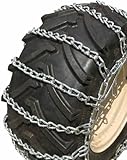
- Fits 26-12-12 tires - Match the tire size stamped on your sidewall before ordering; garden tractor tire brands and tread depths can vary.
- 2-link ladder traction - Cross chains occur every other side-chain link for more consistent grip and a smoother ride than 4-link spacing.
- Non-V-bar twisted link - Good all-around snow, hill, gravel, and wet grass traction with less surface marking than V-bar or studded chains.
- Sold as a pair - Includes chains for the left and right drive tires.
- Install tight for best life - Rubber chain tighteners are recommended to keep chains centered and reduce loose movement.
Compare duals with ballast according to the job and ground conditions. Duals change load distribution and flotation; ballast adds weight to the tractor. Consider traction, soil compaction, compatibility, stability and setup complexity before choosing either. Check the manual and tire guidance, and recalculate pressure for the changed configuration. Michigan State University Extension’s tire-pressure and ballasting guidance discusses how tire setup and operation affect performance.
Independent reader supportYour contribution helps us test, update, and keep practical guides available for everyone.5. Use traction aids carefully and operate smoothly
Chains and other traction materials may help in suitable conditions, but fitment is model- and tire-specific. Confirm compatibility and installation directions with the tractor and traction-device manufacturers or a qualified dealer; do not assume a chain that fits one tire or tractor is appropriate for another.
Rank #4
- Pair of 2 Link Tire Chains & Tensioners 26x12x12 | For Snow Blowers, Lawn & Garden Tractors, Mowers & Riders, UTV, ATV, 4-Wheelers, Utility Vehicles
- Specs - Outside Links 0.191" (4.85mm), Crosslinks 0.178" (4.5mm). Number of Cross Chains: 22. Refer to images for more information
- Includes - (1) Pair of Zinc-Plated, 2-Link Tire Chains, (1) Pair of Chain Tensioners; comes as shown in the first image. Tires NOT Included
- Double check your exact tire size to be sure that these tire chains will fit your unit properly. Do NOT purchase based on model alone
- For turf tires ONLY. Use for snow & mud
Apply power gradually and keep weight distribution within the tractor maker’s limits. More grip does not eliminate rollover risk. Follow the tractor’s operating instructions and safety guidance, including University of Missouri Extension’s tractor safety guidance; use a qualified dealer for model-specific changes to wheels, ballast or traction devices.
Quick Recap
Best Value

- ENHANCED TRACTION IN SNOW & MUD: Designed with a 2-link ladder pattern and 42-1/2 inch side chain length, these OakTen snow tire chains deliver reliable traction for navigating tough, snowy, or muddy terrain. Perfect for lawn tractors, garden tractors, mowers, and snow blowers
- DURABLE ALLOY STEEL: Built from high-quality alloy steel with a zinc-plated finish, these tire chains provide strong, long-lasting durability for lawn garden tractors and snow blowers, enhancing performance across various applications
- WIDE TIRE SIZE COMPATIBILITY: Compatible with multiple tire sizes including 20x7x12, 20x8x8, 20x8x10, 20x9x8, 21x7x8, and 21x7x10, offering a tailored fit for John Deere, MTD, Murray, Cub Cadet, and more
- EASY TO INSTALL: Engineered for quick setup, these snow tire chains are easy to install and remove. To ensure optimal fit, measure your tire’s outer diameter and width to match the tire size range before purchase
- VERSATILE USAGE: Ideal for riding mowers, garden tractors, snow blowers, and other small outdoor equipment, these chains deliver superior grip and control in winter conditions, improving both safety and efficiency
A practical order of checks
- Inspect tires for damage, uneven wear and worn tread; confirm the tread type suits the terrain and work.
- Identify the load, implement, speed and tire arrangement, then use the tractor manual and tire manufacturer’s load/inflation table to set pressure.
- Check axle weights in the working configuration and adjust ballast only as the tractor manufacturer recommends.
- Consider duals or traction devices only after confirming their suitability for the tractor, tire and operation.
- After changing load or wheel configuration, recheck tire pressure and follow the applicable operating guidance.
Product prices and availability are accurate as of the date/time indicated and are subject to change. Any price and availability information displayed on Amazon at the time of purchase will apply.




