Recommended Free Tools
Driving a manual transmission made me more deliberate behind the wheel—not automatically safer or better than every automatic driver. It gave me repeated practice coordinating controls, anticipating what was ahead, reading the car’s responses, managing momentum, and staying patient through mistakes. Those habits are useful; the gearbox itself is not proof of superior driving.
1. I learned to coordinate my inputs deliberately
Moving away smoothly in a manual asks me to coordinate the clutch, accelerator, and gear selection. If the timing is off, the car can jerk, stall, or roll backward on a slope. That immediate consequence made me pay closer attention to how one input affected the next.


The UK Driver and Vehicle Standards Agency (DVSA) treats smooth clutch-and-gear coordination as a basic driving skill for moving away, changing gear, and stopping. Its car-driving syllabus also makes a broader point: drivers manage complex situations more effectively when basic controls become familiar enough not to demand all their attention.
2. I started planning farther ahead
When I had to choose a gear for my speed, the road, or an approaching incline, I found myself thinking earlier about what was coming. Changing gear smoothly and in good time is easier when I have noticed a bend, hill, or slowdown before reaching it.
Free tools Windows power users keep installed
One-click scans. No signup required.
The habit that mattered most was not shifting. It was looking ahead, scanning, anticipating, and planning around other road users. The DVSA teaches these as central driving skills in its roadside approach and cornering syllabus. Automatic drivers need those skills just as much; a manual simply gave me another reason to practise them.
3. I paid closer attention to the car’s feedback
A manual made some of the car’s responses harder for me to ignore. Engine speed, road speed, the selected gear, and whether the car moved smoothly all helped me judge whether my choice was working. I learned to notice those cues rather than treating the controls as isolated motions.
Rank #2

- Most recent NYS driver's manual MV-21 (4/18)
- Official 2018 DMV Hard Copy
Saskatchewan’s driver guidance advises considering engine rpm, gear, and road speed when shifting. It also recommends learning the gear pattern without looking at the lever, so attention can stay on the road. That is a practical lesson in vehicle awareness, not a benefit unique to manual cars: drivers can learn to read feedback in automatics, too.
4. I thought more carefully about speed and momentum
Choosing when to change gear encouraged me to match my inputs to the conditions instead of reacting at the last moment. On a gradient or as traffic slowed, I had to consider what the car would need next and how to keep its progress smooth.
Windows Errors? Fix Them Before They Spread
Repair common Windows errors and clear accumulated junk for a smoother, more stable PC - no reinstall needed.Free scan · no reinstallOutdated Drivers Are Slowing You Down
One free scan finds every outdated or missing driver and matches the right update for your exact hardware.Free scan · exact hardware matchRank #3
The DVSA syllabus connects suitable gear choice with speed and road conditions, timely decisions on inclines, and smooth, effective driving. For me, that practice sharpened judgment about managing momentum. It does not establish that a manual gives a driver uniquely safe control: vehicles differ, and good speed management depends on the driver as well as the transmission.
5. I learned patience by practising through mistakes
Stalling was frustrating, but it also made the next step clear: pause, reset, and try again when it was safe. Repeating the same basic actions helped me become less flustered and more consistent. The useful lesson was patience and recovery—not that struggling is good in itself.
Saskatchewan Government Insurance describes manual operation as requiring substantial practice and skill, while the DVSA recommends supervised practice and ongoing evaluation of driving ability. Practice can improve shifting, but difficulty with a manual does not guarantee better driving once the learner gets past it.
Independent reader supportYour contribution helps us test, update, and keep practical guides available for everyone.Does driving a manual make someone a better driver?
Not as a general rule established by the evidence available here. The benefits I describe are personal: manual practice helped me work on coordination, anticipation, feedback, speed judgment, and patience. Good driving also depends on observation, decision-making, and adapting to other road users—skills an automatic driver can develop without operating a clutch.
Best Value
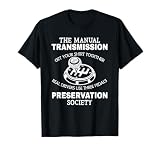
- Best perfect stuff for auto mechanics, technicians, car enthusiasts, mechanical engineers, car mechanics workers, or auto repair shop owners in your family or friends who loves to ride, race, drive, and repair cars, and have a good sense of humor.
- Know someone who loves driving, racing vehicles, or working in car repair shops? If it is you or anyone in your life this vintage graphic art design "Manual Transmission Preservation Society Driving Driver" is great awesome for you.
- Lightweight, Classic fit, Double-needle sleeve and bottom hem
The limited comparisons do not support a universal verdict. A 2006 simulator pilot involved 10 adolescent male drivers with ADHD; participants reported more attention and safer driving in manual mode, but the authors called for replication. A 2011 on-road study of 31 older drivers and 32 younger controls found that an automatic improved several assessed behaviors for the older group, including urban speed adjustment and lane position. Neither result establishes that one transmission makes drivers generally better.
A 2024 analysis of Ghana crash records from 2019–2022 included 1,856 automatic-vehicle crashes and 2,272 manual-vehicle crashes. Its authors reported an association between manual-transmission use and higher risk of incapacitating or fatal driver injuries in their model. This is an association in a particular crash dataset, not proof that the gearbox caused the outcomes or a general comparison of driver skill.
What I would take from the experience
Learning a manual can be worthwhile if you want to practise coordinating controls and making gear choices. But the goal should be calm, attentive driving—not proving that one transmission is superior. Choose a vehicle and learning environment that suit your needs, practise with appropriate supervision, and keep the focus on the habits that matter in any car: observation, anticipation, planning, and safe decisions.
Quick Recap
Product prices and availability are accurate as of the date/time indicated and are subject to change. Any price and availability information displayed on Amazon at the time of purchase will apply.
The Tool Desk
Outbyte Driver Updater FREEFix the driver behind crashes, sound loss and screen glitchesFind Drivers →Outbyte PC Repair FREEClear out junk files and repair common Windows errorsFree Scan →



