Toyota’s smaller-than-Tacoma pickup is becoming a credible product program, but the “2028 Toyota small pickup” is not yet an officially announced model. Toyota executives have indicated that a compact truck for North America is being pursued, and Toyota CEO Tetsuo Ogawa has publicly described a RAV4-based pickup as an opportunity. Reporting also points to a unibody truck aimed at the Ford Maverick, potentially with hybrid power.
That makes the project strategically important—but the 2028 model year, name, price, specifications, production plant, and launch date remain unconfirmed as of August 12, 2026. The most accurate description is a likely compact, crossover-based Toyota pickup positioned below the Tacoma, not a finished vehicle with published specifications.

As an Amazon Associate I earn from qualifying purchases.
The short answer: Toyota’s small truck is real enough to take seriously, but 2028 is still a projection
Toyota has not revealed a production compact pickup, opened orders, published specifications, or confirmed a 2028 launch. Its official U.S. truck catalog currently covers the Tacoma and Tundra families, with no smaller production pickup listed. Toyota’s current truck catalog is therefore an important reality check: the future truck is not yet an official retail model.
Do these 3 things before closing this tab:
1Fix the driver behind crashes, sound loss and screen glitches2Clear out junk files and repair common Windows errors3Scan for outdated or missing drivers - takes under a minuteHowever, this is no longer just a fan-render rumor. In May 2025, Toyota North America planning and strategy chief Cooper Ericksen was reported as saying that decisions had been made, Toyota was dedicated to the project, and the remaining question was when it could be placed in the lineup. The reported vehicle would be a unibody pickup aimed at the Ford Maverick, with hybrid power considered likely. The reporting on Toyota’s Maverick-fighting truck provides the clearest explanation of the project’s intended position.
#1 Best Overall

- 1.White Tundra Toy Trucks Size:L×W×H:8.66×3.74×3.54(inches),weight:1.04Ib.
- 2.White Tundra Toy Trucks Material:Our pickup truck toy is made of zinc alloy + ABS plastic,zinc alloy body, interior and chassis are made of ABS plastic, rubber tires.
- 3.White Tundra Toy Trucks Features:With simulated sound and light effects,press the body or press the steering wheel to trigger the sound and light effect,the front lights and rear tail lights light up and trigger the sound effect.Doors, hood and tailgate all open,front wheels can turn left and right,the rearview mirror can be folded,retractable pedals on both sides,the tire rack can be freely disassembled.Four wheels with shock absorbing effect,the rear wheel has a pull-back function.
- 4.White Tundra Toy Trucks Display:Tundra metal diecast toy trucks is finely crafted and rich in details,which can decorate men's offices and boys' rooms, and is very suitable for car model lovers to collect. It is an excellent choice for play, preschool education, decoration and collection.
- 5.Perfect Gift Full of Surprises:This gift will not only entertain your kids, but also teach them about cars and improve their hands-on skills, especially as a Christmas or birthday gift. Adults can use it as a decoration or decoration, put it in the car or on the display cabinet at home, it becomes a work of art.
Then, in May 2026, Toyota Motor North America CEO Tetsuo Ogawa referred to a “RAV4-based pickup” as an opportunity and said dealers were waiting, while also stressing that development takes time. Ogawa’s comments strengthen the RAV4-based theory, but they do not amount to a formal reveal or a promise that the truck will arrive for the 2028 model year.
What Toyota has actually confirmed
The project’s broad direction is increasingly clear. Its production details are not. Here is the line between evidence and speculation:
| Item | What can responsibly be said |
|---|---|
| Existence and intent | Toyota is considering or pursuing a pickup below the Tacoma for North America. Executive comments make the project more credible than ordinary rumor. |
| Market position | It is intended to address the compact-pickup opportunity represented most directly by the Ford Maverick and also by the Hyundai Santa Cruz. |
| Construction | Reporting describes a unibody truck. That would distinguish it from the body-on-frame Tacoma and Tundra. |
| RAV4 relationship | Toyota’s CEO has publicly described a RAV4-based pickup as an opportunity. A production platform code or engineering specification has not been published. |
| Powertrain | Hybrid propulsion is plausible and has been reported as likely. Toyota has not confirmed the engine, battery, output, drivetrain, or whether a plug-in hybrid or battery-electric version will be offered. |
| Name | No name has been announced. Stout, EPU, Hilux, T-100, and Tacoma are speculative labels or references to other Toyota products and concepts. |
| Timing | Some reports have projected a 2027 or 2028 arrival, but Toyota has not confirmed a model year, reveal date, or U.S. sales date. |
| Price and capability | There is no official MSRP, towing rating, payload rating, bed length, ground clearance, fuel-economy figure, or range estimate. |
| Production | No official source identified the plant or confirmed U.S. production for the compact pickup. |
This distinction matters because unofficial renderings and repeated internet speculation can make a vehicle appear more complete than it is. Toyota has confirmed an opportunity and a direction—not a finished 2028 product.
Quick wins for a faster PC:
Clear out junk files and repair common Windows errorsFree Scan →Scan for outdated or missing drivers - takes under a minuteDriver Scan →Why a RAV4-based pickup makes sense
A RAV4 connection would give Toyota a logical foundation for a smaller truck. A crossover-derived vehicle could provide four-door packaging, a relatively manageable exterior footprint, hybrid-system experience, and a lower entry point than the Tacoma. It could also be easier to drive and park than a traditional midsize pickup.
That is an informed product-strategy inference, not a published Toyota specification. Ogawa’s description supports the idea of a RAV4-based truck, but Toyota has not said exactly which components would be shared, whether the vehicle would use the current RAV4 architecture, or how extensively the pickup would be engineered for work use.
The key technical question is whether Toyota can make the truck genuinely useful without turning it into a heavier, more expensive Tacoma substitute. A unibody pickup can be practical and durable, but its structure integrates the cab and cargo-box body rather than using the separate frame associated with conventional truck architecture. That usually favors road manners, efficiency, packaging, and cost over maximum towing, extreme payload work, and serious off-road abuse.
Toyota’s reported emphasis on workhorse functionality is encouraging. The company appears to understand that American buyers will expect more than a crossover with a shallow cargo box. The truck will need a useful bed, sensible payload capacity, good cargo tie-downs, and enough durability for home-improvement, recreation, landscaping, and light-work tasks. None of those final measurements has been released yet.
Recommended Free Tools
Is it the Toyota Stout, EPU, or something else?
There is no confirmed name. “Stout” is a historic Toyota truck name and has become a popular label for speculation about a new compact pickup. That does not mean Toyota has selected it for the American-market vehicle.
The EPU is also relevant, but it should not be treated as the 2028 Toyota truck. Toyota’s European newsroom describes the EPU Concept 2023 as a next-generation midsize pickup concept with a monocoque body and battery-electric powertrain. Toyota lists the concept at 5,070 millimeters long, 1,910 mm wide, and 1,710 mm high, with a 3,350-mm wheelbase and seating for five.
The EPU demonstrates that Toyota has explored a unibody electric pickup with a practical cargo deck. It may offer useful clues about Toyota’s broader thinking on electrified trucks and flexible cargo space. But it is explicitly a concept, Toyota classifies it as midsize, and no source identified in this research connects the EPU by name, dimensions, or specifications to the future U.S. RAV4-based pickup.
Accordingly, articles or videos that state the EPU is definitely the production 2028 truck go beyond the evidence. The same applies to claims that the vehicle will definitely be called Stout, Hilux, T-100, or Tacoma.
PC Slower Than It Used to Be?
A free scan shows the junk files, broken settings and background clutter dragging Windows down - then fixes them in one click.Free scan · Windows 10 & 11Crashes, No Sound, or Screen Glitches?
Random freezes, missing sound and display glitches usually trace back to one bad driver. Find and replace yours safely.Free scan · under a minuteRank #2
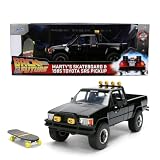
- Iconic Back to the Future Design – Features the 1985 Toyota SR5 pickup truck with Marty McFly’s skateboard, capturing every nostalgic detail from the movie.
- Interactive Features – Includes opening doors and hood to enhance display possibilities and interactive play.
- Highly Detailed – Boasts an authentic interior, detailed engine, and movie-accurate exterior, making it perfect for collectors.
- Premium Diecast Construction – Built with durable diecast metal and rubber tires for a realistic look and feel.
- Jada Toys – Renowned for delivering high-quality Hollywood-inspired collectibles that bring iconic movie vehicles to life.
What powertrain could the truck use?
A hybrid is the most defensible expectation, but it remains an expectation. Reporting on Toyota’s smaller pickup has repeatedly pointed toward hybrid power, and Toyota’s existing hybrid expertise would fit the vehicle’s intended role. A hybrid could give the truck better efficiency in commuting and urban driving while preserving the instant low-speed response that helps a utility vehicle feel capable.
Still, no final powertrain has been announced. Buyers should not treat any of the following as confirmed:
- A particular gasoline engine or engine displacement.
- A specific horsepower or torque figure.
- A battery size or hybrid-system generation.
- Front-wheel drive, all-wheel drive, or any specific four-wheel-drive system.
- A plug-in hybrid launch version.
- A battery-electric launch version or an official driving-range target.
- A production relationship to the all-electric EPU concept.
The most reasonable current forecast is a conventional hybrid or another electrified configuration related to Toyota’s crossover strategy. But the responsible wording is “potentially hybrid,” not “Toyota has confirmed the hybrid system.”
How it would differ from the Tacoma
The small pickup would not simply be a shorter Tacoma. The current Tacoma occupies the midsize-truck category and uses Toyota’s TNGA-F truck platform. Toyota’s official announcement for the 2026 Tacoma provides the relevant contrast: the Tacoma is designed as a truck-first product, while the reported smaller vehicle would use a unibody, crossover-oriented approach.
The Tool Desk
Outbyte Driver Updater FREEFix the driver behind crashes, sound loss and screen glitchesFind Drivers →Outbyte PC Repair FREEClear out junk files and repair common Windows errorsFree Scan →| Likely compact Toyota pickup | Toyota Tacoma | |
|---|---|---|
| Position | Below Tacoma; compact, light-duty pickup | Midsize pickup |
| Construction | Reported unibody design | Truck-oriented body-on-frame architecture |
| Primary strengths | Size, maneuverability, efficiency, everyday utility | Towing, payload potential, ground clearance, off-road capability |
| Likely buyer | Urban and suburban owners with light-duty truck needs | Owners needing more traditional truck capability |
| Known specifications | Not yet published | Established production model with published specifications |
The smaller truck could be easier to live with in crowded neighborhoods and parking garages, more efficient for daily commuting, and less intimidating for people who have never owned a truck. In exchange, buyers may give up some of the Tacoma’s towing, payload, clearance, frame strength, and serious off-road hardware. Those trade-offs are typical of the segment, but Toyota’s exact compromises are unknown.
Why it could be a game-changer in America
The Ford Maverick proved that a meaningful group of American buyers wants pickup utility without the size and cost of a conventional truck. The Hyundai Santa Cruz also occupies this crossover-pickup space. Both established an alternative to the familiar pattern of moving from a compact SUV directly to a large or expensive pickup.
A Toyota entry could be especially important for four reasons.
1. It would give Toyota a product below the Tacoma
Toyota has strong recognition in the American truck market through the Tacoma and Tundra, but neither is a compact pickup. A smaller model could attract buyers who like Toyota’s reputation and hybrid expertise but find the Tacoma larger, more expensive, or more capable than they need.
What’s actually slowing this PC down?
Pick the symptom - the matching free tool is one click away.
2. It could make truck ownership more practical
Many buyers want an open bed for bicycles, camping equipment, home-improvement materials, gardening supplies, or occasional light work. They may not need a heavy-duty frame or the dimensions of a traditional midsize pickup. A smaller footprint could reduce the daily penalties of truck ownership while preserving the bed’s usefulness.
3. A hybrid could fit the vehicle’s real-world mission
A compact truck used primarily for commuting, errands, and weekend projects spends much of its time away from a job site. An efficient electrified powertrain could make more sense for that use than a large-displacement truck engine, assuming Toyota can maintain useful payload and towing performance.
4. Toyota could expand the segment
The Maverick’s success created evidence for demand, but the market is still narrower than the market for midsize and full-size pickups. A well-priced, widely available Toyota could bring buyers who have not previously considered a compact truck. That would make the vehicle strategically important even if it did not immediately replace Tacoma sales.
Rank #3
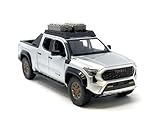
- SCALE DETAILS: Precision-crafted 1:24 scale diecast model of the 2025 Toyota Tacoma Trailhunter, featuring authentic proportions and dimensions
- EXTERIOR FEATURES: Black finish with detailed grille, LED-style lighting elements, and rugged off-road wheels with bronze-colored rims
- DESIGN ACCURACY: Faithfully reproduced body styling including the distinctive Trailhunter badge, side steps, and pickup truck bed configuration
- COLLECTOR'S ITEM: Limited edition MiJo Exclusives release, perfect for Toyota enthusiasts and diecast model collectors
- DISPLAY QUALITY: Premium die-cast construction with detailed interior, opening doors, and authentic Toyota Tacoma Trailhunter styling elements
Calling it a guaranteed game-changer would be premature. The truck will earn that label only if Toyota delivers the combination buyers are likely to want: a useful bed, competitive pricing, dependable hybrid performance, sensible interior space, strong availability, and enough capability to justify choosing it over a crossover SUV.
Where the project could fall short
The compact-pickup formula has an inherent conflict. Buyers want an affordable, efficient, easy-to-drive vehicle, but they also expect the bed and chassis to perform real work. Strengthening the truck, increasing payload, adding all-wheel-drive hardware, and improving towing can increase weight and cost. Keeping it light and inexpensive can limit capability.
Profitability is another challenge. Larger trucks generally provide automakers with more pricing headroom, while compact pickups must appeal to cost-conscious buyers. Toyota executives have acknowledged that affordability and timing are significant obstacles. If the final truck is priced too close to a well-equipped Tacoma—or to a similarly practical compact SUV—it may struggle to justify itself.
Availability could matter just as much as the specification sheet. A compact Toyota pickup that exists only in small numbers would have less impact than a vehicle dealers can regularly stock. Toyota’s CEO saying dealers are waiting shows that retailer interest exists, but it does not confirm production volume or distribution plans.
Finally, Toyota must avoid confusing lifestyle appeal with truck utility. A sleek design and an open bed may attract attention, but buyers will judge the vehicle by bed usability, payload, durability, cabin flexibility, visibility, fuel economy under load, and the cost of ownership. Those details will determine whether it becomes a genuine work-and-recreation tool or simply a crossover with truck styling.
What buyers should expect—and what they should not
If Toyota launches the project in the direction executives have described, the truck will probably appeal to people who want:
- A smaller vehicle than the Tacoma.
- A four-door cabin suitable for daily use.
- An open cargo bed for occasional work and recreation.
- Better maneuverability than a traditional midsize or full-size pickup.
- Electrified power, potentially including a hybrid system.
- Enough practical capability for home projects, outdoor equipment, and light-duty hauling.
It is less likely to be the right choice for someone who regularly tows heavy trailers, carries maximum payloads, needs a high-clearance off-road truck, or depends on the rugged hardware associated with the Tacoma. That is not a criticism of the future model; it is the normal trade-off of moving from a body-on-frame midsize truck to a compact unibody pickup.
At this stage, readers should be skeptical of any article or video presenting exact numbers for horsepower, towing, payload, bed length, ground clearance, price, battery capacity, or range. Toyota has not published those figures for this vehicle.
When could the 2028 Toyota small pickup arrive?
The 2028 label is plausible as an editorial forecast, but it is not a confirmed Toyota model year. Some secondary reports have projected a 2027 or fall-2027 arrival, while the newer executive comments indicate that the project is still subject to development timing. Those statements do not establish a launch commitment.
A production date can move for several reasons, including engineering development, manufacturing capacity, regulatory approval, supplier readiness, pricing decisions, and Toyota’s broader product-planning priorities. The Tacoma’s production plans should not be used to infer the compact pickup’s factory. Reports about Tacoma production shifts to Texas concern the Tacoma and do not confirm where a future smaller truck would be built.
The next meaningful evidence would be an official Toyota announcement identifying the model, showing a production vehicle or prototype, confirming the market, publishing a model year, or opening a reservation or information page. Until then, “2028” should be read as a target or projection—not a promise.
Rank #4
What would make the truck genuinely competitive?
Toyota would need to get several decisions right:
- Useful cargo space: The bed should be practical for everyday materials and recreational gear, not merely decorative.
- Honest capability: Toyota should publish clear payload and towing limits and equip the truck for the jobs its marketing suggests it can handle.
- Efficient power: A hybrid system would be most valuable if efficiency remains strong when the truck is loaded.
- Reasonable pricing: The truck does not need to hit an invented $25,000 or $30,000 number, but it must offer a clear value advantage over moving up to a Tacoma or choosing a compact SUV.
- Everyday comfort: Buyers in this class often use the vehicle as their primary transportation, so ride quality, cabin storage, rear-seat space, and technology matter.
- Availability: Dealers need enough inventory for shoppers to find and purchase the vehicle without excessive waiting or markups.
- Clear model identity: Toyota should explain how the truck differs from the Tacoma and which buyers it is designed to serve.
If Toyota can combine those qualities, the compact pickup could become one of the company’s most strategically important new products in North America. If it arrives too expensive, too limited, or too compromised to perform basic truck tasks, the opportunity will be much smaller than the headlines suggest.
What to watch next
For anyone following the project, these are the updates that will separate real news from speculation:
Free tools Windows power users keep installed
One-click scans. No signup required.
- An official Toyota name and model page.
- A confirmed U.S. market and model year.
- Production-intent photos or a formal reveal.
- Powertrain and drivetrain information.
- Bed dimensions, payload, towing, and ground-clearance figures.
- MSRP, trim levels, and availability.
- Official factory or production information.
- Confirmation of whether the truck is related to the RAV4, the EPU concept, or neither in a direct engineering sense.
Until those details appear, the safest conclusion is that Toyota has a serious compact-pickup opportunity in development, but the internet has filled in more of the product than Toyota has.
Frequently Asked Questions
Has Toyota confirmed a 2028 small pickup truck?
No. Toyota executives have indicated that a pickup below the Tacoma is being pursued, and the CEO has described a RAV4-based pickup as an opportunity. Toyota has not confirmed the 2028 model year, a reveal date, a production date, or U.S. sales timing.
Will the new Toyota pickup be called Stout?
Toyota has not announced the name. Stout is a historical Toyota truck name and a popular speculative label, but it is not a confirmed American-market designation.
Will Toyota’s small pickup be hybrid?
Hybrid power is considered likely in reporting about the project, but Toyota has not published the final engine, battery, drivetrain, output, fuel economy, or launch powertrain.
Is the Toyota EPU concept the upcoming U.S. pickup?
There is no confirmed connection. The EPU is an official midsize, monocoque, battery-electric concept. It shows that Toyota has explored electrified unibody pickups, but Toyota has not said that the EPU is the production RAV4-based truck.
How will the compact Toyota pickup differ from the Tacoma?
The reported truck would be smaller and unibody, with a crossover-oriented mission. The Tacoma is a midsize, truck-oriented model built on Toyota’s TNGA-F platform. The smaller pickup would likely prioritize maneuverability and efficiency, while the Tacoma remains the better fit for more demanding towing, payload, clearance, and off-road needs.
How much will the 2028 Toyota small pickup cost?
Toyota has not announced an MSRP. Any exact price, including claims that it will cost $25,000 or $30,000, is speculation.
The Bottom Line
Bottom line: Toyota’s compact pickup is more credible than a rumor, and a RAV4-related unibody truck with hybrid power could be a strong answer to the Ford Maverick. But as of August 12, 2026, Toyota has not confirmed the name, 2028 model year, price, specifications, plant, or launch date. It could become a game-changer if Toyota delivers real bed utility, competitive capability, hybrid efficiency, affordable pricing, and broad availability; for now, it is a promising project—not a revealed product.
Quick Recap
Product prices and availability are accurate as of the date/time indicated and are subject to change. Any price and availability information displayed on Amazon at the time of purchase will apply.




