A 2020 Toyota Sequoia can be the smarter buy if you want its 5.7-liter V8, find a well-maintained example at a substantial discount, and do not need the newer model’s extra towing capacity or updated technology. The 2025 is the stronger fit for buyers who need its higher published tow limit or prefer a newer hybrid powertrain and cabin features. The choice depends on the actual vehicles, their prices and condition—not model year alone.
The specifications below are for U.S.-market models. Toyota’s figures describe what it advertised; they do not establish comparative reliability, crash performance, current used prices, or the condition of a particular vehicle.


What changed between the 2020 and 2025 Sequoia?
These are different generations with different powertrains. Toyota equipped the 2020 Sequoia with a 5.7-liter V8 and six-speed automatic. The 2025 uses a standard twin-turbo V6 hybrid powertrain and a 10-speed automatic. Toyota’s published figures give the 2025 considerably more power and torque, while the 2020 offers the older V8 format.
| Specification | 2020 Sequoia | 2025 Sequoia |
|---|---|---|
| Powertrain | 5.7-liter i-FORCE V8; six-speed automatic | i-FORCE MAX twin-turbo V6 hybrid; 10-speed automatic |
| Horsepower and torque | 381 hp and 401 lb-ft, per Toyota’s 2019 model-year release | 437 hp and 583 lb-ft, per Toyota’s 2024 model-year release and 2025 brochure |
| Maximum published towing capacity | Up to 7,400 lb, depending on grade and equipment; Toyota specified up to 7,100 lb for the TRD Pro | Up to 9,520 lb |
| Fuel economy | A comparable EPA rating is not established by the cited Toyota material; check the exact year, engine and drive configuration at FuelEconomy.gov | Toyota-estimated 21 city/24 highway/22 combined mpg for 4×2 SR5 and Limited; 19/22/20 mpg for 4×4 configurations |
The power, torque and towing figures are manufacturer-published specifications, not independent test results. The 2020 maximum varies by grade and equipment, and neither model’s lineup maximum should be assumed to apply to every vehicle. Toyota details the 2020 figures in its 2020 Sequoia release and the TRD Pro release; the 2025 figures appear in Toyota’s 2025 model-year announcement and 2025 brochure.
Recommended Free Tools
#1 Best Overall

- Compatible with Toyota Tundra (2WD and 4WD) 2007-2019
- Compatible with Toyota Sequoia (2WD and 4WD) 2008-2019
- Paperback
Is the 2020 Toyota Sequoia better than a 2025?
Neither is universally better. The 2020 can be a better-value choice for someone who specifically wants a V8 and finds a clean, documented example for enough less money to justify its age and equipment. The 2025 is better aligned with buyers who need the higher published towing maximum, want a hybrid powertrain, or place a high value on newer cabin and driver-assistance technology.
Why the older Sequoia might make more sense
- You prefer the 5.7-liter V8 and are comfortable buying an older vehicle.
- The actual 2020 you are considering is in sound condition, has useful service records, and costs meaningfully less than a comparable newer option.
- Your towing needs fall within that vehicle’s specific rating, so the 2025’s additional published capacity does not solve a problem you have.
- You are satisfied with the older vehicle’s particular infotainment and convenience equipment.
When the 2025 is the stronger fit
- You need more towing headroom, subject to the exact vehicle’s rating and payload limits.
- You want the standard hybrid twin-turbo V6, newer multimedia features, or newer driver-assistance equipment.
- You prefer a newer vehicle and its particular seating, cargo and trim configuration.
Do not assume the hybrid will save a specific amount in fuel costs. That depends on the exact 2025 configuration, annual mileage, fuel prices and driving conditions. Toyota’s 2025 brochure lists different estimates by drivetrain and grade; EPA guidance says an original fuel-economy estimate remains a useful indicator for a properly maintained used vehicle. Check the exact configuration and see the EPA’s fuel-economy label guidance.
Rank #2
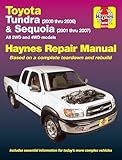
- Complete Repair Coverage: Step-by-step repair procedures specific to your vehicle — from routine maintenance like oil changes and air filter replacement to complex engine and transmission repairs
- 700+ Photos & Illustrations: Every procedure is visually supported with clear, close-up photography taken during an actual vehicle teardown and rebuild — no guesswork required
- Beginner to Advanced: Written in plain language so a DIY owner with basic tools can tackle most repairs confidently, while still serving as a valuable reference for experienced mechanics
- Full Troubleshooting Section: Quickly diagnose problems with dedicated troubleshooting guides for engine, electrical, brakes, and drivetrain systems
- Time-Saving Tips Throughout: Pro shortcuts and notes highlight common pitfalls, helping you avoid costly mistakes and get your vehicle back on the trail faster
How do towing and fuel economy compare?
Towing: 2025 has the higher published maximum
Toyota lists up to 9,520 lb for the 2025 and up to 7,400 lb for the 2020 lineup, with the latter figure dependent on grade and equipment. Toyota’s cited 2020 release gives the TRD Pro a lower maximum of up to 7,100 lb. These numbers are not interchangeable with the rating of a specific vehicle.
Before towing, verify the exact Sequoia’s tow rating, payload, hitch and wiring equipment, and any brake-controller requirements. Check the loaded trailer’s weight and follow the vehicle’s manual and labels. A lineup maximum is not a substitute for configuration-specific limits.
What’s actually slowing this PC down?
Pick the symptom - the matching free tool is one click away.
Fuel economy: compare exact configurations, not model-year averages
Toyota’s 2025 brochure estimates 21 city, 24 highway and 22 combined mpg for 4×2 SR5 and Limited configurations, and 19/22/20 mpg for 4×4 configurations. The cited 2020 Toyota material does not provide a comparable EPA figure, so a precise side-by-side number should not be inferred. Look up the exact 2020 engine and drivetrain at FuelEconomy.gov, then estimate annual fuel spending using your mileage and local fuel prices. EPA notes that, with proper maintenance, a vehicle’s original estimate remains a useful indicator of average fuel economy over its typical 15-year life.
What features does the 2025 add—and what does the 2020 already have?
The 2025 adds a 1794 grade and newer multimedia and convenience features. Toyota describes an adjustable cargo shelf, sliding third row, power-folding third row and trailer-camera technology, with availability depending on grade or package. Check the brochure and the specific vehicle’s equipment rather than assuming every feature is standard.
The 2020 is not devoid of driver assistance. Toyota said Toyota Safety Sense-P, Blind Spot Monitor and Rear Cross Traffic Alert were standard across 2020 grades. Toyota lists Safety Sense 2.5 as standard for 2025. Feature-suite descriptions alone do not establish which vehicle has better crash-test performance; the cited specifications do not provide a comparative crash-test result.
Both are three-row SUVs, but published descriptions cannot tell you whether a particular seating layout works for your household. Sit in the second and third rows, try child-seat access, test cargo arrangements, and check whether the vehicle fits your garage and parking needs. The 2020 equipment details are in Toyota’s 2020 TRD Pro and lineup release; 2025 features and grade availability are in the 2025 Sequoia brochure.
Best Value
Is the 2020 Sequoia more reliable?
The cited specifications and feature releases do not establish that either model year is more reliable. A model-year verdict cannot replace evidence about an individual vehicle’s maintenance and repair history. Ask for records, check recall status by VIN, and arrange an independent pre-purchase inspection.
How to decide whether a specific 2020 is the smarter buy
- Compare equivalent vehicles. Match grade, two- or four-wheel drive, second-row bench or captain’s chairs, towing equipment and installed options. Toyota’s full-line pricing archive links to original model-year price sheets; those are not today’s used transaction prices.
- Calculate the real price gap. Compare local examples with similar equipment, mileage and condition. Include the older vehicle’s likely immediate maintenance, fuel use, insurance and financing costs where relevant. There is no established current-price discount that applies to every market.
- Review the vehicle’s history and condition. Obtain service and repair records, check VIN-specific recalls, and have a qualified independent mechanic inspect the frame and underbody, suspension, tires and brakes, drivetrain, leaks, electronics, and evidence of accident or water damage.
- Confirm the fit for your use. Verify configuration-specific towing and payload limits if relevant, then test the rows, cargo setup and child-seat access in person.
- Compare fuel costs using exact ratings. Look up each vehicle’s year, engine and drivetrain, then use your own annual mileage and local fuel prices. For used-vehicle estimates, account for maintenance and condition.
Because today’s local asking and transaction prices have not been established here, the decisive question is whether the actual 2020 is sufficiently cheaper than a comparable 2025 after inspection and expected ownership costs. If it is not, the older model’s V8 alone does not make it the smarter purchase.
Quick Recap
Product prices and availability are accurate as of the date/time indicated and are subject to change. Any price and availability information displayed on Amazon at the time of purchase will apply.