The 2006 Suzuki Hayabusa 1300 is the K6 version of the first-generation GSX1300R. It uses the original 1,299 cc fuel-injected inline-four engine and belongs to the 1999–2007 generation, not the redesigned 1,340 cc Hayabusa introduced for 2008. For a used buyer, it remains a remarkably capable fast-road and sport-touring motorcycle: powerful, stable, practical enough for two-up travel and supported by a large aftermarket.
Age and history matter more than the odometer. A clean, substantially stock 2006 with maintenance records can be an excellent purchase. A cheap example with unknown servicing, damaged bodywork, charging faults, lowered suspension, a stretched swingarm, turbo hardware or evidence of drag racing is better treated as a project. The key is to buy the best-preserved K6 you can find, not simply the lowest-mileage or cheapest one.
What is the 2006 Suzuki Hayabusa?
The full name is Suzuki GSX1300R Hayabusa, although it is commonly advertised as the Hayabusa 1300. In Suzuki model-year terminology, a 2006 motorcycle is a K6. U.S. parts catalogs distinguish the standard GSX1300RK6 from the GSX1300RZK6 Limited Edition; the exact market and VIN should be confirmed before identifying a bike as an LE. The 2006 OEM parts fiche is useful for checking model-specific trim and components.
The K6 is one of the final and most mature versions of the original Hayabusa design. Suzuki launched the first-generation bike in 1999 with a 1,299 cc engine and an aerodynamic body developed for extreme high-speed performance. The major generation break came in 2008, when Suzuki redesigned the motorcycle and increased displacement to 1,340 cc. Therefore:
#1 Best Overall
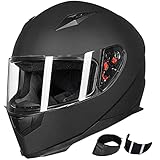
- 2 Visors Included: Clear + Smoked and 1 Neck Scarf for Winter Use
- Streamlined Aerodynamic Design Reduces Wind Noise and Drag
- Advanced and Lightweight Durable ABS Shell
- Quick Release Clasp and Strap and Removable Inner Lining Pads
- Meets or Exceeds FMVSS-218 and DOT Safety Standards
- 1999–2007: first-generation Hayabusa, 1,299 cc.
- 2008–2020: second-generation Hayabusa, 1,340 cc.
- 2021 onward: third-generation Hayabusa, still 1,340 cc but with substantially more electronic equipment.
A listing that calls a 2006 a 1,340 or second-generation model is mixing generations. Conversely, the terms Hayabusa 1300 and GSX1300R generally describe the same first-generation motorcycle.
Why the first-generation Hayabusa matters
The original Hayabusa was designed around speed rather than conventional sportbike styling. Its unusual, heavily faired shape was controversial when it appeared, but the aerodynamic work helped give the motorcycle exceptional high-speed stability. Its performance also contributed to the widely reported agreement among major manufacturers to limit production motorcycles to approximately 300 km/h, or 186 mph. Cycle World’s historical account provides useful context for the model’s speed-focused development.
The broad first-generation timeline is:
- 1999: The original 1,299 cc GSX1300R arrives as a record-setting production motorcycle.
- 2001: Later first-generation motorcycles became associated with the 186-mph/300-km/h restriction, while gearbox and other details evolved during the generation.
- 2002: ECU, clutch, exhaust and emissions-related revisions were reported.
- 2005: Clear indicator lenses appeared on later first-generation versions in documented markets.
- 2006: The K6 is a mature first-generation motorcycle, with changes mainly involving colors, trim and market equipment rather than a fundamental redesign.
- 2007: Final first-generation model year.
- 2008: Major redesign, 1,340 cc engine and revised bodywork, chassis and electronics.
Year-to-year equipment and color details vary by country, so this timeline should not be used to authenticate an imported bike without checking its VIN and original-market documentation. The first-generation brochure archive is helpful for comparing market-specific specifications and paint schemes.
2006 Suzuki Hayabusa specifications
The figures below represent commonly published K6 specifications. The source describes the weight as empty or dry, not as a fully fueled curb weight. That distinction is important when comparing the 2006 bike with later Hayabusas or other motorcycles.
Engine and drivetrain
| Item | 2006 specification |
|---|---|
| Engine | Liquid-cooled, four-stroke inline four-cylinder |
| Valve train | DOHC, 16 valves |
| Displacement | 1,299 cc |
| Bore × stroke | 81.0 × 63.0 mm |
| Compression ratio | 11.0:1 |
| Fuel system | Electronic fuel injection |
| Starter | Electric |
| Lubrication | Wet sump |
| Transmission | Six-speed constant-mesh |
| Clutch | Wet multi-plate |
| Final drive | Chain |
| Primary reduction | 1.596 |
| Final reduction | 2.388, 43/18 |
| Drive chain | RK GB50GSVZ3, 112 links |
The 1,299 cc engine is the defining mechanical difference from the 2008-on 1,340 cc model. The 2006 specification reference gives the detailed gearing, engine and capacity figures.
Frame, suspension and dimensions
| Item | 2006 specification |
|---|---|
| Frame | Twin-spar aluminum-alloy |
| Front suspension | Inverted telescopic fork, spring-preload adjustable |
| Rear suspension | Link-type shock, spring-preload adjustable |
| Front suspension travel | 120 mm / 4.7 in |
| Rear suspension travel | 140 mm / 5.5 in |
| Rake | 24.2 degrees |
| Trail | 97 mm / 3.8 in |
| Wheelbase | 1,485 mm / 58.5 in |
| Turning radius | 3.3 m / 10.8 ft |
| Length | 2,140 mm / 84.3 in |
| Width | 740 mm / 29.1 in |
| Height | 1,155 mm / 45.5 in |
| Seat height | 805 mm / 31.7 in |
| Ground clearance | 120 mm / 4.7 in |
| Fuel tank | 21 L / 5.5 U.S. gal. |
| Listed empty/dry weight | Approximately 217 kg / 478 lb |
The long 58.5-inch wheelbase and substantial mass contribute to the Hayabusa’s planted highway behavior. They also explain why it demands more effort during parking-lot maneuvers, tight U-turns and slow-speed corrections than a lighter supersport.
Brakes and tires
| Item | 2006 specification |
|---|---|
| Front brakes | Dual 320 mm discs with six-piston calipers |
| Rear brake | 240 mm disc with opposed two-piston caliper |
| Front tire | 120/70 ZR17 tubeless |
| Rear tire | 190/50 ZR17 tubeless |
This is conventional hydraulic braking hardware. The K6 does not have factory ABS, traction control, selectable engine maps, cruise control, a quickshifter, or a modern electronic chassis package. Those features should not be imported into a specification comparison with newer Hayabusas.
Fluid capacities
- Engine oil, oil change: approximately 3.1 L.
- Engine oil with filter: approximately 3.3 L.
- Engine oil after complete repair or rebuild: approximately 4.0 L.
- Coolant: approximately 2.95 L.
- Fork oil: approximately 480 ml per leg, depending on the service procedure and specified oil level.
These are service-reference volumes, not a substitute for the correct filling procedure. Check the final oil level through the sight glass or by the method specified in the K6 owner’s manual. Suzuki’s manual index identifies the K6 owner’s manual as part number 99011-24F57-SDE; use the Suzuki manual index to locate the relevant documentation.
Horsepower, torque, acceleration and top speed
There is no single horsepower number that can be quoted without explaining how it was measured. Published figures may refer to crankshaft horsepower, rear-wheel horsepower, metric PS, a different national specification, a different model year or a modified motorcycle.
| Figure | How to interpret it |
|---|---|
| 172.6 bhp at 9,800 rpm and 102 lb-ft at 7,000 rpm | Claimed output listed by a period technical source; not a Suzuki-certified 2006 rear-wheel dyno result. |
| 158.3 rear-wheel horsepower and 99 lb-ft | Measured output reported by the same technical source for a first-generation specification. |
| 161.2 bhp, 99 lb-ft and 189 mph | A generation-level road-test result for 1999–2007 coverage, not a controlled factory specification for every 2006 motorcycle. |
The practical description is that the stock K6 is an approximately 160-horsepower-at-the-wheel-class motorcycle with enormous roll-on acceleration. It is not necessary to rev the engine aggressively to make rapid progress; its broad torque and tall, stable chassis are central to the Hayabusa experience. The APE technical data supports the claimed-versus-measured distinction, while Visordown’s generation-level test illustrates why published road-test figures differ.
The familiar approximately 186 mph or 300 km/h figure refers to the factory speed-limiting context associated with the manufacturer agreement. Indicated speed, actual GPS or radar speed, market specification and modifications all affect the number. A modified or de-restricted bike cannot be treated as factory stock, and high-speed testing belongs on a suitable closed course rather than a public road.
Rank #2
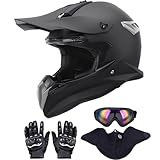
- Size - OUMURS Dirt Bike Helmet include Adult-M (570 - 580 mm / 22-1/2" - 22-7/8" ); Adult-L (590 - 600 mm / 23-1/4" - 23-5/8"); Adult-XL (610 - 620 mm / 24" - 24-3/8" ); Adult-XXL (620 - 630 mm / 24-3/8" - 24-3/4" )
- Safe and Reliable - The OUMURS Dirt Bike Helmet meets DOT FMVSS-218 Safety Standards,made of high quality ABS shell and EPS linings provide security for your driving, it’s a good choice for you as a dirt bike helmet or adult ATV helmet
- With Goggles Gloves and Mask - OUMURS Dirt Bike Helmet include the goggles, gloves and mask which you need to in driving. Put on the accessory equipment, windproof and UV resistant, can resist the interference of the sun and give you a more clear and wide vision in riding
- Multiple Air Vents Design - The adult ATV helmet have multiple air vents, make fresh air keep entering the helmet, You can have a good riding experience even in hot summer. The optimized vent reduces the wind noise and can ride more quietly with this adult ATV helmet
- Double D Ring Design - OUMURS motorcycle helmet with double D ring design, easy to wear and wear firmly. It will not fall off even if it is impacted by external forces, effectively protecting your safety
What the K6 is like to ride
Highway and touring ability
The Hayabusa’s reputation is built on speed, but its fairing, fuel capacity, six-speed gearbox and two-up layout make it more usable than the word hyperbike suggests. It provides effective wind protection, a large tank, passenger footpeg mounts, under-seat storage, bungee hooks and a hinged fuel tank that makes service access easier. The riding position is sporty without being as extreme as a dedicated 600 cc supersport.
At highway speed, the long wheelbase and aerodynamic body make the motorcycle feel composed and planted. The standard steering damper is another part of that high-speed-oriented package. It is a fast sport-tourer rather than a light, nervous canyon bike.
Low-speed handling and cornering
The same weight and wheelbase that produce stability make the K6 demanding at walking pace. Riders need to plan U-turns, avoid unnecessary momentum changes and be deliberate with clutch and throttle control. Once moving, the chassis is capable and stable, but the bike feels substantial rather than flickable.
The six-piston front calipers can provide strong braking when clean and properly serviced. On a 20-year-old motorcycle, however, caliper seals, pad pins, hoses, fluid and rotors matter more than the original specification. A neglected brake system may feel wooden, drag or require immediate rebuilding.
What it does not provide
There is no factory ABS, traction control, ride mode, cruise control or quickshifter. A modern sport-tourer may be easier to manage in rain or during emergency braking because of electronic intervention and newer chassis technology. The K6 instead offers a relatively simple, direct mechanical experience, but it places more responsibility on the rider.
Recommended Free Tools
2006 colors and Limited Edition identification
Documented K6 color combinations include:
- Pearl Glass White / Metallic Sonic Silver.
- Candy Indy Blue / Metallic Oort Gray.
- Candy Sonoma Red / Pearl Nebular Black.
- Metallic Phantom Gray / Pearl Nebular Black.
Availability varied by country. Australian brochures and other market records do not always match U.S. listings, and color codes have been reported inconsistently between sources. Paint alone therefore cannot establish that a bike is a 2006, a U.S.-spec model or a Limited Edition.
For an alleged LE, check the 17-character VIN, title, frame and original-market paperwork, factory decals, wheel and frame details, and the parts catalog. Also inspect the bodywork closely: aftermarket fairings, replacement decals and complete repainting are common enough that a seller’s color-based identification should be treated as a starting point, not proof. The brochure archive and OEM fiche are useful cross-checks.
Common problems and used-bike inspection points
The first-generation Hayabusa is generally regarded by used-bike coverage as a durable platform, but a 2006 is now old enough for age-related deterioration to matter on every example. The following points are inspection priorities, not a list of guaranteed failures.
1. Verify the identity and paperwork
- Match the 17-character VIN on the frame to the title and registration.
- Confirm that it is actually a K6 rather than a titled carryover, rebuilt motorcycle or incorrectly advertised 2008-on bike.
- Determine whether it is U.S.-spec or a gray-market import, especially if emissions, parts or registration requirements are relevant in your state.
- Run theft, salvage, flood, accident and title-history checks.
- Ask for the original keys, owner’s manual, service records and removed stock parts.
A missing title, mismatched VIN, vague import history or unexplained replacement bodywork should reduce the price substantially or end the inspection.
Outdated Drivers Are Slowing You Down
One free scan finds every outdated or missing driver and matches the right update for your exact hardware.Free scan · exact hardware matchWindows Errors? Fix Them Before They Spread
Repair common Windows errors and clear accumulated junk for a smoother, more stable PC - no reinstall needed.Free scan · no reinstall2. Start and listen to the engine cold
Insist on a genuinely cold start. A seller who warms the motorcycle before arrival may be hiding difficult starting, smoke or an unstable idle. Check for:
- Excessive cam-chain or top-end rattling.
- Blue smoke at startup or under acceleration.
- Oil leaks around the valve cover, crankcase and oil cooler.
- Uneven idle, hesitation or poor throttle response.
- Difficult hot starting after the test ride.
- Cooling-fan operation and stable temperature.
- Evidence of stale fuel, clogged injectors or long-term storage.
Cam-chain tensioner noise is a recurring subject in first-generation owner discussions and used-bike advice, but it is not proof that every K6 has a defective tensioner or that a noise has only one cause. Have a qualified technician diagnose persistent top-end rattle before buying. See the owner discussion as anecdotal context, not as a formal recall notice.
Rank #3

- Corsair-X Motorcycle Helmets Compatible
- Signet-X Motorcycle Helmets Compatible
- Quantum-X Motorcycle Helmets Compatible
- DT-X Motorcycle Helmets Compatible
- Regent-X Motorcycle Helmets Compatible
On an expensive, modified or suspicious motorcycle, a compression test or leak-down test is worthwhile. Do not rely on a clean idle alone to clear a bike that has turbo plumbing, nitrous hardware, nonstandard velocity stacks or extensive fuel-control changes.
3. Test the gearbox and clutch under load
Ride through every gear and apply meaningful throttle once the engine is warm. Look for:
The Tool Desk
Outbyte PC Repair FREEClear out junk files and repair common Windows errorsFree Scan →Outbyte Driver Updater FREEFix the driver behind crashes, sound loss and screen glitchesFind Drivers →- Jumping out of second gear.
- False neutrals or difficulty selecting neutral.
- Notchy or excessively heavy shifting.
- Clutch slip at high rpm in a high gear.
- Clutch chatter, abnormal basket noise or engagement problems.
- Evidence of repeated drag-racing launches.
Gearbox problems are not considered universal on the platform, but they are expensive enough to justify a careful test. Clutch wear is more plausible on a bike that has been launched hard, fitted with drag-racing equipment or used for repeated high-power modifications. Bennetts’ used review provides useful first-generation ownership context.
4. Test the charging system and inspect the wiring
Age, heat and accessory modifications can damage connectors and wiring. With a healthy conventional lead-acid battery, approximately 12.6 volts after resting indicates a charged battery. At 3,000–5,000 rpm, charging voltage should generally be stable in the mid-14-volt range, subject to the test method and battery condition.
Investigate readings that remain near battery voltage, rise excessively or fluctuate sharply. Inspect:
- Battery terminals and main grounds.
- Regulator/rectifier connectors.
- Stator connector and wiring.
- Melted plugs, bypassed fuses or overheated terminals.
- Added lighting, heated equipment and audio wiring.
- Alarm, immobilizer and remote-start installations.
Charging faults are commonly discussed by owners, but they should be treated as age- and condition-related inspection points rather than a confirmed model-wide 2006 defect. The owner-reported common-issues discussion is useful only when kept in that context.
Quick wins for a faster PC:
Repair Windows errors before they cause bigger problemsFix Now →Scan for outdated or missing drivers - takes under a minuteDriver Scan →Clear out junk files and repair common Windows errorsFree Scan →5. Inspect the chassis, subframe and suspension
Put the motorcycle on a stand where possible and check:
- Steering-head bearings for notchiness or play.
- Fork tubes for pitting, leaks and damaged chrome.
- Rear shock for leakage or a dead, uncontrolled feel.
- Swingarm and suspension-linkage bearings for play or corrosion.
- Wheel bearings and wheel alignment.
- Steering damper condition.
- Frame, subframe, engine cases and lower fairings for impact damage.
- Nonstandard lowering links, stretched swingarms or altered geometry.
Subframe cracking was reported on early Hayabusas, and later first-generation bikes received a stronger steel subframe. A 2006 should not automatically be treated as one of the earliest subframe cases, but cracks, repairs, overload damage and modifications still require close inspection. A stretched or lowered motorcycle may look impressive to a particular buyer, but it is not equivalent to a stock bike in handling, ground clearance or resale value.
6. Check brakes, tires and age-sensitive consumables
Budget for immediate work if the bike has old or date-coded tires, cracked brake hoses, dark brake fluid, pitted rotors, sticking six-piston calipers, seized pad pins, leaking fork seals, hardened coolant or fuel hoses, or a worn chain and sprockets. Original fork oil and suspension linkage grease may also be overdue even when the mileage is low.
On a 2006, low mileage can indicate long storage rather than careful use. Fuel-system cleaning, battery replacement, fluid changes and seal inspection may be necessary after years of inactivity.
Free tools Windows power users keep installed
One-click scans. No signup required.
7. Treat modifications as a separate buying proposition
Record every non-stock part, including exhausts, fuel controllers, airbox changes, velocity stacks, gearing, turbo or nitrous equipment, lowering links, extended swingarms, braided lines, quickshifters and nonstandard wiring. Ask who installed the parts, whether the ECU was mapped, what dyno or tuning documentation exists and whether the original components are included.
Rank #4

- Ultra light weight durable aerodynamic thermoplastic alloy shell;
- 3-level top ventilation control and 5-position ventilation channel;
- Heavily cushioned and comfortable interior, Removable and washable;
- Beautiful glossy UV protective finish;
- Aerodynamic rear venturi-effect exhaust spoiler; DOT Approved; Meets Federal Motor Vehicle Safety Standard 218 (FMVSS 218);
Modifications do not automatically add value. A professionally documented build may appeal to a specialist buyer, but an unknown tune or poorly repaired harness can create a far larger risk than the advertised mileage suggests. For most road buyers, a mostly stock motorcycle with original bodywork is the safer and more liquid purchase.
K6 maintenance requirements
The most important scheduled service is the valve-clearance inspection at approximately 15,000 miles. The engine uses shim-under-bucket adjustment. Some owners report that clearances remain within specification for much longer, but an owner’s statement that the valves have never needed adjustment is not the same as documented inspection.
Use the K6 manual rather than borrowing intervals from a 2008–2012 or 2021-on Hayabusa. A sensible service review includes:
What’s actually slowing this PC down?
Pick the symptom - the matching free tool is one click away.
| Area | What to verify |
|---|---|
| Engine oil | Correct level, service history and leaks; replace oil and filter according to the K6 schedule. |
| Valve train | Inspection documented at approximately 15,000 miles and thereafter as specified. |
| Spark plugs and air filter | Replacement or inspection history; check for signs of rich running or poor filtration. |
| Cooling system | Coolant condition, hoses, radiator, thermostat behavior and fan operation. |
| Brakes | Fluid, pads, rotors, caliper seals, hoses and pad pins. |
| Chain and sprockets | Correct slack, lubrication, alignment and hooked or worn teeth. |
| Chassis bearings | Steering head, wheel, swingarm and suspension-linkage inspection and lubrication. |
| Suspension | Fork seals, fork oil, rear shock and correct adjustment. |
| Electrical system | Battery health, charging output, grounds, connectors and accessory wiring. |
| Fuel system | Tank corrosion, stale fuel, injector condition and storage history. |
For a newly purchased motorcycle with incomplete records, establish a baseline rather than assuming the seller’s description is a service history. The cost of fluids, tires, battery, brake work, fork service and valve inspection can quickly eliminate the apparent savings of a cheap example.
Independent reader supportYour contribution helps us test, update, and keep practical guides available for everyone.Recalls and safety status
Do not describe the 2006 Hayabusa as having no recalls without checking its actual VIN. Suzuki’s U.S. recall page provides a VIN lookup for U.S.-spec street motorcycles from January 13, 2000 onward. Enter the VIN yourself and request confirmation from Suzuki or a dealer if the result is unclear. The page states that its recall data was refreshed on August 7, 2026; recall information and vehicle histories can change.
Keep these categories separate:
- Safety recall: A formal manufacturer or government campaign.
- Technical service bulletin: Service guidance that is not necessarily a safety recall.
- Owner-reported recurring problem: Useful evidence for inspection, but not proof of a campaign.
- Later-model recall: Not automatically relevant to a K6.
- Import or emissions issue: A registration or compliance matter that may be unrelated to mechanical safety.
For example, the documented ignition-switch-lead-wire campaign cited by NHTSA applies to certain 2008 GSX1300R K8 motorcycles. It should not automatically be assigned to a 2006 K6.
What is a 2006 Hayabusa worth in 2026?
There is no single fair price because the market separates book value, dealer asking price and completed private-party transactions.
Do these 3 things before closing this tab:
1Repair Windows errors before they cause bigger problems2Scan for outdated or missing drivers - takes under a minute3Clear out junk files and repair common Windows errors- Book-value reference: The currently accessible Kelley Blue Book page displays a $4,715 trade-in value for a 2006 Hayabusa in good condition with typical mileage. That is a trade-in reference, not a guaranteed private-party retail price.
- Dealer asking-price snapshot: 2026 Autotrader listings show examples around $8,999 with approximately 4,458 miles and $9,999 with approximately 19,348 miles. These are advertised prices, not verified sale prices, and may include dealer preparation, warranty coverage, unusually clean condition or pricing markup. See the current listing snapshot.
Use those figures as reference points, not as an appraisal. A rough project should be priced according to parts and labor, not mileage. A running but undocumented motorcycle deserves a discount for immediate baseline service. A clean, stock, documented example can justify a premium because it is easier to maintain and resell. A low-mileage collector-quality bike with original fairings, exhaust and trim may command more than a higher-mileage rider, while a turbocharged, stretched or heavily altered bike may be worth less to a conventional buyer despite expensive parts.
A practical negotiation formula is:
reasonable purchase price = comparable asking prices − immediate service costs − a risk reserve for unknown history.
Deduct for old tires, brake work, fork service, missing stock parts, bodywork damage, electrical repairs, questionable tuning and absent documentation. Do not pay a clean-bike premium for a motorcycle that merely has low mileage.
Is the 2006 Hayabusa a good first motorcycle?
Generally, no. The K6 can be smooth and predictable in experienced hands, but its power, speed, mass and lack of modern electronic intervention make it a poor substitute for rider training. The issue is not that the motorcycle is inherently unmanageable; it is that a novice can reach dangerous speeds or overwhelm the tires and brakes before developing good throttle, braking, cornering and hazard-management skills.
Best Value

- All Year Round Friendly: UPF 50+ UV Sun Protection. Whether you are hiking, cycling, motorcycling, mountains, skiing, skating or any season, this multifunctional mask is eligible for superior wind and weather protection around the head and neck.
- VERSATILITY: Our balaclava can be worn as a half mask, pirate mask, head warmer, neck gaiter, ninja hoodie or full face hood. It is versatile enough to complement your goggles, helmet and ski gear.
- MULTIPLE CHOICES AVAILABLE: Designed in a unisex minimalist aesthetic, our balaclava is suitable for both men and women. It is also available in several colors.
- COMFORTABLE TOUCH: Made of milk fiber, it provides all-day comfort keeping you warm and dry.
- EXCEPTIONAL USE PERFORMANCE: Premium material wicks moisture very well and dries quickly, providing you with all-day comfort.
A disciplined rider who has completed proper training and built experience on smaller motorcycles may eventually find the Hayabusa manageable. It should not be chosen as a first bike simply because it can be ridden gently.
2006 Hayabusa versus the alternatives
| Alternative | How it compares |
|---|---|
| 2007 Hayabusa | The same first-generation concept and 1,299 cc engine family; compare equipment, condition and history rather than assuming the newer model is fundamentally different. |
| 2008–2012 Hayabusa | Redesigned 1,340 cc generation with more performance and revised equipment, but usually a higher purchase price and a different ownership proposition. |
| Kawasaki ZX-14/ZZR1400 | The closest period competitor: another large, high-speed, high-torque sport-tourer. Condition, riding position and local market support should decide between them. |
| Honda CBR1100XX Blackbird | Older and generally less extreme, with a more sport-touring-oriented character for some riders. |
| Suzuki GSX-R1000 | Lighter and sharper, but less relaxed and less naturally suited to two-up highway touring. |
| Modern sport-tourers | Usually offer stronger braking development, ABS, traction control, ride modes and better emissions or connectivity equipment, but may lack the K6’s mechanical simplicity and historical character. |
Who should buy a 2006 Hayabusa?
The K6 makes sense for a buyer who wants:
- A smooth, powerful inline-four with exceptional roll-on performance.
- Stable high-speed highway behavior.
- Two-up and touring practicality without buying a large dedicated touring motorcycle.
- A mature first-generation platform with broad parts and aftermarket support.
- Relatively simple electronics compared with modern motorcycles.
- A historically significant motorcycle that can cost less than a newer low-mileage Hayabusa.
It is a poor choice for a buyer who needs ABS and modern rider aids, wants light low-speed handling, has no repair budget, dislikes inspecting modified wiring, or is primarily attracted by a low asking price. Insurance can also be expensive because of the model’s performance.
Final verdict
The 2006 Suzuki Hayabusa 1300 is one of the best-developed versions of the original GSX1300R. Its 1,299 cc engine remains exceptionally strong, its aerodynamic chassis is stable and practical, and its mechanical simplicity appeals to riders who do not need modern electronics.
But every K6 is now an approximately 20-year-old motorcycle. Tires, seals, hoses, connectors, suspension components, brakes and fuel-system parts may need attention regardless of the odometer. The most desirable example is usually not the most modified or the absolute lowest-mileage bike; it is the straight, stock or professionally documented motorcycle with original bodywork, a clear VIN, cold-start proof and maintenance records.
Quick wins for a faster PC:
Repair Windows errors before they cause bigger problemsFix Now →Scan for outdated or missing drivers - takes under a minuteDriver Scan →Clear out junk files and repair common Windows errorsFree Scan →Buy condition and history first, specification second, and mileage third.
Frequently Asked Questions
Is the 2006 Hayabusa a first-generation model?
Yes. The 2006 GSX1300R is the K6 version of the first-generation Hayabusa, built from 1999 through 2007 with a 1,299 cc engine. The redesigned 1,340 cc second generation began in 2008.
How much horsepower does a 2006 Hayabusa make?
Published numbers depend on the test. One technical source lists 172.6 bhp as a claimed crankshaft figure and 158.3 horsepower measured at the rear wheel for a first-generation specification. A road test reports 161.2 bhp for 1999–2007 coverage. These should not be treated as one exact, factory-certified 2006 number.
Does the 2006 Suzuki Hayabusa have ABS or traction control?
No. The K6 uses conventional hydraulic brakes and predates factory ABS, traction control, selectable ride modes and other modern electronic rider aids.
What should I check first on a used 2006 Hayabusa?
Verify the VIN and title, insist on a cold start, test the charging system, inspect the wiring and modifications, test every gear and the clutch, look for cam-chain or top-end noise, examine the frame and subframe, and budget for tires, brakes, suspension service and the approximately 15,000-mile valve inspection if it is not documented.
Is a 2006 Hayabusa worth buying in 2026?
Yes, if it is straight, substantially stock and supported by credible maintenance records. The bike’s age makes condition more important than mileage. A neglected or heavily modified example can cost more to make safe and reliable than a better-maintained motorcycle bought at a higher initial price.
The Bottom Line
Bottom line: The 2006 K6 is a mature, fast and surprisingly practical first-generation Hayabusa. It remains a good used buy when the chassis is straight, the charging system is healthy, the engine and gearbox are sound, and the maintenance history is documented. Avoid buying on paint, mileage or horsepower claims alone; verify the VIN, inspect the motorcycle cold and price every needed repair before making an offer.
Quick Recap
Product prices and availability are accurate as of the date/time indicated and are subject to change. Any price and availability information displayed on Amazon at the time of purchase will apply.
Recommended Free Tools